You’ve seen it a thousand times at the end of an Instagram caption or a TikTok video: "link in bio!" But what does that really mean?
Simply put, the "link in bio" is the one clickable URL that most social media platforms let you have in your profile section. It’s a direct call to action, a signpost telling your followers, "Hey, the important stuff is over here."
Think of it as the digital front door to everything you do online. It's the one bridge connecting your social media island to the rest of your digital world.
Table of contents
What Does a Link in Bio Really Mean?
At its heart, the meaning of link in bio comes down to one thing: scarcity. Platforms like Instagram and TikTok deliberately limit where you can put clickable links. You can't just drop a link in a post's caption and expect it to work. This makes that single spot in your biography incredibly valuable digital real estate.
What started as a technical limitation quickly became a strategic opportunity for creators and businesses.
In the early days, that link was usually just a one-way ticket to a website's homepage. But that was a blunt tool. A creator might need to send followers to a new YouTube video, a product they just launched, and their latest blog post—all at the same time. Having to constantly swap out that single link was a clunky, frustrating mess.
From a Simple Signpost to a Digital Gateway
This exact problem led to a new breed of tools built to get the most out of that single URL. The whole idea of the "link in bio" evolved. It went from being a simple redirect to a powerful, all-in-one hub. Now, instead of one destination, that link opens up a custom landing page filled with all your important links.
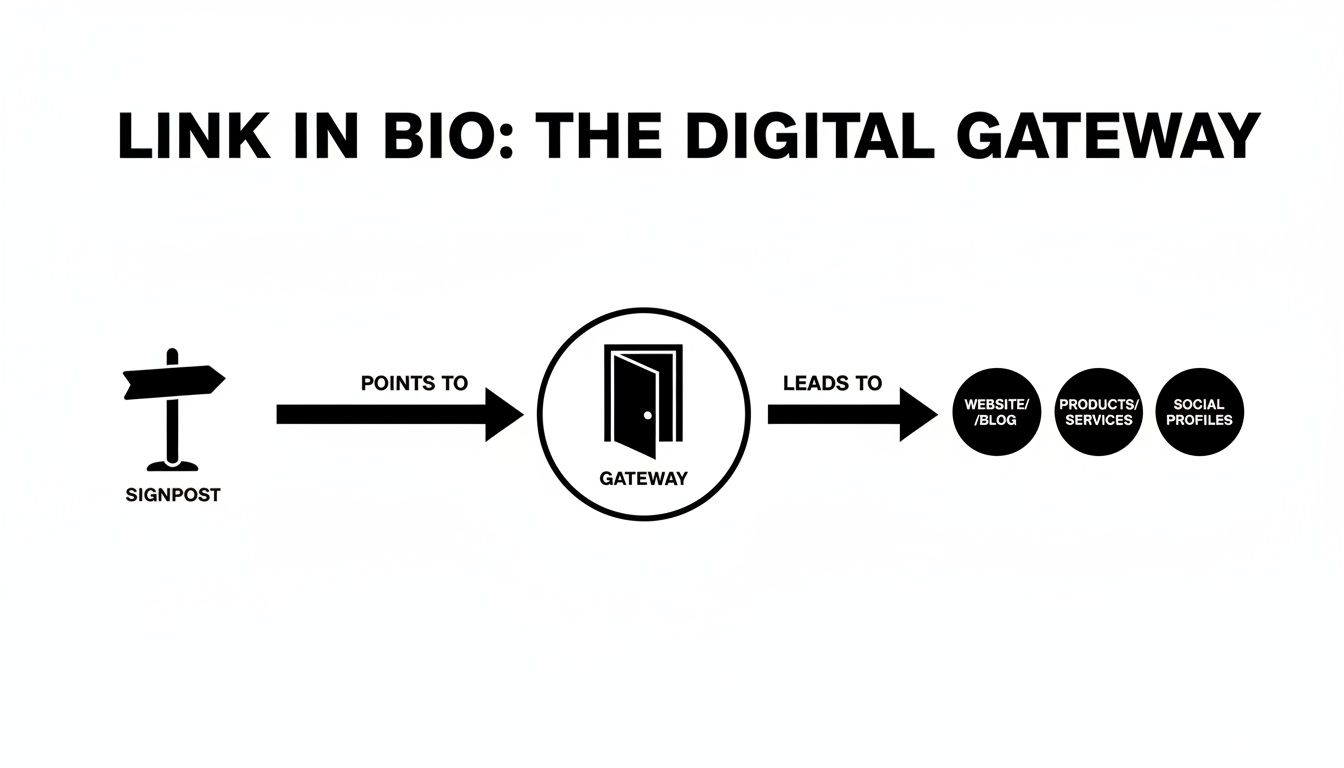
The meaning completely changed. It wasn’t just about sending traffic away from your social media anymore; it was about creating a branded, central experience right where your audience is.
To get a sense of how this revolution started, it's worth understanding what Linktree does, as they were one of the first to popularize the simple "list of links" format. This fundamental shift turned the link in bio from a clumsy workaround into an essential marketing asset.
The Evolution of the Link in Bio
The very concept of what a "link in bio" is and what it can do has transformed over the years. What was once a simple signpost is now a dynamic content hub. This table breaks down the shift.
| Aspect | Traditional View (The Old Meaning) | Modern View (The New Meaning) |
|---|---|---|
| Purpose | A single redirect to a homepage or one specific URL. | A central hub connecting audiences to multiple destinations. |
| Function | Static link that requires manual updates for every new campaign. | Dynamic, customizable landing page with many links and rich media. |
| Audience | Passive clickers; they leave the social platform immediately. | Engaged visitors; they interact with content on the link page itself. |
| Strategy | A simple workaround to a platform limitation. | An integrated part of a digital marketing and branding strategy. |
This evolution shows that the "link in bio" is no longer just a utility. It's a strategic tool for branding, engagement, and conversion, turning a single link into a full-blown interactive experience.
Why the "Link in Bio" Became Such a Big Deal
So, how did one little hyperlink become a linchpin of the creator economy? It all started with a problem. Most social media platforms, especially visual-first apps like Instagram, built what you could call a "walled garden." They gave you a beautiful space to share content but provided only one exit door. You couldn't just drop a clickable link into a post caption and send followers to your blog or shop.
This deliberate restriction funnelled all the attention—and all the value—into that one clickable spot they did give you: the link in your bio. Suddenly, that single line of text became the only bridge connecting your social media island to the rest of your online world. It was the only way to get people to your website, your latest YouTube video, or your online store.
This forced creators and businesses to get clever. They had to make that one gateway work overtime.
An Entire Industry Was Born
That single constraint kicked off a wave of innovation. A whole new category of tools popped up to turn this limitation into a genuine opportunity. Why constantly swap out one URL for another every time you had something new to share? The new solution was simple but powerful: use a single, permanent link that opens a custom landing page, a micro-site that holds all your important links in one neat place.
This simple shift transformed the "link in bio" from a clumsy workaround into the central hub for a creator's entire online brand. It became the one place to connect your latest content, your products, and all your other social profiles.
The growth has been nothing short of explosive. A deep dive into 100 million Instagram profiles showed that a whopping 31 million users now rely on link-in-bio tools to manage their online presence. Linktree alone commands nearly 80% of that market, which just goes to show how essential these tools have become for anyone trying to build an audience online.
This evolution is what gives the modern meaning of link in bio its real power. It’s no longer just a hyperlink; it’s a dynamic, branded dashboard that lets you guide your audience exactly where you want them to go.
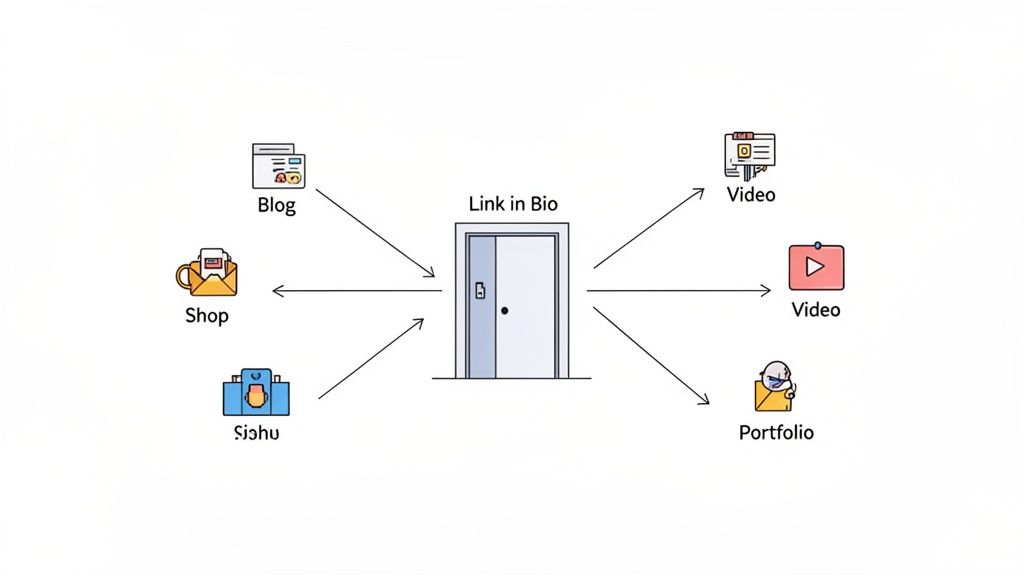
While many tools stop at offering a basic list of buttons, exploring a more powerful link-in-bio alternative can open up far more engaging and visually rich ways to showcase your digital world.
Moving Beyond Static Lists of Links
The original meaning of a link in bio was pretty straightforward: a vertical list of buttons. Think of it as a digital traffic cop, just pointing followers to different online destinations. But let's be honest, in today's world, that basic approach feels as outdated as a flip phone. The real magic is happening now, as we move beyond those boring, static pages toward vibrant, interactive dashboards that feel more like mini-websites.
This isn't just a minor update; it's about transforming your page from a simple menu into a curated experience for your audience.
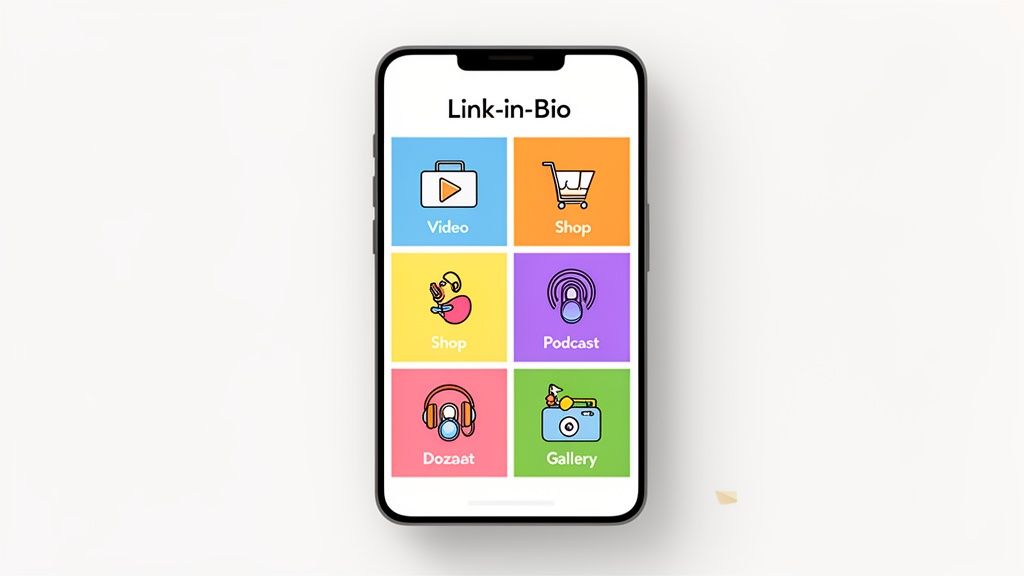
Picture your online content arranged like a bento box. Every piece—your latest video, a new song, a portfolio showcase, or a blog post—gets its own perfectly sized compartment. This is the whole idea behind modern tools like Taap.bio, which use a modular grid system to create a far more compelling and visually organized experience.
Crafting a Visual Narrative
Instead of forcing you into a one-size-fits-all list, a modular design lets you build a page that actually reflects your unique brand. You get to arrange your content like a digital mood board, giving you total control over the layout, what's important, and how it's all presented.
This approach gives you the power to tell a story visually, not just with words.
With a modular grid, you can emphasize your most important content by making its block larger, creating a clear visual path for your audience. It's about guiding their attention, not just giving them a list of options.
That level of control is a complete game-changer. Imagine placing your newest YouTube video right next to a link for your online shop, creating a seamless connection between the content your followers love and the products you sell. To really see this in action, it helps to understand the principles of what modular design is and how it creates such a dynamic experience.
Ultimately, this shift turns your link-in-bio page from a purely functional directory into an expressive, creative canvas. It’s no longer just a list of places to go; it becomes a destination in its own right—one that shows off your digital personality and invites your followers to stick around and engage.
Bringing Your Digital Hub to Life
What if your link in bio could do more than just send people away? The whole idea of a "link in bio" is evolving. We're moving past simple link lists and into something far more powerful: a destination that actually grabs and holds your audience's attention.
This isn't just a list of buttons anymore. It's about turning that single link into a living, breathing digital hub. The secret is using smart widgets that pull live, interactive content right onto your page, creating one central space for your entire online world.
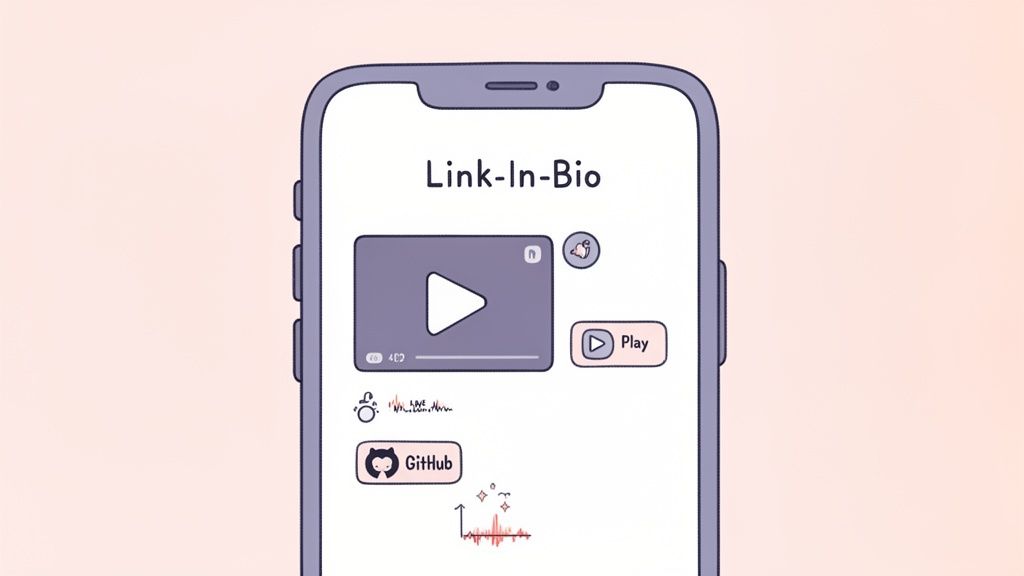
This modern approach keeps visitors engaged without them ever needing to click away. The result? They spend more time with you, creating a much richer experience.
From Redirects to Rich Experiences
Instead of a boring list of links that push people elsewhere, imagine embedding dynamic content that updates automatically. A visitor lands on your page and can immediately interact with:
- Your Latest Instagram Posts: A live grid shows off your newest content, making it easy for them to follow you on the spot.
- Clickable YouTube Thumbnails: Give people a sneak peek of your latest videos to drive more views from an already-interested audience.
- A Real-Time GitHub Graph: If you're a developer, this is a killer way to instantly show off your recent activity and expertise.
These elements give your audience immediate value. Your page stops being a static business card and starts acting like a true reflection of what you're working on right now.
The goal is to stop treating your link in bio page as a simple directory and start treating it as an experience. It becomes a destination in its own right, not just a temporary stop on the way to somewhere else.
A game-changer here is inline media playback. With a tool like Taap.bio, your audience can listen to your latest Spotify playlist or podcast episode right there on the page. No need to open another app or navigate away. This seamless integration removes all the usual friction, keeping them completely immersed in your world.
To really nail the layout of these interactive elements, check out our guide on creating an effective link-in-bio grid. This strategy fundamentally changes what your single bio link is worth, turning it into a seriously powerful tool for keeping your audience hooked.
How to Build a Link in Bio That Converts
Having a great tool is one thing, but a smart strategy is what really separates a pretty page from a high-performing one. If you want to turn your link in bio from a simple menu into a true conversion engine, you need to start thinking like a designer and a marketer. Your primary job is to guide your audience's attention where you want it to go.
It all starts with a crystal-clear Call to Action (CTA). The moment someone lands on your page, they should know exactly what you want them to do. Launching a new product? Make that the biggest, boldest link on the page. Running a promotion? Ditch the generic "My Website" and use action-oriented language like "Shop the Sale Now."
Design for the Mobile Experience
Let's be real: almost everyone who clicks your link in bio will be on their phone. A cluttered page that’s hard to read on a small screen is a one-way ticket to a quick exit.
Keep your layout clean and your text short. Make your buttons big enough for thumbs to easily tap. Your most important links should be right at the top or made to stand out visually. The whole idea is to make the experience effortless. If you want to get better at this, it helps to understand the principles of visual hierarchy in web design.
Your link-in-bio page isn’t just a list; it’s a strategic dashboard. Every element should have a purpose, guiding visitors toward the actions that matter most to your brand.
Measure What Matters
So, how do you know if any of this is actually working? You track it. The single most important metric to watch is your Click-Through Rate (CTR), which is simply the percentage of visitors who click on one of your links.
Industry-wide, the average CTR for a link-in-bio page is around 2-3%. The top performers, however, push that number up to 4-6% by using strong CTAs and obsessing over their mobile design. And with over 90% of all social media traffic coming from mobile devices, you can't afford to ignore it.
Dive into your analytics. See which links people are loving and which ones are getting ignored. This data is gold—it tells you exactly how to tweak your page, swap out content that isn't working, and continuously improve your results.
Your Link in Bio Questions, Answered
If you've ever found yourself wondering what the big deal is with that little link, you're not alone. Let's break down some of the most common questions people have about the "link in bio."
What Exactly Is a “Link in Bio”?
Think of the "link in bio" as the one, precious piece of digital real estate that social media platforms give you. Since places like Instagram and TikTok won't let you put clickable links in your post captions, this single URL in your profile becomes the main gateway to everything else you do online.
It's the digital front door for your followers, leading them to your latest blog post, your online store, a new YouTube video, or anywhere else you want them to go.
Why Not Just Link Directly to My Website?
You could, but you'd be creating a lot of extra work for yourself and a clunky experience for your audience. Imagine you drop a new video, launch a product, and publish an article all in the same week. Are you going to swap out that single bio link every single time?
A link-in-bio tool lets you build a simple landing page that holds all of your important links at once. Instead of constantly updating your bio, you just add a new button to your page. It's a game-changer.
This approach transforms a single link from a frustrating bottleneck into a dynamic, multi-purpose gateway for all of your most important content.
Aren't All Link-in-Bio Tools Just a Basic List of Links?
They used to be, but not anymore. The first generation of tools were exactly that—a simple, vertical list of buttons that sent people away from your page as quickly as possible. Modern tools have a completely different philosophy.
Today's advanced platforms, like Taap.bio, let you create an interactive experience that is the destination. You can build a custom page with a modular grid, embed your latest Instagram posts or YouTube videos right there, and even let visitors stream your Spotify playlist without ever leaving. It's the difference between handing someone a plain text menu and inviting them into a rich, interactive digital storefront.
Ready to move beyond a boring list of links? With Taap.bio, you can build a stunning, interactive page with smart widgets and a flexible grid. Create your free page today.