
At its core, Linktree takes that single, precious link in your social media bio and turns it into a launchpad—a clean, mobile-friendly landing page where you can host a whole collection of clickable links. This neatly sidesteps the frustrating "one link" rule you see on platforms like Instagram and TikTok, letting you guide your audience to all your important content from one central spot.
Table of contents
What Linktree Actually Does for You
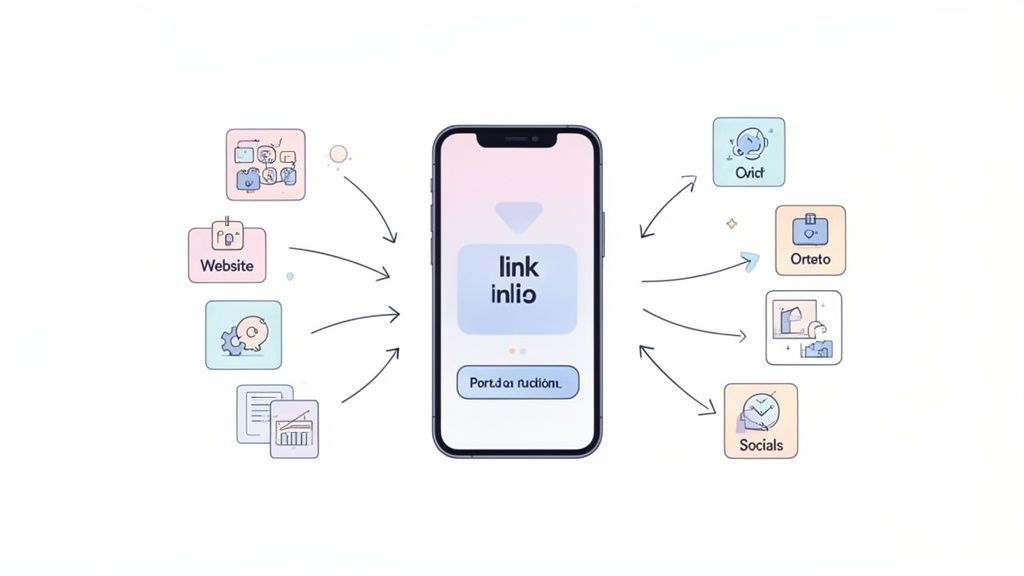
Think about your social media bio for a second. It’s like a locked door with only one keyhole. Before tools like Linktree came along, you could only give your followers one key—a single link to your website, your newest video, or your online shop. This meant making a tough, often daily, decision: what’s the most important thing to promote right now?
Linktree is the master key to that door. When someone clicks your Linktree URL, they don't just go to one place. Instead, they land on a simple, organized page that you’ve built, almost like a digital switchboard connecting them to all the places you want them to go.
To put it in perspective, here's a quick rundown of what it delivers.
Linktree's Core Function at a Glance
| Aspect | Description |
|---|---|
| Core Purpose | To consolidate multiple links into a single, shareable URL for social media bios. |
| Who It's For | Creators, influencers, musicians, small businesses, and anyone with more than one link to share. |
| Key Outcome | Simplifies navigation for your audience, increasing traffic to your most important content and online destinations. |
This table shows just how focused Linktree's mission is: solving one problem, and solving it well.
Organizing Your Digital Footprint
That simple page becomes a central directory for everything you do online. You can load it up with buttons that take people pretty much anywhere you can imagine.
It's incredibly versatile. For example:
- Content Creators: Can link to their latest YouTube video, a new blog post, and all their affiliate products at once.
- Musicians: Can promote a new single on Spotify, share upcoming tour dates, and point fans to their merch store.
- Small Businesses: Can direct customers to their main website, a special promotion, or a contact form.
- Authors: Can share links to buy their book on Amazon, Barnes & Noble, and their personal site, all next to a newsletter signup.
This whole approach brings all your scattered links together into one easy-to-use experience for your followers. No more hunting around.
The big idea is both simple and incredibly effective: Stop making your audience search for your stuff. Bring all your important links straight to them with a single click, taking away any friction and guiding them exactly where they need to be.
Since its launch in 2016, Linktree exploded as the go-to fix for creators bumping up against social media's single-link limit. Its growth has been staggering, jumping from 2.7 million users in 2019 to over 50 million worldwide today. This mirrors the massive boom in the creator economy itself. If you're curious about the numbers, you can dive into the latest reports on Linktree's user base for a deeper look.
Why Linktree Became the Go-To Standard
Linktree didn't just stumble into success; it basically invented a whole new category of tool. Its rise to the top was no fluke. It was a direct answer to a massive headache that millions of people in the growing creator economy were dealing with. Before Linktree came along, artists, entrepreneurs, and influencers were stuck swapping out their one bio link constantly, leaving money and eyeballs on the table.
The secret to its success? It’s just so darn simple. Linktree made the idea of a personal landing page accessible to everyone. It’s a no-code, super intuitive interface that you can figure out in five minutes. You don’t need to know anything about web design or pay a developer. If you can point, click, and type, you can build a page that works.
This ease of use is what made it a must-have. All of a sudden, a musician could point fans to a new album, a writer could link to their latest articles, and a small shop could promote a flash sale—all from one spot that was a breeze to update. Linktree tore down the technical walls and let creators get back to creating.
The Freemium Model Was a Game-Changer
A huge part of its explosive growth comes down to its freemium model. Linktree offered its main service—hosting all your links—for free. That meant zero friction. Anyone could solve their "link in bio" problem right away without pulling out a credit card.
And while the free plan is great for getting started, the paid plans are there for when you get serious. Upgrading gives you the kind of features that professional creators really need.
- Deeper Customization: Paid plans let you remove all the Linktree branding and dial in your own colors and fonts, making the page feel like an extension of your brand.
- Advanced Analytics: You can go beyond just counting clicks. You'll see where your visitors are coming from and what they’re actually interested in.
- Powerful Integrations: The premium versions hook up with tools like Mailchimp and Google Analytics, turning your link page into a real marketing hub.
This approach lets people experience the value for themselves before they ever have to pay, a strategy that clearly worked. It’s a stable, well-funded platform that’s become the yardstick everyone else measures themselves against.
Linktree became the default choice because it offered a straightforward solution to a universal problem at the exact moment the creator economy was exploding. Its simplicity and accessible freemium model made it the industry’s foundational tool.
This isn’t just talk. Linktree hit a staggering $1.3 billion valuation back in March 2022 and has only kept growing, with recent revenue estimates touching $49.09 million. That kind of financial muscle has allowed it to buy up competitors and lock down its spot at the top, giving users confidence that it’s not going anywhere. You can dive deeper into Linktree's impressive financial journey to see what it means for the creator space.
By really understanding what makes Linktree tick, we can start to see where the next wave of tools is pushing things forward.
A Look Under the Hood: Linktree's Core Features
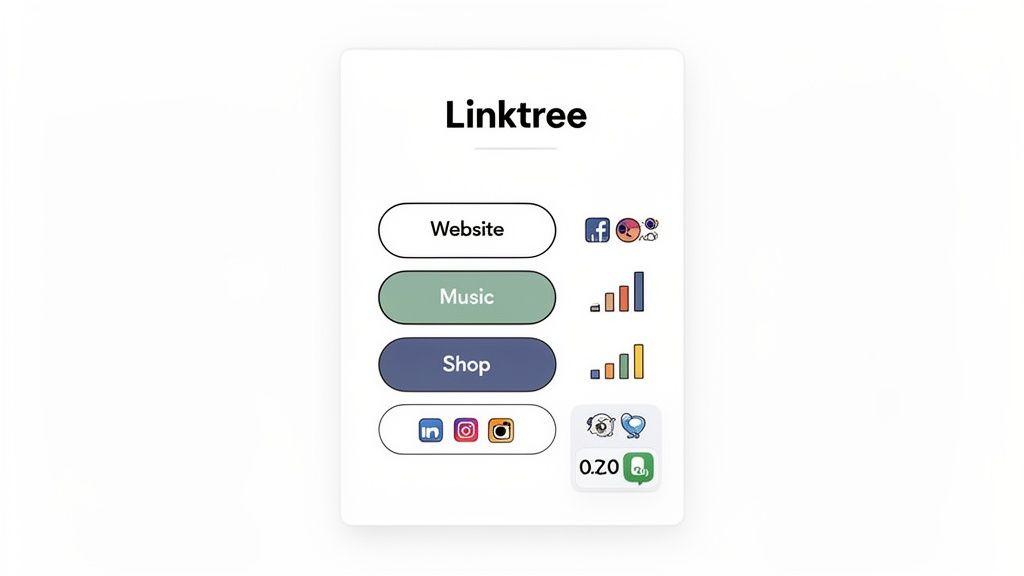
So, we know why Linktree exists, but what does it actually do? Let's get past the high-level concept and dig into the practical tools you'll be using every day. At its core, Linktree is a simple, no-fuss toolkit built for one thing: getting all your important links organized and presented in a clean, easy-to-use list. Speed and simplicity are the name of the game here, not overwhelming complexity.
The entire platform is built around its link management system. Even on the free plan, you can add, edit, and drag-and-drop an unlimited number of links. This is the foundation of your page—a straightforward, vertical stack of buttons ready to send your audience exactly where you want them to go.
Essential Link Management Tools
Where Linktree really starts to shine is in its specialized link types. These aren't just basic URLs; they add layers of functionality that help you connect with your audience in much smarter ways.
- Standard Links: The bread and butter of your page. These are your typical links to a website, a new blog post, an e-commerce store, or anywhere else on the internet.
- Social Icons: Instead of wasting valuable button space on links to your other profiles, you can add small, familiar icons for platforms like X, YouTube, and Facebook. They sit neatly at the top or bottom of your page.
- Music Links: This is a game-changer for musicians. Add one "Music Link" for your new track, and Linktree automatically finds it on major streaming services like Spotify and Apple Music. Fans can just tap and listen on their favorite platform, no searching required.
- Video Links: You can embed a YouTube or Vimeo video right on your Linktree page. This means visitors can watch your latest vlog or trailer without ever having to leave your profile—a great way to keep them engaged.
With these tools, a simple list becomes a dynamic mini-hub. Think of an author launching a book: they can link to different online retailers, embed the book trailer, and add social icons to build their community, all from one central spot.
Basic Analytics and Customization
How do you know if any of this is actually working? Linktree gives you a peek into your performance. The free plan provides lifetime analytics that track your total views and clicks, which is enough to get a general feel for your page's traffic. It’s a basic but surprisingly useful snapshot of how many people are stopping by and what they’re interested in.
The goal here isn't to drown you in data. It's to give you just enough information to see what's resonating with your audience so you can put your most important content front and center.
If you decide to upgrade to a paid plan, you unlock more detailed analytics, like click-through rates and where your traffic is coming from. Customization also gets a major boost. While the free plan has some nice pre-made themes, paid tiers let you fine-tune everything—colors, fonts, button styles—to perfectly match your brand. You can even remove the Linktree branding entirely to make the page feel 100% yours.
Even though these features are simple by design, they give most creators the essential tools to guide their audience, capture sign-ups, and make sales without needing a web developer.
So, What Are the Limits of a Basic Link List?
Linktree was a brilliant solution to a very real problem: social media's "one link" rule. But in solving that problem so elegantly, it also created its own set of limitations. The platform was built from the ground up for one thing—simplicity. It gives you a clean, vertical list of links, and it does that job well.
But what happens when your brand is more than just a list? When user experience and a unique identity are what truly matter, the cracks in that simple foundation start to show.
At the end of the day, almost every Linktree page looks and feels the same. Sure, a paid plan lets you swap out colors and fonts, but you’re still locked into that rigid, top-to-bottom menu. This one-size-fits-all model can accidentally sand down the unique edges of a vibrant brand, making a stunning design portfolio look just like a basic list of social profiles.
The Trouble with a "Passive" Experience
This standardized format tends to create a very passive journey for your visitors. Think about it: someone lands on your page, scans a menu of text buttons, and their only goal is to click away from your page as fast as possible. The Linktree page isn't the destination; it’s just a glorified departure board.
For creators who build their brands on visual storytelling and genuine connection, that's a massive missed opportunity.
- Your Brand Gets Watered Down: Your page risks getting lost in a sea of sameness, failing to convey the unique vibe you've worked so hard to build.
- There's No Visual Hierarchy: Every link looks just as important as the next, making it tough to steer your audience toward your most valuable content or latest offer.
- Engagement is Almost Zero: With nothing interactive to do, visitors have no reason to stick around. They find a link, they click, and the interaction is over.
If you're a photographer, a designer, or a musician, this is a real problem. Your online hub should feel like an extension of your craft—not a generic directory that squashes your creative flair into a plain old list.
A Linktree page is like a functional but uninspired restaurant menu. It tells you what’s on offer, but it does absolutely nothing to showcase the chef's unique flavor, presentation, or personality.
Moving Beyond Just a List of Links
Now, this isn't to say Linktree is useless. It’s not. But for many creators today, the question is no longer just, "How do I share all my links?" It's become, "How do I create an engaging, on-brand hub that brings my entire digital world together?"
The simple link list was the perfect answer to the first question, but it just doesn't cut it for the second.
This gap is exactly why a new generation of tools has popped up. They see that a "link in bio" page can be so much more than a utility. It can be a mini-website—immersive, interactive, and visually stunning—that actually represents your brand and keeps your audience hooked.
The Evolution to Dynamic and Visual Bio Pages
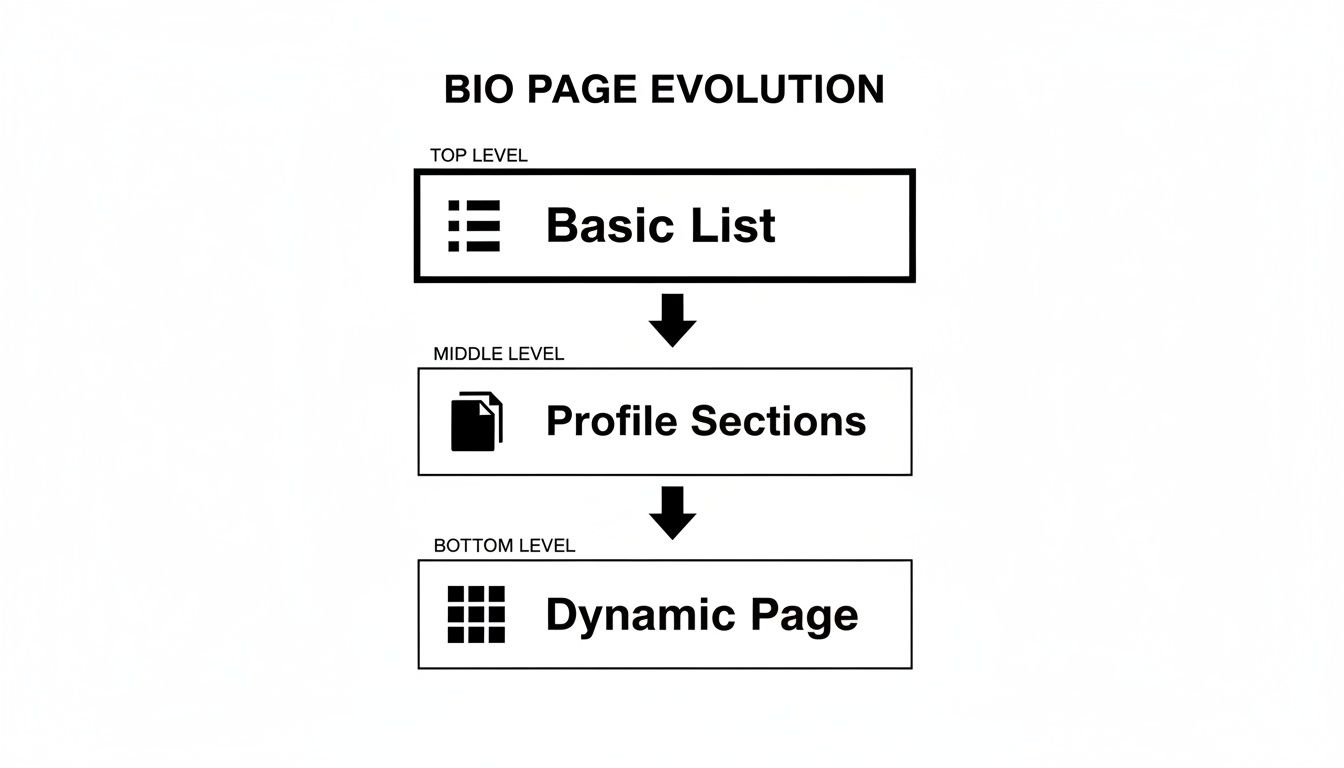
The simple, single-file list of links just wasn't cutting it anymore. Creators quickly realized its limitations, sparking a major shift in how we think about the "link in bio" page. A new generation of tools popped up, all built around a powerful idea: your bio page shouldn't just be a list of exits. It should be a destination—an engaging, interactive hub that visually tells your story.
Think of it like upgrading from a plain text document to a full-blown multimedia presentation. The old way was all about pure utility, just getting people from point A to point B. This new approach is all about creative freedom and expressing your brand. For anyone whose brand is built on aesthetics, like designers, artists, or photographers, this change was a game-changer.
From Linear Lists to Bento Grids
The biggest leap forward was ditching the rigid, one-size-fits-all list. Modern platforms started offering modular, grid-based layouts—you'll often hear them called "bento boxes"—as a direct response to the boring vertical menu. This design philosophy lets you treat every piece of your content like a block you can place on a canvas.
Imagine all your digital content as puzzle pieces: your latest YouTube video, your Dribbble portfolio, a new track on Spotify, your online store. A bento grid lets you arrange all those pieces in a way that’s not just visually interesting but also strategic.
- Create Visual Hierarchy: Got a big product launch? Make it the biggest, boldest block on the page so no one can miss it.
- Tell a Story: You can arrange your content to guide visitors through your world, creating a narrative flow instead of just a static list.
- Showcase Your Brand: Finally, you can build a unique, asymmetric layout that actually reflects your personal style. No more cookie-cutter profiles.
This approach puts you in the driver's seat of the user experience. You're no longer just handing someone a menu; you're inviting them into a space you've carefully designed to represent you.
The shift to a grid-based layout is about transforming a passive directory into an active, immersive dashboard of your digital life. It’s about making your bio page a destination, not just a departure board.
Introducing a Smarter Way to Connect
This new wave of tools, including dynamic alternatives like Taap.bio, goes way beyond just looking good. They’re built to be smarter and more interactive. Instead of just linking out to your content, they pull your content in using integrated widgets and live feeds.
For instance, a visitor could watch your latest video, listen to your new podcast, or scroll through your Instagram feed—all without ever leaving your page. This makes for a much richer experience, one that encourages people to stick around, explore, and actually connect with what you're doing.
Ultimately, this evolution is about giving creators the tools to build a page that's as unique as their brand. By moving past the simple list, you can create a personalized digital storefront that doesn’t just direct traffic, but genuinely captivates your audience and tells a powerful visual story.
Unlocking Engagement with Smart Widgets
A better layout is a huge step up from a simple list, but the real magic starts when your bio page stops being a static, boring menu. The biggest leap beyond the old Linktree model is the arrival of smart widgets. These aren't just fancy buttons; they're live, interactive windows that pull content from your other platforms directly onto your page.
Think of it this way: instead of just linking to your latest YouTube video, a smart widget lets you embed a playable preview right there. Instead of a link to your Spotify profile, visitors can play your new track without ever leaving your page. This one change is massive. It transforms a passive click-fest into an active, engaging experience, which keeps people on your page and interacting with your content for way longer.
This is a real evolution, from a basic utility tool into a rich, integrated hub for your brand.
From Static Links to Live Content
So, what does Linktree do? It creates a page full of exits. What do smart widgets do? They create a destination.
Let's look at a few real-world examples that really drive this home:
- For a Developer: Forget a simple link to a profile. A GitHub widget can display their real-time contribution graph, proving their consistent activity and coding chops at a glance.
- For a Photographer: A live Instagram feed widget can showcase their six most recent photos, giving visitors an instant taste of their latest work without having to click away.
- For a Musician: An embedded Spotify widget lets fans stream their latest single right from the bio page, directly boosting plays and engagement.
- For a YouTuber: A video widget can show off a grid of their most recent uploads as clickable thumbnails, driving views without making people navigate over to YouTube first.
These widgets turn your bio page into a living portfolio that updates itself, always showing your freshest, most relevant content automatically.
The whole point of smart widgets is to reduce friction and grab attention immediately. When you bring your content directly to your audience, you create a much richer, stickier experience that keeps them on your page longer.
Why Customization and Control Matter
This deeper level of interaction goes hand-in-hand with much greater design control. While Linktree mostly sticks to a theme-based system, modern tools like Taap.bio give you a true drag-and-drop canvas. You’re not just picking a color scheme; you're actually composing a unique layout from the ground up.
Want to make your latest video the star of the show? Resize its block to be the biggest thing on the page. Need to tuck away a less important link? Shrink it into a compact square. This kind of granular control lets you create a visual hierarchy, guiding your audience's attention to exactly what you want them to see.
Let's break down how this all stacks up.
Feature Showdown: Linktree vs Taap.bio
It’s one thing to talk about lists versus dynamic pages, but seeing the features side-by-side makes the difference crystal clear. Here’s how a traditional Linktree setup compares to the modern, widget-driven approach of Taap.bio.
| Feature | Linktree | Taap.bio |
|---|---|---|
| Core Layout | A single-column, vertical list of links. | A flexible drag-and-drop grid. You control the size and position of everything. |
| Content Display | Text links that send visitors to another site. | Embeddable smart widgets (video, music, forms) that keep visitors on your page. |
| Customization | Pre-set themes and basic color options. | Granular control over layout, block sizes, fonts, and brand colors. |
| Dynamic Content | Requires manual updates for all links. | Widgets like social feeds and video galleries update automatically. |
The bottom line? The result is a page that not only works better but feels entirely yours—a true extension of your personal or company brand. It’s the difference between picking from a template and creating a custom design.
Got Questions? We've Got Answers
After seeing what Linktree can do and how newer tools are shaking things up, you probably have a few questions. Let's break down the most common ones to help you figure out the best move for your brand. After all, the right choice really comes down to your unique goals and the story you want to tell online.
Is Linktree Still a Good Bet for Beginners?
Absolutely. Linktree’s biggest win has always been its simplicity, and that's a huge deal when you're just getting your feet wet. If all you need is a quick and clean way to get a handful of important links onto one page, it’s still a fantastic and reliable place to start.
It's free, takes minutes to set up, and you don’t need to know a lick of code. But be warned: as your brand evolves and you start craving more design freedom or want to show off your content in more interesting ways, you'll likely start to feel a bit boxed in.
What’s the Big Deal with a Grid-Based Tool Like Taap.bio?
The magic is in the blend of creative freedom and genuine user engagement. Linktree gives you a neat, single-file line of links. A bento-style grid, like what you get with Taap.bio, lets you become the architect of your page.
You can design a visual narrative, making your most important content pop by giving it more real estate. It’s the difference between handing someone a plain text menu and giving them a beautifully designed, interactive dashboard for your brand.
It's all about shifting your bio page from a simple list of exits to an immersive destination. Smart widgets can stream your latest YouTube videos or Spotify tracks right on the page, keeping your audience captivated instead of just clicking away.
Can I Use My Own Custom Domain with These Tools?
You bet. Both Linktree and modern alternatives like Taap.bio offer custom domain support, though it’s almost always a feature you'll find in their paid plans.
Using a custom domain (think links.yourbrand.com) is a pro move. It makes your brand look more polished and cohesive, ditching the platform’s default URL for one that's all yours. For any growing creator or business, it’s a small investment that signals you’re serious about your online presence.
Ready to build a bio page that does more than just list links? Taap.bio lets you create a stunning, interactive hub with a drag-and-drop grid and smart widgets that bring your content to life. Stop sending your audience away and start engaging them with a page that’s as unique as your brand. Create your free Taap.bio page today!


