Amazon doesn't support standalone digital downloads, so sellers must route products through approved channels such as Kindle Direct Publishing, Audible, Amazon Appstore, or Prime Video Direct, depending on the file type. The opportunity is still substantial, with Kindle Direct Publishing described as producing over 1.4 million self-published titles per year, but success depends on choosing the right channel rather than uploading a PDF and waiting for sales.
You may be sitting on a polished planner, workbook, template pack, or short course and searching for the Amazon upload button. That search often leads to advice written as if Amazon were a giant Etsy-style download marketplace. It isn't. Amazon can distribute digital content at enormous scale, but it does so through separate programs with different formats, rules, and customer experiences.
That distinction changes the business decision before you create anything. An ebook may fit KDP. A mobile application may belong in the Amazon Appstore. A standalone Canva template or printable PDF usually needs a different sales route entirely.
Table of contents
The Digital Product Myth on Amazon
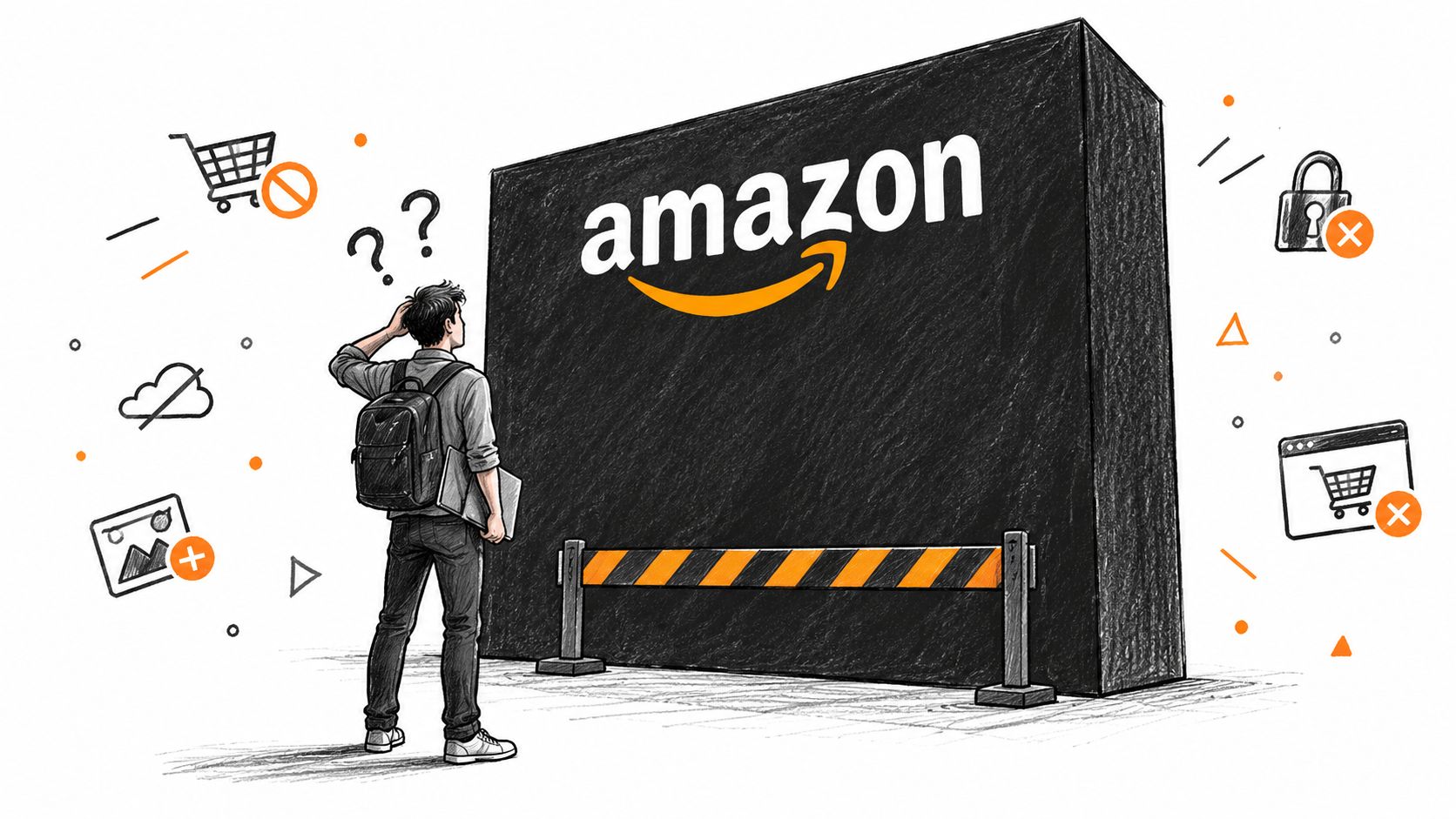
The most expensive assumption in this market is simple: create a file, upload it to Amazon, and let the platform deliver it after checkout. There is no universal Amazon portal for standalone digital downloads. Amazon's own guidance treats digital products as one option within a broader channel strategy, not as a single upload flow for every file type. The practical sequence is to identify a customer problem, research competing products and reviews, choose a format, create the asset, and then select the channel that supports it. Amazon's digital product guidance reflects that channel-first approach.
Amazon's digital publishing infrastructure grew from Kindle rather than from a general-purpose file store. The Kindle era began in 2007, and by 2010 Amazon said it was selling more ebooks than physical books, helping establish digital reading as a major commercial category on the platform. Later reporting described KDP as producing over 1.4 million self-published titles per year, while Amazon controlled roughly 60% to 70% of U.S. online book sales and at least 40% of U.S. physical print book sales. Those figures explain Amazon's strength for books, not its suitability for every digital asset. The historical reporting on Amazon's digital publishing ambitions shows how the platform's advantage developed.
Search intent and platform reality
When someone searches for “sell digital products on Amazon,” they may mean any of the following:
- A Kindle ebook: A manuscript, guide, novel, or workbook adapted for a reading device.
- An audiobook: Spoken content distributed through an audio publishing route.
- An application: Software packaged for a supported app marketplace.
- A video product: Video content submitted through an eligible video program.
- A file download: A PDF, Notion template, spreadsheet, preset, or planner delivered directly after payment.
Only the first four categories have an obvious relationship with Amazon's approved digital channels. The fifth is where most confusion starts. Amazon's channel restrictions mean that a printable planner isn't automatically transformed into a viable Amazon product just because it has commercial value.
Practical rule: Decide where the customer will consume the product before deciding how to create it.
A creator who understands that rule avoids formatting a PDF for a storefront that won't deliver it. They can instead convert a workbook into a genuine ebook, package software for the Appstore, or sell the original file through a direct checkout that controls delivery. For a broader comparison of file-based and physical goods, see this guide to digital products versus physical products.
Amazon Channel Map for Digital Creators
Amazon works better as a collection of specialist distribution routes than as one digital shop. Match the asset to the channel first, then assess discoverability, approval requirements, customer expectations, and payment terms.
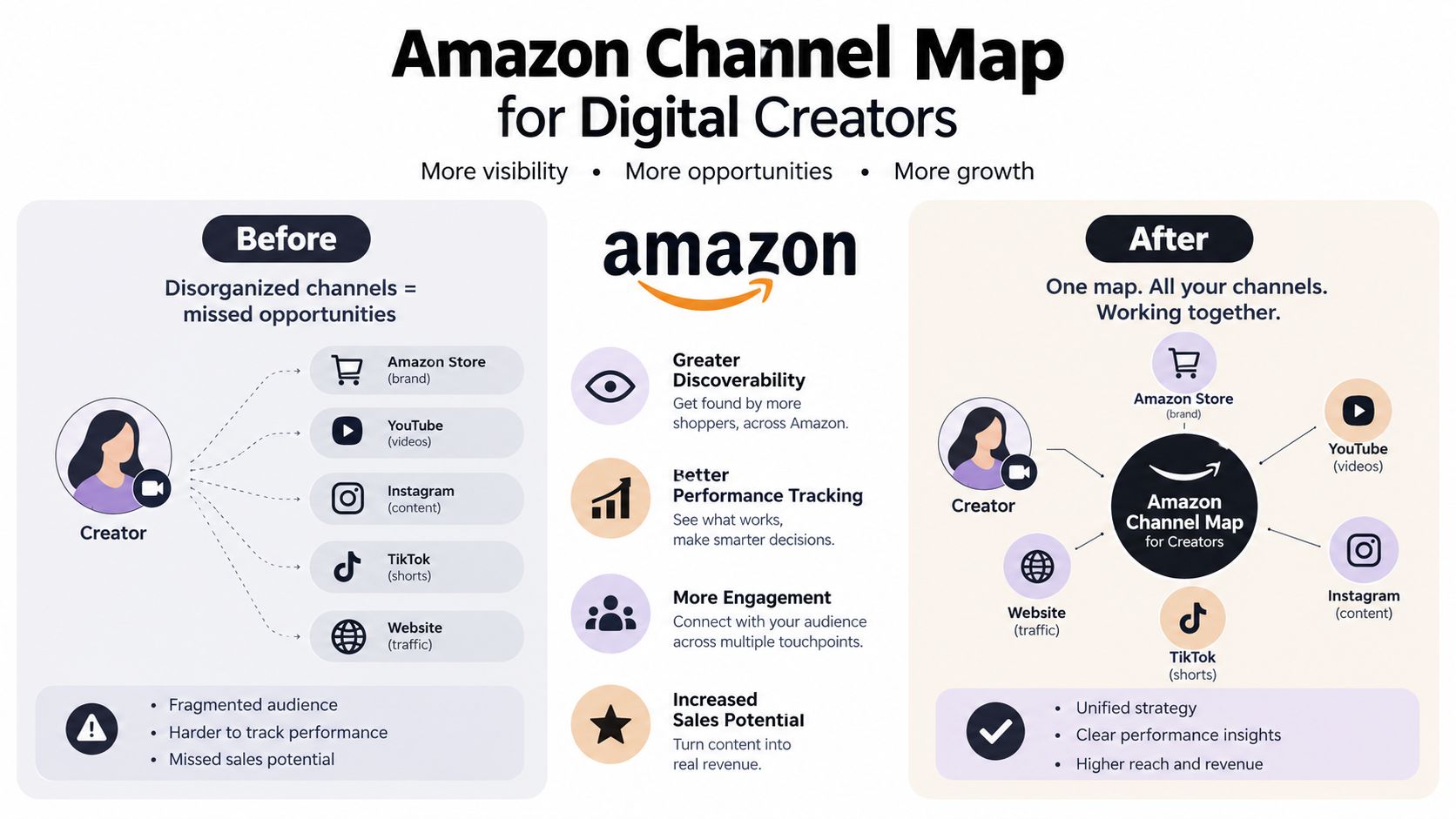
| Amazon route | Suitable product | Main format consideration | Commercial trade-off |
|---|---|---|---|
| Kindle Direct Publishing | Ebooks, novels, guides, and some workbook-style publications | The file must work as a book rather than as an arbitrary download | Strong reader discovery, with publishing and metadata rules |
| Audible and ACX routes | Audiobooks and spoken-word editions | Audio quality, rights, narration, and catalog requirements matter | Access to audio listeners, with economics tied to the chosen distribution arrangement |
| Amazon Appstore | Mobile applications and supported software | The product must function as an app and meet marketplace requirements | Useful for software discovery, but maintenance and review obligations continue |
| Prime Video Direct | Eligible video content | Video submission, rights, and program availability determine eligibility | A possible video route, but not a substitute for a file-download store |
KDP is the clearest fit for written digital products. Amazon's public KDP ecosystem reported $69.4 million in Kindle Unlimited author earnings for August, indicating that subscription reading remains a meaningful revenue stream for authors. Independent industry summaries also report that Kindle sells over 487 million ebooks annually, and that KDP titles are available in more than 40 languages. Amazon KDP's public dashboard is the place to verify current program terms and earnings information before publishing.
Match the product to the customer experience
A 200-page instructional guide can become a KDP ebook because the buyer expects to read it inside a book ecosystem. A mobile budgeting tool may fit the Appstore because the buyer expects installation, updates, and an app interface. An audiobook requires a listening experience, not a renamed MP3 folder.
A printable planner is different. Its value often depends on editable pages, printing instructions, linked navigation, or a particular tablet app. Forcing that product into a book format can make the customer experience worse. A workbook with structured reading material may work on KDP, while the editable companion file belongs in a separate store.
The same principle applies to a creator with several assets. Publish the discoverable book on KDP, distribute an eligible video through the relevant video route, and sell a template library through a checkout designed for instant file delivery. Amazon doesn't need to be the only channel in the business.
For a wider platform comparison before committing to a marketplace, review platforms for selling digital products.
From Idea to Publishable Asset
Amazon's own practical sequence starts with the problem, not the file. That sounds obvious, but creators routinely spend weeks designing a product before checking whether competing listings already satisfy the need. Reviews often reveal the useful gaps: missing examples, poor navigation, outdated instructions, weak accessibility, or a format that doesn't suit the buyer's workflow.
Validate before you build
Start with Amazon search results and read competing titles, descriptions, categories, and customer feedback. Pay particular attention to repeated complaints. A buyer who says a guide is too general is giving you a positioning signal. A buyer who wants a printable checklist is telling you that a standard ebook may not be enough.
Use that research to write a narrow product promise:
- Name the audience: Identify the person who has the problem.
- Define the outcome: State what the asset helps that person do.
- Choose the consumption format: Decide whether the buyer reads, listens, watches, installs, or downloads.
- Select the channel: Confirm that Amazon supports that format before production.
- Create a listing brief: Prepare the title, description, categories, keywords, cover or screenshots, and rights information.
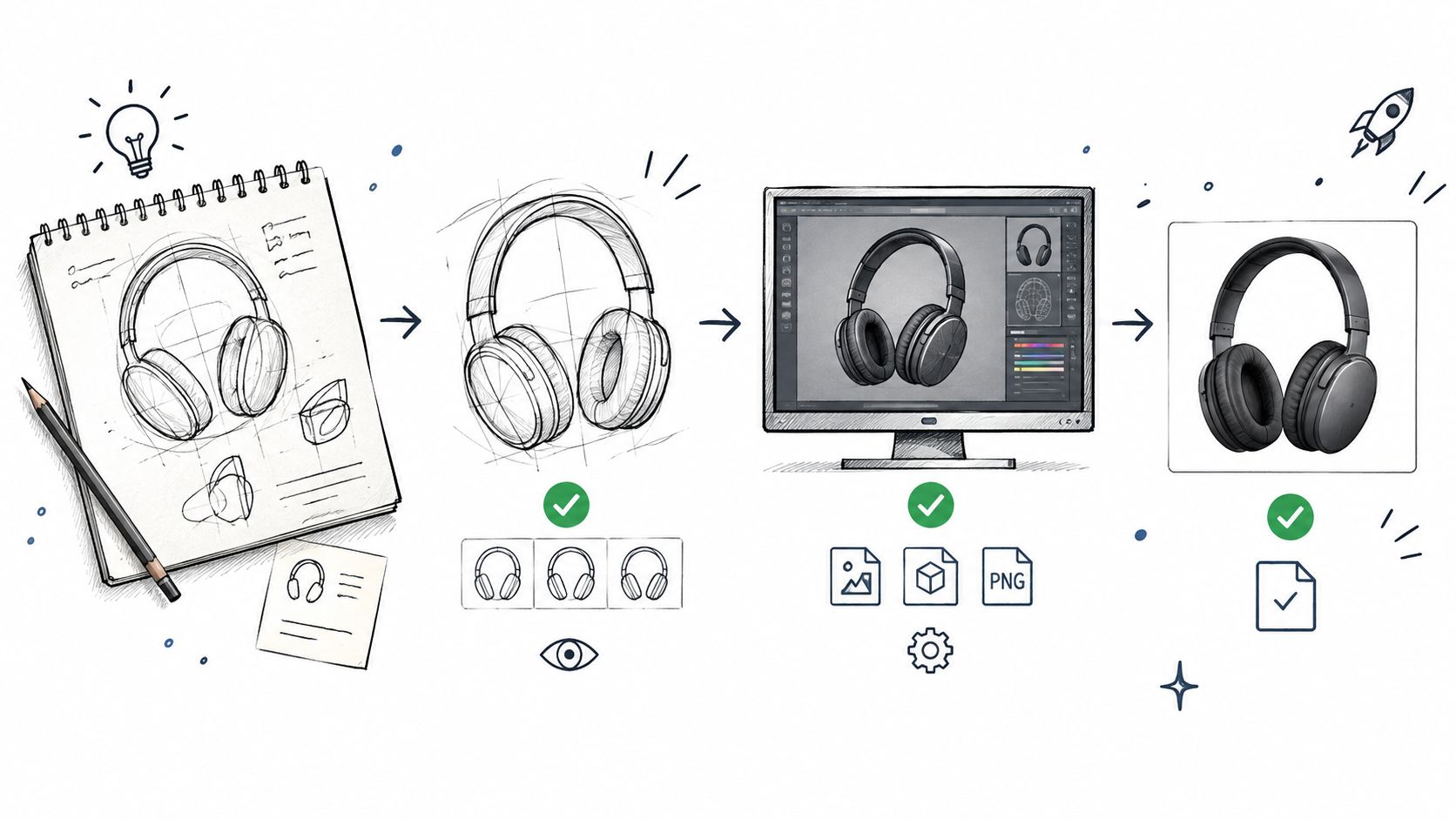
The right format protects both approval and conversion. KDP requires a book-like reading experience. Audio routes require usable recordings and clear rights. App submissions require functioning software and marketplace compliance. Video programs require content that fits their current eligibility rules. Don't treat a file extension as proof that the product belongs in a particular channel.
Build for the listing, not just the asset
Amazon buyers encounter the product through its listing before they experience the content. Your title should identify the subject and intended reader without stuffing unrelated keywords. The description should explain the problem, show what the buyer receives, and clarify any limitations. Categories and keywords should reflect actual buyer language rather than internal creative terminology.
A book creator should test the manuscript on the intended reading experience, check headings and navigation, inspect images, and review the converted file before submission. An app creator should test installation, screen behavior, permissions, and core actions. An audiobook creator should listen for distracting noise, inconsistent levels, missing sections, and incorrect metadata.
This video can help creators think through the design and production stages before choosing a publishing route:
Before submission: Open the final customer-facing file yourself. If the first page, first screen, or first minute feels unfinished, approval won't solve the conversion problem.
A practical workflow is to create a small test version, inspect it on the target device or app environment, and only then complete the full catalog entry. Keep source files, licenses, contributor agreements, and final exports organized. That record helps when Amazon asks for rights or content clarification.
For ideas on turning expertise into a structured asset, use this practical guide to creating digital products to sell.
Pricing, Royalties, and Tax Traps
Creators often search for a single Amazon royalty percentage, but that shortcut creates bad financial decisions. Amazon doesn't use one universal payout model for every digital channel. KDP, audio distribution, app distribution, and video programs can use different commercial terms, and those terms may depend on territory, format, subscription participation, delivery costs, rights, or program enrollment.
That means a pricing decision belongs after channel selection. A creator who sells an ebook through KDP is evaluating reader reach, list price, royalty eligibility, subscription reading, and distribution settings. An app developer is evaluating marketplace economics alongside ongoing maintenance. An audio producer must consider production cost and the terms of the selected audio route. A video creator needs to verify the current program's eligibility and payment structure.
Build a channel-specific model
Use a simple worksheet before publication:
- Gross customer price: What the buyer sees in the relevant marketplace.
- Platform deduction: The current commission, royalty adjustment, delivery charge, or other applicable deduction.
- Production cost: Editing, cover design, narration, software development, music licensing, or video production.
- Support cost: Updates, customer questions, compatibility fixes, and refunds.
- Net contribution: What remains before wider business expenses and taxes.
Don't fill the worksheet with an assumed universal percentage. Check the current terms for the exact channel and territory, then save the page or agreement used for your calculation. Amazon's public KDP dashboard demonstrates why current verification matters, because program earnings and policies can change over time.
Tax and payment administration
International creators should collect the tax information requested during account setup and understand how Amazon reports earnings in their jurisdiction. A U.S. tax form, withholding status, local income tax, sales tax, or VAT obligation may apply differently depending on where the creator lives, where the customer is located, and which entity processes the sale.
Keep payout statements, invoices, licensing records, and business expenses together from the start. Don't assume that Amazon's collection or reporting process removes every local obligation. If you sell outside your home country, ask an accountant familiar with digital goods and marketplace income to review the setup before the catalog grows.
The key financial question isn't “What royalty do I get?” It is “Does this channel's reach justify its restrictions and deductions for this product?” A book designed for reader discovery may justify marketplace economics. A low-priced editable template may not, especially if the platform can't deliver the file in the way the customer expects.
For a book-focused financial and publishing workflow, compare the channel requirements in this guide to selling ebooks on Amazon.
When Amazon Is Not the Best Channel
Amazon works well when buyers already search there for the format you publish. The fit weakens when the product is primarily a file, a service, a customizable workspace, or an ongoing relationship with its creator. Templates, planners, Notion dashboards, presets, checklists, and niche toolkits often require instant access, editable formats, clear usage rights, updates, and customer support. A book marketplace can attract attention, but it does not handle every part of that experience equally well.
Start with the buyer's first action after payment. If they need to read a finished book, KDP may be suitable. If they need to download a spreadsheet, duplicate a Notion system, print a planner, or book implementation help, a direct store usually fits the product better. For file-first products like templates and planners, compare the trade-offs in this guide to selling digital products on Shopify.
A direct creator store preserves the product instead of forcing it into a marketplace-friendly substitute. You can sell a PDF as a PDF, provide an editable template after checkout, explain the license on the sales page, collect an email address with permission, and send a customer to a booking page when the offer includes support. That control matters when the product changes often or depends on instructions beyond a book description.
Compare the economics directly
Amazon can provide discovery, but the marketplace also controls the customer journey, accepted format, listing environment, and commercial terms. A direct store requires traffic from social content, search, partnerships, or email. In return, it gives you more control over the offer, price, presentation, delivery, and customer relationship.
For low-ticket products, recurring deductions and operating work can change the result. A creator choosing a $19 monthly plan for a direct store should compare that fixed cost with the sales needed to offset marketplace deductions, customer support, and separate software subscriptions. Calculate both routes using realistic sales and support assumptions. A channel with more reach is not automatically the more profitable choice.
A practical direct-store setup can combine:
- Storefront: A public page with the offer, proof, previews, and terms.
- Checkout: Payment collection without sending the buyer through several unrelated tools.
- Delivery: Automatic access to the purchased file.
- Audience capture: A permission-based email signup for launches and updates.
- Bookings: Paid consultations or implementation sessions connected to the product.
- Analytics: Visibility into visits, clicks, signups, and purchases.
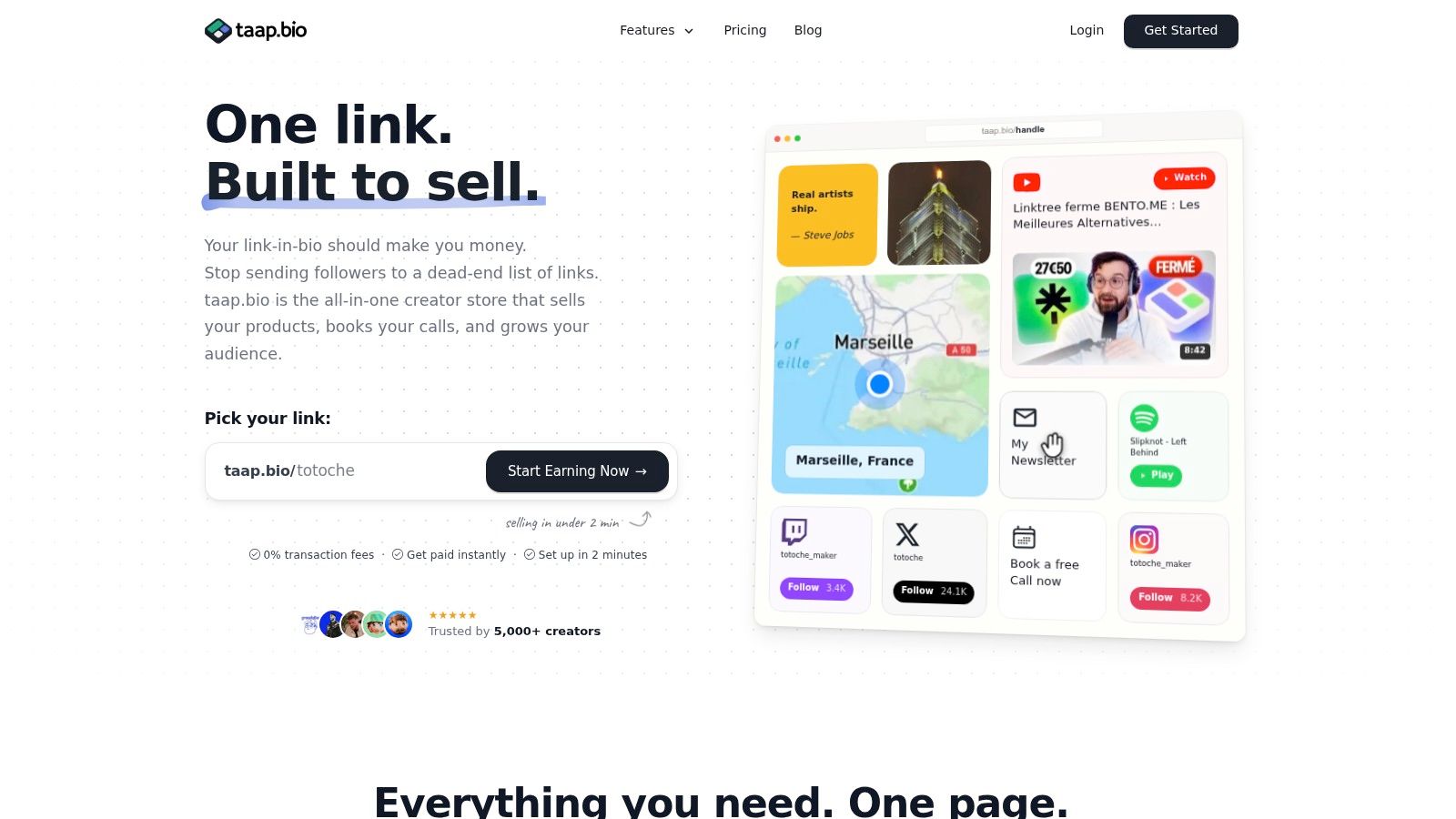
The publisher's own creator storefront combines a drag-and-drop bento page, built-in checkout, instant digital file delivery, paid bookings, email capture, and widget analytics. It states that creators keep 0% platform fees on every sale, offers $19 per month after a 14-day trial, and hosts data in France with GDPR-friendly settings. Verify current pricing and terms before choosing it or another platform.
Use Amazon for discovery, direct sales for depth
Consider a productivity author with a KDP guide, editable planning templates, and paid setup sessions. KDP can help readers discover the guide. The templates need delivery that preserves editability and provides usage instructions. The sessions need scheduling, payment, and a way to confirm what the customer purchased. A single book listing cannot handle those jobs without weakening the buying experience.
The same division applies to courses. A course may include video, worksheets, a community, updates, and live support. Amazon may suit an introductory book that attracts interested readers, while the complete system belongs in a platform that controls access, delivery, and follow-up.
Direct selling also reduces dependence on one marketplace. You can revise the offer, test a bundle, contact previous buyers with permission, and explain updates without waiting for a listing to support every change. Amazon remains useful for products that match its formats and search behavior. For editable, service-led, or frequently updated products, direct distribution is often the cleaner channel.
Choosing Your Distribution Strategy
Choose the channel by asking what the buyer must do after payment.
If the buyer wants to read a book, start with KDP. Amazon's Kindle ecosystem has global reach, subscription reading, and a mature self-publishing pipeline, including reported annual royalties of over $520 million paid to more than 1 million self-publishing authors in earlier reporting. Those figures show the scale of the publishing ecosystem, not a guarantee for an individual title.
If the buyer wants to listen, investigate the appropriate audiobook route. If they want to install software, evaluate the Appstore and commit to ongoing maintenance. If they want to watch video, check the current eligibility of the relevant Amazon video program.
If the buyer wants to download, edit, print, customize, or revisit a file, compare a direct creator store before attempting to force the product into KDP. That includes planners, templates, Notion systems, spreadsheets, presets, and niche toolkits.
Use this decision checklist:
- Need marketplace discovery: Choose Amazon when your audience actively searches there for the format you publish.
- Need format control: Choose direct delivery when the product depends on editable files, bundles, licenses, or updates.
- Need customer ownership: Choose a store with email capture and buyer access when follow-up sales matter.
- Need service integration: Choose a platform that connects checkout with paid bookings if implementation support is part of the offer.
- Need a hybrid presence: Publish the book, app, audio, or eligible video on Amazon and keep file-first products in your direct store.
The most resilient strategy is often hybrid. Amazon handles formats it was built to distribute, while a creator-owned storefront handles products that need flexibility, direct delivery, and stronger unit economics. The important decision isn't whether Amazon is good or bad. It's whether the product, buyer expectation, and channel actually fit.
If you're selling templates, planners, ebooks, or other file-based products, taap.bio provides a creator storefront with built-in checkout, instant digital delivery, paid bookings, email capture, and analytics from one page. Visit it to compare a direct sales route with Amazon's channel-specific model before you invest more time in formatting the wrong asset.