You've poured your heart and expertise into creating a valuable digital product-an ebook, a course, a preset pack, or a software tool. Now comes the critical next step: choosing the right platform to sell it. The marketplace is crowded, and the sheer number of options can be paralyzing. How do you pick the one that aligns with your business goals, technical skills, and budget without getting bogged down in endless research?
This guide is your definitive resource for navigating that decision. We've meticulously analyzed the best platforms for selling digital products, cutting through the marketing noise to give you a clear, actionable comparison. Whether you're a seasoned creator looking to scale or a freelancer making your first sale, the platform you choose is the foundation of your digital storefront. It handles everything from payment processing and file delivery to customer management, so making the right choice from the start is crucial for long-term success.
Inside, you'll find detailed breakdowns of 12 top-tier options, complete with screenshots, fee structures, and honest assessments of their pros and cons. We'll explore who each platform is truly built for, from simple "buy button" solutions like Gumroad to all-in-one powerhouses like Kajabi. For a comprehensive overview of your options, an expert review outlines the 12 Best Platforms to Sell Digital Products in 2026, providing another valuable perspective. Our goal is to equip you with the insights needed to select a platform confidently, set up your store efficiently, and start generating revenue from your creations. Let's find the perfect home for your work.
Table of contents
1. Gumroad
Gumroad has long been the go-to platform for creators seeking simplicity and speed, making it one of the best platforms for selling digital products without a steep learning curve. Its core strength lies in its "creator-first" ethos, stripping away the technical complexities of e-commerce so you can upload a product and start selling in minutes. The platform acts as the Merchant of Record (MoR) as of January 1, 2025, which means it handles the intricate and often frustrating process of collecting and remitting global sales tax and VAT on your behalf.
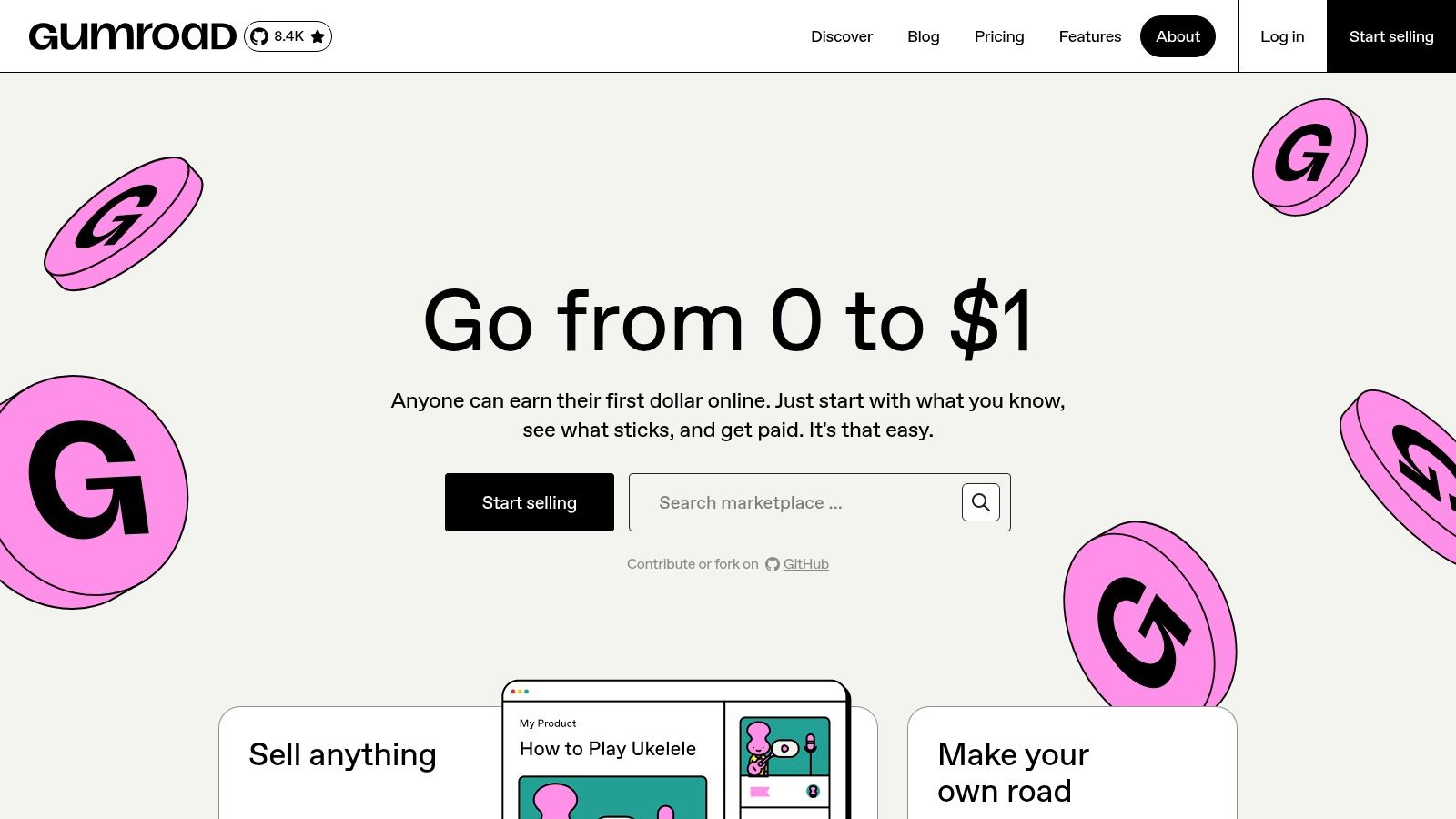
This MoR status is a game-changer for solo creators who don't want to become tax experts. You simply create your product page, set a price, and share the link. Gumroad’s interface is clean and intuitive, supporting one-off sales, subscriptions, and memberships with minimal setup. Furthermore, its optional Discover marketplace can provide a built-in traffic source, exposing your products to new audiences and potentially driving incremental sales you wouldn't have otherwise captured.
Key Details & Use Cases
- Best For: Solo creators, artists, and writers with a small catalog who want the fastest path from idea to sale. It's ideal for selling e-books, presets, templates, and simple courses.
- Fees: Gumroad charges a 10% flat fee on each sale. This is higher than some competitors but includes payment processing and all platform features without a monthly subscription.
- Limitations: The trade-off for simplicity is limited customization. Your storefront and product pages will have a distinct Gumroad feel, which may not suit brands wanting a unique, fully-branded experience.
For creators looking to centralize their links, a Gumroad store pairs exceptionally well with a tool like Taap.bio. You can feature your top Gumroad products directly on your Taap.bio page, creating a seamless path for your audience to discover and purchase. This strategy leverages Gumroad's powerful, simple checkout while using Taap.bio as your central hub, a tactic common among the best tools for content creators.
2. Lemon Squeezy
Lemon Squeezy has emerged as a powerhouse for software developers and sophisticated digital creators, positioning itself as one of the best platforms for selling digital products with built-in global compliance. Its primary differentiator is its role as a Merchant of Record (MoR), which absolves sellers from the complexities of managing global sales tax, EU VAT, and fraud prevention. The platform is engineered to handle everything from simple digital downloads to complex software-as-a-service (SaaS) subscriptions and license key management.
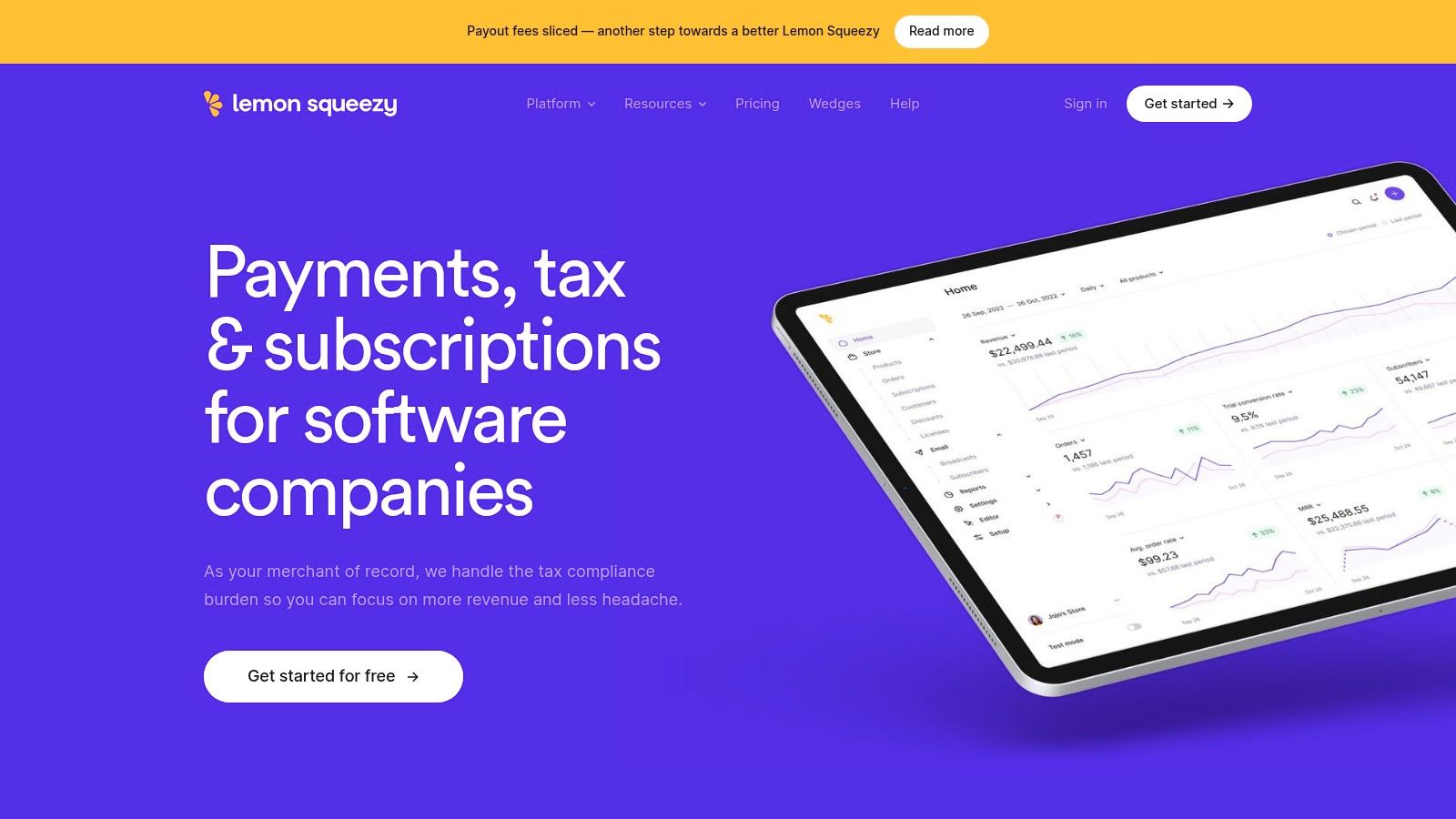
This comprehensive, all-in-one approach allows businesses to scale internationally without needing a dedicated finance team to handle tax remittance. Lemon Squeezy provides both developer-friendly APIs and simple, no-code checkout embeds, making it adaptable for various technical skill levels. Whether you're selling a one-off Notion template or launching a full-fledged SaaS product, the platform provides the infrastructure to support your growth, handling payments, taxes, and compliance so you can focus entirely on your product.
Key Details & Use Cases
- Best For: SaaS businesses, software developers, and creators selling high-value digital products who need robust subscription management and automated global tax compliance.
- Fees: A standard plan charges 5% + 50¢ per transaction. Additional small fees may apply for specific payment methods like PayPal or for international transactions.
- Limitations: The per-transaction fee structure, while transparent, can become more expensive than self-managed payment stacks for businesses operating at a very high volume. The platform is also more feature-rich than a simple creator might need.
3. Payhip
Payhip is a powerful and versatile platform that stands out by offering a comprehensive suite of e-commerce tools with a generous free-forever plan. It empowers creators to sell digital downloads, courses, coaching, and memberships from a customizable storefront without any upfront costs. A key differentiator is its handling of digital sales tax, including EU and UK VAT, which it manages on behalf of sellers. This feature alone makes it one of the best platforms for selling digital products to a global audience without the administrative headache.
Payhip gives you the autonomy of a full website builder, allowing for much deeper brand customization than many competitors. You can connect a custom domain and design a storefront that truly reflects your brand's identity. It also includes built-in marketing features like affiliate programs, coupons, and email marketing integrations, providing a complete ecosystem to not just sell products but also to grow your business effectively. Payouts are instant via Stripe or PayPal, giving you immediate access to your earnings.
Key Details & Use Cases
- Best For: Creators who want a feature-rich, all-in-one solution without a mandatory monthly fee. It's excellent for those who plan to scale from selling a few downloads to offering courses and memberships.
- Fees: Payhip offers a tiered fee structure. The free plan has a 5% transaction fee, while paid plans at $29/month and $99/month reduce this to 2% and 0% respectively. Standard Stripe/PayPal processing fees also apply.
- Limitations: The 5% fee on the free plan can be higher than some alternatives for high-volume sellers. Additionally, your ability to sell is tied to Stripe and PayPal's regional availability.
4. Sellfy
Sellfy is an excellent all-in-one platform for creators who want the power of a dedicated e-commerce store without the technical overhead. It stands out by offering a subscription-based model with zero platform transaction fees, making it one of the best platforms for selling digital products if you anticipate a high volume of sales. Creators can sell unlimited digital products, physical goods, subscriptions, and even print-on-demand merchandise from a single, polished storefront.
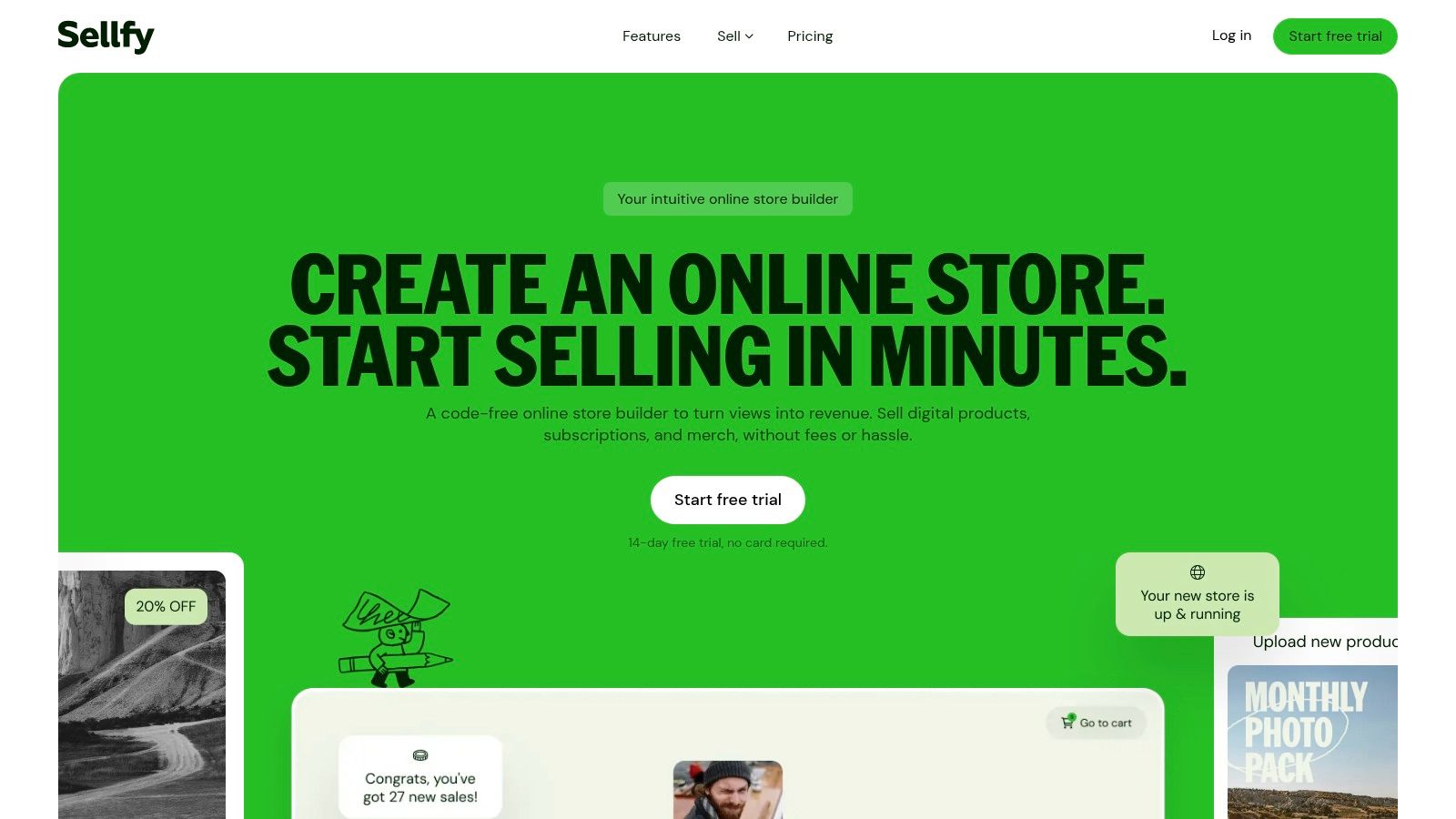
Unlike platforms that take a percentage of each sale, Sellfy's fixed monthly fee allows for more predictable earnings as your business grows. The platform also includes powerful built-in marketing tools, such as discount codes, email marketing, and cart abandonment features on its higher-tier plans. This integrated approach helps you convert more visitors into customers directly within the Sellfy ecosystem, eliminating the need for multiple third-party tools and simplifying your workflow.
Key Details & Use Cases
- Best For: Established creators and businesses with consistent monthly sales who want to maximize their revenue by avoiding transaction fees. It's ideal for selling courses, software, design assets, and print-on-demand items.
- Fees: Starts with a monthly subscription (e.g., the Starter plan is $29/month). There are no Sellfy transaction fees, but standard Stripe and PayPal processing fees still apply. Plans are tiered based on your annual sales revenue.
- Limitations: The monthly subscription can be a barrier for creators just starting out or those with inconsistent income. The most valuable marketing features, like upsells and cart recovery, are locked behind the more expensive Business and Premium plans.
5. Shopify (with Digital Downloads app)
For creators who envision a full-fledged brand and not just a product, Shopify offers an enterprise-grade solution that scales from a simple digital storefront to a complex e-commerce empire. While known for physical goods, it is one of the best platforms for selling digital products when paired with its free Digital Downloads app or more robust third-party alternatives. This approach provides unparalleled control over your brand identity, checkout experience, and customer journey.

Unlike simpler platforms, Shopify is a complete website builder with a vast ecosystem of themes and apps. You can sell digital downloads, courses, and software alongside physical merchandise in a single, unified cart. This makes it ideal for established brands or creators with a long-term vision for a diverse product catalog. Beyond initial sales, cultivating a loyal customer base is vital. You can learn how to improve customer retention for Shopify stores to ensure long-term success with your digital offerings.
Key Details & Use Cases
- Best For: Established creators, businesses with mixed physical and digital inventories, and anyone wanting maximum brand control and scalability. It's perfect for selling software, extensive course libraries, and high-value digital assets.
- Fees: Starts with a monthly subscription (e.g., Basic at $29/mo) plus payment processing fees (starting at 2.9% + 30¢ for online transactions via Shopify Payments).
- Limitations: The power comes with complexity and cost. It requires more setup than creator-first platforms, and the free Digital Downloads app is basic; many creators upgrade to paid apps for features like PDF stamping or license key generation.
Shopify’s robust customization means you can fine-tune your product pages for maximum impact, a crucial step in improving conversion rates on your landing pages. For creators using Taap.bio, you can link directly to individual Shopify product pages, funneling your social media audience to a highly-optimized and fully-branded purchasing environment.
6. WooCommerce (WordPress)
For creators who demand complete control and ownership over their digital storefront, WooCommerce is the undisputed champion. As a free, open-source plugin for WordPress, it transforms a standard website into a powerful e-commerce engine, making it one of the best platforms for selling digital products with limitless customization. Unlike hosted platforms, WooCommerce gives you full authority over your hosting, design, branding, and customer data, ensuring your business is built on your own terms without platform-imposed limitations.
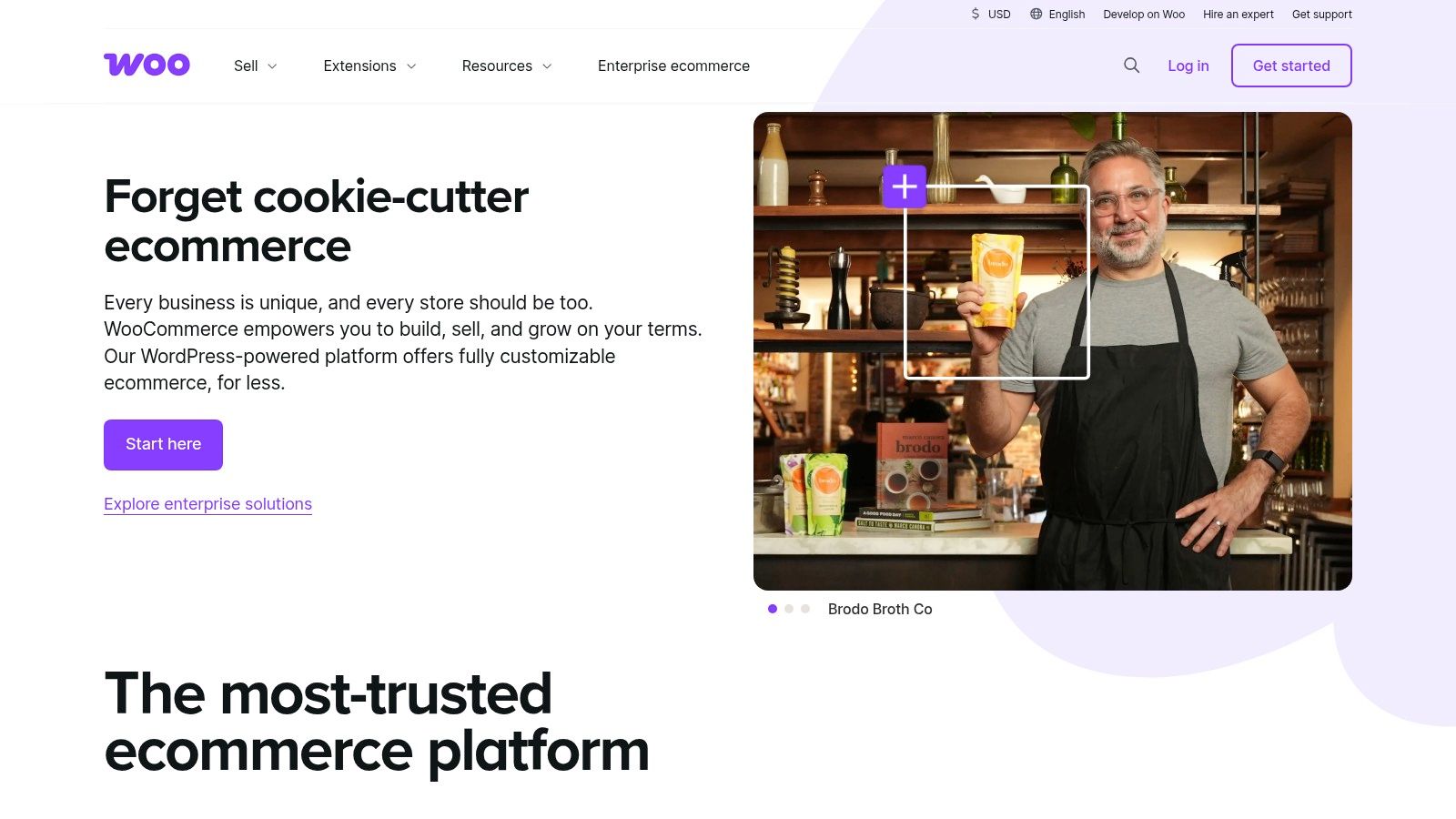
This level of control is its core strength. You can design a completely unique customer experience and extend functionality with a massive library of both free and paid extensions. Whether you need to sell subscriptions, manage software licenses, or offer tiered memberships, there is an extension to meet your needs. While this requires a more hands-on approach to managing hosting and security, the payoff is a scalable, future-proof platform that grows with your business and is entirely yours.
Key Details & Use Cases
- Best For: Entrepreneurs and established businesses who want to build a fully-branded e-commerce presence and own their entire tech stack. It's perfect for complex digital product stores with diverse offerings like software, extensive course libraries, and membership sites.
- Fees: The core WooCommerce plugin is free. Costs come from web hosting, your domain name, and any premium extensions or themes you choose to purchase. Payment processing fees (e.g., via WooPayments, Stripe, or PayPal) also apply.
- Limitations: The primary downside is the technical responsibility. You are in charge of your own hosting, security updates, and maintenance. The initial setup is more involved than all-in-one platforms, and costs can accumulate with premium extensions.
For those using WordPress and WooCommerce, a well-designed link in bio for ecommerce page is essential. You can use a tool like Taap.bio to create a beautiful, mobile-friendly hub that directs followers to your key products, special offers, or category pages, effectively bridging the gap between social media and your self-hosted store.
7. Squarespace
Squarespace is the premier all-in-one website builder for creators who prioritize design and a seamless brand experience. While known for its stunning portfolio and blog templates, it has evolved into one of the best platforms for selling digital products by integrating e-commerce directly into its core offering. Its strength lies in providing a single, beautifully designed hub where you can host your website, sell digital downloads, manage memberships, and even offer courses without needing third-party tools.
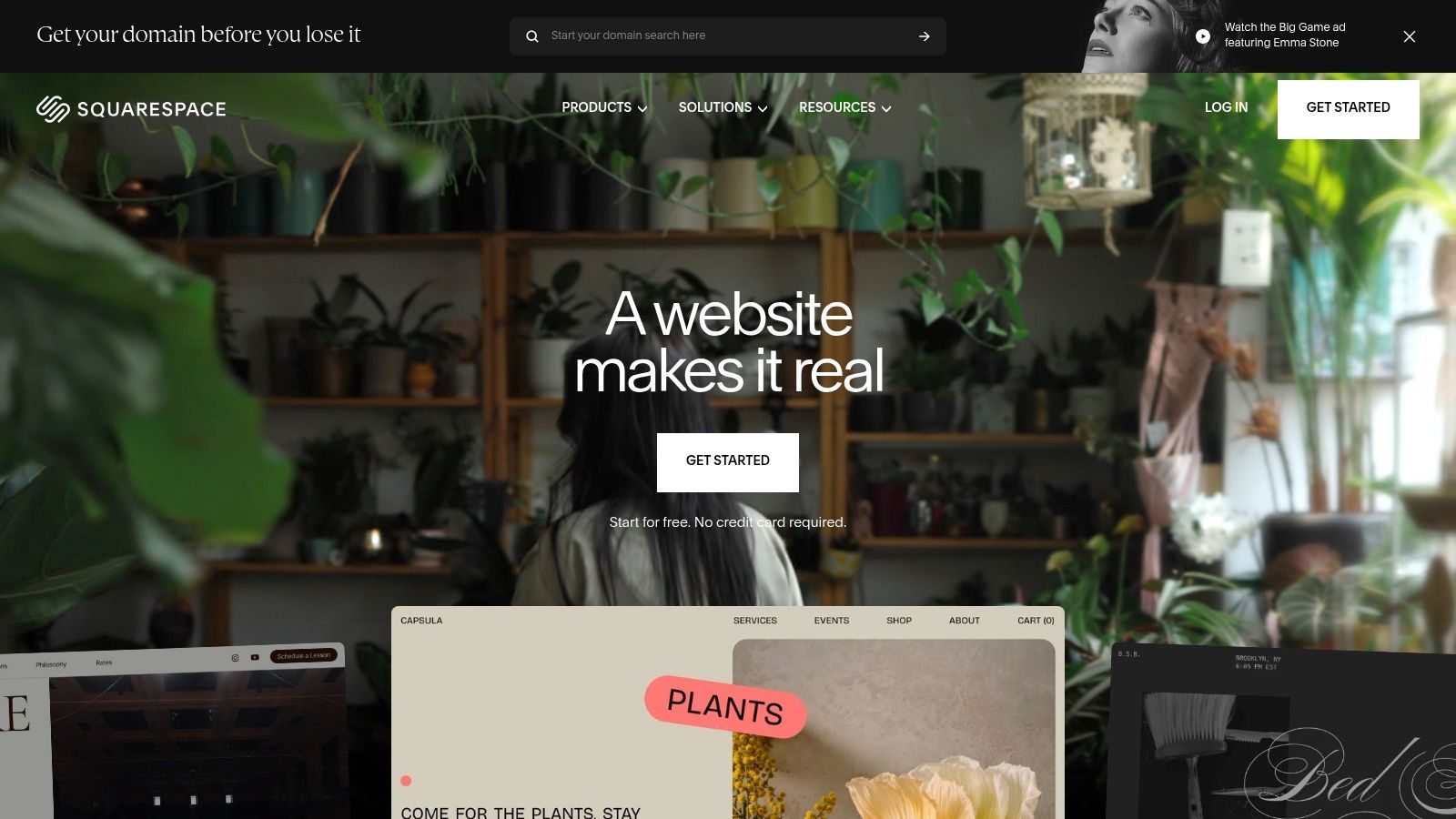
The platform is ideal for creators who want their digital product storefront to feel like an integral part of their main website, not a separate, bolted-on page. With Squarespace, you can sell downloadable files, paywalled blog content, videos, and access to exclusive member areas. The drag-and-drop builder makes it easy for non-technical users to create a professional-looking site, and built-in analytics and email marketing tools provide everything needed to grow your digital business under one roof.
Key Details & Use Cases
- Best For: Photographers, designers, coaches, and bloggers who want a polished, all-in-one website with integrated e-commerce capabilities. It's excellent for selling presets, design templates, and exclusive member content.
- Fees: Squarespace requires a Business plan or higher for e-commerce. Transaction fees are 3% on the Business plan but drop to 0% on Commerce plans. Plans start at $23/month (billed annually).
- Limitations: The platform imposes file size limits on digital product uploads, which can be a hurdle for creators selling large files like video courses or high-resolution asset packs. In these cases, you may need to host large files externally and provide a download link.
8. Podia
Podia is designed as an all-in-one digital storefront for creators who want to minimize tool sprawl and manage their entire business from a single dashboard. Its core value proposition is bundling a website builder, email marketing, and product hosting into one cohesive platform, making it one of the best platforms for selling digital products like online courses, memberships, and digital downloads without needing multiple subscriptions. This integrated approach simplifies the tech stack, allowing you to focus on creating content rather than connecting disparate tools.
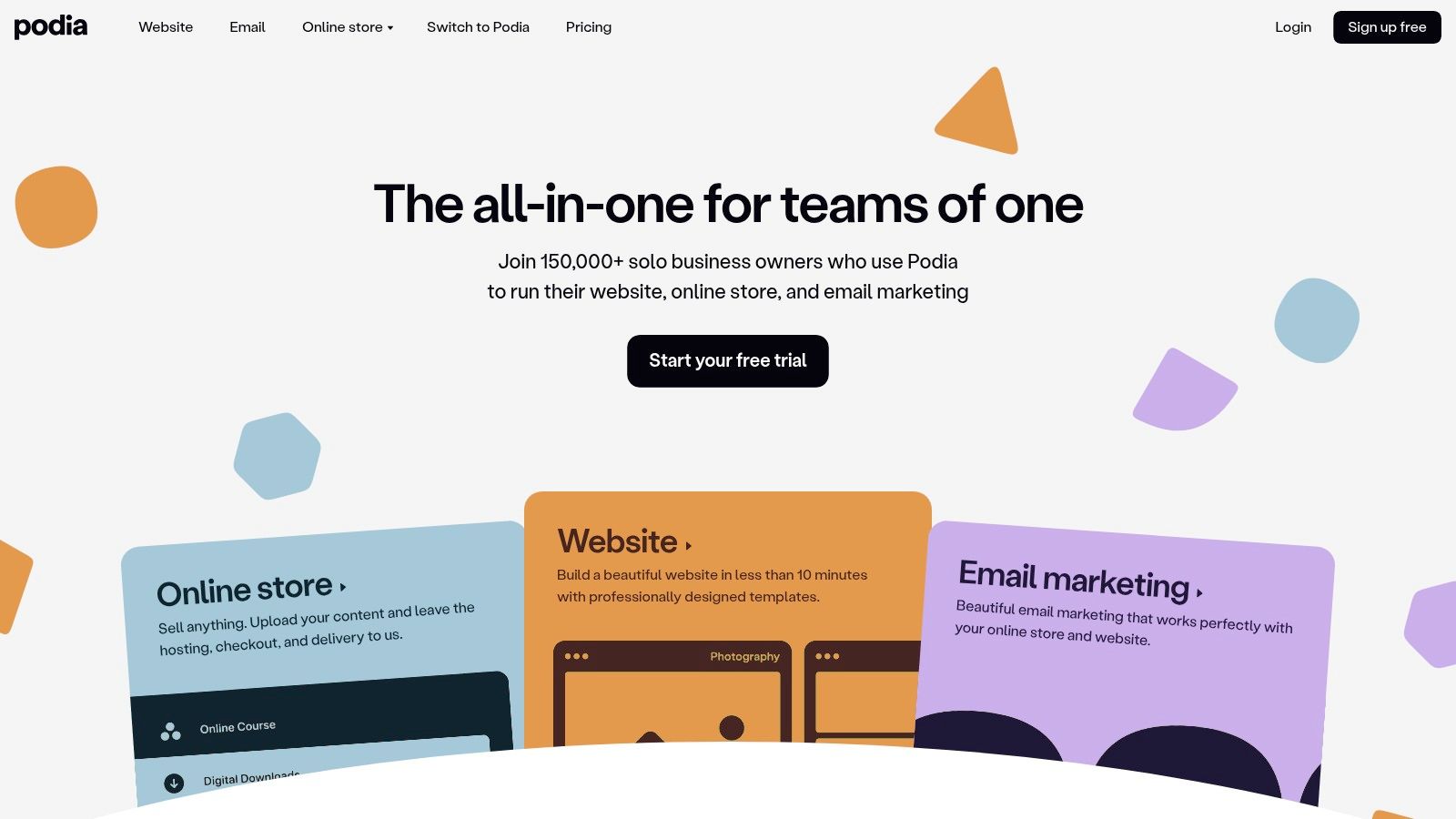
The platform is exceptionally intuitive, enabling a quick launch for even non-technical users. You can create a full-fledged website, build landing pages, send newsletters, and sell your products using a clean, streamlined interface. While it may not offer the deep customization of a full CMS, its website builder is more than capable for most creators' needs, functioning much like a dedicated no-code landing page builder. This makes Podia a powerful yet user-friendly choice for centralizing your digital product ecosystem.
Key Details & Use Cases
- Best For: Coaches, educators, and course creators who need an integrated solution for selling courses, memberships, and coaching sessions alongside digital downloads.
- Fees: Starts with a free plan (10% transaction fee). Paid plans begin at $33/month (billed annually) with lower transaction fees. The popular Mover plan has a 5% transaction fee, while the Shaker plan removes it entirely.
- Limitations: Key features like affiliate marketing, embedded checkout, and PayPal integration are locked behind the more expensive Shaker plan. The website builder, while easy to use, is less flexible than platforms like WordPress or Webflow.
9. Teachable
Teachable has established itself as a premier destination for course creators, making it one of the best platforms for selling digital products when education is at the core of your business. Its strength lies in providing a robust, student-focused learning environment with features like quizzes, certificates, and content dripping. The platform is designed to help you build a professional-looking online school, handling everything from hosting and payment processing to student management.
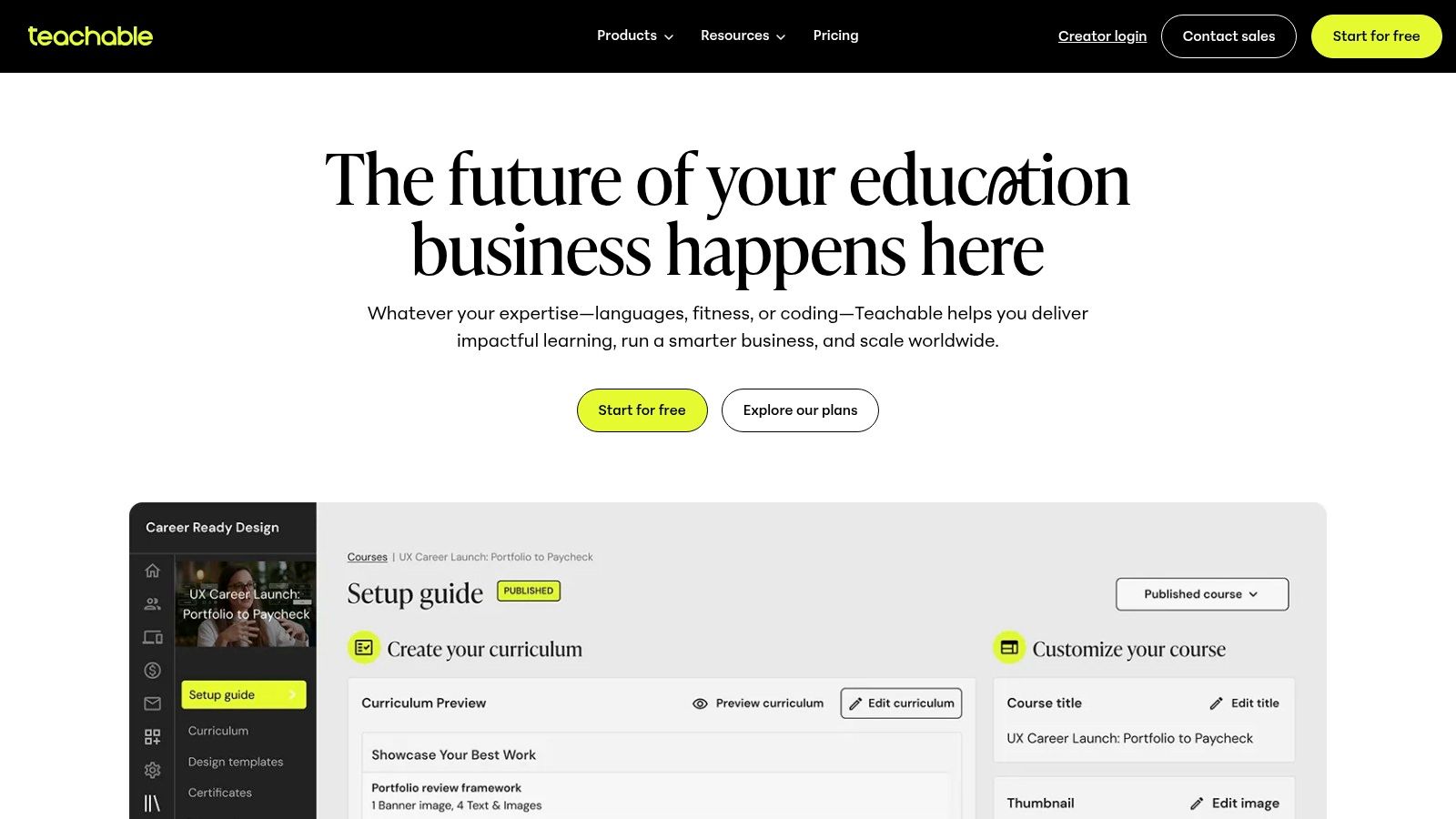
Unlike simpler platforms, Teachable offers advanced features that support a scalable education business, including affiliate marketing tools, detailed analytics, and integration capabilities. It handles complex VAT and sales tax collection, which is a significant relief for creators selling to a global audience. While it also supports digital downloads and coaching sessions, its true power is unlocked when building and delivering comprehensive courses with a polished student experience.
Key Details & Use Cases
- Best For: Educators, coaches, and experts who want to sell in-depth courses and build a dedicated online school. It's perfect for structured learning programs with multiple modules.
- Fees: Plans start with a 7.5% base transaction fee on the Starter plan. Higher-tier plans (Builder, Growth, Advanced) offer 0% base transaction fees, though standard payment processing fees still apply.
- Limitations: The platform’s structure is heavily optimized for courses, making it less flexible if you primarily sell standalone digital downloads like e-books or templates. The entry-level plan's transaction fee is a notable consideration for new creators.
10. Kajabi
Kajabi is the premium, all-in-one solution for established creators and businesses looking to build an entire digital empire, not just sell a single product. It moves beyond simple checkout pages to offer a fully integrated suite of tools for courses, communities, coaching, and memberships. Its core strength is combining product delivery with powerful marketing automation, including email campaigns, sales funnels, and advanced analytics, all under one roof.
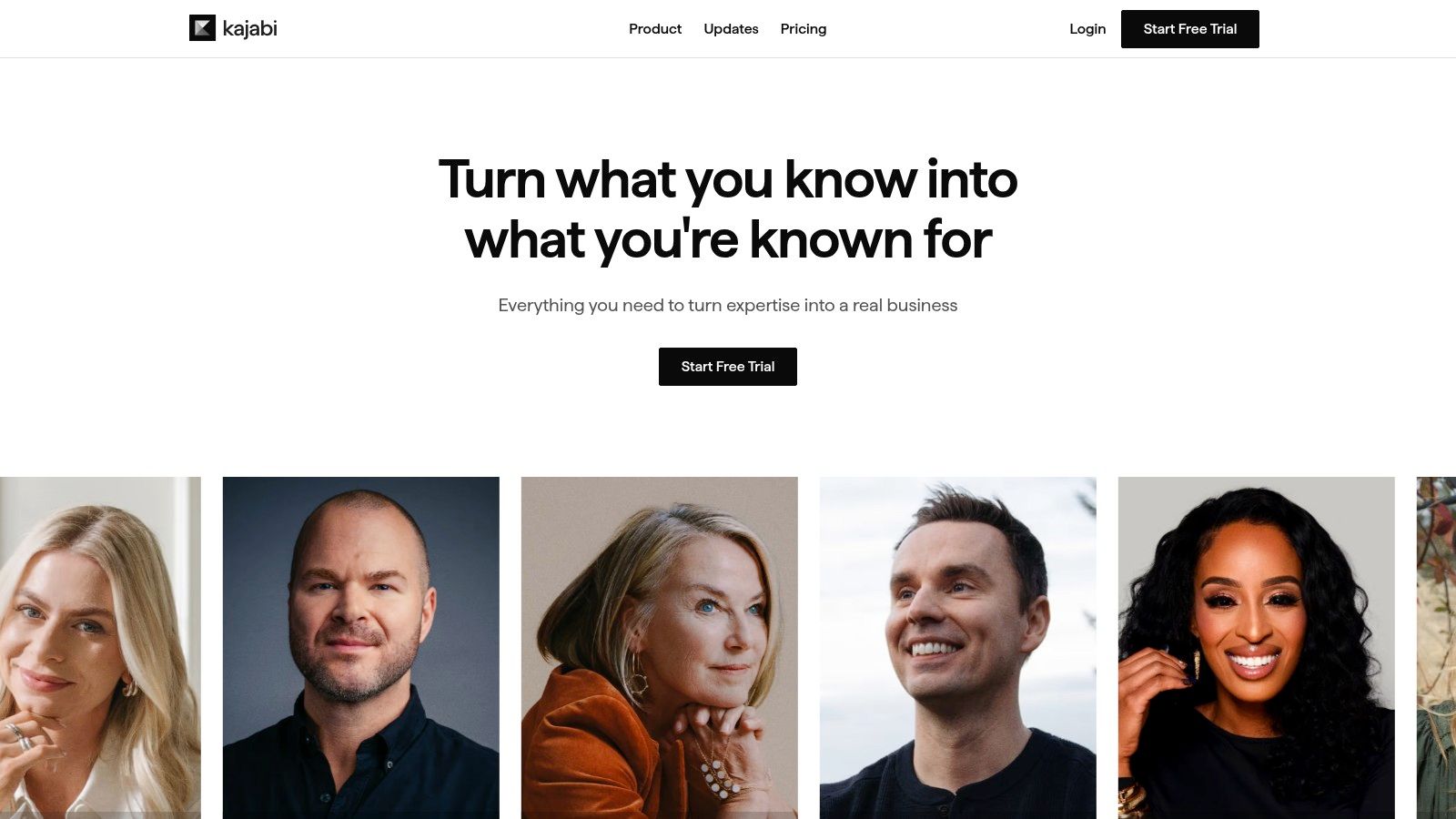
This enterprise-grade approach makes it one of the best platforms for selling digital products when scale and sophistication are required. Instead of stitching together separate tools for your website, email list, and course hosting, Kajabi consolidates them into a single, cohesive system. With features like its native mobile app for communities and courses, you can offer a premium, seamless experience to your audience, justifying a higher price point for your offerings.
Key Details & Use Cases
- Best For: Serious entrepreneurs, educators, and teams who are scaling their online business and need an integrated solution for marketing, sales, and content delivery. It's ideal for high-ticket courses, memberships, and coaching programs.
- Fees: Kajabi operates on a monthly subscription model, starting at $149/month (or $119/month billed annually). Transaction fees vary depending on whether you use the built-in Kajabi Payments or a third-party gateway like Stripe/PayPal.
- Limitations: The premium price point makes it inaccessible for beginners or creators with a small product catalog. The all-in-one nature means you are locked into its ecosystem, which can feel restrictive if you prefer best-in-class tools for specific functions like email marketing.
11. Etsy (Digital Downloads)
While known for handmade physical goods, Etsy has carved out a massive niche as one of the best platforms for selling digital products, especially for creators targeting consumer trends. Its primary advantage is access to a huge, built-in marketplace of buyers actively searching for products like planners, templates, and digital art. Instead of building an audience from scratch, you can leverage Etsy's powerful search engine and existing customer base to find your first buyers.
The platform handles the instant delivery of digital files upon purchase, making the process seamless for both you and the customer. You can upload up to five files per listing, which is perfect for offering different formats or bundles. For artists and designers, Etsy provides an unparalleled opportunity to capitalize on seasonal trends and popular aesthetics, turning creative skills into a passive income stream without the need for a standalone website.
Key Details & Use Cases
- Best For: Artists, designers, and creators making trend-driven products like digital planners, social media templates, Procreate brushes, and printable wall art.
- Fees: Etsy's fees are layered. Expect a $0.20 USD listing fee, a 6.5% transaction fee, a payment processing fee (varies by country), and a potential Offsite Ad fee of 12-15% if a sale is attributed to an external ad.
- Limitations: The fee structure can become complex and eat into margins. You are also competing directly with thousands of other sellers on the same platform, making it difficult to stand out without strong branding and Etsy-specific SEO knowledge.
For creators focused on visual products, promoting your Etsy store on a Taap.bio page can direct your social media audience to a curated gallery of your best work. This is a common strategy for those learning how to sell art online, as it combines Etsy’s marketplace power with a personalized, branded hub.
12. itch.io
For indie game developers, comic creators, and artists, itch.io stands out as one of the best platforms for selling digital products to a passionate, built-in community. It has carved a unique niche by focusing on creative freedom and an unparalleled creator-friendly business model. Its most compelling feature is its "open revenue sharing" system, where you, the creator, decide what percentage of a sale goes to the platform, with a suggested default of 10%.
This pay-what-you-want model empowers creators in a way no other platform does. Beyond games, itch.io is an excellent home for asset packs, tools, soundtracks, and digital zines. The platform provides customizable storefront pages, community forums, and the ability to participate in game jams and site-wide sales, which can significantly boost visibility. The audience is highly engaged and actively looking to discover and support independent creators, making it a powerful ecosystem for the right kind of digital product.
Key Details & Use Cases
- Best For: Indie game developers, tool creators, musicians selling soundtracks, and artists selling digital comics, zines, or asset packs.
- Fees: A flexible, "open revenue sharing" model. Creators choose the platform's cut (from 0% to 100%), with a default of 10%. Standard payment processor fees (Stripe/PayPal) also apply.
- Limitations: The platform’s audience is heavily skewed towards gaming and related creative fields. If your products fall outside this niche, you may struggle to gain traction compared to more generalized marketplaces.
Top 12 Digital Product Platforms: Comparison
| Platform | Core features | UX / Quality ★ | Value & Pricing 💰 | Target audience 👥 | Unique selling points ✨🏆 |
|---|---|---|---|---|---|
| Gumroad | MoR checkout, digital downloads, subscriptions, hosted pages | ★★★★☆ (4/5) | 💰 MoR (tax handling); higher platform fee | 👥 Solo creators, sellers of lightweight catalogs | ✨ Fast setup & payouts; 🏆 Discover marketplace exposure |
| Lemon Squeezy | MoR, SaaS billing, licenses, dev API & embeds | ★★★★☆ (4/5) | 💰 Per-transaction fees; tax/fraud bundled | 👥 SaaS makers, dev-forward sellers | ✨ Developer APIs + global tax/fraud automation |
| Payhip | Storefront, courses, memberships, Stripe/PayPal | ★★★½ (3.5/5) | 💰 Free tier; platform fee on lower plans | 👥 Beginners, price-sensitive creators | ✨ All features on every plan; instant payouts |
| Sellfy | Hosted store (digital+physical), subscriptions, marketing | ★★★½ (3.5/5) | 💰 Subscription pricing (no platform fees) | 👥 Small shops needing hosted storefront | ✨ Unlimited products; built-in upsells & recovery |
| Shopify (Digital Downloads) | Full ecommerce, themes, app ecosystem, digital app | ★★★★☆ (4/5) | 💰 Monthly + card fees; app costs possible | 👥 Scale-up shops mixing digital + physical | ✨ Enterprise reliability; massive app marketplace 🏆 |
| WooCommerce (WP) | Open-source plugin, extensions for downloads & subs | ★★★★☆ (4/5) | 💰 Core free; hosting/dev costs apply | 👥 Owners wanting full control & data | ✨ Total customization & ownership |
| Squarespace | Drag-and-drop sites, templates, digital products | ★★★★☆ (4/5) | 💰 All-in-one plans; upload limits may apply | 👥 Creators prioritizing design & simplicity | ✨ Beautiful templates; easy maintenance |
| Podia | Courses, memberships, downloads, email & pages | ★★★★☆ (4/5) | 💰 Monthly plans; transparent pricing (some fees) | 👥 Creators wanting all-in-one simplicity | ✨ Quick launch + integrated email/checkout |
| Teachable | Course delivery, coaching, student apps, tax handling | ★★★★☆ (4/5) | 💰 Tiered fees (some plans 0% base fee) | 👥 Course creators & educators | ✨ Mature student UX; strong course tools 🏆 |
| Kajabi | Premium all-in-one: courses, funnels, automations | ★★★★☆ (4/5) | 💰 Higher monthly pricing; enterprise features | 👥 Established creators/teams scaling products | ✨ Built-in funnels, automations & analytics 🏆 |
| Etsy (Digital) | Marketplace listings, instant download delivery | ★★★★☆ (4/5) | 💰 Listing + 6.5% txn + processing; Offsite Ads add fees | 👥 Sellers of templates, art, printables | ✨ Massive buyer demand & native SEO reach |
| itch.io | Indie marketplace, flexible revenue split, community | ★★★★☆ (4/5) | 💰 Creator sets platform cut (very flexible) | 👥 Indie game devs, niche digital creators | ✨ Creator-first revenue model; strong niche community |
Unifying Your Digital Storefront with Taap.bio
Navigating the landscape of the best platforms for selling digital products can feel overwhelming. We've journeyed through a comprehensive list, from the creator-first simplicity of Gumroad and Payhip to the all-in-one e-commerce powerhouses like Shopify and Kajabi. Each platform offers a unique blend of features, fee structures, and user experiences tailored to different creative and entrepreneurial needs.
Your final choice isn't about finding a single, universally "perfect" platform. Instead, it’s about identifying the one that aligns most closely with your specific goals, technical comfort level, and business model. The ideal solution for a course creator selling high-ticket educational programs (like Kajabi) is vastly different from that of an artist selling digital prints and Procreate brushes (like Etsy or Gumroad).
From Analysis to Action: Your Next Steps
The critical takeaway is that your product's success hinges on strategic alignment. Before you commit, revisit your core objectives. Are you prioritizing ease of use and low upfront costs, or do you require robust marketing automation and scalability? Your answer to this fundamental question is the compass that will guide your decision.
To move forward with confidence, follow this actionable framework:
- Define Your Core Product: Is it a one-off eBook, a recurring membership, a complex software tool, or a large video course? The nature of your product will immediately narrow down your options. For instance, Podia excels with memberships and courses, while Lemon Squeezy is built to handle software licensing seamlessly.
- Calculate Your True Costs: Look beyond the monthly subscription fee. Factor in transaction percentages, payment processor fees (like Stripe or PayPal), and potential costs for essential apps or plugins. A "free" platform like Payhip might be more profitable for low-volume sellers than a platform with a monthly fee but lower transaction costs.
- Evaluate the Customer Experience: How will your buyers discover, purchase, and access your digital product? Platforms like Sellfy and Podia offer a clean, branded storefront and a smooth checkout process. In contrast, a self-hosted solution like WooCommerce offers unlimited customization but requires you to manage the entire experience yourself.
The Central Hub Strategy: Why a Unified Link Matters
As a modern creator, your digital presence is likely fragmented. You have your products on Gumroad, your portfolio on another site, your social media profiles, and maybe a newsletter. This is where the true challenge lies: directing your audience to the right place without causing confusion or drop-off. This is especially critical for those migrating from a centralized platform like Bento.me, who are now faced with managing multiple disparate links.
This is precisely why a "link-in-bio" tool is no longer just a list of links; it’s your digital headquarters. A tool like Taap.bio allows you to consolidate your entire digital ecosystem into a single, beautifully designed, and easily accessible landing page. Instead of forcing your audience to hunt for your products, you present them with a cohesive brand experience.
You can feature your latest eBook from Payhip, link to your course on Teachable, showcase your digital art from Etsy, and collect email sign-ups all from one URL. This unified storefront approach simplifies your marketing, strengthens your brand identity, and, most importantly, reduces the friction for a potential customer to make a purchase. By choosing the right e-commerce backend and pairing it with a powerful front-facing hub, you create an unstoppable combination for digital sales.
Ready to unify your digital world and create a stunning, high-converting storefront for all your products and links? taap.bio provides the elegant, powerful hub you need to bring your entire creative business together under one link. Start building your free, beautiful, and centralized digital presence today at taap.bio.