

Most YouTube subscriber advice is lazy. It tells creators to upload more, chase trends, cut everything into Shorts, and hope the algorithm notices.
That approach burns people out.
If you want to know how to grow youtube channel subscribers, stop thinking like a poster and start thinking like an operator. Subscriber growth comes from four things working together: clear positioning, strong long-form videos, tight discovery signals, and a system that turns attention into a repeatable audience engine. If you also sell products, coaching, memberships, or services, subscriber growth can't live in a silo. It has to support the whole business.
The channels that grow fastest usually aren't doing more. They're doing fewer things with more intent. They know exactly who they're for, they publish videos that earn attention over time, and they remove friction everywhere a viewer might decide whether to subscribe or leave.
Table of contents
Define Your Niche and Ideal Subscriber
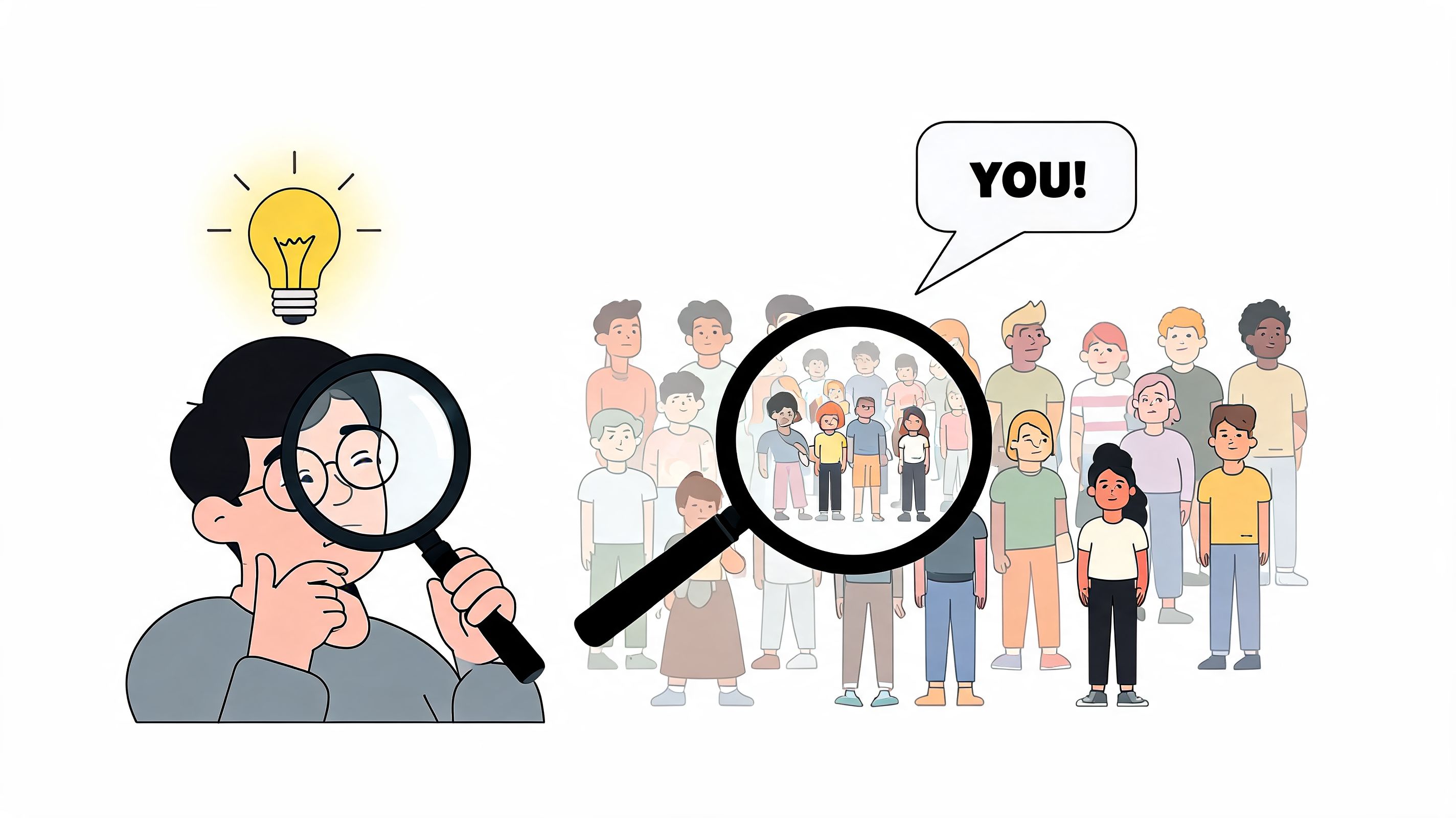
A lot of creators pick a niche backwards. They start with what they want to talk about, then force an audience around it. That usually creates scattered videos, weak positioning, and subscribers who don't know what to expect next.
A better approach is to build from your Zone of Genius. That means finding the overlap between three things:
- What you can teach or show with authority
- What people actively look for
- What can lead to a real business outcome
Find the overlap, not just the passion
Passion matters, but it isn't enough. Plenty of creators are passionate about topics that are too broad, too vague, or too difficult to monetize.
Use a simple filter:
| Question | Weak answer | Strong answer |
|---|---|---|
| What do you know well? | "Fitness" | "Strength training for busy parents" |
| What problem do you solve? | "Help people get healthy" | "Help beginners stop wasting time in the gym" |
| Why would someone subscribe? | "I share tips" | "I make training simpler, cheaper, and easier to stick to" |
Then validate it in practice. Search your topic on YouTube and look at autocomplete. Check Google Trends to see whether interest is stable or seasonal. Study competitor channels and ignore vanity signals. Focus on what formats they repeat, what questions show up in comments, and which promises appear in their titles over and over.
Practical rule: If you can't describe your channel's promise in one sentence, viewers won't understand why they should subscribe.
Build the subscriber profile before the content plan
Your ideal subscriber isn't "anyone interested in my topic." That's too loose. Define a specific person with a specific frustration.
A useful way to sharpen that thinking is to borrow from audience strategy frameworks like this ideal customer profile guide. Even if you're building a creator brand instead of a software company, the logic still applies. Who gets the most value from your content, what are they trying to fix, and what would make them come back next week?
Write down these five points:
- Current problem. What are they stuck on right now?
- Desired outcome. What result are they chasing?
- Content behavior. Do they binge tutorials, commentary, breakdowns, or case-based videos?
- Trust trigger. Do they subscribe because of expertise, personality, clarity, or entertainment?
- Next step. After subscribing, what else are they likely to want from you?
In this context, a broader presence matters. If your channel is one part of a larger personal brand, your positioning should stay consistent across platforms. A practical reference point is this guide on building an online presence, because YouTube growth gets easier when your message is stable everywhere people find you.
What usually wastes time
Creators lose months by making one of these mistakes:
- Broad category channels. "Lifestyle," "marketing," and "self-improvement" are too wide unless you add a clear angle.
- Topic hopping. One video on tools, one on mindset, one on vlogs, one on news. That's not variety. It's confusion.
- Subscriber mismatch. A topic can get views but still attract the wrong audience if it doesn't connect to your core promise.
The niche isn't a prison. It's a signal. When viewers quickly understand who your channel helps, subscribing becomes easy.
Engineer High-Impact Videos That Attract Subscribers
The daily upload grind is overrated. It creates activity, not assets.
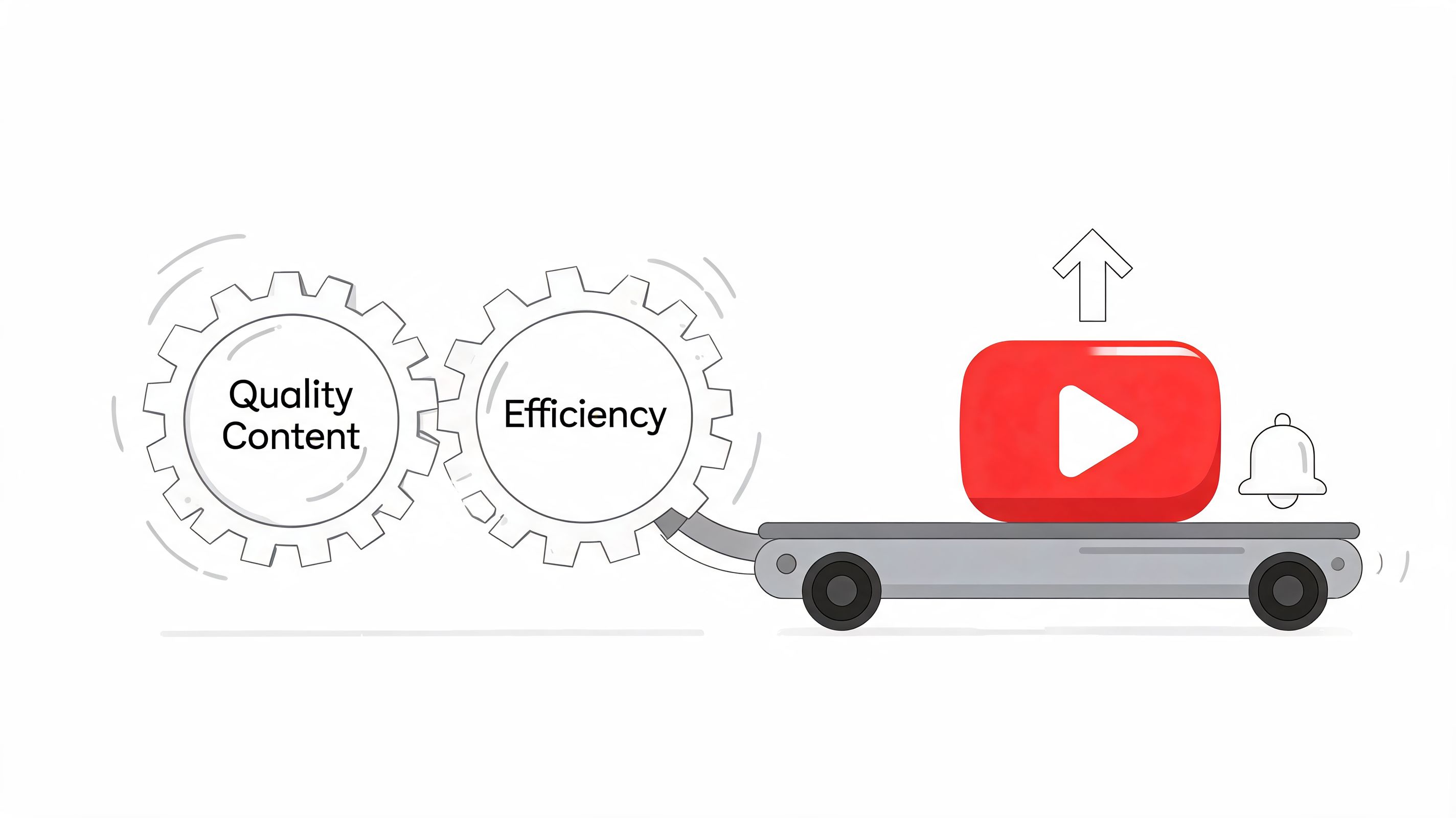
The better model is to build videos with a long shelf life. The Slingshot Strategy analysis argues that rapid growth doesn't require frequent posting. In one example, a channel saw a 7.5x increase in subscribers in 40 days, and the growth was mainly attributable to just 2 videos. That's the mindset shift most creators need. A few strong videos can do more for subscriber growth than a pile of forgettable uploads.
Make videos that deserve repeat distribution
A subscriber-worthy video usually does one of these things well:
- Solves a painful problem with clear before-and-after value
- Organizes a messy topic better than the competition
- Takes a strong position that helps viewers think differently
- Gives a complete roadmap people want to save and revisit
Disposable content gets a click and disappears. A high-impact video keeps getting recommended because it satisfies the viewer and remains useful.
That changes how you plan. Instead of asking, "What can I post this week?" ask, "What could become a pillar video for this channel over the next year?"
Structure matters more than most creators admit
Good videos aren't just about good information. They hold attention through design.
Use this basic structure:
- Hook immediately. State the problem, outcome, or tension in the opening moments.
- Prove relevance fast. Tell the viewer why this video is worth their time.
- Deliver in clean segments. Break the video into distinct parts so it feels easy to follow.
- Reset attention often. Use pattern changes. Different shots, graphics, examples, screenshares, B-roll, or story turns.
- Close with momentum. The end should make subscribing feel logical, not forced.
The strongest hook isn't hype. It's specificity.
A lot of channels lose subscribers before they gain them because the first part of the video is bloated. Long intros, self-focused updates, and generic setup lines kill momentum. Cut them.
If you're still refining your workflow, your editing setup matters more than people like to admit. Faster editing means more time spent on scripting and packaging. If you're on Apple hardware, this breakdown of Mac video editing tools is a useful way to compare options based on how you work, not just brand popularity.
Here's a useful visual example of content thinking in action:
Repurpose without weakening the core video
Repurposing works when the long-form video leads and the short clips support it. The mistake is treating every platform as if it needs the same content in the same form.
Use clips to create curiosity, not to replace the main asset. Short social cuts should tease the payoff, isolate a strong opinion, or showcase one useful moment from the larger video. Then send people to the full piece.
A practical workflow is to turn each new upload into platform-native support content. If you're doing that manually, this guide on posting a YouTube video on Instagram is a solid reference for turning one video into cross-platform promotion without making the content feel copied and pasted.
What works and what doesn't
What works
- Long-form videos built around a single strong promise
- Tight openings
- Clear visual pacing
- Searchable topics with lasting relevance
- A handful of pillar videos that match the channel's core identity
What doesn't
- Uploading often with no packaging discipline
- Random Shorts that attract a different audience than your main channel
- Videos that teach well but bore people structurally
- Overedited intros and underedited substance
Subscriber growth usually follows conviction. Make fewer videos. Make stronger ones.
Master YouTube SEO for Maximum Discovery
YouTube SEO isn't keyword stuffing. It's signal alignment. You need your topic, title, spoken language, metadata, and viewer response to all point in the same direction.
That's why technical optimization matters. In the YouTube benchmark discussed here, reaching the 1,000-subscriber milestone requires an average of 77 long-form videos, and that progress is accelerated by strategic keyword integration in titles, descriptions, and even verbally within the video. Most creators obsess over thumbnails and skip the metadata work that helps YouTube categorize the content correctly.
Start with one search intent
Every video should target one primary intent. Not three.
Before writing the title, define the search behavior behind the topic:
- Problem solving. The viewer wants a fix.
- Comparison. The viewer wants to choose between options.
- Tutorial. The viewer wants steps.
- Evaluation. The viewer wants an opinion before acting.
When the intent is clear, your title gets simpler. Simpler is usually stronger.
Compare these:
- "My Thoughts on Growing Online as a Creator in 2026"
- "How to Grow YouTube Channel Subscribers Without Posting Every Day"
The second one gives YouTube and the viewer a cleaner signal.
Use an on-page checklist before publishing
A practical SEO pass should cover these elements:
- Title. Put the primary phrase near the front if it reads naturally.
- Description opening. Use the first lines to restate the topic and outcome in plain English.
- Spoken keywords. Say the core topic out loud in the video so captions and transcription reinforce relevance.
- Tags and hashtags. Keep them relevant and supportive, not random.
- Filename and asset organization. This won't save a weak video, but operational consistency helps your team stay sharp.
- Chapters. If the structure is educational, chapters can clarify the video's scope.
Checklist: If the title promises one thing, the intro should confirm it, the body should stay on it, and the description should reinforce it.
Write descriptions for both discovery and action
Most creators either ignore descriptions or stuff them with junk. Use them as a conversion layer.
A strong description does three jobs:
- It tells YouTube what the video is about.
- It tells the viewer why it matters.
- It gives the next click a purpose.
A clean description structure looks like this:
| Section | What to include |
|---|---|
| Opening lines | Core topic and benefit |
| Middle | Supporting context, related phrases, brief summary |
| CTA block | One clear next action |
| Resource links | Relevant links, no clutter |
If your goal is to move viewers deeper into your ecosystem, keep those links organized and intentional. This guide on YouTube URL links is useful because link placement isn't just technical. It affects whether viewers take the next step or bounce.
Discovery mistakes that slow growth
A lot of channels don't have a content problem. They have a labeling problem.
Avoid these mistakes:
- Clever titles that hide the topic
- Descriptions that start with irrelevant promo text
- Mismatched keywords between title and actual video
- Trying to rank for broad terms when your angle is specific
SEO doesn't replace quality. It amplifies clarity. If the video is strong and the metadata is disciplined, YouTube has a much easier job finding the right audience for it.
Turn Viewers into a Loyal Community
Subscriber growth doesn't come from views alone. It comes from viewers deciding your channel is worth returning to.
That decision is usually driven by retention and interaction. According to this YouTube analytics growth breakdown, videos with captions achieve higher watch times on average. The same source notes that channels uploading consistently gain about 100 subscribers in 3-4 months, and that using retention data can double efficiency. The point isn't just to upload. It's to learn from what keeps people watching.
Read the retention graph like an editor
Most creators open retention once, glance at the line, and move on. That's not analysis.
Look for specific moments:
- Early drop-off means the hook was weak, slow, or misleading
- Mid-video dips usually signal repetition, fluff, or a confusing transition
- Spikes often mean viewers rewatched a useful explanation or skipped to the payoff
- A strong ending curve suggests the structure carried momentum
Treat each graph like editorial feedback. If viewers leave after your intro every time, the problem isn't the audience. It's the intro.
Fix the parts that cause abandonment
You don't need to reinvent your whole style. Usually, a few recurring changes lift channel quality fast.
Try this diagnostic table:
| Retention issue | Likely cause | Better move |
|---|---|---|
| Sharp early drop | Slow opening | Lead with the outcome or tension |
| Dip after first section | Too much setup | Get to the example faster |
| Flat middle fatigue | Monotone pacing | Add a visual reset or new angle |
| Drop before CTA | Weak closing transition | Tie the CTA to the viewer's next problem |
Captions matter here too. They improve accessibility, help non-native speakers, and often make videos easier to follow on mobile or in low-audio situations. That added clarity can support watch time.
Ask for comments that require thought, not yes-or-no replies.
A better community prompt sounds like this: "What's the one part of your process that's slowing channel growth right now?" That gives people something real to answer. Then pin a strong comment, reply early, and use future videos to reflect what your audience keeps asking.
If your broader audience engagement is weak across platforms, this guide on improving social media engagement is a useful companion because strong YouTube communities rarely exist in isolation.
Community isn't built by saying "like and subscribe" louder. It's built when viewers feel seen, helped, and expected back.
Build Your Subscriber Funnel with Taap.bio
Most YouTube growth advice treats YouTube like a sealed container. That's a mistake.
Creators don't live on one platform anymore. They publish on YouTube, clip to Instagram, post thoughts on X, test ideas on TikTok, and sell through landing pages, storefronts, or email. Yet most subscriber advice still focuses on YouTube-native tactics while ignoring the harder, more valuable problem of moving an audience across platforms. This gap is called out in this cross-platform promotion critique, which notes that current guidance often fails to show creators how to convert followers from platforms like TikTok or Instagram into YouTube subscribers.
Stop sending people into scattered links
If your Instagram bio points one place, your TikTok bio points somewhere else, and your YouTube description points to a random homepage, you're adding friction.
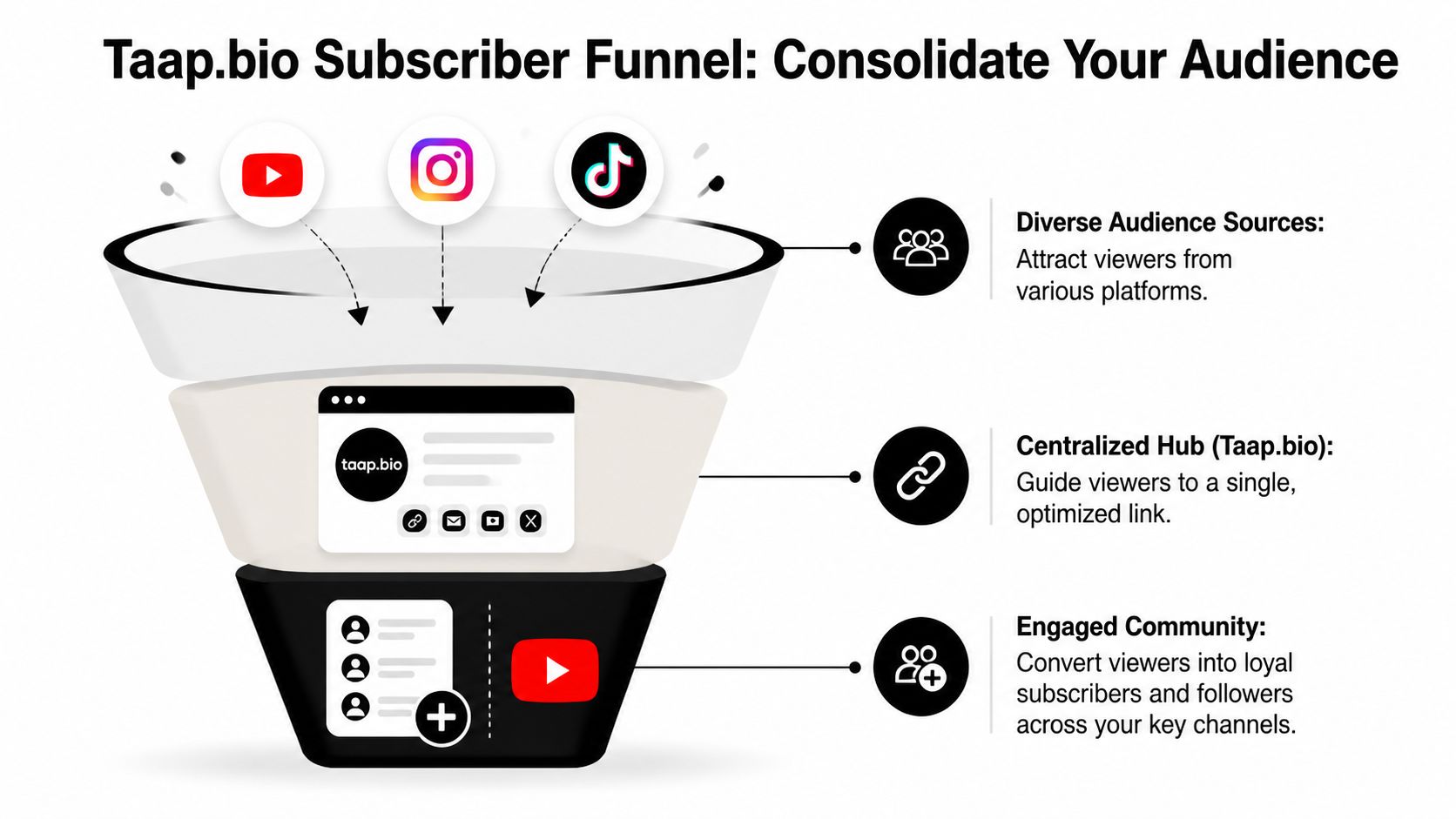
Subscriber funnels work better when they do three things:
- Collect attention from multiple sources
- Route that attention to one intentional hub
- Make the next action obvious
For creators, that central hub should do more than list links. It should present your brand clearly, show current content, and make it easy for people to choose between subscribing, buying, booking, or joining your list.
Design the funnel around behavior
People from different platforms arrive with different levels of intent.
Someone coming from TikTok often needs context. Someone coming from Instagram may already know your personality but not your long-form content. Someone coming from a YouTube description may already trust you and want the next offer.
That means your hub page should reflect tiers of intent:
| Visitor type | What they need first | Best next step |
|---|---|---|
| Cold follower | Clear positioning | Watch a featured YouTube video |
| Warm audience member | Proof and consistency | Subscribe or browse top content |
| High-intent fan | Offer clarity | Buy, book, or join your list |
A flexible landing page holds greater importance than a static link stack. A tool built for creators should let you feature video, social proof, offers, and calls to action in a way that matches your brand. If you're thinking about that kind of setup, a custom landing page builder is the category to look at because layout and hierarchy affect conversion behavior.
What a strong subscriber funnel looks like
A practical creator funnel is simple:
- Publish long-form YouTube content that earns search and recommendation traffic.
- Cut platform-native clips for Instagram, TikTok, and other channels.
- Send those audiences to one central page instead of splitting attention.
- Feature your best videos and the clearest subscribe path there.
- Put monetization options nearby, but not in the way.
Your YouTube channel grows faster when your other platforms stop competing with it and start feeding it.
This matters even more if your business includes coaching, digital products, services, or courses. In that case, a subscriber isn't just a vanity milestone. They're a future customer, repeat viewer, referral source, and warm lead. The funnel should respect all of those possibilities.
Analyze Data and Systematize Your Growth
A lot of creators say they "check analytics," but what they really do is stare at views and subscriber count.
That's not a system. That's scoreboard watching.
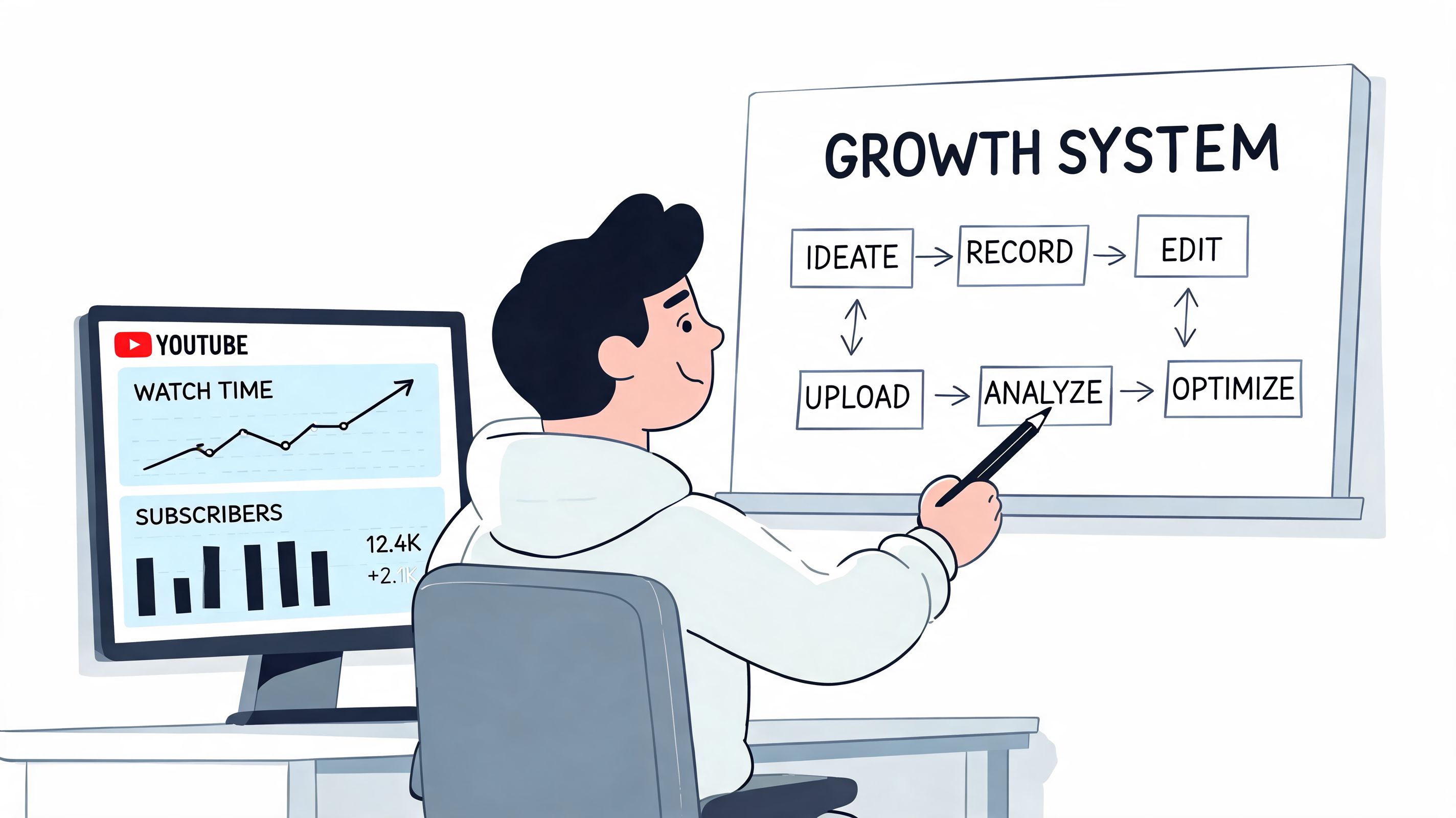
The better approach is to turn analytics into a series of controlled decisions. Start with format choice. An analysis of 200,000 channels found that creators focused on long-form videos reached 1,000 subscribers with a median of 46 uploads, while channels focused on Shorts required a median of 90 uploads. That's a serious trade-off. If your primary goal is subscriber growth, format choice shouldn't be based on convenience alone.
Use experiments, not vague impressions
Each month, pick a small number of variables to test. Not everything at once.
Useful tests include:
- Thumbnail style. Face-led, text-led, or concept-led
- Title pattern. How-to, mistake-based, or outcome-based
- Opening structure. Direct payoff first versus problem-first
- Video length range. Shorter and tighter versus deeper and broader
Track what changed and what happened. Look at click-through rate, retention shape, traffic sources, and subscribers gained per video. The lesson isn't "this video did well." The lesson is "this combination worked with this audience."
Build a feedback loop that includes the business
If your creator business extends beyond YouTube, measure more than channel metrics. Track which videos drive clicks to your central profile, which topics produce the strongest downstream interest, and which audience segments convert into buyers, leads, or booked calls.
That gives you a clearer operating view:
| Layer | What to review |
|---|---|
| Video level | CTR, retention, subscriber gain or loss |
| Channel level | Traffic sources, topic clusters, returning viewers |
| Business level | Which videos drive the most qualified next actions |
At this point, creators usually level up. They stop treating YouTube as isolated content and start treating it as the top of a structured audience system.
If you want subscriber growth that compounds, don't ask whether the last video performed. Ask what it taught you, what you'll repeat, and what you'll change next.
If you're ready to turn your audience into something more durable than scattered followers, taap.bio gives you one place to showcase your content, sell digital products, book coaching, collect emails, and present your brand like a real creator business instead of a pile of disconnected links.


