
Stop treating Linktree vs Website like a taste debate. The question is simpler, and more ruthless, does the page help you make money, or does it just help people leave faster? A lot of creators pick the cheapest option, then act surprised when the whole funnel feels leaky.
The category is not tiny anymore. A 2025 market report cited 31 million Instagram users using a link-in-bio tool, with Linktree serving 24.7 million of them for about 79.95% market share, across 62 different tools overall, and 49% of users in the United States (market report). That scale proves the format is mainstream. It also proves the format has a ceiling.
| Option | What it does well | Where it falls short |
|---|---|---|
| Link-in-bio page | Fast setup, simple routing, mobile-friendly | Weak ownership, shallow analytics, limited SEO value |
| Website | Full control, stronger SEO, deeper measurement | More setup, more maintenance, easier to overbuild |
| Integrated creator store | Fast like a bio page, monetizes like a storefront | Not for people who only need a placeholder |
If you're chasing revenue, stop asking which tool is prettier. Ask which one keeps attention long enough to convert it. That's the gap many people ignore.
Table of contents
Why Your Link-in-Bio Page Is Costing You Money
The popular advice says you need a website if you're serious. That advice is incomplete. A basic link-in-bio page can be useful, but it's built for routing traffic, not for capturing value.
A lot of creators mistake convenience for strategy. They build a neat little hub, post it in their bio, and feel organized. Then they wonder why email growth is flat, why product clicks don't add up, and why every campaign needs more traffic just to reach the same result.
The problem is structural, not cosmetic
Bio pages are optimized for fast taps, not for a full buyer journey. That matters because the user arrives from a feed, a story, or a short-form video, and the attention window is tiny. Independent guidance on bio-link behavior shows the category is usually measured at the top of the funnel, which is useful but incomplete, and Later's analytics docs show the platform tracks page views, post clicks, button clicks, and click-through rate, with limited retention on free plans (Later analytics documentation).
That's the trap. A creator can see taps, but not enough context to know which offer, headline, or page structure moved the visitor toward revenue. If your goal is email ownership, bookings, or product sales, a page that only tracks clicks is a weak substitute for a page that captures intent.
Practical rule: if the page doesn't help you collect an email, close a sale, or book a call, it's probably just a prettier exit ramp.
Most “free” tools get expensive. They save setup time, but they tax your conversion rate. If you're trying to improve the performance of a website-style page, start with practical website copy checklists and build for the action you want, not for the tool's default layout.
The Core Difference Routing Traffic versus Owning It
A link-in-bio page is a routing layer. It gets people somewhere else. A website is an owned asset. It keeps the traffic, the structure, and the measurement inside your domain.
That distinction sounds technical, but it changes everything. A Linktree-style page lives on a shared domain, which means the authority sits with the platform. A website keeps authority on your own domain and can expose crawlable structure, page titles, internal links, and content that search engines can index (SEO comparison).
Routing gets attention, ownership compounds it
When you route traffic, you're renting attention. When you own the page, you can turn one visit into a sequence, a signup, a sale, or a remarketing audience. That's not abstract brand talk, it's the difference between a tap and an asset.
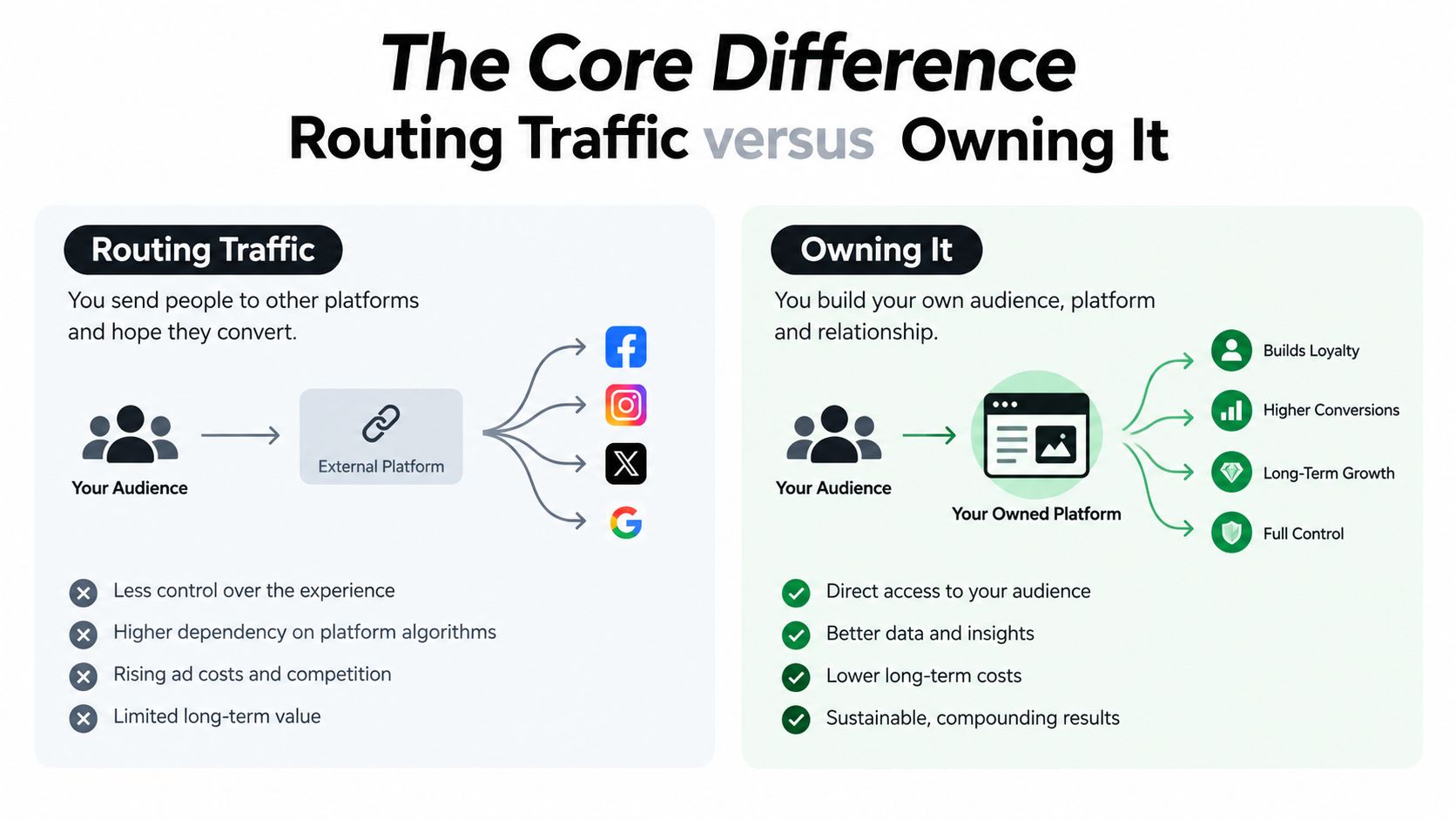
A site also gives you room to write for intent. A creator can build landing pages for speaking, coaching, products, or services, while a bio page usually compresses all of that into the same stack of buttons. That's why websites tend to do better on discoverability and long-term audience building, while bio pages stay stuck as a traffic handoff.
If you want the mechanics laid out in a clean, conversion-focused way, Samuel Woods has a useful set of website copy optimization checklists. Use that kind of structure on the pages that matter. Don't waste your best offer on a page that exists only to redirect people.
What the website actually gives you
A website lets you shape the journey. You can add context above the CTA, segment offers by intent, and build pages that answer the next question before the user bounces. That's the difference between a generic menu and a designed sales path.
Own the place where the action happens, or you'll keep paying to move people into someone else's system.
SEO Analytics and the Data Blind Spot
If all you track is clicks, you're operating with a blind spot. Link-in-bio tools show activity, but they rarely show the whole journey, and that's where creator businesses lose money.
The narrower the analytics, the easier it is to fool yourself. A click looks like interest, but it might be curiosity, accidental tapping, or a dead-end visit that never moved toward revenue. A full website gives you a cleaner environment for attribution because you can measure more than the top-level tap.
Link-level metrics are not business metrics
Independent reviews note that basic Linktree plans expose mostly clicks and views, while richer metrics like traffic sources, devices, geography, UTMs, and longer history are often behind paid tiers (Linktree review). That means the default reporting is narrow before you even start optimizing.
A website is different because it can run GA4, pixels, custom events, and server-side analytics. That gives you real funnel visibility, not just a count of who touched a button. If the goal is conversion, that matters more than vanity traffic.
Why this matters for SEO and decision-making
A bio page is also weak for search ownership. It usually doesn't give you the same crawlable content structure, so it's not built to rank for intent-driven queries or support long-term domain authority. A website can.
If you're serious about optimization, the question isn't “How many clicks did I get?” It's “Which source, page, and offer produced the highest-value visitor?” Without that answer, you're optimizing blindly. Analytics and tracking for creators becomes useful only when the platform can connect action to outcome.
Bottom line: if your analytics stop at clicks, you're measuring motion, not money.
The Integrated Creator Store The Best of Both Worlds
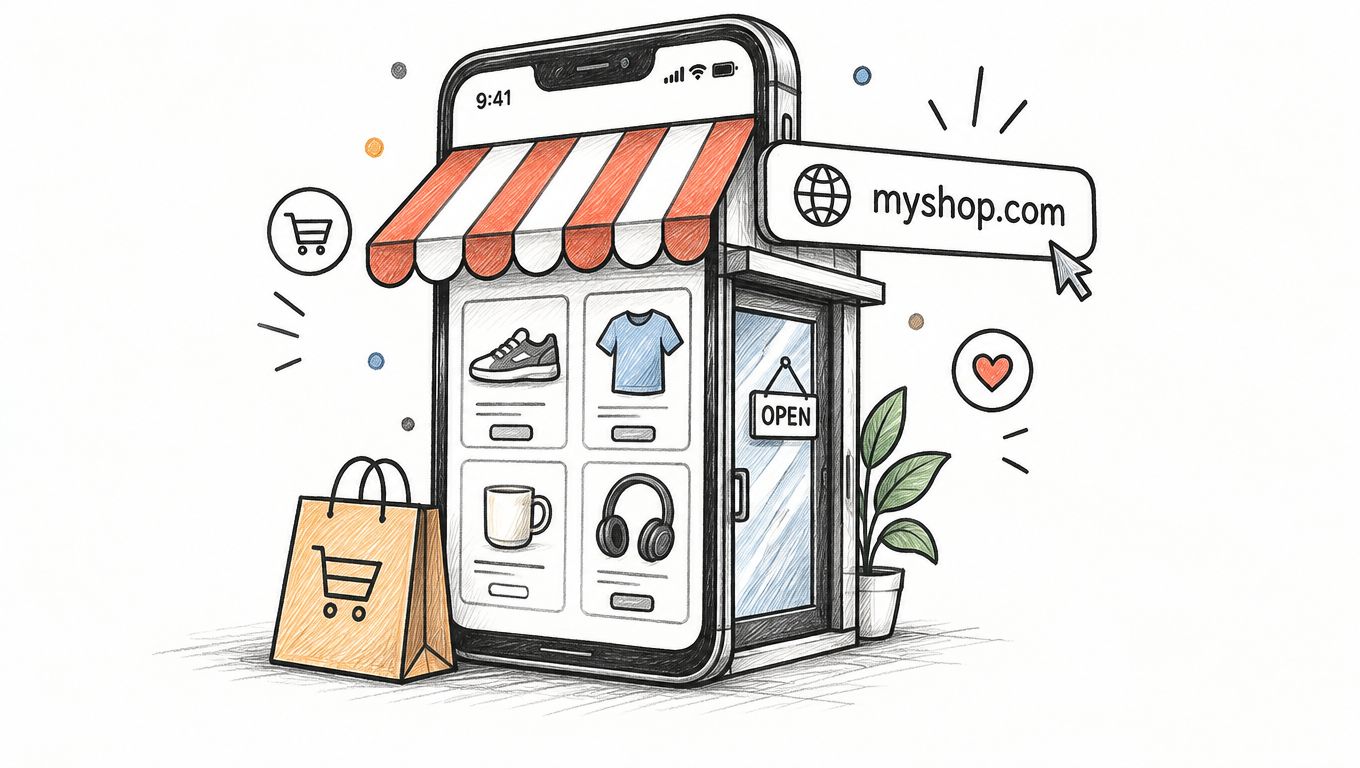
Creators do not need another “free” tool that only pushes traffic around. They need a page that keeps attention close to the sale. An integrated creator store does that by combining the speed of a bio page with the pieces that collect revenue.
Tool sprawl is the true cost here. One app for links, one for checkout, one for email, one for bookings, one for analytics. That stack looks cheap until you realize it turns a sales channel into a maintenance job.
Why consolidation beats patchwork
The model works when checkout, booking, and email capture sit on the same page. A visitor can buy, book, or subscribe without leaving mid-decision, and that is where small sales are won or lost. Every redirect adds friction, and friction kills momentum.
Platforms in this category usually bundle those functions instead of scattering them across separate products. That matters more than a long feature list. A clean bento layout, digital delivery, and on-page scheduling are useful only because they keep the transaction in one place.
Taap.bio is one example of that approach. It uses a drag-and-drop bento layout with 10+ rich widgets, built-in checkout with instant digital file delivery, and paid bookings with on-page calendars. The point is not the menu of features. The point is that one page can replace the messy patchwork that usually forces creators to stitch together Linktree, a storefront, email software, and a scheduling tool. digital product store setup shows the kind of structure that makes this work in practice.
Revenue happens on the page, not after the page
The best creator pages close the loop immediately. The offer is visible, the next action is obvious, and the visitor does not have to guess what to do next.
That is the advantage of an integrated store over a generic bio page. It does more than route traffic. It turns intent into a transaction while the visitor is still warm.
If you want a useful reference for how creators turn attention into sales, turn views into revenue with Social Cloud frames the same revenue-first logic from a different angle. The lesson is simple, stop sending people away before the page has done its job.
The right page is not the one with the most links. It is the one with the fewest unnecessary exits.
One page can do the work of four tools
This model works because it stays focused. You are not asking visitors to understand your whole business before they act. You are giving them a direct path to buy, book, or subscribe while intent is still hot.
That is why an integrated creator store often beats a generic website for solo operators. A broad site can sprawl fast. A focused store stays narrow enough to convert and flexible enough to monetize without dragging the creator into tool chaos.
Privacy and Compliance Why It Matters More Now
Privacy is a conversion issue. Every tracking script, consent prompt, and extra vendor adds friction before a visitor ever reaches the offer. That friction costs clicks, emails, and purchases.
Some creator tools now limit retention and trim tracking by default. A recent privacy policy from a link-in-bio product shows click data can be limited to daily totals, hashed visitor counting, and minimal retention (CreatorLink privacy policy). That is the direction worth paying attention to, because lighter data collection usually means fewer compliance headaches.
Choose the lightest tool that still does the job
If you work with European audiences, check the privacy setup before you ship anything. Look at data residency, retention periods, third-party scripts, and whether the tool triggers consent requirements. Some platforms host data in the EU and ship without third-party tracking scripts, which removes cookie banners by default, but you should verify the hosting location and cookie policy of any tool before you adopt it.
Many creators get this wrong. They assume a full website automatically signals trust, then fill it with trackers, pop-ups, and half-finished policy pages. A cleaner page with fewer dependencies often performs better because it asks less of the visitor. Use this GDPR compliance checklist for creator pages before you add another tool to the stack.
Trust is part of the conversion path
People notice when a page feels invasive. They also notice when they can buy, book, or subscribe without fighting a maze of consent banners.
If your business depends on email capture, paid bookings, or digital products, privacy-friendly design is not a legal afterthought. It shapes whether people stay long enough to convert. Keep the page lean, keep the tracking honest, and remove anything that makes a buyer hesitate.
How to Choose the Right Platform for Your Goals
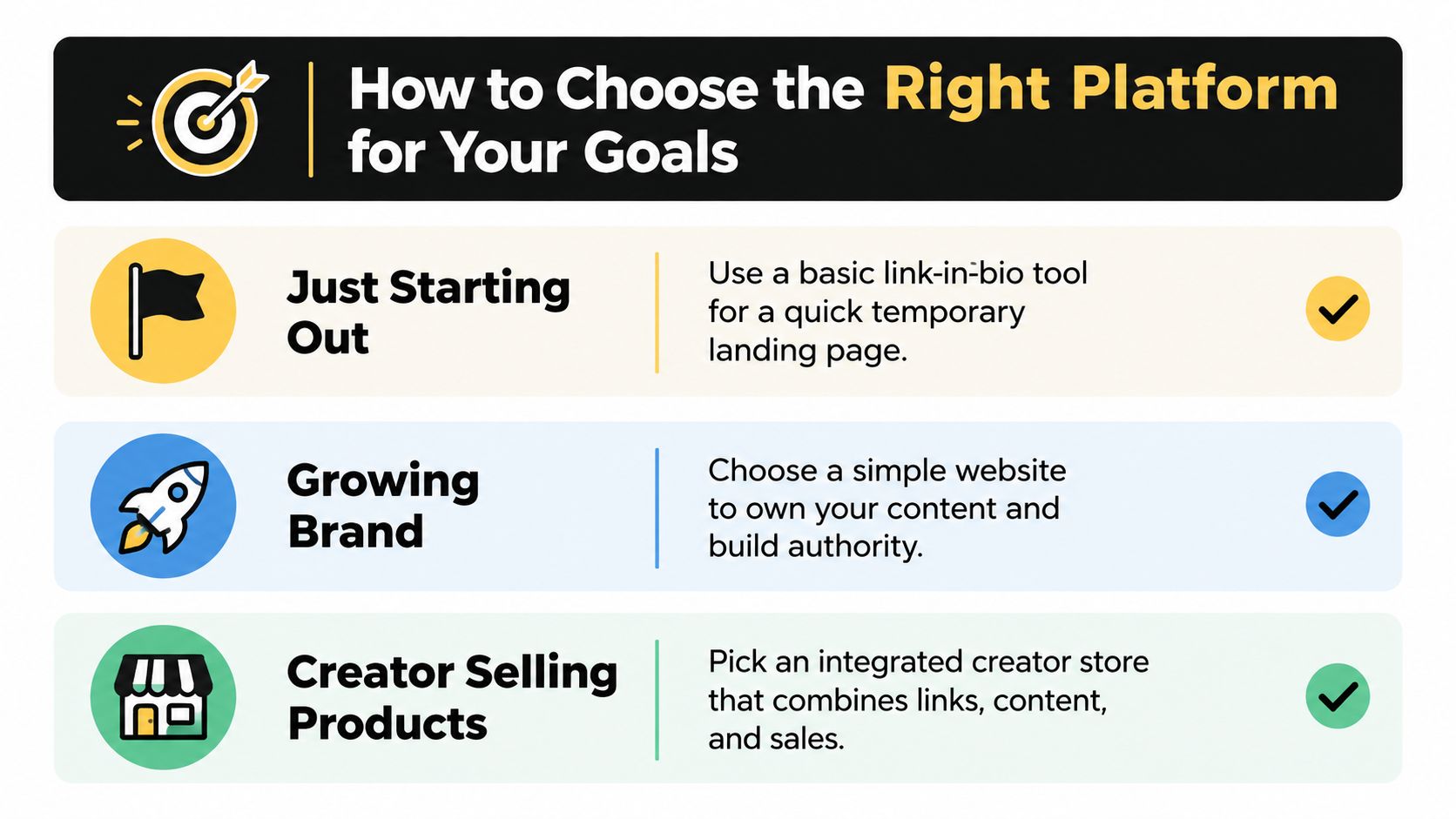
Choose the platform by what the page must do for revenue. If you only need a short-lived landing page, a basic link-in-bio tool is enough. If you need ownership, search visibility, and better measurement, a website is the right call. If you need those things plus direct monetization without tool sprawl, an integrated creator store is the smarter choice.
Use the job, not the hype, as your filter
Creators waste money on tools that feel free or familiar. Free is expensive when it costs sales, and simple is a problem when it cannot convert.
A basic link-in-bio page fits a short-term promo, a new creator, or a one-off announcement. A website fits brand authority, SEO, and long-term content ownership. An integrated creator store fits selling, booking, and email capture from one place, without stitching together a stack.
What I'd recommend, plainly
Start lean if you are testing ideas. Use your own domain if you are building a durable brand. Stop sending buyers through five tools if one page can handle the sale.
If you want a benchmark, how to audit competitor stores shows how offers, proof, and navigation are arranged in real pages. Use that to build something tighter and more revenue-focused than what you studied.
Before committing to a stack, review how an all-in-one business platform handles the same jobs and compare the trade-offs. The point is not more features. It is fewer tools between the click and the sale.
For creators who need one page to route traffic, collect emails, take payments, and handle bookings, the integrated store wins. It gives you more control than Linktree and less complexity than a bloated website.
If you are tired of losing clicks to tool sprawl, build the page that keeps the sale in one place. Taap.bio combines links, checkout, bookings, and email capture into one creator store, so you can stop stitching together separate tools and start selling from a single page.


