Think back to the last time you were handed a paper business card. What did you do with it? If you're like most people, it probably ended up in a drawer, on your desk, or maybe even in the trash.
A digital business card is the modern answer to that outdated ritual. It’s a dynamic, shareable profile that pulls all of your crucial professional info—contact details, social media handles, portfolio links, and more—into one slick, accessible online hub. It's less of a static card and more of a personal landing page, designed to make connecting easier, more memorable, and way more effective.
Table of contents
Understanding The Digital Business Card
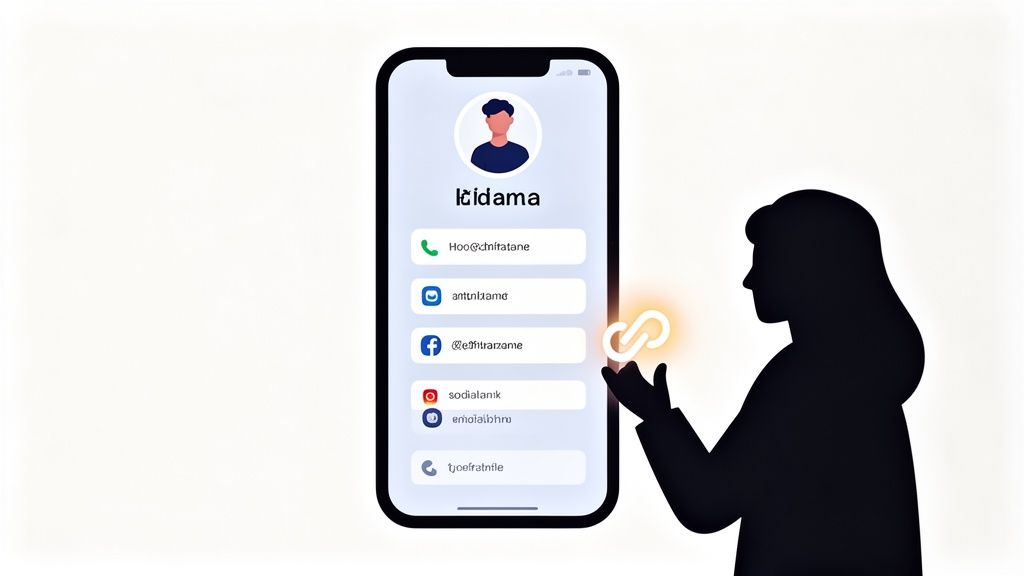
Imagine meeting someone at a conference and, instead of just giving them your name and number, you hand them a complete gateway to your professional world. That's the power of a digital business card. It transforms a simple, often forgettable exchange into an engaging first impression that lasts.
This isn’t just about going paperless; it’s a genuine strategic upgrade. When you understand the inherent limitations of traditional business cards, you can really appreciate the massive leap forward that digital versions offer.
Let's take a quick look at how they stack up side-by-side.
Traditional vs Digital Business Cards at a Glance
This table breaks down the core differences, showing why so many professionals are making the switch.
| Feature | Traditional Paper Card | Digital Business Card |
|---|---|---|
| Updatability | Static; requires a full reprint for any change. | Dynamic; updates in real-time for all recipients. |
| Cost | Ongoing printing and design costs. | Often a one-time or low recurring subscription fee. |
| Content | Limited to what fits on a small card. | Virtually limitless—can include videos, links, galleries. |
| Sharing | In-person only. | Instantly shareable via QR, NFC, text, or link. |
| Analytics | Zero tracking capability. | Track views, clicks, and engagement. |
| Environmental Impact | Contributes to paper waste. | Eco-friendly and sustainable. |
| Interactivity | None. | Highly interactive with clickable links and media. |
As you can see, the digital version isn't just a replacement—it's a complete evolution of how we network.
A Modern Tool For Modern Networking
The real game-changer is functionality. A digital card is never out of date. If you get a promotion, launch a new project, or switch companies, you just update your profile. Instantly, everyone who has your link has your latest information. No more wasted cards, no more outdated contacts.
This shift has really picked up steam as professionals look for smarter, more eco-friendly ways to connect. The global market for digital business cards was valued at $159.4 million in 2022 and is projected to soar to $505.2 million by 2032. This growth is being driven by our reliance on smartphones and the need for contactless solutions.
A digital business card is more than a contact file; it's a personal branding hub. It turns a simple exchange of information into a meaningful connection by showcasing your work, personality, and professional story in a single, interactive space.
More Than Just A Link
At its core, a great digital business card works like a "link-in-bio" page. It’s the central spot you can send new connections to find everything that matters about you professionally. This is what makes it such an indispensable tool for everyone from freelance creatives to corporate leaders. In fact, if you want to dig deeper, you can learn more about the meaning of a bio link and see just how powerful this concept is.
Ultimately, a digital business card gives you:
- Centralized Information: All your essential links—LinkedIn, portfolio, website, calendar—are neatly organized in one place.
- Instant Accessibility: Share your card with a quick QR code scan, an NFC tap, a text message, or by adding it to your email signature.
- Enhanced Engagement: You can include interactive elements like intro videos, project galleries, and even appointment schedulers to capture a new contact's interest immediately.
Beyond Contact Info: The Real Payoff of Going Digital
Switching to a digital business card isn't just about trading paper for pixels. It's a genuine strategic upgrade. Think of it this way: a traditional card is a static snapshot, frozen in time. A digital card is a living, breathing tool that keeps working for you long after that first handshake, completely changing how you build and manage your network.
The most obvious win is pure convenience. Your card is always with you, right on your phone, so you’re never caught empty-handed. But the real magic is that it's always up-to-date. Got a new title or phone number? Just update your profile once. Instantly, everyone who has your link has your latest info. The cost and waste of reprinting boxes of cards? Gone.
A Smarter and Greener Approach
The numbers here are pretty staggering. We print around 100 billion paper business cards every single year, and a jaw-dropping 88% of them are tossed in the trash within a week. That’s a mountain of waste and a constant drain on your budget for design and printing.
By going digital, companies can slash their networking costs by as much as 90%. This is about more than just saving a few bucks; it’s a clear signal that your brand is modern, efficient, and mindful of its environmental footprint.
This shift also completely redefines what you can share. You're no longer hemmed in by a tiny rectangle of cardstock. A digital card is a limitless canvas, transforming a simple contact exchange into a dynamic portfolio that shows people what you're all about. You can easily include things like:
- Intro Videos: A great way to let new contacts see and hear from the real you.
- Project Galleries: Don’t just tell them what you do—show them with high-quality images and case studies.
- Social Media Feeds: Give people a real-time window into your professional world.
- Direct Calendar Links: Make it incredibly easy for prospects to book a meeting with a single tap.
This rich, interactive experience makes a first impression that actually sticks. It lets you tell your story, not just list your contact details.
Turning Networking into something you can actually measure
This might be the biggest advantage of all: the ability to see what happens after you share your card. A paper card is a black hole—you get zero feedback. A digital business card, on the other hand, gives you powerful analytics. You can see who viewed your profile, what links they clicked on, and how they’re engaging with your content.
This data is a game-changer. It shines a light on which connections are genuinely interested, helping you focus your follow-up efforts where they'll count the most. Suddenly, networking moves from a shot-in-the-dark to a measurable, data-driven strategy. By bringing your professional identity into one place, your digital card becomes the central pillar of your personal brand, much like a content hub for your professional life.
When you add it all up, the benefits just keep stacking. You save money, cut down on waste, make a far more compelling first impression, and get the insights you need to build stronger relationships. It's a complete overhaul that makes every connection more valuable.
How Do Digital Business Cards Actually Work?
You might think there’s some complex wizardry behind a digital business card, but it’s actually built on simple, everyday tech. At its heart, every digital card is just a central hub for your professional life—think of it as your own personal landing page. The real magic is in how you get people there.
Imagine your profile is a room. The different sharing methods—QR codes, NFC, and links—are just different keys to unlock the same door. They all lead to the same place, and the technology behind them is already in everyone's pocket.
Three Ways to Share Your Profile
There are three main ways to hand over your digital card, and each one shines in different situations. Knowing which to use can make all the difference, whether you're shaking hands at a conference or presenting on a Zoom call.
QR Codes (The Visual Key): This is your go-to for almost any scenario. A QR code is a visual shortcut that anyone can scan with their phone's camera, instantly pulling up your profile. They work great on virtual backgrounds, presentation slides, or even printed on a coffee mug.
NFC (The Contactless Tap): Near Field Communication is the same slick tech behind tap-to-pay with your credit card or phone. An NFC-enabled card or even a small sticker lets you share your profile with a simple tap on someone's smartphone. It's fast, impressive, and perfect for in-person meetings.
Direct Links (The Universal Share): This is the most straightforward method of all. Simply sharing the direct URL to your profile is perfect for email signatures, social media bios, and text messages. It’s the easiest way to connect with people when you're not in the same room.
This simple flowchart breaks down when it makes sense to lean into these tools.
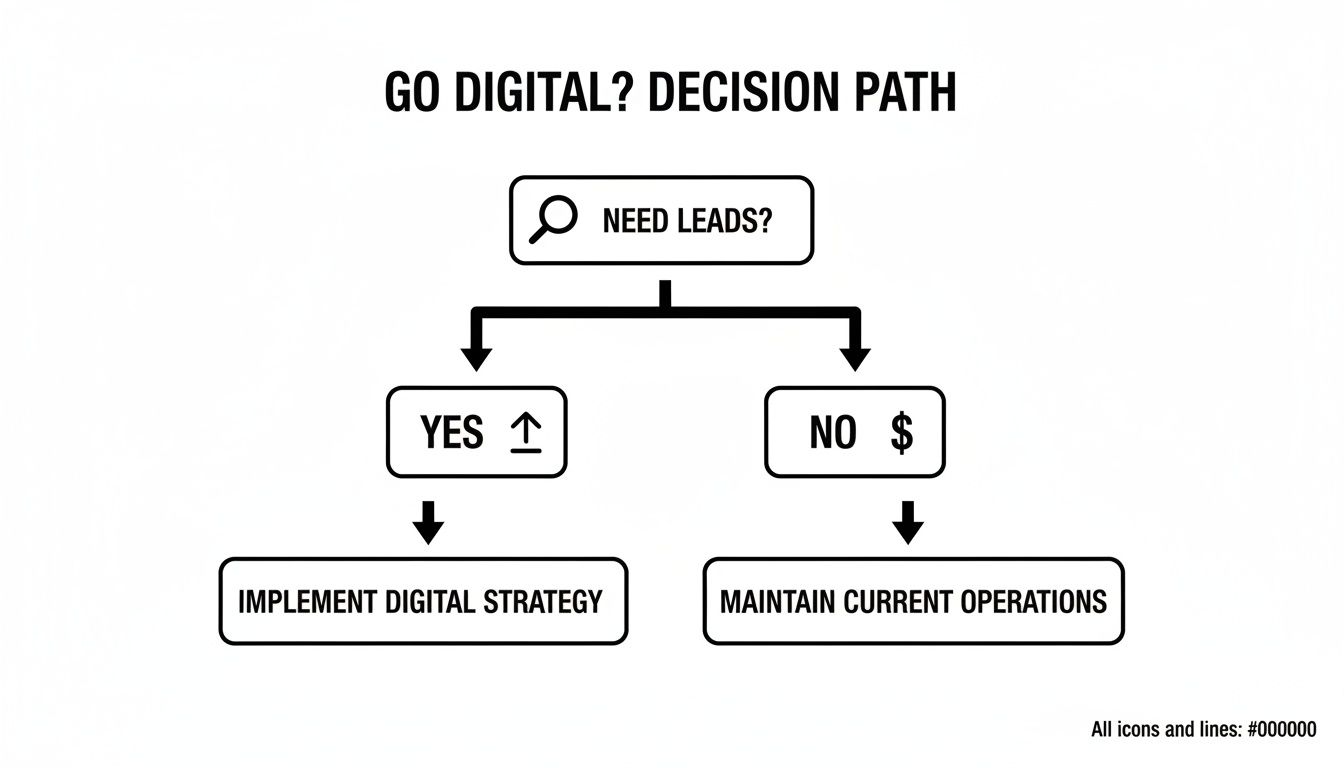
As you can see, if generating new leads and growing your network is on your radar, going digital is a clear win.
So, Which Sharing Method Is Right for You?
The best method really depends on where you do your networking. Do you spend more time at trade shows or on video calls? Each "key" serves a purpose, but they all point back to your profile—the single source for all your professional information.
A busy sales professional might swear by an NFC card for its speed and "wow" factor at events. A consultant leading a virtual workshop, on the other hand, will get more mileage out of a QR code displayed on-screen. And a freelance writer? They’ll probably live and die by the direct link in their portfolio and social bios.
No matter which one you choose, the goal is always the same: make a connection that sticks.
From Simple Link Lists to Dynamic Hubs
Digital business cards didn't just pop into existence. Their roots lie in something much simpler: the early "link-in-bio" pages. At first, these were just stark, vertical lists of URLs. They got the job done, but they were about as inspiring as a grocery list.
This first iteration solved a real problem—consolidating all your scattered online presences. The trouble was, they had zero personality. It was a generic, one-size-fits-all experience that turned a personal introduction into a boring, uniform directory.
More Than Just a List
It didn't take long for platforms to realize that a professional identity is so much more than a collection of links. This is where the concept of a modular profile changed everything. Think less like a rigid list and more like a personalized dashboard or a Japanese bento box.
Instead of a boring, top-to-bottom scroll, you get a flexible canvas. Every piece of your professional world—your portfolio, a recent social post, your latest project, a contact form—becomes its own interactive block. You can arrange, resize, and prioritize them however you see fit. The control shifts entirely to you, letting you build a visually striking grid that truly reflects who you are.
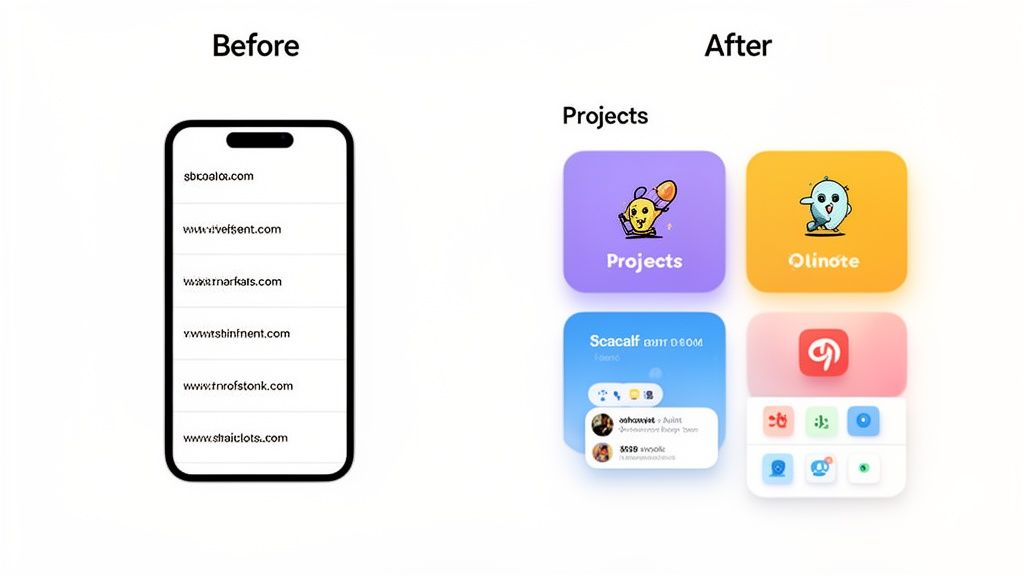
See how each element gets its own space and visual weight? It creates a dynamic layout that’s miles more engaging than a simple list. This approach turns your profile from a passive directory into an active, curated experience for your audience.
This evolution is exactly why the market is exploding. North America is leading the charge, with the US market for digital business cards projected to soar to $82.59 billion by 2035. For entrepreneurs and consultants, this shift is a game-changer; these interactive hubs can track engagement and convert contacts up to 5x better than old-school paper cards.
The Power of Smart Widgets and Live Content
The real quantum leap, though, is the arrival of smart widgets. These aren't just static links anymore. They're live, interactive windows that pull in real-time content from your other platforms, creating a profile that’s always up-to-date and genuinely alive.
Here’s what that looks like in practice:
- For a Developer: A GitHub widget can pull in your contribution graph, showcasing your coding activity as it happens.
- For a Musician: A Spotify widget can embed your latest track, letting visitors listen right there on your page.
- For a Creator: A YouTube or Instagram widget can display your most recent videos or posts, complete with follower counts and direct links.
This shift completely redefines what a digital business card can be. It's no longer a static contact file. It's a living destination that tells your complete professional story, updated automatically.
By moving from simple lists to modular hubs, platforms like Taap.bio have transformed the old link-in-bio. You're not just handing someone a list of places to find you; you're inviting them into a rich, interactive space where you're in complete control. To really get a handle on this, check out our guide on what a link-in-bio truly means. This is what makes a modern digital business card an absolutely essential tool for networking and building your brand today.
How to Create and Share Your Digital Business Card
Ready to build your digital handshake? You'll be surprised at just how simple it is to create and share a digital business card. The whole process is designed to be intuitive, putting you firmly in the driver's seat of your professional story.
The first step is picking the right platform. You’ll want something that gives you plenty of room for customization, offers analytics to see what's working, and plays nicely with the other tools you already use. If you want a feel for how it all comes together, many services let you watch a demo on creating digital business cards to see it in action.
Designing a Profile That Makes an Impact
Once you've chosen your home base, the fun begins: designing your profile. This is your digital first impression, so it pays to be thoughtful about how you present yourself and your work.
Start with a great photo—a professional, high-quality headshot is non-negotiable. Then, craft a bio that gets straight to the point. This isn’t the place for your full resume; it’s a hook, an introduction designed to make someone want to learn more.
Think like a tour guide. Arrange your content so your most critical links and information are right at the top. You want to create an obvious path for visitors to follow.
Next, curate the links and media that truly represent your value. This could be anything from:
- Your Portfolio: A direct line to your best projects.
- Social Profiles: Let them connect with you on professional networks like LinkedIn.
- A Scheduling Link: Make it dead simple for potential clients to book a call.
- Introductory Video: A short, personal welcome can work wonders.
Sharing Your Card With the World
With your card polished and ready, sharing it is incredibly easy. Your platform will arm you with several ways to get your card into the right hands, making sure you’re ready for any networking situation that comes your way.
You have a few powerful options to choose from:
- Generate a QR Code: Slap your unique QR code onto presentation slides, virtual meeting backgrounds, or even your phone's lock screen for quick scans.
- Use an NFC Card: At in-person events, nothing beats the "wow" factor of an NFC card. A simple tap on a smartphone, and your profile is instantly shared.
- Add it to Your Email Signature: This is a classic for a reason. Every single email you send becomes a networking tool.
- Pin it to Social Profiles: Your digital business card is the ultimate link-in-bio. We've got more ideas on this in our guide on how to link a website on Instagram.
Using these methods, your card becomes more than just a contact file—it's an active, powerful tool for turning every introduction into a real connection.
Got Questions About Digital Business Cards? We’ve Got Answers.
Making the leap from paper to digital always brings up a few questions. That's totally normal. Let's walk through some of the most common ones so you can feel confident about making the switch.
"Are These Things Actually Secure?"
It’s a fair question, and for good reason—we're talking about your professional identity here. The short answer is a resounding yes. Any digital business card platform worth its salt puts security front and center.
You’re always in the driver’s seat. You decide exactly what information to share, and you can change it on the fly. If you ever need to, you can revoke access in an instant, giving you a level of control that a flimsy piece of cardstock could never offer.
"Does the Other Person Need to Download an App to See It?"
Nope, not at all. And honestly, this is one of the best parts. Your digital business card is just a smart, mobile-friendly webpage.
When you share your link, QR code, or tap your NFC card, it just opens right up in their phone's browser. It works on any device—iPhone, Android, tablet, you name it. There's nothing to install, which means there's zero friction for your new connection.
The real magic of a modern digital business card is that it just works. No apps, no downloads, no awkward "can you find it in the app store?" moments. It's an instant connection, every single time.
"Can I See Who’s Actually Looking at My Card?"
You bet. This is where digital cards really leave paper in the dust. Most services come with built-in analytics that show you exactly what’s happening after you share your card.
You can track how many people viewed your profile, see which links they clicked on, and get a real sense of who's engaging with your content. It turns networking from a shot in the dark into a data-backed strategy. You’ll know exactly which leads are warm, helping you focus your follow-up for the biggest impact.
Ready to build a digital business card that makes every handshake count? With a tool like Taap.bio, you can create a dynamic, professional hub for your brand in just a few minutes. Start building your free Taap.bio page today and feel the difference yourself.