Digital products became mainstream before many creators treated them that way. In 2025, digital products generated more than $2.5 trillion in annual economic value, while people spent over $560 billion on digital media in 2024, according to Whop's digital product statistics overview. The same source reports that 68% of internet users aged 16 and older paid for digital content each month in 2025. Buyers aren't experimenting with digital products anymore. They already understand instant access, downloadable assets, subscriptions, online learning, and software.
The mistake is treating every digital product as the same business. A template is a scalable file. Coaching is paid access to your judgment. A course packages expertise. A membership sells recurring value. Software turns a repeatable process into a tool. Each model demands a different amount of production, support, promotion, and customer involvement.
This list ranks 10 digital products to sell by audience fit, price potential, production burden, delivery complexity, promotion angle, and the fastest way to connect a taap.bio page to checkout, bookings, and email capture. taap.bio can keep discovery, purchase, delivery, scheduling, and list growth in one bento-style flow, with product blocks, rich media, paid bookings, email signup, and analytics available from one page. You can review the storefront model directly on taap.bio.
Choose the product model that matches the strength you already have. If you know a process, package the process. If you create reusable assets, sell the assets. If buyers need your judgment, charge for access. If the value continues after the first transaction, build a recurring offer.
Table of contents
1. Online Courses and Educational Content
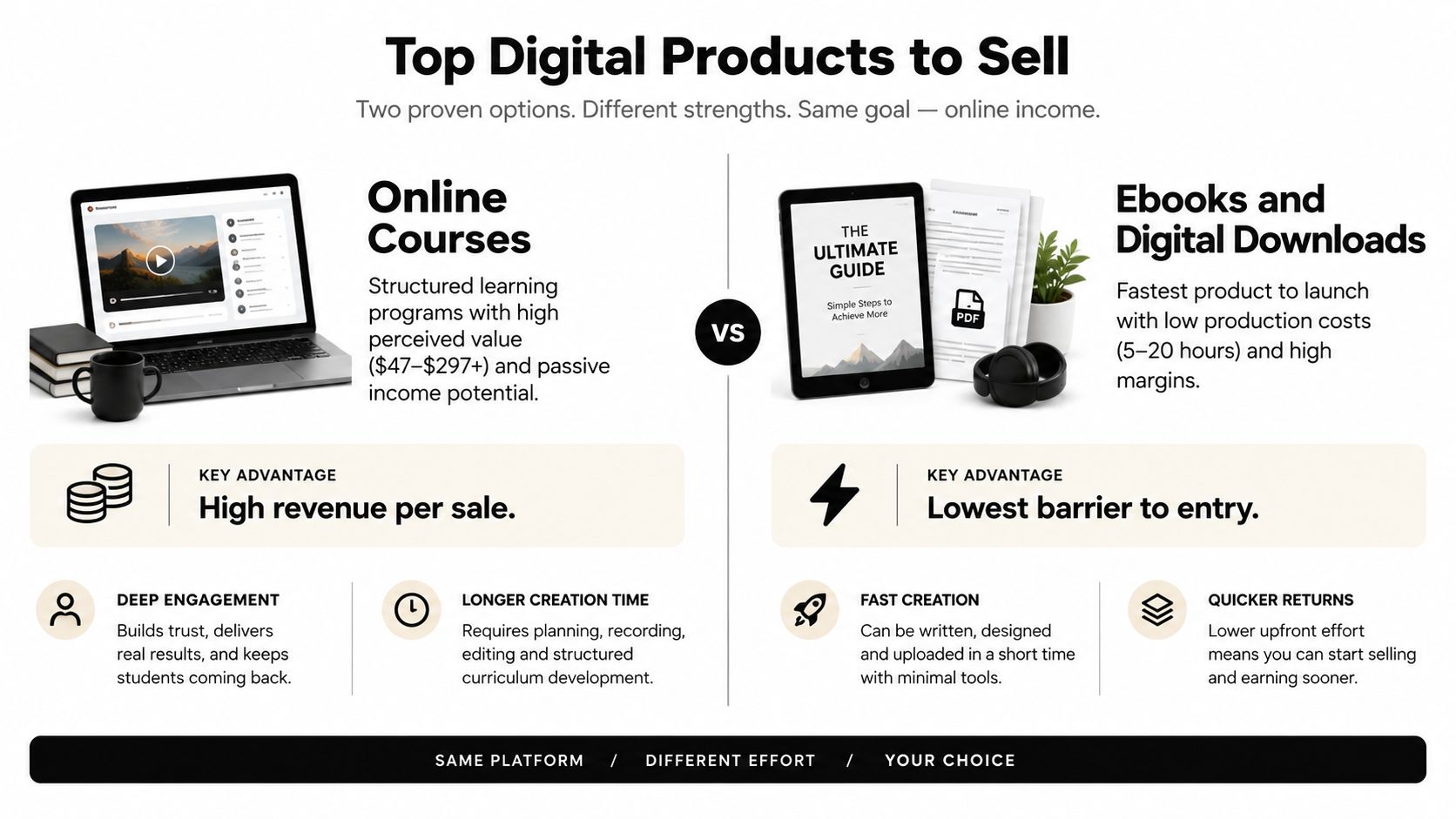
Online courses work best when your audience needs a sequence, not an isolated answer. A strong course takes a defined learner from a clear starting point to a practical result through video lessons, worksheets, demonstrations, quizzes, and assignments. The format suits consultants, subject-matter experts, marketers, designers, fitness professionals, and creators who can explain a repeatable method.
Don't build a broad course called “Everything About Marketing.” Build a focused program such as a campaign planning system for independent consultants or a portfolio workflow for junior designers. Specific outcomes make the sales page easier to write and give buyers a reason to choose your course over free content.
Package expertise into a guided result
Use short modules, downloadable resources, progress tracking, assessments, and a clear completion path. Drip-fed access can help learners follow the intended sequence, while lifetime access suits reference-heavy training. A community or discussion area adds value, but it also creates a support obligation. Include it only when you can respond consistently.
Course production carries a heavier upfront burden than a PDF or template. You need a reliable recording setup, edited lessons, a usable learning environment, and a plan for updates. Students also need answers when an exercise creates confusion.
Practical rule: Sell the transformation first, then show the curriculum that delivers it.
A taap.bio page can place the course offer beside an email signup and supporting content, giving visitors a direct path from preview to purchase. Use the guide to selling an online course to connect the offer to your storefront workflow. For stronger instructional design, study how to design engaging learning modules. This model has high revenue potential, but it isn't the fastest product to launch.
2. Ebooks and Digital Downloads
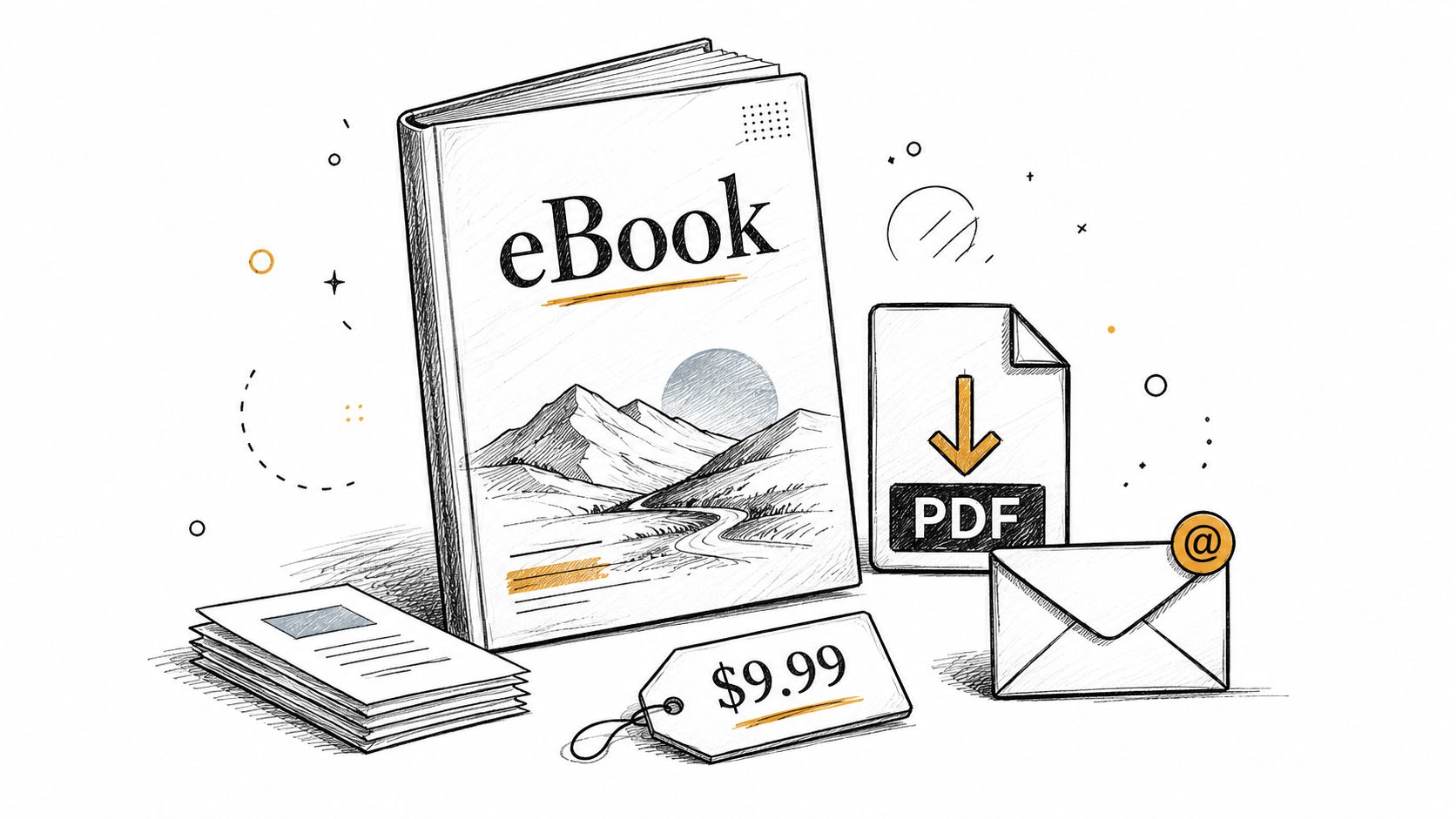
Ebooks and downloadable files are the right starting point when you can solve a narrow problem in writing. The product might be a guide, workbook, checklist, swipe file, resume resource, spreadsheet, or bundle of templates. The file format matters less than the usefulness of the finished asset.
A generic ebook competes on visibility. A practical download competes on implementation. “A Guide to Freelancing” is broad. “Client Proposal Pack for Independent Brand Designers” gives the buyer a specific reason to pay.
Make the download do work
The strongest downloads contain decisions, examples, prompts, and reusable structures. Add a short implementation guide to a template pack. Add annotated examples to a checklist. Add a buyer worksheet to a strategy guide. These additions move the offer away from commodity content.
taap.bio's built-in checkout can deliver a digital file immediately after payment, including common formats such as PDF, ZIP, and MP4. That makes the storefront useful for solopreneurs who don't want to assemble separate sales, payment, delivery, and email tools. Use taap.bio's ebook selling workflow to place the download beside a preview and email signup.
Promotion should show the product in use. Publish a page from the workbook, demonstrate a spreadsheet, or explain one decision the guide helps a buyer make. Capture the visitor's email before or after the download so a one-time purchase can lead to a related workshop, booking, or course. This is the lowest-complexity model on the list, but the product still needs a precise audience and a visible outcome.
3. Coaching, Consulting, and Bundled Packages
Coaching and consulting sell access to your judgment. Buyers pay because they want a diagnosis, a decision, feedback, accountability, or help applying information to their circumstances. This model fits experts with credible experience and a problem that can't be solved well by a static file alone.
Start with one defined session. Examples include a website conversion review, a content strategy audit, a portfolio critique, or a launch planning call. Once recurring questions emerge, turn the session into a package that combines advice with templates, recordings, or follow-up support.
Charge for a decision, not an hour
A booking page should make the buyer understand what happens before, during, and after the call. State the problem you address, what the client receives, what preparation is required, and what isn't included. Upfront payment filters out casual inquiries and protects time that would otherwise disappear into unpaid consultations.
taap.bio's paid bookings widget combines an on-page calendar, payment collection, scheduling invitations, and automated reminders. You can also present a starter consultation beside a deeper advisory package, then capture the client's email for follow-up offers. The coaching sales workflow on taap.bio supports this product model from one storefront.
A useful bundle might include an assessment call, a written action plan, a template pack, and a follow-up review. Don't bundle unrelated products to increase the apparent value. Bundle the steps a buyer needs to reach the result.
Buyers accept premium access when the offer removes uncertainty, shortens the path to a decision, or prevents an expensive mistake.
This model has strong revenue potential but limited capacity. Your next move after validating demand should be a group workshop, course, or productized audit, not an endless calendar of one-to-one calls.
4. Templates and Presets
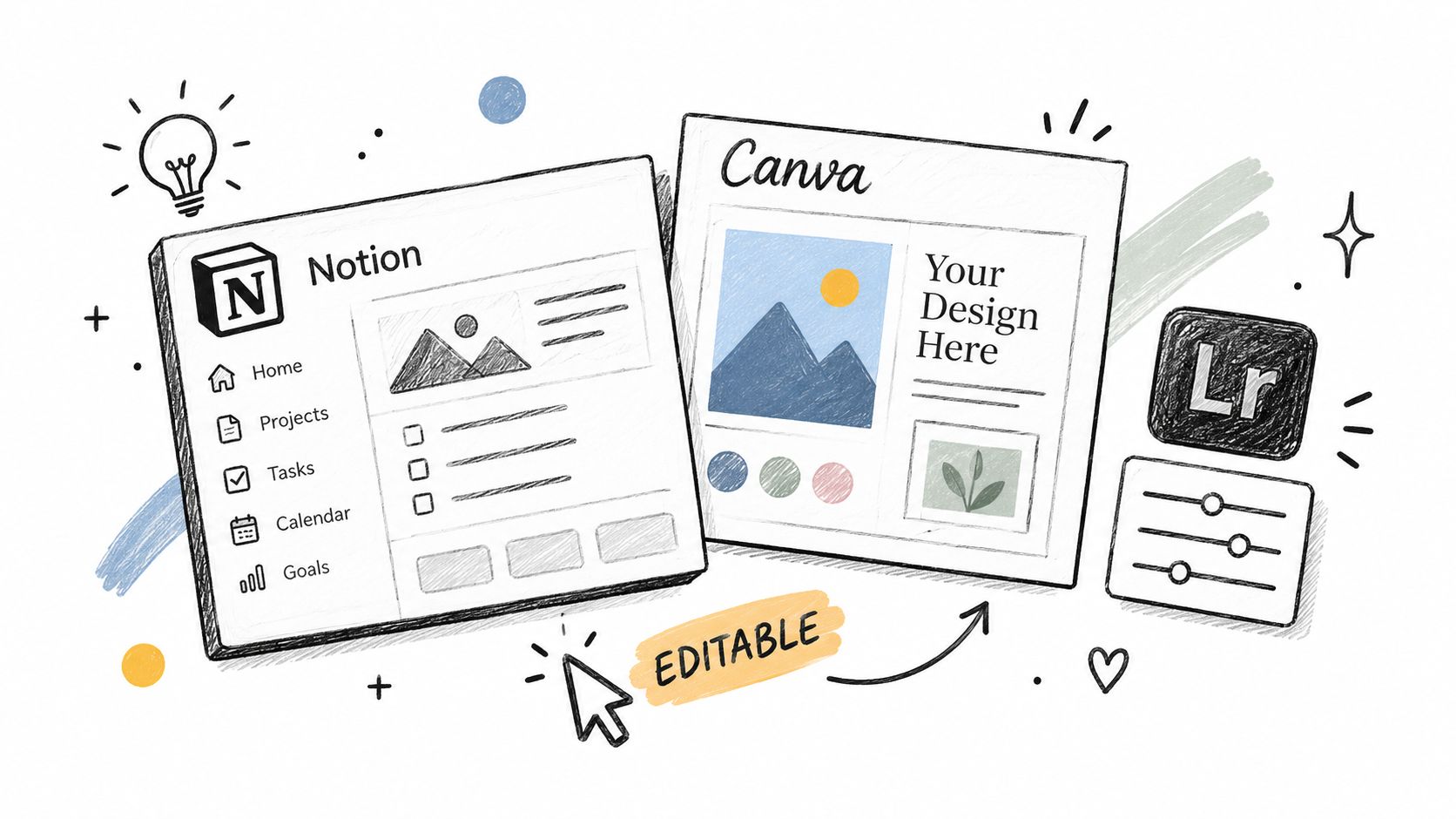
Templates and presets turn repeatable creative or operational work into a reusable asset. They include Notion dashboards, Canva layouts, Figma UI kits, Lightroom presets, Adobe brushes, Excel trackers, presentation systems, and project planners. This category suits designers, photographers, marketers, operators, and creators who already use a structured workflow.
The best template doesn't merely look polished. It removes a decision the buyer would otherwise have to make. A real estate content calendar, a consultant proposal system, or a freelancer's project dashboard has a clear use case. A visually attractive template with no audience-specific purpose becomes another interchangeable download.
Sell the workflow around the asset
Include setup instructions, a filled example, compatibility information, and a short troubleshooting guide. Buyers often struggle with implementation rather than the file itself. A template that gets used creates better reviews and gives you language for future promotion.
A taap.bio digital product block can connect the preview, checkout, and instant file delivery in one flow. Use taap.bio's Notion template selling guide when packaging editable workspaces or similar assets. The same storefront approach works for Canva links, Figma files, preset bundles, and spreadsheet downloads.
Keep licensing clear. State whether the buyer receives personal, commercial, or client-use rights. Explain whether redistribution, resale, or modification for third parties is allowed. Clear terms reduce support requests and protect the value of the asset.
Promote the template through demonstrations rather than static screenshots. Record a short walkthrough, show the unorganized starting point, and reveal the completed workflow. Bundle related assets only when they support the same job. A consultant might buy an intake form, proposal, project plan, and reporting dashboard as one operating system. That is more valuable than four unrelated files.
5. Membership Communities and Exclusive Content
Memberships sell ongoing access, so the offer has to earn repeat visits. Package the product around a private community, a resource library, live workshops, office hours, curated research, or fresh templates. This model fits creators with an audience that already needs continued help and can support regular engagement.
The buyer should know what they get before joining. State the publishing rhythm, the rules for participation, the live touchpoints, the resource types, and the outcome members can expect. “Exclusive content” is weak positioning on its own. People join for a clear reason to return, not for vague access.
Build a cadence you can maintain
A strong membership has one main job. A monthly workshop plus a practical resource works well for operators who want applied guidance. A moderated peer group fits professionals who need feedback and introductions. A creator membership can center on behind-the-scenes material and early access. Pick the reason people stay, then build around it.
Recurring models matter in digital sales. Analysts at Fungies' digital seller market analysis report that subscriptions made up a large share of digital goods market activity, and they project continued growth in the wider market. The takeaway is simple. Recurring access works when the content keeps solving a real problem.
Because members need a reason to return, use the taap.bio email widget for a monthly announcement and re-engagement message, and keep the paid community link beside one-time products so new visitors see both options. Connect the paid community or content environment through the relevant integration, then use the storefront to promote membership alongside one-time products. The guide to creating a membership site covers the setup workflow in detail.
Memberships require active management. Moderation, updates, cancellations, member questions, and engagement drops all need attention. Launch only when you can describe the next useful experience, not just the welcome post. A smaller, active community beats a larger library that nobody uses.
6. Digital Tools, Software, and Web Applications
Software has the highest delivery complexity in this list, but it can create the strongest connection between a buyer's recurring problem and your product. Good examples include niche calculators, workflow tools, content utilities, reporting dashboards, scheduling systems, and AI-assisted applications.
Start with a problem you understand operationally. A calculator that replaces a spreadsheet is more promising than a vague “AI productivity app.” A tool for real estate agents to create listing descriptions has a clearer audience than a general writing assistant. Specific users make onboarding, pricing, and promotion more focused.
Validate the workflow before building the system
Sketch the input, action, and output. Ask what the user enters, what the tool does, and what decision or task becomes easier. Test that workflow manually with a form, spreadsheet, or service before investing in a full application. A tool that doesn't produce a useful result manually won't become valuable through more engineering.
taap.bio can serve as the landing page and payment entry point for a software offer. Use the storefront to explain the use case, show a product video, capture emails for a waitlist, and route paid users toward access. If the application needs subscriptions, authentication, hosting, support, and billing logic, plan those systems separately from the public product page.
Your promotion should demonstrate the tool against a real workflow. Show the input, the process, and the output. Avoid promising automation without explaining the work the customer still needs to review.
A digital tool also creates an ongoing support obligation. Bugs, integrations, permissions, privacy, onboarding, and feature requests all affect delivery. Choose this model when you have technical capability or a reliable development partner. Choose a template, audit, or paid booking first if you still need to learn what buyers repeatedly ask for.
For a concrete creative software example, review the ShortGenius AI ad creative tool and study how a focused tool presents its job to be done.
7. Stock Photography, Graphics, and Design Assets
Stock assets work when you can offer a visual point of view that generic libraries don't provide. Sell themed photography collections, illustrations, icons, fonts, mockups, textures, or video elements to a defined buyer. The target customer might be a wellness brand, a food creator, a real estate marketer, or a podcast producer.
Avoid competing on volume alone. Large libraries already offer enormous catalogs. Your advantage should be relevance, consistency, or a distinctive visual treatment. A coordinated set for independent therapists is easier to position than “business stock photos.”
Make licensing part of the product
Every asset pack needs an understandable license. Explain personal use, commercial use, client work, modification, redistribution, and any restrictions involving recognizable people, trademarks, or third-party materials. Model releases and copyright records belong in your production workflow, not in a crisis after publication.
Organize assets by the buyer's task. A social campaign pack can contain photographs, background textures, icons, and mockups that work together. A creator pack can include thumbnails, overlays, and cover art. Cohesive collections encourage larger purchases and make promotion more visual.
taap.bio can present the collection with image blocks, product previews, checkout, and email capture. Use the page to show contact sheets and close-up examples before purchase. If you add subscriptions, describe what new assets arrive and how customers access them.
This model has low delivery friction after creation, but quality control is demanding. Buyers notice inconsistent lighting, poor file naming, missing formats, and unclear licenses. Build a clean folder structure and include a readme file. Your asset library becomes more valuable when customers can find and use the files immediately.
8. Printables and Done-for-You Templates
Printables appeal to buyers who want a finished physical result from a digital file. Planners, invitations, labels, wall art, classroom resources, business cards, and organizational systems all fit this model. The audience includes teachers, event organizers, parents, small businesses, and people who want to customize a design without starting from a blank page.
The product should tell buyers what they can print, edit, and use. List paper sizes, file types, color assumptions, editing requirements, and whether home or professional printing is recommended. That information prevents disappointment and reduces avoidable refunds.
Design for the moment of use
Seasonal and event-driven products can create clear promotion angles, but they also need timely publishing. A wedding stationery set, back-to-school planner, or holiday party kit should appear before the buyer's planning window closes. Evergreen business forms and household organizers can support year-round discovery.
taap.bio's instant file delivery suits printables because buyers can move from checkout to download without waiting for manual fulfillment. Add a preview gallery, an email signup for related releases, and a bundle option when the files belong to one coordinated system.
Use Pinterest, Instagram, short-form video, or search-focused content to show the finished result. Demonstrate customization rather than just displaying the file. A video of a blank invitation becoming a finished event suite communicates utility faster than a product description.
Printables are easy to produce but difficult to differentiate. Visual polish matters, yet clarity matters more. Include instructions, test the files on common devices, and check that fonts, margins, and editable fields behave as promised. A low-complexity product still needs a professional buying experience.
9. Music, Samples, and Audio Production Assets
Audio products serve musicians, podcasters, video creators, game developers, and agencies that need sound without producing every element themselves. Sell royalty-free tracks, sound effects, loops, MIDI packs, drum kits, vocal samples, presets, or podcast intro packages.
The key commercial decision is licensing. A buyer using music in a personal video has different needs from a brand running paid advertising. Separate personal, commercial, and exclusive rights where appropriate. State whether attribution is required, whether the license covers client work, and whether the buyer can use the track in monetized content.
Sell sound by use case
Organize products around production jobs. “Podcast transition pack” is clearer than “Audio Pack 04.” “Cinematic tension beds for short documentaries” gives filmmakers a reason to listen. Include audio previews with consistent naming, tempo or key information where relevant, and a file manifest.
A taap.bio page can showcase embedded audio previews, explain licensing, deliver files after purchase, and capture emails for new releases. Use the storefront to sell a single track, a themed bundle, or access to a growing library. Promotion works best when the audience hears the asset in context, not through an isolated waveform.
Copyright and ownership need careful attention. Don't include samples, vocals, melodies, or recordings unless you have the rights to license them. Keep agreements with collaborators and retain source documentation. Buyers need confidence that their use won't create a rights dispute later.
This model fits creators with production skill and a recognizable sound. If you can produce consistently, release themed packs and build an email audience around them. If every track requires expensive outsourcing, sell a smaller, higher-value collection instead of trying to compete with large libraries.
10. Virtual Events and Webinars
Virtual events package live access, concentrated teaching, interaction, and replay value. They include workshops, masterclasses, panels, summits, training sessions, and product demonstrations. This format suits experts who can create urgency around a date and partners who can contribute different perspectives.
An event needs one clear promise. “A business webinar” is weak. “A live proposal clinic for independent consultants” gives attendees a reason to register. Explain what they'll learn, what they'll receive, whether the session is recorded, and how long replay access lasts.
Turn one event into several products
Use the live session to collect questions, objections, examples, and language from real buyers. Then turn the recording into a paid replay, the questions into an FAQ resource, and the framework into a workbook or short course. A well-run event can become the research engine for your next offer.
Registration should lead to an owned audience. taap.bio's email widget can support event promotion and follow-up, while paid bookings can handle scheduled sessions or limited workshop access. Add a calendar link, payment instructions, speaker details, and a clear replay policy to the storefront.
Partnerships can expand reach, but define responsibilities before promotion begins. Agree on speaker deliverables, recording rights, attendee communication, and follow-up ownership. If several people promote the event, use consistent messaging and one registration destination.
Events have more moving parts than downloads. Test the streaming setup, prepare a backup communication channel, and assign someone to handle technical issues. The live format creates urgency, but the replay and follow-up materials make the product useful after the event ends.
10 Digital Products: Side-by-Side Comparison
| Product | 🔄 Implementation complexity | ⚡ Resource requirements | 📊 Expected outcomes | 💡 Ideal use cases | ⭐ Key advantages |
|---|---|---|---|---|---|
| Online Courses and Educational Content | High, curriculum, recording, editing | High, camera, editing, platform, support | High per-sale revenue; long-term passive income | Skill training, certification, cohort launches | Premium pricing; builds authority ⭐ |
| Ebooks and Digital Downloads | Low, writing and layout | Low, design tools, minimal hosting | Moderate sales velocity; low price point | How‑to guides, workbooks, templates, lead magnets | Fast to launch; very high margin ⚡ |
| Coaching, Consulting, and Bundled Packages | Medium–High, delivery & personalization | High, time, scheduling, credibility | High revenue per client; strong LTV | One‑on‑one advising, VIP packages, onboarding | Highest hourly rates; deep client relationships ⭐ |
| Templates and Presets (Notion, Canva, Figma, Adobe) | Low, design once, iterate | Low, design subscriptions, demo assets | Steady passive sales; scalable via bundles | Productivity dashboards, design kits, presets | Extremely high margin; passive, repeatable sales ⭐ |
| Membership Communities and Exclusive Content | Medium, ongoing content & moderation | Medium, community tools, content cadence | Predictable recurring revenue; higher LTV | Niche communities, ongoing education, workshops | Recurring ARR; fosters loyalty and retention ⭐ |
| Digital Tools, Software, and Web Applications (SaaS) | Very high, dev, testing, maintenance | Very high, development, infra, support | High recurring revenue; scalable growth potential | Niche problem‑solving apps, freemium→paid funnels | Highest valuation potential; scalable moat ⭐ |
| Stock Photography, Graphics, and Design Assets | Medium, shoots/designs and curation | Medium, equipment or contractor costs | Passive bundle/subscription sales; visual discovery | Themed asset packs, mockups, fonts, icons | Visual shareability; subscription or bundle revenue |
| Printables and Done‑For‑You Templates | Low, fast design (1–3 hrs) | Very low, Canva, mockups, instant delivery | Low price; high volume and repeat purchase | Planners, invitations, classroom resources | Extremely fast to create; viral on Pinterest ⚡ |
| Music, Samples, and Audio Production Assets | Medium, production + mastering skills | Medium, DAW, plugins, occasional studio costs | Moderate‑high per‑asset sales; subscription possible | Beats, loops, sound effects, sample packs | Strong licensing demand; niche producer communities |
| Virtual Events and Webinars (Recorded or Live) | Medium–High, planning, speakers, tech | Medium, promotion, streaming tools, coordination | High one‑time revenue; content repurposing | Workshops, summits, product launches, lead gen | Urgency/FOMO boosts conversions; repurposeable content |
Turn One Product Into a Simple Revenue System
The most profitable digital product portfolio usually starts with one audience problem, not ten unrelated ideas. Choose a buyer you understand and write the problem in operational language. “Creators need better content” is too broad. “Independent consultants lose time turning discovery calls into proposals” gives you a specific customer, workflow, and product direction.
Validate the offer before overbuilding. Read buyer questions, review competing products, inspect support complaints, and talk to people who already pay to solve the problem. Then ask for a real commitment. A purchase, booking, or paid pre-order tells you more than a compliment or a survey response.
Create the smallest useful version. That could be a proposal pack instead of a full business library, a paid audit instead of a complete consulting program, or one workshop instead of a full course. The first version should help a buyer complete a meaningful task. It doesn't need every feature you might eventually add.
Set a clear price and delivery promise. Explain what the customer receives, how access works, what support includes, and what rights apply to the files or recordings. Unclear delivery creates refunds and support requests even when the underlying product is good.
Publish the offer on a taap.bio page with a direct preview, a purchase or booking action, and an email signup. A file-based product should show the asset in use. A booking should show the result of the session. A course should show the curriculum and learner outcome. A membership should show the cadence and community experience. Keep the next action obvious.
Use analytics to improve the conversion path. Look at which product blocks receive attention, where visitors leave, and whether visitors choose a purchase, booking, or signup. Test the message, preview, product order, and call to action before creating more inventory. A page that doesn't explain the offer clearly won't be fixed by adding another product.
Start with a file-based product or paid booking when speed matters. Files are easier to deliver and update. Bookings let you learn buyer language directly and identify the problems worth packaging. Once customers reveal repeated questions, turn the answers into a bundle, workshop, course, or membership.
The right expansion path depends on the original foundation:
- Reusable knowledge can become a guide, workshop, and course.
- Reusable assets can become a bundle, library, or membership.
- Personal judgment can become a booking, group program, and advisory package.
- A repeatable workflow can become a template, automation, or software tool.
- An active audience can support recurring content, events, and community access.
Protect your margins by reducing unnecessary tool changes. A single page that combines storefront content, checkout, paid scheduling, email capture, and analytics can make the buyer journey easier to understand and the creator stack easier to maintain. The platform won't create demand for you, but it can reduce friction after someone discovers the offer.
The strongest system connects three layers. First, a low-priced entry product gives a new buyer a safe way to experience your work. Second, a higher-value transformation solves a deeper problem through coaching, a course, software, or a structured package. Third, an owned email audience gives you a direct channel for useful follow-up, new releases, workshops, and repeat promotion.
Don't launch all three at once. Launch the smallest useful offer, listen to buyers, and build the next layer from demonstrated demand. Your goal isn't to collect digital products. It's to connect expertise, assets, access, and recurring value into a business that serves the same audience more effectively over time.
Use taap.bio to publish digital downloads, sell courses and templates, accept paid bookings, capture email subscribers, and track activity from one bento-style creator page. Choose one product model from this list, add a clear preview and delivery promise, then invite your audience to visit taap.bio and take the next action.