The most profitable digital product isn't automatically the most complex one. A software platform may scale impressively, but it also creates support, hosting, maintenance, and retention obligations. A focused template can launch faster, solve a sharper problem, and produce useful customer feedback before you commit months to development.
Choose the product model before you build. Match audience urgency, your expertise, delivery effort, pricing potential, scalability, and access to an owned email audience. A buyer who needs a specific workflow solved today may prefer a downloadable toolkit over a broad course. A consultant with limited reach may earn more from a paid audit than from a low-priced ebook. A creator with proven recurring demand can build toward a membership, subscription, or software product.
This list ranks the top digital products to sell by business model and operational reality, not popularity alone. Each model can move through the same focused taap.bio workflow: attract visitors from social content or search, present one clear offer, collect payment or bookings, deliver access, capture email subscribers, and measure which page elements convert.
Table of contents
1. Digital Courses and Online Coaching Programs
Courses and coaching programs work best when customers want a defined result, not an unlimited library of information. Teach one practical skill, guide customers through a transformation, or help them complete a task they've struggled to finish alone. Strong formats include short video lessons, live cohorts, downloadable workbooks, exam preparation, fitness programs, and professional training.
The online-education market is substantial, although estimates differ depending on whether they include university tuition, corporate training, course marketplaces, and learning software. One estimate values global online-education revenue at $185.20 billion in 2024 and projects $279.30 billion by 2029, while another narrower estimate values the market at $59.2 billion in 2024. These figures shouldn't be combined, but they support the commercial strength of structured learning products. The online-education market estimates show why creators can sell courses beyond traditional institutions.
Build the smallest credible curriculum
Don't record a huge course before proving that people will pay for the outcome. Start with a small cohort, a paid workshop, or a compact “micro-course plus resource pack.” Use existing client work, videos, presentations, and frequently asked questions to reduce production time.
A course page should answer four questions immediately:
- Who is it for: Name the audience and their current problem.
- What changes: State the skill, task, or result customers can expect to pursue.
- How access works: Explain whether lessons are recorded, live, downloadable, or combined.
- What happens next: Add a workbook, booking option, or implementation session.
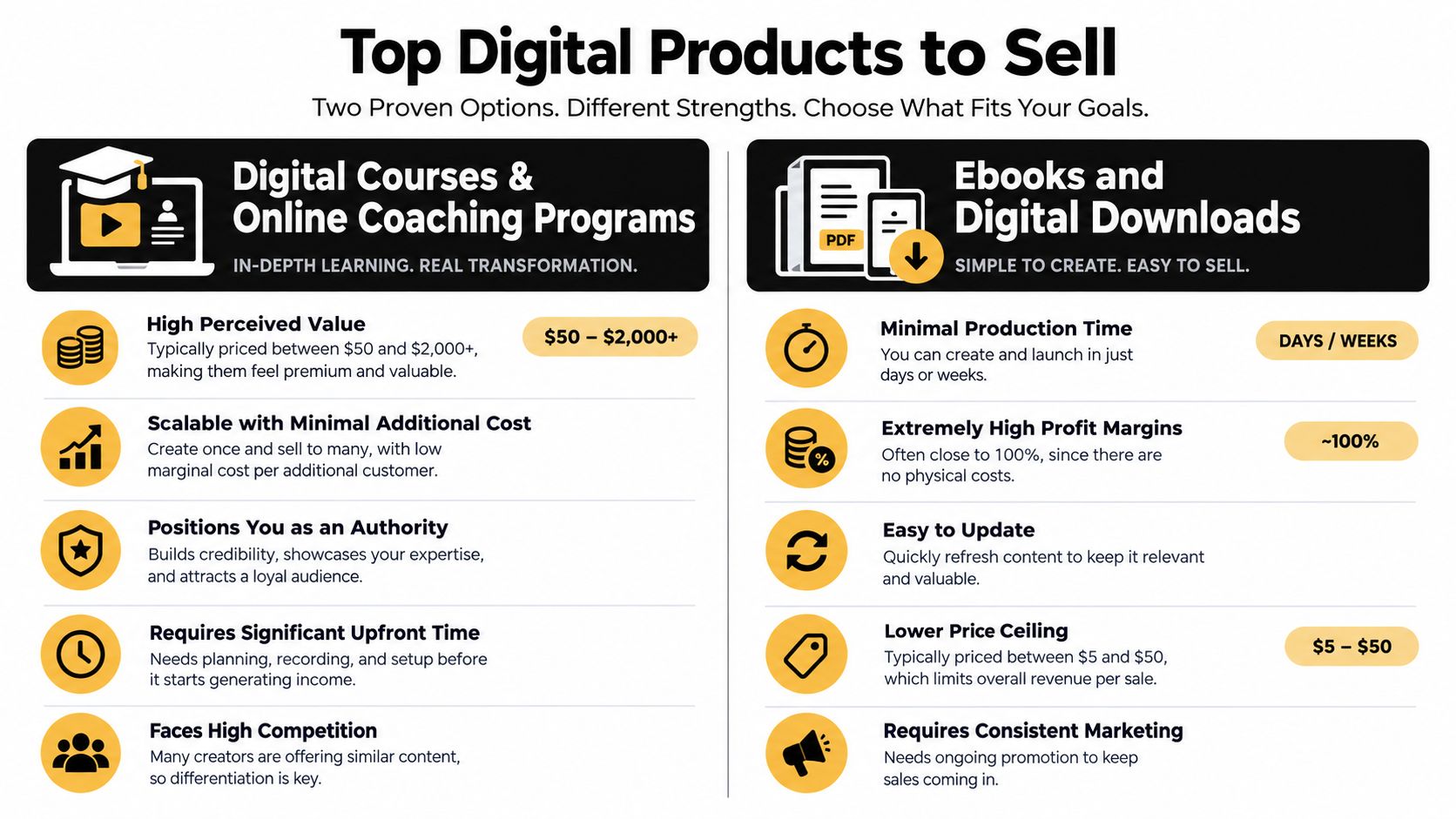
Online courses can carry higher pricing potential than standalone files, but support requirements rise with complexity. Keep lessons short, add explicit milestones, and use an email sequence to encourage progress. Class Central's analysis of MOOCs found a median completion rate of 12.6%, so a paid course should reduce cognitive load rather than overwhelm buyers. The course comparison chart illustrates why courses demand more delivery planning than simple downloads.
Use taap.bio's email signup widget before launch, then connect checkout or paid bookings from the same page. For a practical implementation guide, see how to sell an online course.
2. Ebooks and Digital Downloads
Ebooks, checklists, guides, workbooks, and downloadable files are the fastest route from expertise to a sellable product for many creators. They require less production and support than courses, and instant delivery means the customer can receive the purchase immediately after checkout.
The worldwide ebook sector was estimated at approximately $22.45 billion in 2024 and projected to exceed $36.57 billion by 2034, with an implied annual growth rate of about 5% over that period. A separate estimate placed the market at $14.92 billion in 2025, compared with $11.29 billion in 2017. The difference reflects market definitions, not a contradiction. The ebook market estimate supports treating ebooks as durable digital products rather than short-lived social-media experiments.
Sell a specific shortcut
A broad topic creates a weak buying reason. “Marketing guide” is vague. “A content briefing workbook for freelance SEO writers” gives the buyer a clear use case. The strongest downloads combine explanation with action, such as a guide plus checklist, a workbook plus spreadsheet, or a professional template plus instructions.
Create a free, useful sample to capture email addresses, then lead subscribers toward the paid version. A taap.bio page can show the file format, included assets, license terms, delivery method, and a short preview without sending visitors through several disconnected tools.
Bundle related assets when the standalone file feels too small to justify a purchase. A checklist, editable template, and short guide can solve a workflow more completely than any single component. Before building, ask your audience what they're currently trying to finish, then turn the most repeated answer into the product promise.
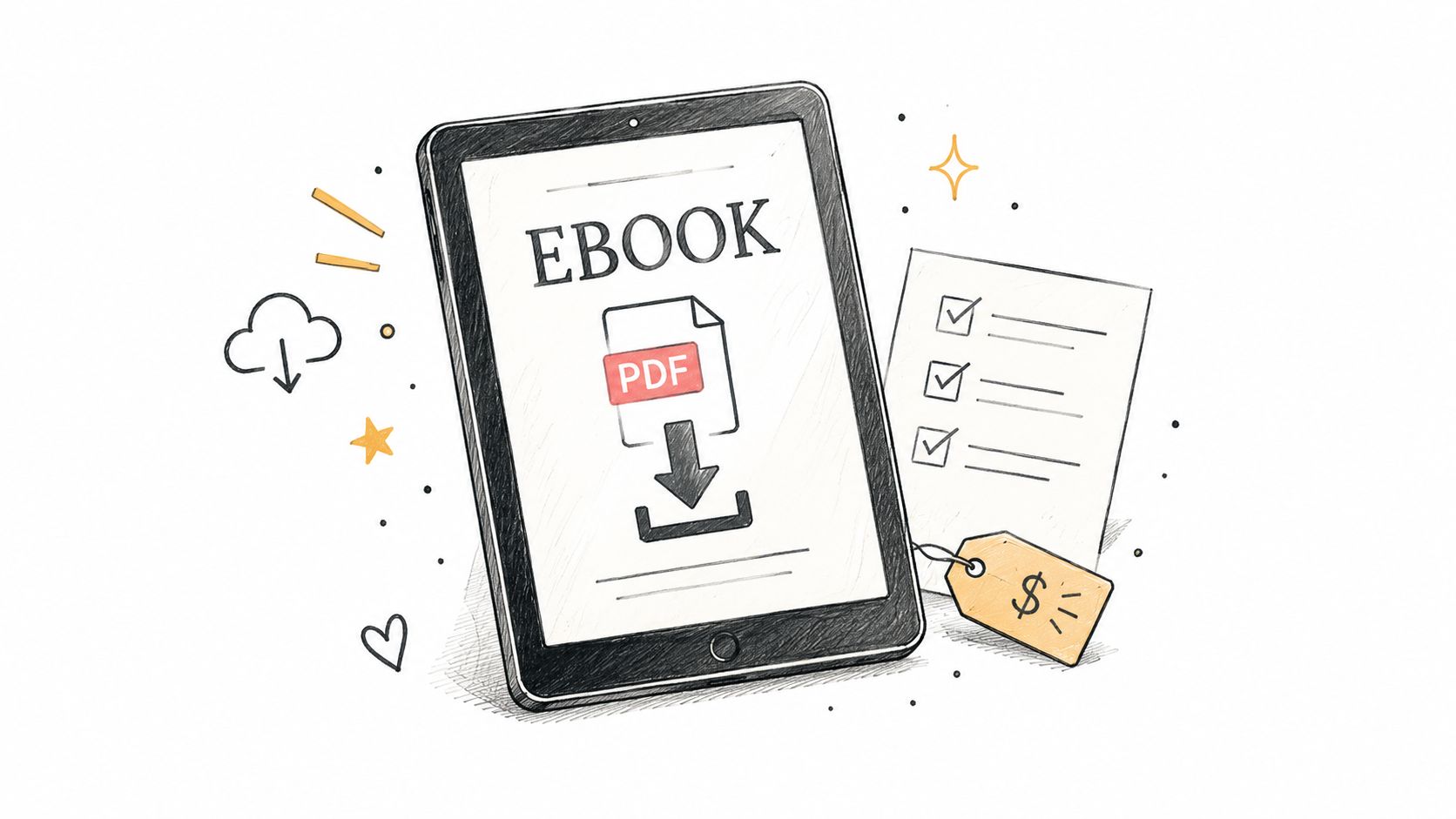
For a practical explanation of the delivery model, use this guide to digital downloads. The ebook download illustration reinforces the simple path from product page to paid file access.
3. Membership Communities and Subscription Content
Memberships create recurring revenue by giving customers an ongoing reason to return. The offer could include a private community, paid newsletter, resource library, private podcast, monthly workshop, expert Q&A, or continuing feedback. Patreon, Substack, Mighty Networks, Circle, and niche fitness communities all demonstrate different ways to package continuing access.
This model is attractive when your expertise changes regularly or when customers benefit from interaction with one another. It isn't a good fit for a creator who has only one useful file and no repeatable publishing rhythm. Members need to know what they'll receive, when they'll receive it, and why the relationship remains valuable after the first month.
Make the recurring promise operational
Start with a small founding group instead of opening a large community with an empty feed. Define the publishing cadence, support boundaries, moderation responsibilities, and access rules before accepting payment. A monthly expert call, a growing resource archive, and a focused discussion space may be more valuable than daily content that exhausts you.
Use a free tier or preview to demonstrate the quality of the experience. Your taap.bio page should lead with the membership outcome, not a long list of features. Capture email before directing visitors to the signup flow, especially when people need time to decide.
Recurring offers require retention thinking from the beginning. Send onboarding emails, point new members to the most useful resources, and make the next action obvious. Annual access can improve commitment, but only offer it when you can reliably maintain the promised value.
A focused membership also pairs well with paid bookings. Members can receive group education while premium customers pay for private implementation help. Learn more about creating a membership site before choosing the community tools, payment flow, and access structure.
4. Personalized Consulting and Done-For-You Services
A productized service is often the smartest first digital product for an expert without a large audience. You don't need to record a full course or build a large content library. You need a clear problem, a repeatable method, a defined deliverable, and a booking process that protects your time.
Offerings might include a brand audit, website review, content strategy session, career consultation, customer research sprint, or done-for-you implementation package. The customer pays for judgment and progress, not merely access to information. That makes this model less scalable than a file, but it usually has stronger pricing potential and gives you direct evidence about what buyers value.
Turn expertise into a defined package
Avoid a vague “book a call” button. Name the service, duration, preparation requirements, deliverables, cancellation policy, and next step. An intake form can collect context before the appointment, while upfront payment reduces no-shows and filters out casual requests.
A useful ladder looks like this:
- Entry offer: A focused review or strategy session.
- Core offer: A larger audit, plan, or implementation sprint.
- Expansion offer: Ongoing advisory support, a course, or a toolkit.
Use the first projects to identify repeated questions and recurring deliverables. Those patterns can become templates, email lessons, or a future course. Ask permission before recording calls or using client material, remove confidential information, and request testimonials only after you've delivered a clear result.
taap.bio's paid booking feature can place the calendar, payment, and appointment invitation in the same customer journey. That matters because every extra redirect creates another opportunity for a prospect to abandon the process. Keep the page narrow, show who the service suits, and make the booking action visually dominant.
5. Digital Templates and Notion/Figma Assets
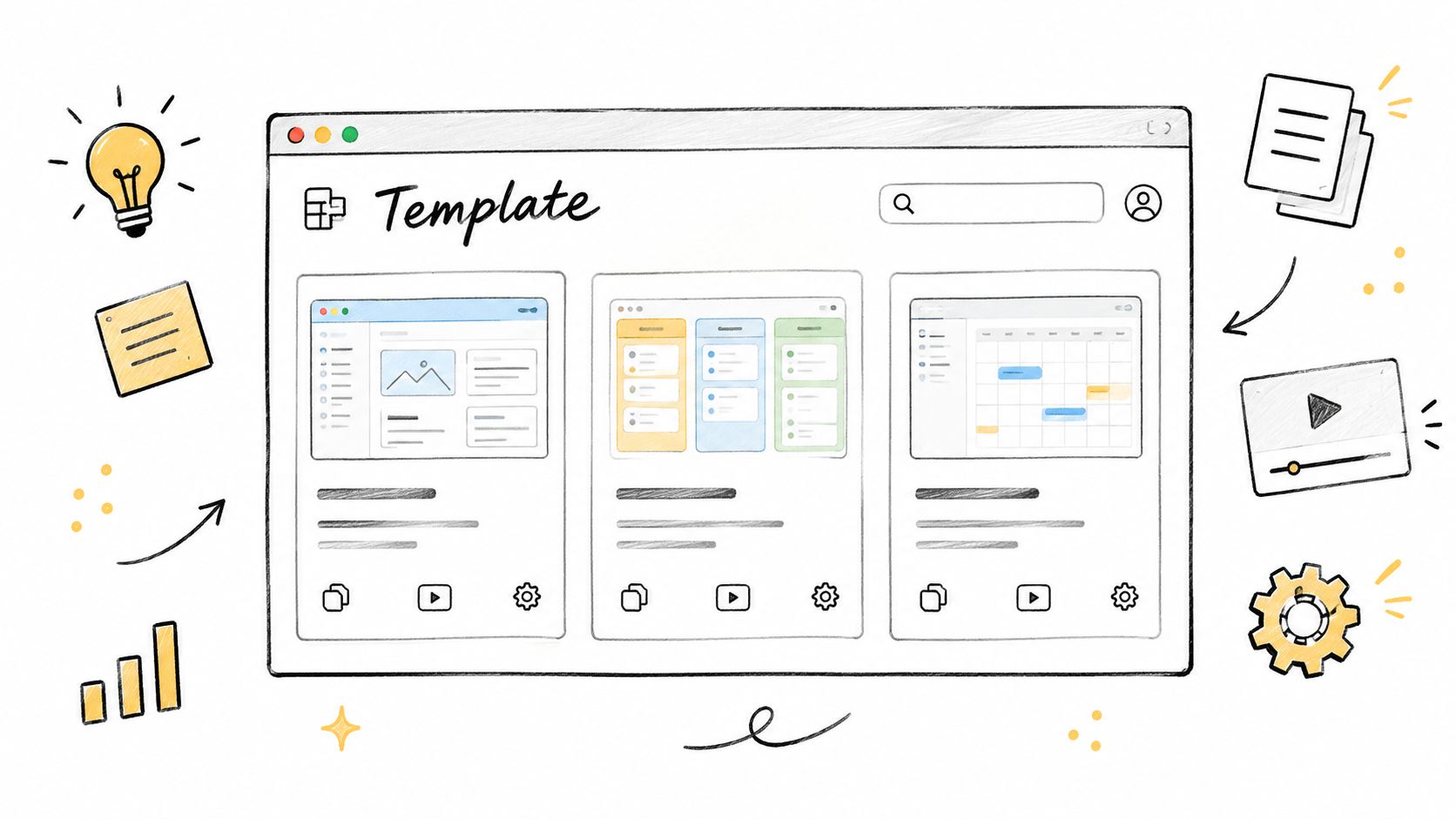
Templates sell because buyers want a working starting point, not a blank document. Notion workspaces, Figma UI kits, Google Sheets models, CRM systems, content calendars, budget trackers, and project dashboards can all become valuable when they reflect a real workflow.
The creator-economy software market was estimated at $6.41 billion in 2025 and projected to reach $16.89 billion by 2031, while creator-commerce platforms were forecast to grow at 19.82% annually through 2031. Cloud deployment represented 87.53% of market revenue in 2025, which supports a buyer expectation of immediate browser-based access. The creator-economy software research points toward functional, instantly accessible products rather than decorative files alone.
Design for one workflow
“Notion template” is a format, not a market. “Notion client-management system for freelance designers” identifies a buyer, a context, and a job to be done. Include a filled example, setup instructions, compatible software details, and a short walkthrough so customers know how to turn the asset into a working system.
A free sample can capture email subscribers before you present the full toolkit. A taap.bio page can display screenshots, a product video, file formats, compatibility information, license scope, update policy, and instant delivery in one place.
Make maintenance part of the offer
Templates need maintenance when the underlying platform changes. Announce meaningful updates to past customers, document version changes, and state exactly what support includes. You can use a single asset as the entry product, a related toolkit as the bundle, and a paid setup call as the premium offer.
Creators who want a practical starting point can also use this free document template. For a walkthrough of the Notion-specific model, read how to sell Notion templates.
6. Music, Art, and Creative Digital Assets
Creative assets let musicians, photographers, illustrators, designers, and video creators turn original work into repeatable digital sales. Suitable products include beats, sound effects, sample packs, stock photographs, presets, LUTs, fonts, icons, motion graphics, and digital artwork.
This model scales better than commissioned work because one finished asset can serve many customers. It still requires careful licensing, clear previews, organized file delivery, and a recognizable style. Buyers need to know whether they can use the asset commercially, edit it, share it with a team, or include it in a client project.
Package the asset around a use case
A loose folder of files feels difficult to evaluate. A focused collection feels useful. A producer might offer sounds for a specific video style. A photographer might package presets around a named visual treatment. A designer might sell a cohesive icon set instead of unrelated graphics.
Use taap.bio media widgets to preview the work directly. Audio buyers should hear samples. Visual buyers should see a gallery. Video buyers should watch a short demonstration. Give away one sample to build an email list, then promote the full collection to subscribers who already understand the quality.
Create simple bundle tiers:
- Single asset: A low-friction first purchase.
- Focused bundle: Several complementary files for one project.
- Commercial or extended license: More usage rights and clearer business value.
Protect your work with readable license terms and retain proof of original creation. Don't promise unlimited rights if you haven't defined them. The customer should understand what they purchased before downloading, not after a dispute.
7. Email Courses and Autoresponder Sequences
Email courses are a strong choice for experts who can teach a process in small, repeatable steps. They deliver guidance through scheduled messages instead of a dashboard or video library, making them useful for writing challenges, onboarding, fitness routines, language practice, and marketing plans.
They also offer a practical validation path. Start with a free sequence that gives subscribers one useful result, then sell a course, consultation, toolkit, or membership to readers who want implementation support. A paid version can include worksheets, templates, feedback, or a complete action plan. Pricing potential rises with the depth of the transformation and the support attached to it.
Design the sequence as a selling system
Every message needs one clear job. Introduce the problem, teach one idea, assign one action, and make the next lesson feel necessary. This progression creates momentum and prevents the sequence from becoming a collection of disconnected tips.
Open with A clear starting point that states what the subscriber will accomplish. Follow with One small win they can complete immediately. Then give A reason to continue by linking that action to the next lesson. Present A relevant offer after the reader has experienced the method and can judge the value of further help.
Use the taap.bio email widget to collect subscribers from a focused public page. State the subject, delivery frequency, and expected outcome beside the signup form. Keep the sales path visible: the page should explain the free sequence, capture the email address, and direct interested readers toward the paid product without unnecessary steps.
Fulfillment is light after the sequence is written, but setup still requires care. Test the onboarding flow, check every link, monitor deliverability, and remove customers from promotional emails once they purchase the next offer. This model suits specialists with limited delivery capacity because one sequence can sell repeatedly without adding calls or manual fulfillment.
8. Webinars and Virtual Events
A webinar is a live sales test, not just a presentation. Use it to teach a method, demonstrate a product, answer objections, or let prospects assess your communication before buying a course or service. Keep the format free for lead generation, ticketed as a workshop, or inside a membership.
Choose this model when direct feedback matters more than low-touch fulfillment. Registration promotion, reminders, hosting, questions, and replay delivery require more work than a download. In return, you can validate a topic quickly, hear objections in real time, and turn one recording into future content.
Build the event around one commercial outcome
Set one clear promise for the registration page. The confirmation email should state what attendees need to prepare. Reminders should remove practical barriers to attendance. After the session, send the replay, identify the key action, and make one relevant paid offer.
A focused taap.bio page should move visitors through four decisions:
- Event explanation: State who should attend and what they will learn.
- Registration or payment: Give visitors one visible action without unnecessary redirects.
- Email capture: Collect contact details from people who are interested but not ready to register.
- Follow-up offer: Connect the event to a course, booking, or downloadable resource.
Ticket price and fulfillment should match the promise. A focused workshop can support a paid offer when attendees leave with a usable result. A free session needs a clear path to the next purchase. Keep delivery capacity in view before adding live support or repeated sessions.
Record the event with permission, then repurpose it into short videos, a podcast episode, a written guide, and email content. The replay extends the selling window for registered prospects who need more time.
Use attendance and purchase behavior as positioning feedback. Registrations without attendance point to a weak promise or reminder sequence. Attendance without sales points to problems with the offer, proof, price explanation, or next action. Fix that issue before scheduling another event.
9. Print-on-Demand and Physical Product Integration
Print-on-demand works best as a brand extension, not as a standalone digital product. You create the design, while a fulfillment provider prints and ships shirts, hoodies, mugs, hats, posters, or other merchandise after each order.
The model removes inventory storage, but physical fulfillment still affects margins. Production costs, shipping, returns, print quality, and provider reliability all shape the customer experience. Choose this route when your audience already connects with your work, music, community, or message and has a reason to buy something tangible.
Validate one focused merchandise offer
Start with a small collection built around a recognizable design. Show clear mockups, ask your audience for feedback, and test interest before adding more products. A focused taap.bio page can explain the item, capture email addresses from visitors who are not ready to buy, and send qualified shoppers to a Printful or similar store. It can also present the merchandise beside a related digital product.
Build the offer around a clear customer reason:
Course plus apparel gives participants a branded item that reinforces the experience. Music plus merchandise pairs a digital release with a limited design. Community plus product creates member-only artwork or seasonal goods. Digital artwork plus print sells a downloadable file alongside a fulfilled wall piece.
Price for the complete fulfillment cost, then check whether the remaining margin justifies customer support and promotion. Merchandise usually requires more operational work than a download because delivery times, damaged orders, and returns need attention. Keep the product range narrow until sales and fulfillment run smoothly.
Email supports launches because subscribers already know your work. State the launch window plainly, and explain the reason for any genuine limit. Tell buyers that the partner produces and ships the physical item, while the digital component may arrive immediately after payment. This separation prevents confusion when delivery schedules differ.
10. AI-Powered Tools and Software-as-a-Service Products
The most scalable product here is also the easiest to underestimate. A narrow AI tool or SaaS product can serve many customers without repeating the full delivery work, but hosting, security, maintenance, and support continue after launch. Suitable ideas include a writing assistant, scheduling tool, analytics dashboard, workflow automation, browser extension, mobile app, or API service.
The course-platform research is relevant context for creator-led digital businesses, not proof of SaaS demand. It shows that independent creators can participate in structured software markets, while AI products require a different support model from a downloadable file. The course-platform market research should therefore inform your business-model thinking, not validate an untested tool.
Build around one expensive, repeated task
Choose a defined user and a job they perform often. Release the smallest useful version, then recruit early users through a focused taap.bio page. Use that page to explain the outcome, capture email addresses from interested visitors, collect signups or trial requests, and direct qualified prospects into the product. Validate the workflow before adding features.
Set the offer around five decisions:
- The job: What task does the tool complete?
- The user: Who receives the clearest benefit?
- The output: What result does the customer get?
- The access model: Will you sell a trial, subscription, license, or one-time purchase?
- The support promise: Which help, fixes, and updates are included?
Subscription pricing suits tools that save time repeatedly. One-time pricing fits a stable utility with limited ongoing costs. Calculate hosting, model usage, uptime monitoring, bug fixes, documentation, support, and compatibility work before setting a price. AI products also face changing models, pricing, and output quality, so publish supported workflows and an update policy.
Use AI tools for content creators for positioning ideas, then keep the product narrow. A tool with clear retention value can scale, but it demands more sustained operations than a download.
Top 10 Digital Products Comparison
| Product | 🔄 Implementation Complexity | ⚡ Resource Requirements | 📊 Expected Outcomes (⭐) | 💡 Ideal Use Cases & Key Advantages |
|---|---|---|---|---|
| Digital Courses and Online Coaching Programs | High, months to build curriculum, videos, live logistics | High, video production, LMS/tools, support staff | High revenue per sale; scalable long-term; authority building ⭐⭐⭐⭐ | Teaching deep skills, cohort launches, premium pricing; strong list & upsell potential |
| Ebooks and Digital Downloads | Low, days to weeks to create | Low, writing/design tools, minimal delivery overhead | Low price per unit but very high margins; volume-driven revenue ⭐⭐ | Quick lead magnets, passive sales, easy to update; near-100% profit on taap.bio |
| Membership Communities and Subscription Content | Medium–High, ongoing content and moderation | Medium, platform fees, community tools, regular creator time | Predictable recurring revenue and higher LTV; churn risk ⭐⭐⭐ | Ongoing value delivery, community-led growth, funnel for premium services |
| Personalized Consulting and Done‑For‑You Services | Low setup, high delivery complexity (custom work) | High, creator hours, expertise, scheduling & ops | Very high revenue per client; not easily scalable ⭐⭐⭐⭐ | High-ticket offers, referrals, bespoke problem-solving; immediate cashflow |
| Digital Templates and Notion/Figma Assets | Medium, design + tutorial creation | Low–Medium, design software, demo videos | Highly scalable with high margins; volume needed for scale ⭐⭐⭐ | Productivity/design shortcuts; bundle to raise AOV; quick repurchases |
| Music, Art, and Creative Digital Assets | Medium, quality production & licensing setup | Medium–High, equipment, software, licensing management | Passive scalable income; discoverability and licensing constrain growth ⭐⭐⭐ | Stock assets, bundles, niche creative styles; preview players improve conversions |
| Email Courses and Autoresponder Sequences | Low, sequence writing and automation | Low, email platform, copywriting effort | Strong for list growth and nurturing; high conversion to offers ⭐⭐⭐ | Lead generation, onboarding, prelaunch funnels; repurpose existing content |
| Webinars and Virtual Events | Medium, live delivery + promotion | Medium, streaming tools, marketing, slides | High conversion potential per event; requires promotion ⭐⭐⭐ | Product launches, authority building, high-touch sales events |
| Print‑on‑Demand and Physical Product Integration | Low, design + POD setup | Low–Medium, design assets, POD integration, mockups | Moderate margin per sale; tangible fan engagement ⭐⭐ | Merch for fans, limited editions, bundling with digital products |
| AI‑Powered Tools and SaaS Products | Very High, product development & ongoing ops | Very High, engineering, hosting, support, compliance | Very high recurring revenue and defensibility if product-market fit achieved ⭐⭐⭐⭐ | Niche automation or creator tools; subscription businesses with high scalability |
Turn One Product Idea Into a Selling System
The right product depends on your capacity, not on a popularity ranking. If you need speed and have limited support time, start with an ebook, checklist, workbook, or focused template. These products can validate a problem quickly, capture email subscribers, and create a simple path from visitor to payment to instant delivery.
If your expertise needs explanation, use an email course or webinar to build demand before recording a larger program. These models let you test the language customers respond to, collect objections, and identify which lesson or promise deserves expansion. A webinar can become a course module, while an email sequence can become the foundation of a paid learning product.
If buyers need your judgment, start with a paid booking. A strategy session, audit, or implementation sprint gives you stronger feedback than a survey and reveals which parts of your process can later become templates or lessons. Productized services aren't as scalable as files, but they can produce revenue and proof before you invest in a more complex offer.
Memberships and software belong later in the progression unless you already have clear recurring demand. A membership requires consistent value and community management. Software requires infrastructure, support, security, and retention work. Don't create a subscription just because recurring revenue sounds attractive. Create one when customers have a recurring problem and you can reliably solve it.
Use this launch sequence:
- Validate one specific problem: Talk to potential buyers, review competing offers, and identify the task they urgently want to complete.
- Create the smallest credible offer: Build one useful file, one workshop, one service package, or one working software workflow.
- Publish one focused page: Explain the audience, problem, outcome, format, price, delivery, and support terms.
- Connect checkout or bookings: Make payment, scheduling, confirmation, and access straightforward.
- Add an email capture point: Offer a useful preview or short educational sequence for visitors who aren't ready to buy.
- Promote one clear call to action: Send social posts, videos, newsletters, and search visitors toward the same offer.
- Review conversion data: Compare visits, signups, purchases, bookings, and drop-off across the page widgets before expanding.
A taap.bio page can bring products, paid bookings, email capture, rich media, checkout, and analytics into one creator storefront. That reduces the number of handoffs between discovery and purchase, which makes it easier to understand whether the offer or the sales journey needs improvement.
Start with the product you can finish, explain, deliver, and support well. Then use customer questions and buying behavior to decide what deserves a bundle, a premium service, a recurring offer, or a software build.
taap.bio gives creators one page for selling digital files, accepting paid bookings, collecting email subscribers, showcasing rich media, and reviewing conversion analytics. Build a focused storefront for your first product and invite your audience to visit taap.bio to start turning expertise into a clearer selling system.