The easiest digital product to make isn't automatically the best one to sell. A short PDF may take a weekend to create, but it can also produce a low-value transaction, weak customer relationship, and little reason for buyers to return. A course can command more, but it demands teaching, support, updates, and a dependable way to turn attention into trust.
The strongest choice matches your expertise, audience behavior, available time, preferred price point, and fulfillment capacity. A photographer may have a natural advantage with presets or licensed media. A consultant may earn more from paid bookings before turning repeated advice into a course. A designer may scale faster with niche templates than with custom client work.
The market is large enough to reward several models. Trade in digital products reached at least USD 0.95 trillion in 2021 across 189 countries and 31 sectors, covering digital goods, productized services, and intermediation fees, as reported in the digital product market overview. Global digital media spending exceeded USD 560 billion in 2024, while the cited market report says digital products generated more than USD 2.5 trillion in annual value by 2025 in a projection and market estimate summarized by Mordor Intelligence.
This roundup compares ten options by the full revenue system behind them: creation burden, price potential, fulfillment, customer relationship, marketing hook, and audience fit. It also shows how a focused taap.bio page can connect discovery with a purchase, booking, or email signup without sending visitors through a pile of disconnected tools.
Table of contents
1. Online and Video Courses
Online courses are not automatically the best digital product. They win when buyers need a structured transformation, not isolated information. Coaches, consultants, educators, and specialists with a repeatable method can justify this model. The cited market breakdown estimated online courses at $12.8 billion in revenue with 22% year-over-year growth, according to InsightRaider's digital product market analysis.
The upside is strong price potential. Recorded lessons, worksheets, examples, and live support can form a higher-value offer than a standalone download. Creation burden is higher, however. You need a clear curriculum, usable audio and demonstrations, checkout, delivery, and a process for handling buyer questions.
Test demand before filming an entire program. Run a free workshop, sell a short guide, or collect waitlist emails for one narrow outcome. Use those responses to script the curriculum, batch-record an MVP with a phone and reliable audio, then add examples where buyers struggle.
Build the offer around one outcome
MasterClass sells celebrity-led education, while CreativeLive focuses on creative classes and replay access. Teachable, Thinkific, and Podia provide hosted course infrastructure. None of them supplies your positioning, audience, or marketing hook.
Practical rule: Sell the first version of the transformation, not every piece of knowledge you have.
Payment plans can reduce the barrier to a premium course. A waitlist captures demand before production. On a taap.bio page, place the course promise, preview video, email signup, checkout, booking option, and basic analytics in one focused destination. The course creator tools guide shows how to connect those functions within a broader creator workflow.
Fulfillment remains partly ongoing because learners may need clarification and updates. The customer relationship is also deeper than with a template, which creates a clear path into coaching, membership, or paid consultation. Choose courses when you can teach one specific result and support the experience. Otherwise, start with a smaller product that tests the same promise.
2. Digital Templates and Design Files
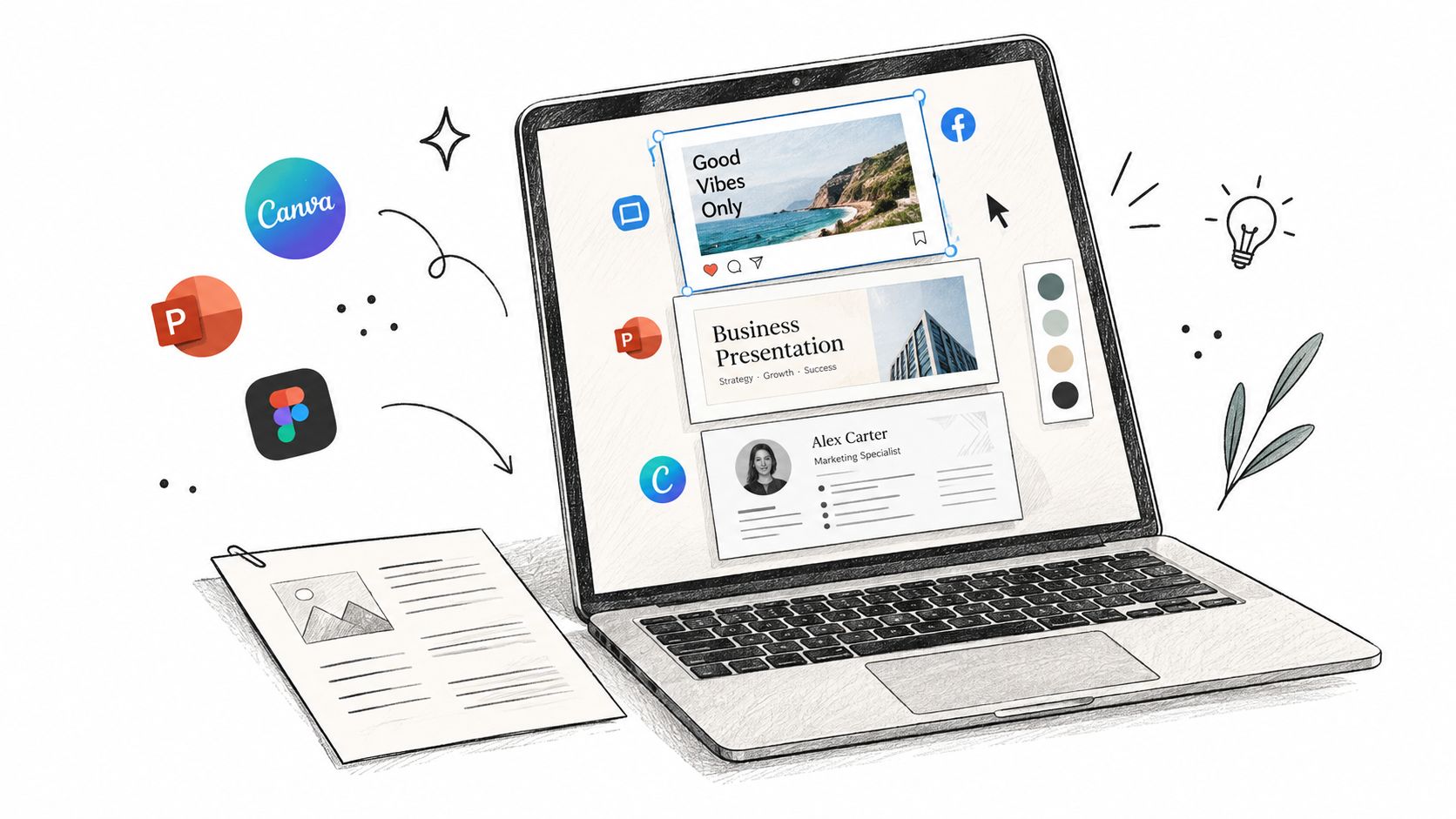
Templates sell time. Buyers want a credible starting point they can edit immediately in Canva, Figma, PowerPoint, or Adobe, whether they need a launch campaign, client proposal, resume, presentation, or social media calendar.
Templates rank among the more scalable products in this list because creation happens upfront while fulfillment stays digital. The customer pays, receives the files, and works independently. Your revenue still depends on audience fit and price potential. A broad “Instagram templates” pack faces intense competition. “Instagram launch templates for independent wedding photographers” gives a specific buyer a clearer reason to choose it.
Package the file as a usable system
A single design is easy to replace. A coordinated bundle supports a complete workflow. Pair matching posts, stories, covers, instructions, and preview images that show the finished result. A free lite version can capture email addresses, while the paid pack should add enough depth to justify purchase.
Match the file type to the customer's habits. Canva suits non-designers, Figma fits product and interface teams, and PowerPoint remains practical for business presentations. Include a concise start-here document because access and editing problems increase support work.
Learn how to sell Canva templates before producing a large catalog. On a taap.bio page, a product block can deliver files after payment, display previews, collect email subscribers, and show which product widgets attract attention. That combines checkout, lead capture, and basic analytics without sending buyers across separate pages.
Your marketing hook should demonstrate the finished outcome, not merely list file formats. Show the template in use, name the audience, and connect the pack to a defined task.
Templates suit creators with a visual portfolio and repeatable design style. They can reach buyers through strong niche and search intent without requiring a large audience, but they still need updates as formats and expectations change. Start with one audience, one job, and one focused bundle. Test sales before expanding the catalog.
3. Ebooks and Written Guides
An ebook is not automatically the easiest digital product to sell. It reduces production and fulfillment work, but its revenue depends on a narrow promise, credible expertise, and a marketing hook strong enough to make reading feel like the shortest path to a result. It suits niche how-to guides, business playbooks, productivity systems, and practical lifestyle resources.
Market comparisons place ebooks and written guides below courses and templates in size, while still showing meaningful demand. Treat that as a commercial signal: writing is accessible, so broad advice faces heavy competition. Buyers pay for a defined outcome, useful structure, and guidance they cannot quickly assemble through casual searching.
Build from material you already understand. Blog posts, emails, workshops, client questions, and research notes can become chapters, but editing must turn separate ideas into one useful system. Add a workbook, decision tree, checklist, or implementation plan so the guide helps readers act.
Make the preview do the selling
A free chapter or sample section lowers purchase risk. The sales page should identify the reader, name the problem, show what the guide contains, and state what the buyer can do after finishing it. A clean cover and readable interior layout support conversion because presentation signals care before anyone opens the file.
The customer relationship is lighter than with coaching or a membership, and delivery is simple once the file is finished. That makes ebooks scalable, but it also limits follow-up unless you collect permission to contact buyers. A post-purchase email can recommend a related template, consultation, or course without adding another fulfillment process.
Substack writers can turn related essays into a paid guide. A business consultant might package a proposal process, while a fitness creator could create a general planning guide with clear boundaries around professional advice.
Use this guide to sell ebooks online and connect the product to a simple funnel. A taap.bio page can offer a free excerpt for email capture and deliver the paid ebook after checkout, while combining bookings, follow-up, and analytics on one page.
Choose an ebook when you can explain a narrow problem better than your audience can solve it alone. Start with one promise, one preview, and one clear next step for the reader.
4. Preset Packs and Filters
Preset packs and LUTs turn visual taste into a repeatable asset. Photographers, videographers, influencers, and small brands buy them to create a consistent look without rebuilding every edit from the beginning. Lightroom, Photoshop, Capture One, and video color-grading workflows each have different requirements, so compatibility and installation support matter.
The creation burden is moderate. You need a strong eye, source images that demonstrate the effect, careful testing across different lighting conditions, and clear instructions. Fulfillment is simple after delivery, but customer questions can increase when a buyer expects one preset to produce identical results on every image.
Sell an aesthetic, not a file extension
“Preset pack” is a format. “Warm golden-hour presets for wedding photographers” is a commercial hook. Build around a recognizable visual job, then include before-and-after examples that show how the pack changes real images. A themed collection usually communicates more value than unrelated filters bundled together.
VSCO and Peter McKinnon have made preset-led visual styles familiar to creator audiences. Individual sellers can compete by being more specific, more transparent about results, and more helpful during installation. Include software versions, licensing terms, and a short tutorial.
Learn how to sell presets online before publishing your pack. On taap.bio, you can place the preview images, product description, checkout, and email signup on one page. Add a tutorial video later on the same destination so buyers can understand the workflow before purchasing.
Sell the moment after the download. Buyers aren't paying for sliders. They're paying for a faster path to a look they can recognize and repeat.
This model suits creators who already produce visual work publicly. Your own feed becomes the demonstration, and each post can point to the product. If your audience asks how you edit, presets are a direct answer. If they don't care about your process, a different product model will fit better.

5. Stock Photos, Videos, and Media Assets
Stock media becomes attractive when you already create a large volume of original visual or audio work. You can license photos, footage, music, sound effects, illustrations, or graphics as individual assets, themed collections, or access libraries. Shutterstock, Getty Images, and Unsplash have trained buyers to think in terms of searchable media and usage rights, while independent creators can win with narrower collections.
This model has a heavier creation burden than a simple template pack. You must produce, organize, name, tag, preview, and license the assets. You also need a clear policy for personal, commercial, extended, or exclusive use. Confusing licensing creates support requests and weakens trust.
Build collections around underserved use cases
Don't photograph generic office scenes because stock platforms already contain them. Shoot what your existing production gives you access to, then organize it around a customer. A real estate creator could build a library of neighborhood details and property textures. A musician might package ambient tracks and sound effects for podcast editors.
Consistent color grading and file organization make a collection easier to use. Provide previews that show the asset in context, but don't expose files in a way that makes unauthorized use effortless. State exactly what customers can and can't do with the license.
The audience relationship is more transactional than coaching or membership. That isn't a weakness if the asset solves an urgent publishing need. A buyer who needs a product image, background track, or short video clip values clear search, fast delivery, and predictable rights.
On a taap.bio storefront, group media products by collection and use rich media widgets to demonstrate them. Capture email addresses from visitors who aren't ready to license immediately, then release related collections to that audience. Analytics can show which previews generate clicks, helping you expand the collections buyers inspect.
Choose stock assets when your archive is an advantage. Don't start by trying to build a vast library. Publish a coherent, useful collection that proves your quality and makes the next purchase obvious.
6. Coaching and Consultation Packages
Coaching and consultation packages have the highest relationship intensity on this list because the customer is buying your judgment, attention, and ability to adapt. They fit business advisors, career specialists, creative directors, fitness professionals, and consultants whose value depends on context rather than a fixed file.
The creation burden is low at the beginning, but fulfillment consumes your calendar. That makes coaching less scalable than templates, ebooks, or recorded courses. Its price potential is usually stronger because the offer can address a specific situation and produce a customized path forward.
Start with one-to-one work. Listen for repeated questions, recurring bottlenecks, and outcomes clients will pay to reach. Then turn the pattern into a defined package, such as an audit plus action plan, a block of calls, or a guided implementation period.
Productize the time before you sell it
An application form filters prospects and gives you context before a call. Tiered packages let buyers choose between a focused review and a deeper engagement. Deposits and upfront payment protect your calendar, while automated reminders reduce administrative work.
Amy Porterfield and Marie Forleo are recognizable examples of business and life education brands, while Clarity.fm demonstrates the marketplace model for paid expert access. You don't need their scale to use the same principle. Make the outcome, boundaries, preparation, and follow-up explicit.
Read this guide to selling coaching online and build the booking flow around a clear offer. taap.bio supports paid bookings with an on-page calendar, upfront payment, and automatically sent invitations. The same page can capture email from visitors who aren't ready to book and sell a lower-commitment guide.
Don't sell “a call.” Sell a decision, diagnosis, plan, or completed review.
Coaching is the right starting point when you have proof from direct work but not enough validated material for a course. It can also become the research engine for future products. Turn repeated explanations into worksheets, a course module, or a membership resource, without pretending that every client needs the same solution.
7. Membership Communities and Paid Newsletters
Memberships and paid newsletters are recurring-revenue models built on continued usefulness. Customers pay for access to exclusive writing, community discussion, live Q&As, member resources, or a combination of formats. Substack, Patreon, Circle, and Mighty Networks represent different delivery environments, but the underlying requirement is the same. You must give members a reason to stay.
The creation burden is ongoing rather than front-loaded. A course can be built and updated periodically. A membership requires a dependable publishing rhythm, moderation, member support, and fresh evidence that the subscription remains valuable.
Choose a repeatable member promise
A vague promise such as “exclusive content” won't carry the offer. Define the recurring job. Members might want a weekly industry briefing, monthly design resources, live feedback, or a private peer group for a specific profession.
Start with free content that demonstrates your voice and usefulness. Then introduce a paid tier with a clear difference in access or depth. Combine formats only when each format supports the core promise. Essays, interviews, templates, and live sessions can work together, but adding everything creates an exhausting production schedule.
Community is the relationship advantage. Members can interact with you and each other, which makes the product harder to replace with a static download. Highlight member progress, answer questions consistently, and keep the space useful rather than turning it into an announcement channel.
A taap.bio page can place the membership invitation beside a free email signup and related one-time products. That gives visitors multiple commitment levels without making them move to separate destinations. Analytics can reveal whether people prefer joining the list, buying a resource, or entering the recurring offer.
The model suits creators with an audience that already returns for perspective. It doesn't suit someone who dislikes publishing on schedule. Recurring revenue creates opportunity, but it also creates a recurring obligation. Set the promise at a level you can maintain during busy periods.
8. Printables and Done-for-You Worksheets
Printables and worksheets are practical, low-friction products. Buyers download planners, checklists, meal-planning pages, invoices, trackers, or routines and use them immediately. Etsy, Pinterest-led funnels, Canva, and Gumroad have made this format familiar to consumers who want a specific tool rather than a long explanation.
The creation burden is lower than a course or software tool, but the price potential is also more limited when the product is a single page. The commercial answer is specificity and packaging. A generic planner is easy to ignore. A focused system for one audience and task has a stronger reason to exist.
Design for completion, not decoration
A printable should tell the user what to do next. Include instructions, logical page order, editable versions when useful, and files that work for the intended print or digital environment. If you sell a meal-planning product, make the shopping process clear. If you sell an invoice pack, make the fields practical and easy to modify.
Bundle related pages into a complete workflow. A business administration pack might include an invoice, proposal worksheet, client intake form, and follow-up tracker. A fitness creator could combine a routine planner, progress log, and habit sheet. The bundle increases usefulness without requiring an entirely new product concept.
Use search language your audience uses, but don't chase trends without checking fit. Pinterest and marketplace discovery can help, while email capture gives you a way to announce related products after the first purchase.
On taap.bio, sell the downloadable file with instant delivery and add an email widget for visitors who want a free sample. The same page can display a booking option for buyers who need customization. That combination turns a low-ticket printable into an entry point for a more valuable service.
Choose printables when you can simplify a repeated task. Don't rely on visual polish alone. The buyer should understand the use case from the preview and complete the first action without needing personal help.
9. Software Tools and SaaS
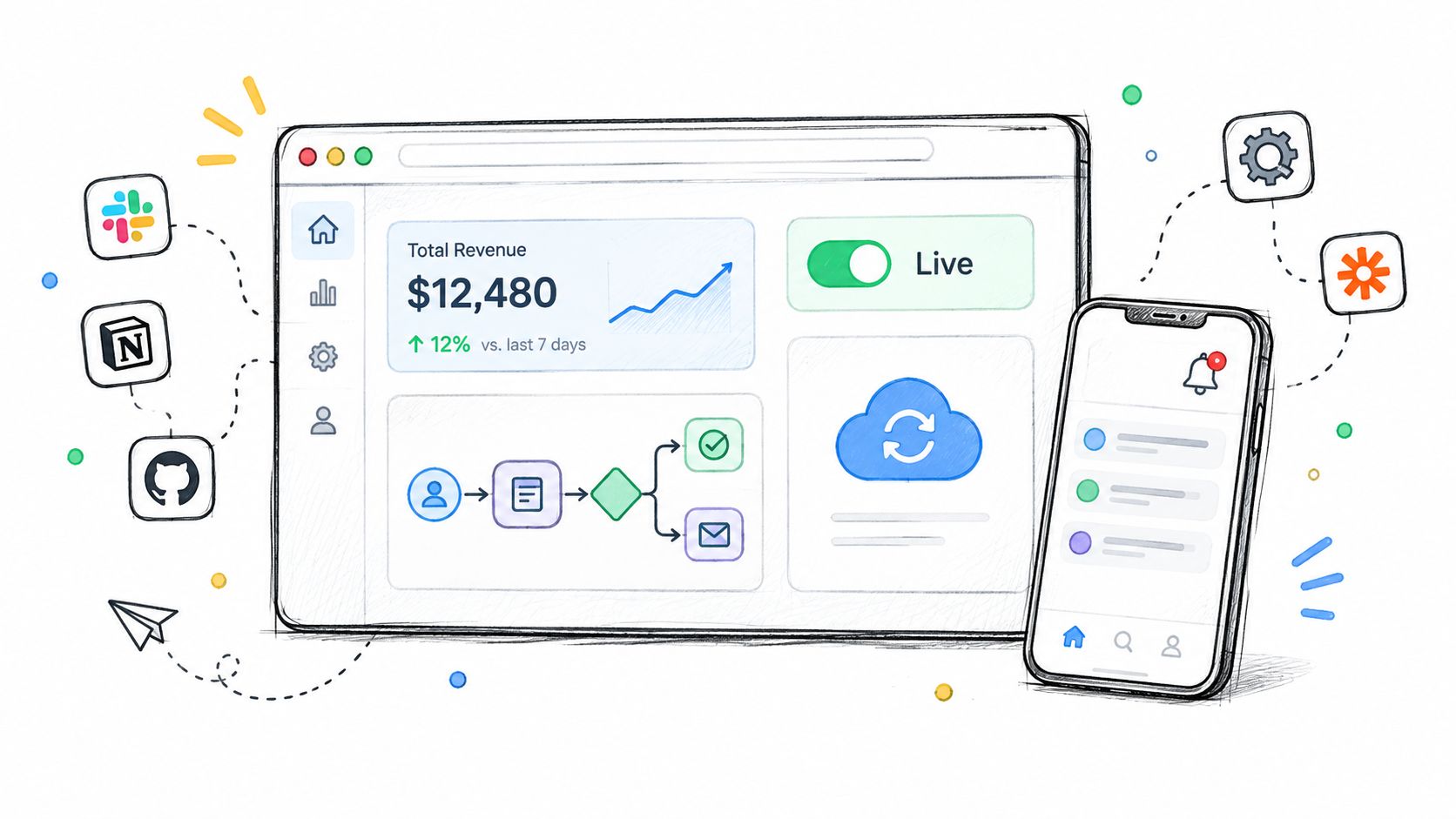
Software is the most technically demanding model here, but it has the strongest potential to become infrastructure for a customer. A mini-app can automate a calculation, remove a repetitive task, connect workflows, or make a specialized process easier. Zapier, Airtable, Notion, Stripe, and Loom show how products become valuable when people use them repeatedly inside work.
The creation burden includes product design, development, testing, security, support, billing, and updates. Fulfillment is automated after setup, but maintenance never disappears. A software customer isn't just buying access. They're trusting the tool with an important workflow.
Validate before you build the full product
Scratch your own itch, then find people with the same problem. A no-code prototype in Bubble or Webflow can test the workflow before you commit to a larger build. Invite early paying users, watch how they use the product, and ask where they abandon it.
Price by customer value and usage rather than by feature count alone. Individual users, teams, and larger organizations may need different permissions, support, and billing arrangements. Retention matters because a tool that gets abandoned after initial curiosity has a weak revenue system.
A calculator for a narrow profession may be more commercially sensible than a broad productivity app. A browser-based content workflow for one type of creator can beat a feature-heavy platform if it solves a painful task with fewer decisions.
Use a taap.bio page as the distribution front door, not as a replacement for the application itself. Explain the problem, show the tool in action, collect beta interest, and route qualified prospects to the appropriate purchase or booking flow. Analytics can distinguish casual clicks from serious demand.
Software is the right choice when you understand the workflow thoroughly and can support it after launch. If your strength is expertise rather than engineering, start with a service or template that validates the problem first.
10. Affiliate Content and Niche Marketing Guides
Affiliate content isn't a downloadable product in the same way as a template or ebook. It is a monetized information asset. You create comparison guides, reviews, tutorials, and buying frameworks that help readers choose products, then earn commissions when qualified referrals lead to sales.
The creation burden is editorial rather than technical. High-quality affiliate content requires research, testing where possible, clear disclosures, accurate comparisons, and updates as products change. Fulfillment is light, but trust is the product. A guide that sounds like an advertisement won't retain credibility.
The Wirecutter, NerdWallet, and CNET Reviews illustrate the model at publisher scale. Independent creators can apply the same logic within narrower niches, such as software for freelance designers, hosting for small businesses, or tools for video creators. Focused subject knowledge is more valuable than a long list of unrelated links.
Build the guide around a decision
A useful comparison answers a real buying question. Explain who each option suits, where it falls short, what setup requires, and which features matter for the target user. Disclose affiliate relationships plainly and recommend products you would stand behind without the commission.
Email capture extends the life of the article. A visitor who isn't ready to purchase can receive updates, new comparisons, or a practical checklist. Update evergreen guides when pricing, features, or policies change. Don't publish a guide once and assume it will remain accurate.
Creators using Instagram can pair short demonstrations with a longer comparison page. This Instagram affiliate guide for creators provides a relevant reference for connecting social discovery with affiliate content.
Use taap.bio to place the guide, email signup, and related paid products on one link-in-bio page. You can also offer paid bookings for tool selection or setup help, creating a service layer around the content. This model suits creators who enjoy research and audience education, but it won't work if you can't protect reader trust.
Top 10 Digital Products Comparison
| Item | 🔄 Implementation complexity | ⚡ Resource requirements & efficiency | 📊 Expected outcomes | 💡 Ideal use cases | ⭐ Key advantages |
|---|---|---|---|---|---|
| Online & Video Courses (Courses, Masterclasses) | High, scripting, recording, editing; months to produce | High budget (studio, contractors), time‑intensive; scalable post‑launch | High revenue per sale; passive long-term income; premium pricing | Coaches, consultants, experts selling skill-based programs | High perceived value; authority building; repurposable content |
| Digital Templates & Design Files | Low–Medium, design skill; quick launch (1–2 weeks) | Low ongoing costs; fast to produce; instant delivery | High margin per item but low price; volume-driven sales | Designers targeting social media, small businesses, marketers | Fast to market; high margins; minimal support |
| Ebooks & Written Guides | Low, writing, formatting; days–weeks | Very low cost; quick iteration; instant email delivery | Moderate revenue; strong lead‑gen and niche authority | Bloggers, consultants, knowledge creators | Low barrier to entry; evergreen; easy to update |
| Preset Packs & Filters (Photo/Video) | Low–Medium, technical editing skills; short build time | Low production cost; instant delivery; trend‑sensitive | Moderate price per pack; viral potential but niche audience | Photographers, videographers, brand stylists | Time‑saving; consistent aesthetic; perceived high value |
| Stock Photos, Videos & Media Assets | Medium, shoot/curate large portfolio; ongoing production | Equipment and production time required; can scale with subscriptions | Recurring revenue via subscriptions; portfolio size drives income | Photographers/videographers selling to agencies & creators | Steady demand; licensing enables premium pricing |
| Coaching & Consultation Packages | Medium–High, client management, prep and delivery | High time investment per client; requires strong personal brand | High revenue per client; referral and retention driven | Experts delivering personalized outcomes or transformation | High‑ticket income; deep client relationships |
| Membership Communities & Paid Newsletters | Medium, content cadence & community management | Ongoing content and moderation; predictable recurring effort | Predictable monthly ARR; churn risk if value drops | Creators with engaged audiences wanting recurring access | Recurring income; community insights inform products |
| Printables & Done‑For‑You Worksheets | Low, quick design; days to produce | Very low cost; instant delivery; minimal support | Low price per item; requires volume; seasonal spikes possible | Educators, planners, niche hobbyists, lifestyle creators | Fast creation; high perceived value for low cost |
| Software Tools & SaaS (Mini‑Apps) | Very High, product development, security, infra | High upfront capital and dev time; ongoing maintenance | High LTV and recurring revenue; retention critical | Builders solving recurring automation/business problems | Sticky revenue; high scaling and exit potential |
| Affiliate Content & Niche Marketing Guides | Medium, research, SEO, long‑form content | Low product cost; time‑to‑rank measured in months | Passive income once content ranks; commission‑dependent | Bloggers/reviewers in high‑commission niches (SaaS, finance) | Very low upfront cost; scalable via SEO and email list |
Turn One Product Into a Simple Creator Funnel
The best digital products to sell aren't chosen by margin alone. Choose the model that fits the strongest proof you already have. If clients pay for your advice, start with a consultation package. If people repeatedly ask for your process, build a guide or template. If your audience wants structured instruction, test a workshop before recording a full course. If you publish consistently and attract returning readers, consider a membership or paid newsletter.
Production capacity should make the decision too. A course requires planning, recording, editing, delivery, and support. Software demands validation, engineering, maintenance, and customer care. Templates, presets, printables, and written guides usually launch faster, but they still need a sharp audience, strong previews, and a practical outcome.
Use a simple first-offer sequence:
- Choose one buyer: Name the audience narrowly enough that the offer feels designed for them.
- Choose one job: State the task or result the product helps the buyer complete.
- Create one useful preview: Offer a sample page, short lesson, before-and-after example, template preview, or product demonstration.
- Set one next action: Ask visitors to buy, book, or join your email list. Don't make every visitor solve your entire business model at once.
A focused page matters because discovery often happens in a fast-moving social environment. Your visitor may arrive from an Instagram bio, YouTube description, podcast note, or direct message. If the page sends that person through separate tools for content, checkout, scheduling, and email capture, every extra step creates another place to lose intent.
taap.bio combines a storefront, paid bookings, email capture, and analytics in a drag-and-drop bento layout. Creators can upload digital files for instant delivery, accept paid bookings through an on-page calendar, export email contacts as CSV, and review real-time analytics for individual widgets. That lets one page support a low-commitment free resource, a paid download, and a consultation without forcing visitors across multiple destinations.
Treat the first launch as a research asset. Watch which preview gets clicked, which offer receives attention, whether visitors choose a purchase or a signup, and which questions appear after delivery. Don't invent demand from likes. Use behavior to improve the product, sharpen the promise, and remove friction.
Then build the next offer from evidence. A printable buyer may want a more complete toolkit. A guide buyer may be ready for a course. A course student may need a consultation or community. This is the logic behind a practical creator funnel strategy, where each step gives the audience a relevant next action instead of pushing unrelated products.
The revenue system should remain simple enough to operate. One clear offer, one useful preview, one audience capture mechanism, and one reliable delivery path are enough for a first version. Add complexity only when customer behavior proves you need it.
Start with the product you can finish, explain, deliver, and improve. Publish the page, send qualified traffic to it, and review the results after real visitors interact with the offer. The next product should earn its place from evidence, not from a list of trending ideas.
taap.bio gives creators a single page for selling digital downloads, taking paid bookings, capturing email subscribers, and reviewing widget-level analytics. Visit taap.bio, choose one product model from this list, and turn your next social profile click into a purchase, booking, or owned audience connection.