
You've probably done the hard part already. You made the ebook, course, template pack, membership, or coaching offer. Then promotion gets messy fast. You post a few times, change your bio link, maybe send an email, and hope sales start rolling in.
That usually doesn't work.
The biggest mistake I see is treating promotion like a pile of disconnected tactics. One day it's Instagram. The next day it's an email blast. Then a random discount. A better approach is simpler. Build one storefront hub, drive every channel into it, and tighten the weak points until the whole system converts.
That's how to promote digital products without burning yourself out.
Table of contents
Nail Your Positioning Before You Promote Anything
Most creators start with traffic. That's backwards. If people land on your page and can't tell who the product is for, what problem it solves, and why they should trust it, more traffic just means more people bouncing.
Data projected for 2026 shows 78% of successful digital products result from problem-driven innovation rather than technology-first experiments, and structured research can uncover workflow bottlenecks that, when fixed, boost productivity by 20-30% according to Rapidops on digital product strategy. The practical takeaway is blunt. Promotion works better when your product starts from a real pain point, not from what you felt like making.

Start with the problem, not the format
People don't buy “a Notion template.” They buy a cleaner handoff system, a freelance proposal kit, or a way to stop wasting time rebuilding the same workflow every week.
That shift matters because product format is rarely the hook. The problem is the hook. The format is just how you deliver the solution.
A fast positioning check looks like this:
- Target user: Who is this for, specifically?
- Pain point: What annoying, expensive, or time-wasting problem do they already know they have?
- Desired outcome: What changes after they use your product?
- Why you: What angle, method, or experience makes your offer different from similar products?
If you can't answer those in plain language, don't buy ads yet. Don't spend a week making more content. Fix the offer story first.
Practical rule: If your product title could apply to ten other creators in your niche, your positioning is still too weak.
Use competitors for contrast, not imitation
Competitive research helps, but copying a competitor's pricing page or content angle is usually lazy positioning. You want to see what category language buyers already understand, then find the gap.
Maybe everyone else is selling a broad “creator business course,” while your audience wants a tiny, practical result like landing their first brand deal or launching their first paid download. Narrower often converts better because it feels safer.
If you need a sharper framework for that, positioning and messaging for growth-stage startups is a useful reference because it shows how messaging becomes clearer when it's tied to market context instead of internal assumptions.
Validate before you build a bigger campaign
Validation doesn't need to be complicated. It can be a waitlist, a pre-sale page, audience replies, or short calls with likely buyers. The point is to hear how people describe the problem in their own words.
Those words become your page headline, post hooks, email subject lines, and call-to-action copy later.
If you're still deciding what to sell, this list of digital product ideas for creators is useful because it pushes you to match product type to audience demand instead of chasing whatever looks trendy.
Promotion gets much easier once the sentence “this is for me” hits instantly.
Build Your High-Converting Storefront Hub
Your storefront is where promotion becomes revenue. If that page is weak, every social post, email, collaboration, and ad has to work twice as hard.
Most creators still use a link list like a traffic directory. That's fine for navigation. It's weak for selling. Buyers need context, trust signals, previews, and a clear next step. A storefront does that. A list of blue buttons usually doesn't.
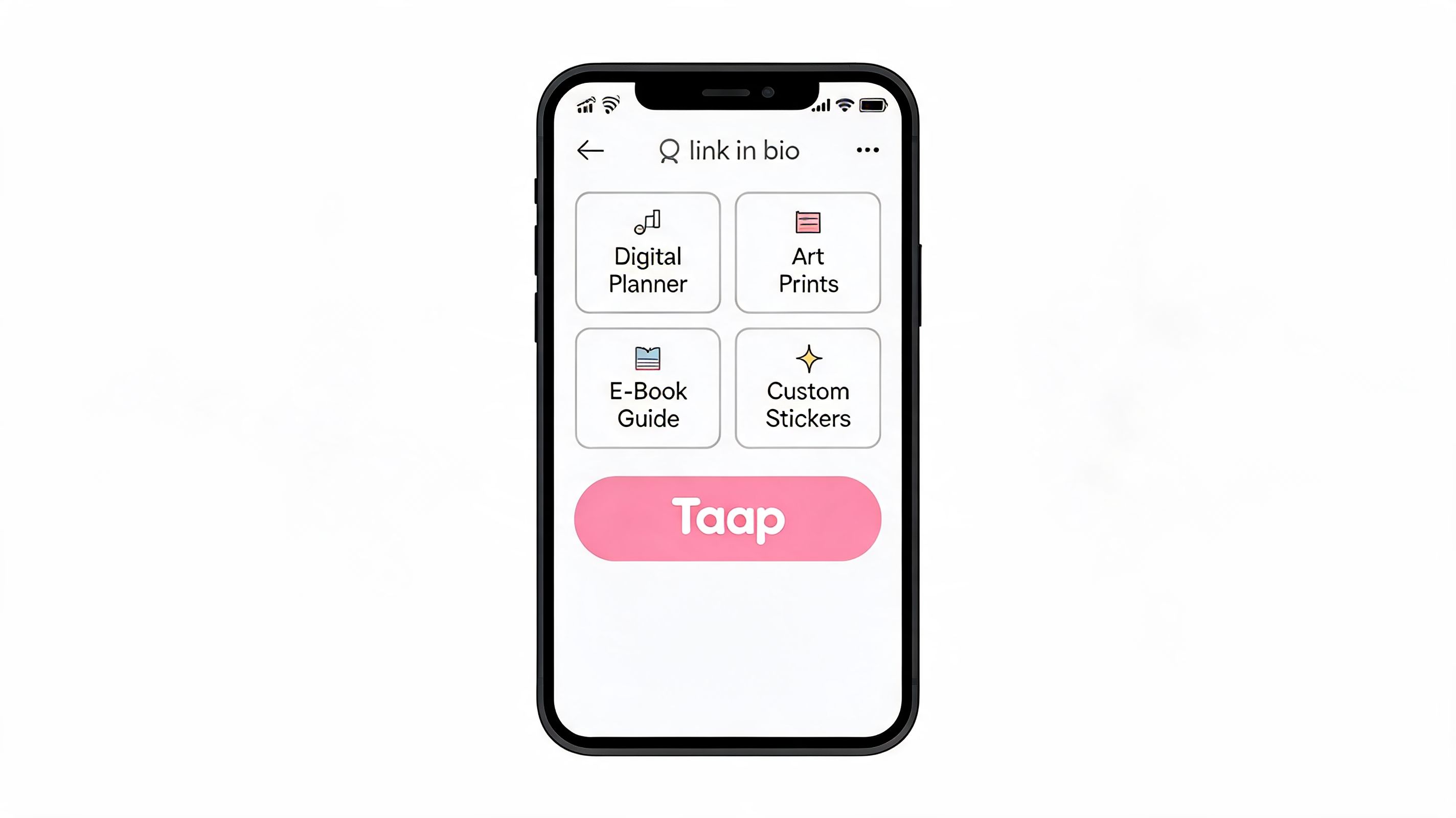
Creator platform benchmarks discussed in this video on visual bio-link storefronts show that visual integration can lift engagement and conversions by 25-40% over static link lists. That tracks with what many creators already feel in practice. When people can see your work, sample your content, and understand the offer without jumping between five tabs, more of them buy.
What your storefront needs on day one
A strong hub doesn't need to be elaborate. It needs to remove doubt.
Use this checklist:
- A headline with a buyer outcome: Skip vague branding lines. Lead with what the product helps people do.
- Product blocks by use case: “Client onboarding kit” beats “PDF bundle.”
- A visible creator proof layer: Add short content previews, testimonials if you have them, or examples of the method in action.
- A direct conversion path: Product purchase, booking link, or email opt-in. Don't make people hunt.
- Mobile-first layout: Most profile traffic arrives on mobile, so your first screen matters more than your footer.
One option for building this kind of hub is taap.bio, which lets creators arrange a modular storefront with product blocks, booking, email capture, and live content widgets on one page. That matters because your bio link stops acting like a menu and starts acting like a sales page. If you want examples of how creators structure these pages, look at this guide to a digital product store setup.
Show the product before asking for the sale
A lot of digital products are hard to judge until someone sees them. That's why previews matter.
If you sell templates, show the inside pages. If you sell a course, show the curriculum and one useful clip. If you sell coaching, show your framework and the booking flow. If you're a musician or creator with mixed offers, embed the content people already trust you for.
Here's a walkthrough that shows how this kind of visual page can work in practice:
Your bio link should answer three questions fast: what you sell, who it helps, and what to do next.
Structure the page like a storefront, not a scrapbook
A common mistake is stacking everything equally. Recent podcast episode. Old freebie. Random affiliate link. Product. Social icons. Another product. It feels busy because there's no hierarchy.
A better structure is simple:
| Section | What goes there | Why it matters |
|---|---|---|
| Top of page | Core offer and one clear CTA | Captures intent while attention is highest |
| Middle | Product previews, educational content, FAQs | Builds trust and reduces hesitation |
| Lower section | Secondary offers, booking, email opt-in | Gives alternatives without distracting from the main sale |
If you are serious about learning how to promote digital products, the system starts at this point. Every channel you use later should send people back to one page built to convert.
Create a Content Funnel That Sells For You
Promotion gets easier when you stop asking every post to make the sale.
A content funnel works like a guided path. People discover you through useful content. Some of them want more help, so they join your email list. Then your emails do the job of turning curiosity into a purchase when the timing is right.
That's one reason content and email remain so effective. According to LoopEx digital marketing statistics, content marketing costs 62% less than traditional marketing while generating 3 times as many leads, and email marketing reaches a 2.8% conversion rate for B2C brands. For most creators selling digital products, that combination is more durable than chasing one-off spikes from social posts alone.
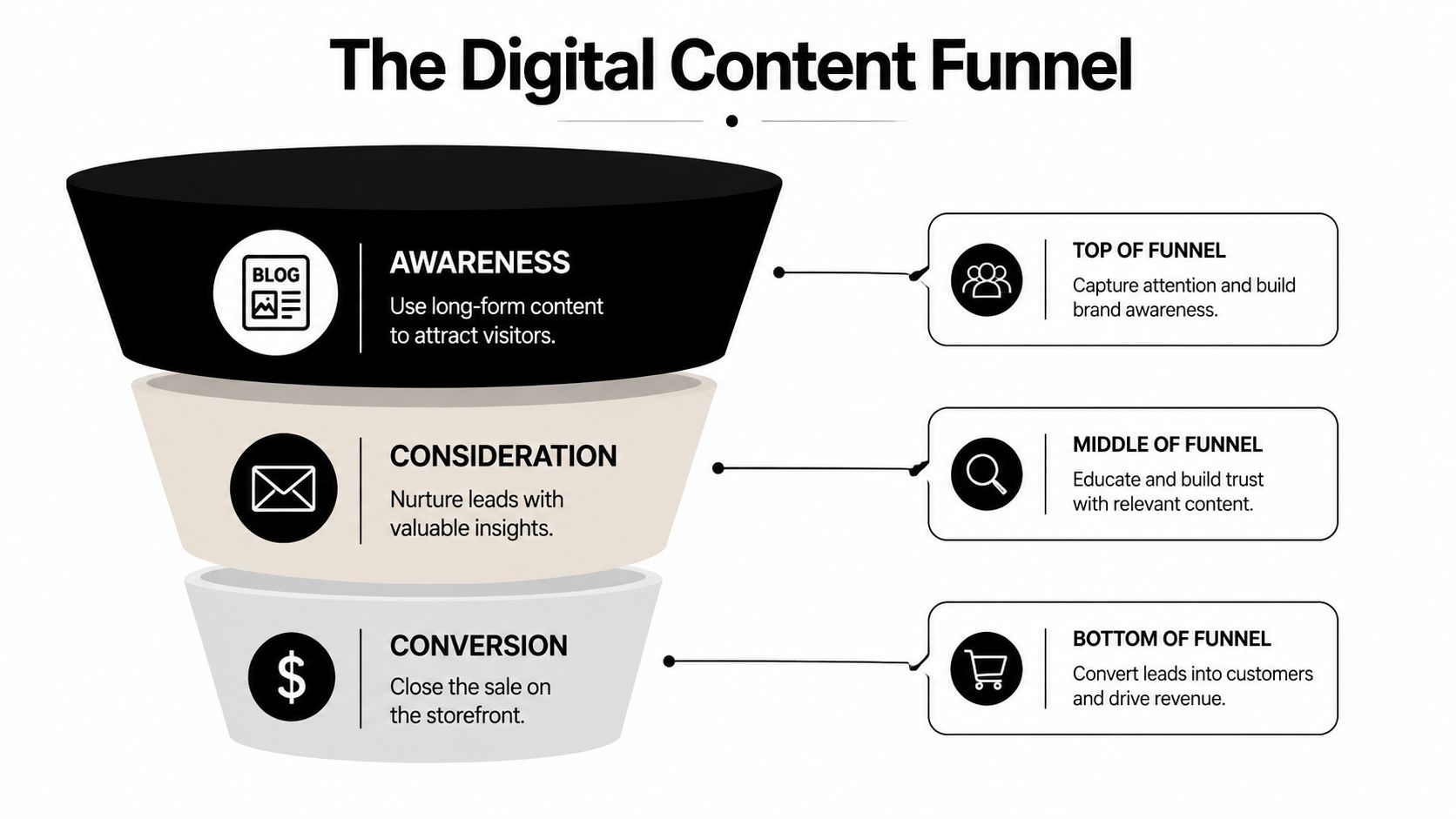
Awareness pulls in the right people
Top-of-funnel content should solve a small part of the bigger problem your paid product addresses. If your product helps freelancers package services, your awareness content might cover proposal mistakes, client red flags, or pricing conversations. If your product is a singing warmup pack, your awareness content could be short tutorials, rehearsal habits, or vocal care tips.
The point isn't volume. It's relevance.
Good awareness content usually does one of these jobs:
- Answers a specific question: Great for search and saves.
- Shows a before-and-after shift: Helps buyers picture the outcome.
- Corrects a common mistake: Builds authority fast.
- Shares a repeatable method: Gives people a taste of your paid framework.
If you need a cleaner way to organize this, a content hub strategy for creators helps because it ties scattered posts back to your main product themes.
Consideration happens in email
Social gets attention. Email closes the gap between interest and action.
Once someone joins your list, don't dump them into a generic newsletter. Give them a short sequence that continues the conversation they already opted into.
A simple sequence might include:
- Welcome email: Remind them what they signed up for and what problem you help solve.
- Quick win: Send a tip, framework, or mini lesson they can use immediately.
- Belief shift: Explain why the usual approach fails and what your method does differently.
- Offer email: Present the product with a clear use case and CTA.
- Objection email: Answer the hesitation you hear most often.
What works: emails that feel like the next logical step after the lead magnet.
What wastes time: collecting subscribers with a generic freebie that has nothing to do with your paid offer.
Conversion happens on the storefront, not in the inbox
Your emails should move people to the page where the decision becomes easy. That page needs a tight promise, preview, pricing context, and a clear buy button.
One practical rule helps here. Keep the lead magnet and the paid offer closely related. If you give away “50 content prompts” and then try to sell “financial planning for creatives,” your funnel breaks. If you give away “3 outreach scripts for landing podcast interviews” and sell a media kit or pitching course, the path feels natural.
That's the version of content marketing that sells for you. Not because it's passive, but because each piece has a defined job.
Drive Traffic with Social and Community Strategy
A single strong content idea can feed your entire week if you treat social like distribution, not constant invention.
Say you're a course creator teaching client acquisition. You publish one detailed post about why discovery calls stall. From that, you pull a short Instagram Reel with the key mistake, a LinkedIn post with the script fix, two Instagram Stories with a poll about call anxiety, and a Discord prompt asking members what objection they hear most. Every version points people back to the same storefront hub.
That approach works better than trying to “be everywhere” with unrelated posts.
Match the platform to the buying motion
Different platforms help at different moments.
Instagram is good for proof, personality, and quick product reminders. TikTok helps when your hook is visual, emotional, or surprising. YouTube works well for deeper trust. Private communities like Discord, Circle, or Facebook Groups are where objections surface in plain language.
Here is the practical approach:
- Use short-form platforms when you need reach and repeated exposure.
- Use community spaces when you want feedback, language insights, and loyal buyers.
- Use long-form platforms when the product needs explanation before purchase.
If social feels noisy, shrink the job. Don't ask it to close every sale. Ask it to start conversations and send qualified clicks to your page.
Repurpose with intention, not laziness
Repurposing fails when you copy and paste the same caption everywhere. It works when you keep the core idea but adapt the angle.
A musician selling sample packs might post a beat breakdown on TikTok, a carousel on Instagram showing what's inside the pack, and a community post asking producers what sound they struggle to create. Same product. Different entry points.
For creators who want a workflow that reduces platform switching, tools that post to all social at once can help with distribution, especially when you're adapting one campaign across multiple networks.
If you want more examples of turning social attention into site visits, this guide on driving traffic from social media to a website is worth reviewing.
Build small conversations, not broad applause
A post with comments from the right buyers beats a post with shallow reach from the wrong audience.
Ask questions that expose pain points. Use Stories polls to test product wording. Reply to comments with follow-up answers that point people toward the product. Invite active followers into a smaller space where you can learn what they need next.
Creators who sell well on social usually aren't louder. They're clearer, more specific, and better at turning attention into dialogue.
Accelerate Growth with Paid Ads and Partnerships
Paid ads and partnerships work best after your core system is already behaving. If your offer is fuzzy or your storefront leaks conversions, these channels just help you spend money faster or waste someone else's audience goodwill.
The smart question isn't “should I run ads?” It's “what am I trying to accelerate?”
When paid ads make sense
Ads are useful when you already know which offer gets traction and which message earns clicks. Then you can test traffic sources, creatives, and audiences without guessing from scratch.
Paid ads are usually the better fit when:
- Your product solves a clear, urgent problem: Easier to communicate in a small amount of copy.
- You have a page that already converts organically: That gives you a baseline before spending.
- You want speed: Ads can create feedback quickly if the rest of the funnel is ready.
What usually fails is sending cold traffic to an underexplained product page. Cold audiences need a tighter promise and less friction than warm followers.
When partnerships beat ads
Partnerships are stronger when trust matters more than scale. That includes coaching, expert-led products, niche templates, or education offers where buyers want proof that the creator understands their world.
A partner can be:
- A creator with an adjacent audience
- A newsletter operator in your niche
- A podcaster whose listeners already care about the problem
- An affiliate who can explain the use case well
This channel gets even more interesting in overlooked segments. According to Product Led Alliance on underserved market positioning, a key growth strategy for 2026 is targeting underserved markets, and emerging data shows micro-niche digital products have seen 150% sales growth via targeted accessibility. That matters because broad markets are crowded. A focused product for non-technical AI users, role-specific productivity, or another neglected buyer group can be easier to grow through trusted partnerships than through generic ad campaigns.
A simple choice framework
Use ads if you need fast testing and already have a clean funnel.
Use partnerships if your niche values recommendation and context.
Use both if the product has early proof, your positioning is tight, and you can support traffic with a real follow-up system.
If you're exploring creator collaborations, affiliate setups, or audience swaps, these influencer marketing best practices are a good starting point because they push you to align partner fit with buyer intent instead of vanity reach.
Optimize, Iterate, and Scale Your Promotions
Most promotion problems aren't traffic problems. They're clarity problems, friction problems, or follow-up problems.
That's why scaling only works after you build a feedback loop. You need to know where people lose confidence. Is it the page headline? The offer framing? The checkout flow? The email sequence? The wrong traffic source? Guessing wastes time. Reviewing behavior gives you a next move.
Only 22% of digital products reach target adoption levels, while well-designed user interfaces can boost conversion rates by up to 200% and strong UX strategies can achieve up to 400%, according to Thoughtworks on digital product success. The useful lesson isn't “design matters” in the abstract. It's that small usability issues can gradually undermine otherwise strong offers.
Track the path, not just the sale
A sale is the end result. You also need to monitor the steps before it.
I like to review promotion in layers:
| Layer | Question to ask | What to do if it looks weak |
|---|---|---|
| Traffic | Are the right people clicking through? | Tighten targeting and message-match |
| Storefront | Do visitors understand the offer quickly? | Rewrite headline, simplify layout, improve previews |
| Are subscribers moving toward the offer? | Change sequence order, CTA placement, or lead magnet alignment | |
| Purchase flow | Where do people hesitate? | Remove distractions, reduce steps, answer objections earlier |
This kind of review catches issues that surface metrics alone might hide.
Run small tests with clear stakes
You do not need a giant testing program. You need disciplined changes.
Good tests include:
- Headline swap: Lead with the outcome instead of the product format.
- Offer order: Move the main product above secondary links.
- Preview format: Replace a static image with a walkthrough or sample lesson.
- Email CTA change: Ask for one action and make it obvious.
- Audience language: Use the phrases buyers use from replies and calls.
Better testing habit: change one meaningful variable, keep the rest stable, and watch how people respond before changing five more things.
Use direct feedback, not analytics alone
Behavior shows where people stop. Feedback tells you why.
Ask a small group to use your page while you watch. Notice where they scroll, where they pause, and what confuses them. If you have peers or partners in your niche, outside perspective helps too. Teams that want a more formal collaboration channel for product feedback or partnerships can collaborate with PeerPush as one way to structure those relationships.
The creators who get good at how to promote digital products usually aren't chasing secret channels. They're tightening the loop between message, page, buyer feedback, and next test. That's what turns promotion from random effort into a repeatable system.
If you want one place to sell digital products, collect emails, showcase content, and book offers from a single page, taap.bio gives you a practical storefront-first setup that fits the system in this guide.


