

Have you built an audience, posted for months, answered the same questions in DMs, and still had no clear path from attention to sales?
That usually means the audience can see your expertise, but they cannot buy it in a clear, low-friction way.
Digital product ideas sound simple in theory. In practice, creators get stuck at packaging, pricing, and presentation. A course page lives on one tool, bookings on another, lead magnets in a third place, and the bio link sends people on a scavenger hunt. Sales drop when the path takes too many clicks.
The better approach is to treat your bio page like a compact storefront. On Taap.bio, one page can show the offer, prove credibility, collect leads, take bookings, and route buyers to the right next step. If you plan to teach, sell, and capture demand from the same page, it helps to study platforms built for selling online courses so the delivery setup matches the offer from day one.
This guide focuses on ten digital product types that creators can ship without inventory or custom client work every time. For each one, the key question is the same. What problem does it solve, and how will a buyer discover it, trust it, purchase it, and receive it from your Taap.bio page?
That is the difference between a list of ideas and a launch plan.
Table of contents
1. Online Courses and Educational Programs
What would your audience pay to learn in a structured way, instead of picking up in scattered posts and DMs?
Online courses sell when the promise is specific and the path is clear. “Land your first three freelance clients in 30 days” is easier to buy than a broad course on freelancing. Buyers want a defined outcome, a sequence they can follow, and proof that the method works.
That is also why courses fit Taap.bio well. A buyer often needs to see your content, your positioning, and your calendar in one place before they commit. Your bio page can do that job if you set it up like a sales flow, not a link list.
Build the first version small
Creators often overproduce the first course. That slows launch, delays feedback, and creates a lot of editing work before anyone has paid.
Start with a compact offer:
- One clear transformation: teach one result, such as booking brand deals, editing short-form video faster, or improving interview performance
- Short lessons: each lesson should solve one problem or move the student one step forward
- Simple proof: use your own process, client examples, screenshots, or before-and-after results
- Fast implementation: include checklists, worksheets, or assignments that get people to act right away
A small course is easier to sell and easier to improve. It also gives you cleaner feedback. If students stall in module two, you know exactly what to fix.
On Taap.bio, put the course offer near the top of the page with a headline that names the outcome. Under that, add trust elements that answer the buyer's next questions. A YouTube widget can show how you teach. An Instagram feed can reinforce your niche. A booking block can add a paid upgrade for buyers who want a strategy call after they enroll.
That setup turns one page into a practical storefront. Discovery, trust, purchase intent, and delivery routing all happen from the same place. If you want a stronger framework for packaging and selling digital offers, this guide on how to sell digital goods online is a useful companion.
Practical rule: Launch a course only when you can describe the before and after in one sentence.
If you want to compare hosting options before you publish the program, this breakdown of best platforms for selling online courses is a useful starting point.
The strongest course ideas usually come from repeated patterns in your existing work. A fitness creator can turn a beginner home workout method into a guided program. A video editor can package a client-ready editing workflow. A career coach can build a job search sprint with modules for resumes, networking, and interviews.
The offer works when the buyer can answer three questions fast. What will I achieve? How long will it take? Why should I trust this creator to teach it? Use your Taap.bio page to answer those questions in that order.
2. Digital Templates and Resources
Templates are often the easiest entry point into digital products because they save time immediately. A buyer doesn't need motivation. They need a starting point that's already structured.
That's why templates sell across niches. Productivity creators sell Notion dashboards. Designers sell Figma files. Marketers sell email swipe files. Finance creators sell budget systems. The strongest offers remove setup friction.
Here's the visual that helps people understand the value fast:
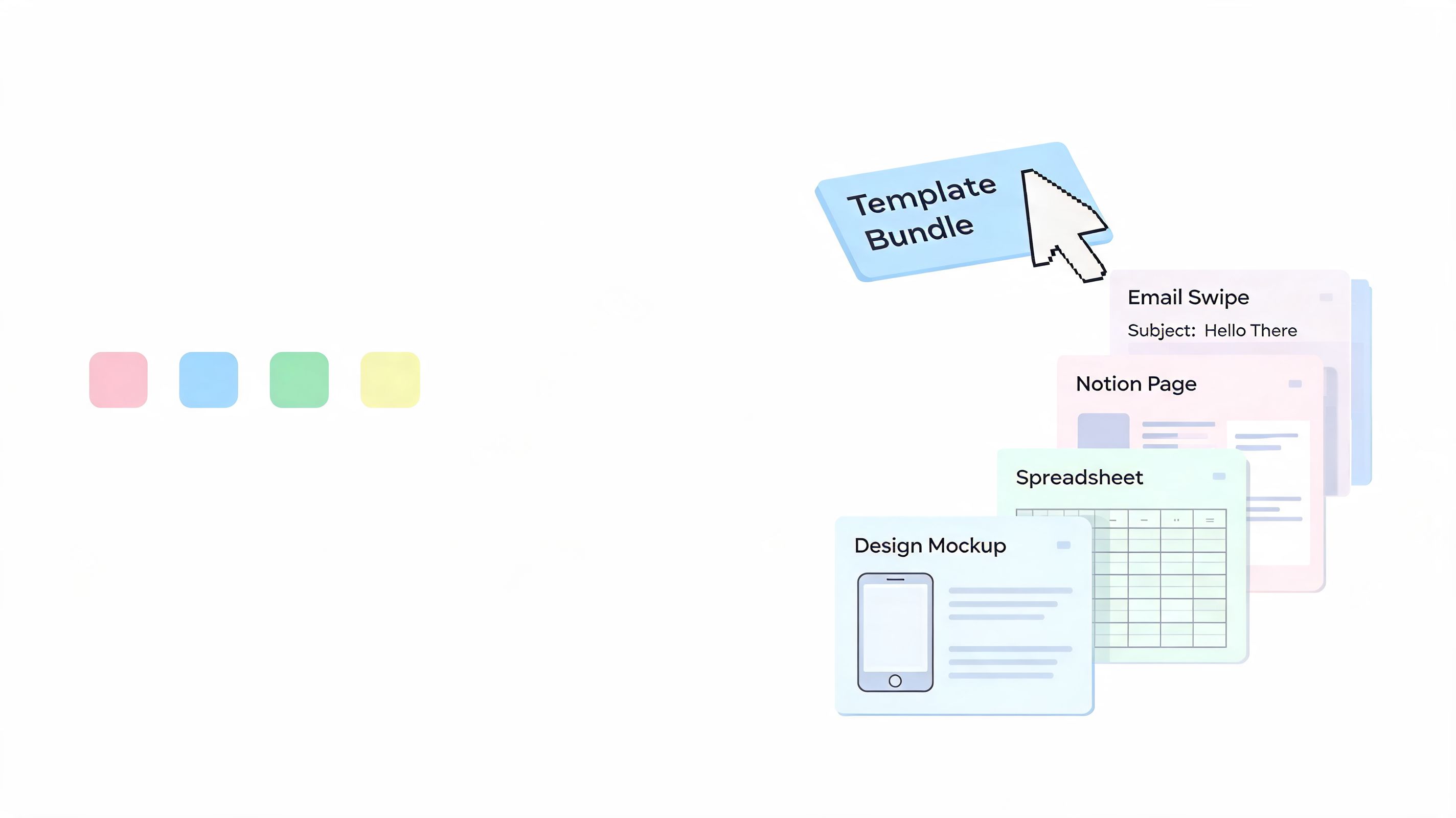
What makes a template bundle sell
A weak template is generic and pretty. A strong one is opinionated and useful.
Focus on:
- Specific use case: “Creator weekly planning system” beats “ultimate planner”
- Visible output: show the finished result, not just the blank file
- Quick onboarding: include a short video or walkthrough so people can start right away
- Natural bundling: combine related assets, such as a tracker, dashboard, checklist, and tutorial
Taap.bio is especially effective here because templates need visual merchandising. Use image blocks to preview pages, then place a buy button beside or below the preview. If you sell multiple packs, use the modular grid to group them by audience, such as creators, freelancers, or coaches.
A good example is a content strategist selling a bundle with a social calendar, caption planner, and hook library. Another is a finance creator selling a debt tracker, savings planner, and monthly review sheet. Buyers don't want “files.” They want a cleaner system than the one they have now.
If you're packaging downloads for direct sales, Taap.bio's guide on how to sell digital goods online covers the mechanics well.
Most template buyers aren't buying creativity. They're buying a head start.
3. Coaching and Consulting Packages
Coaching is the fastest path to revenue when your audience already trusts your judgment. It's also the easiest product to position badly.
“Book a call with me” is weak. “YouTube channel teardown for creators stuck below consistent growth” is clear. Narrow coaching packages convert better because buyers can picture the outcome before they pay.
Package the offer around one decision
The best coaching offers help a client solve a high-friction problem. That might be pricing, messaging, content strategy, sales calls, portfolio review, or personal branding.
A few formats work especially well:
- Single intensive: one deep session for diagnosis and action plan
- Short package: several calls over a defined period
- Group coaching: one theme, multiple buyers, lower delivery load
- Audit plus call: review first, discussion second
Taap.bio removes a lot of the admin that makes coaching annoying to run. You can present the offer on the same page as your proof, embed live content from your channels, collect leads, and let people book through the built-in scheduling flow. That matters because buyers often need to see your content, your positioning, and your calendar in one place before they commit.
One warning. Coaching can become a custom-service trap if every client wants something different. That's why niche packaging matters. A creator who offers “personal brand consulting” may get messy requests. A creator who offers “LinkedIn profile audit for founders” gets cleaner demand and cleaner fulfillment.
Use coaching when your audience needs context, accountability, or feedback. Don't use it when the same answer can be delivered once as a guide or template.
4. Membership Communities and Subscription Content
What would people pay you for every month, even if you never posted a brand-new masterclass again?
That question usually decides whether a membership has a real chance. The strongest subscription offers are built around continuity: accountability, access, feedback, timely updates, or a peer group with a shared goal. If the offer relies on constant reinvention, delivery gets heavy fast and retention drops.
A good membership sells an ongoing result. Members stay because the product helps them keep momentum, solve new problems as they appear, or stay close to a creator they trust.
Use a structure like this:
- Core reason to stay: ongoing feedback, accountability, access, or curated updates
- Recurring rhythm: a weekly prompt, monthly workshop, office hours, or resource drop
- Clear member identity: founders, fitness coaches, UGC creators, job seekers, or another defined group
- Next offer built in: workshops, small-group programs, audits, or premium consulting for members who want more help
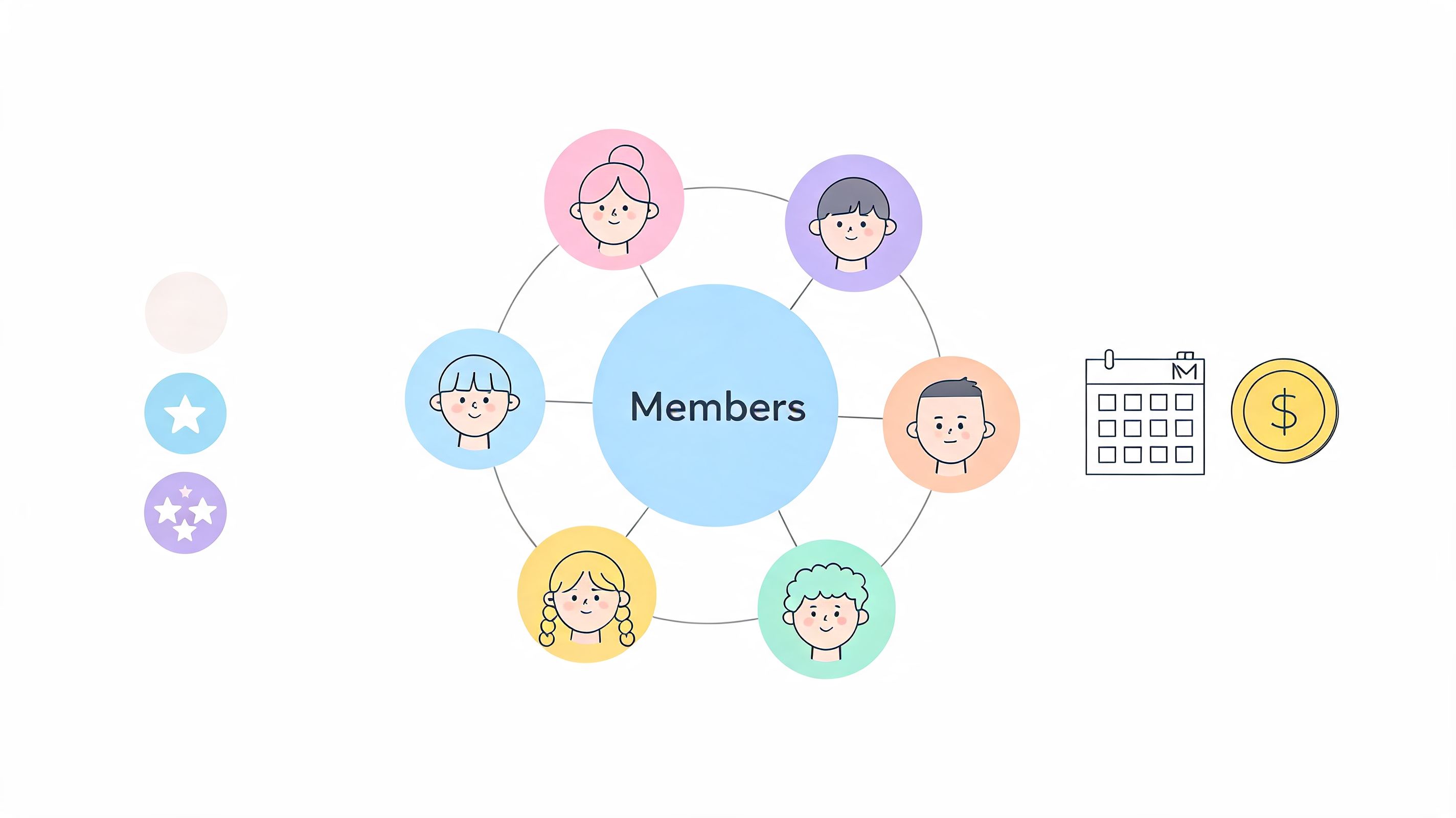
The trade-off is simple. Memberships can produce steadier revenue than one-off launches, but they also create an ongoing service promise. Creators who publish consistently, respond to members, and enjoy community management tend to do well here. Creators who disappear for long stretches usually see churn show up quickly.
Taap.bio works best when the page does more than link out. Put the membership at the top if subscriptions are the main offer. Then build proof around it. Add YouTube content to show your teaching style, embed Instagram or TikTok posts to show you are active, and place a lead capture block under the offer for people who want a free sample, a waitlist, or a low-commitment entry point first.
That setup matters because buyers rarely join from a headline alone. They want to see what they will get, how often you show up, and whether the community feels alive.
One practical way to package this:
- Free layer: newsletter, checklist, or sample lesson
- Entry membership: community access, monthly Q&A, basic resource library
- Higher tier: direct feedback, office hours, reviews, or member-only workshops
This is also where delivery needs discipline. Promise fewer things and deliver them on a predictable schedule. A monthly live session that happens every month will usually retain better than an ambitious content calendar that slips by week three. If part of your subscription includes worksheets, guides, or downloadable resources, it helps to know the basics of selling a PDF online with a clean delivery flow, since many memberships depend on those assets.
The best memberships feel active before someone joins and organized after they pay. Taap.bio helps with both. You can showcase the offer, stack social proof around it, capture leads from visitors who are not ready yet, and route people toward the right tier without building a messy patchwork of tools.
5. Ebooks and Digital Guides
What problem do people ask you to explain again and again? That is usually the best starting point for an ebook.
Good guides sell because they save time. They give buyers a clear path, a decision framework, or a checklist they can use today. Broad advice rarely holds up here. A focused guide does. "How to price your first coaching package" will usually outperform "everything I know about coaching" because the buyer can see the outcome before they pay.
Build a guide around one outcome
An ebook does not need more pages. It needs a tighter promise and better execution.
That usually means:
- One specific result: “Book your first three consulting clients” or “Plan a five-day Tokyo itinerary on a budget”
- A step-by-step structure: each section should move the reader toward action, not background reading
- Useful extras: checklists, scripts, worksheets, swipe copy, or templates
- Clean formatting: readable headings, strong spacing, and visuals that support the point
This product type works well for creators who already give repeated advice in DMs, comments, calls, or email. If the same question keeps showing up, document the answer once, improve it, and sell it in a format people can use on their own schedule. If you want a broader view of how these products are packaged and sold, start with this breakdown of digital downloads for creators and small businesses.
Taap.bio is useful here because the difference between a guide that gets ignored and one that converts is often presentation. Put the cover mockup at the top. Add a short block that names the reader, the problem, and the result. Follow it with a "what's inside" section so buyers can scan the chapters fast. Then add a short video or reel where you explain who the guide is for and what changed after you developed the system inside it.
That setup answers the three questions buyers usually have. Is this for me? Is it practical? Can I trust the creator?
A few formats keep working because the buying intent is easy to understand: founder playbooks, niche career guides, financial starter manuals, travel guides, creator workflows, and process docs that turn scattered advice into one usable system.
If PDF delivery is your main setup, Taap.bio explains the process in this guide on selling a PDF online.
6. Presets, Filters, and Software Add-ons
What are people already asking you to recreate?
That question usually points to a sellable preset pack or add-on. If followers keep asking how you got that skin tone, color grade, UI treatment, transition stack, brush set, or workflow shortcut, demand already exists. The mistake is packaging the product as your taste. Buyers pay for a specific outcome they can apply to their own work.
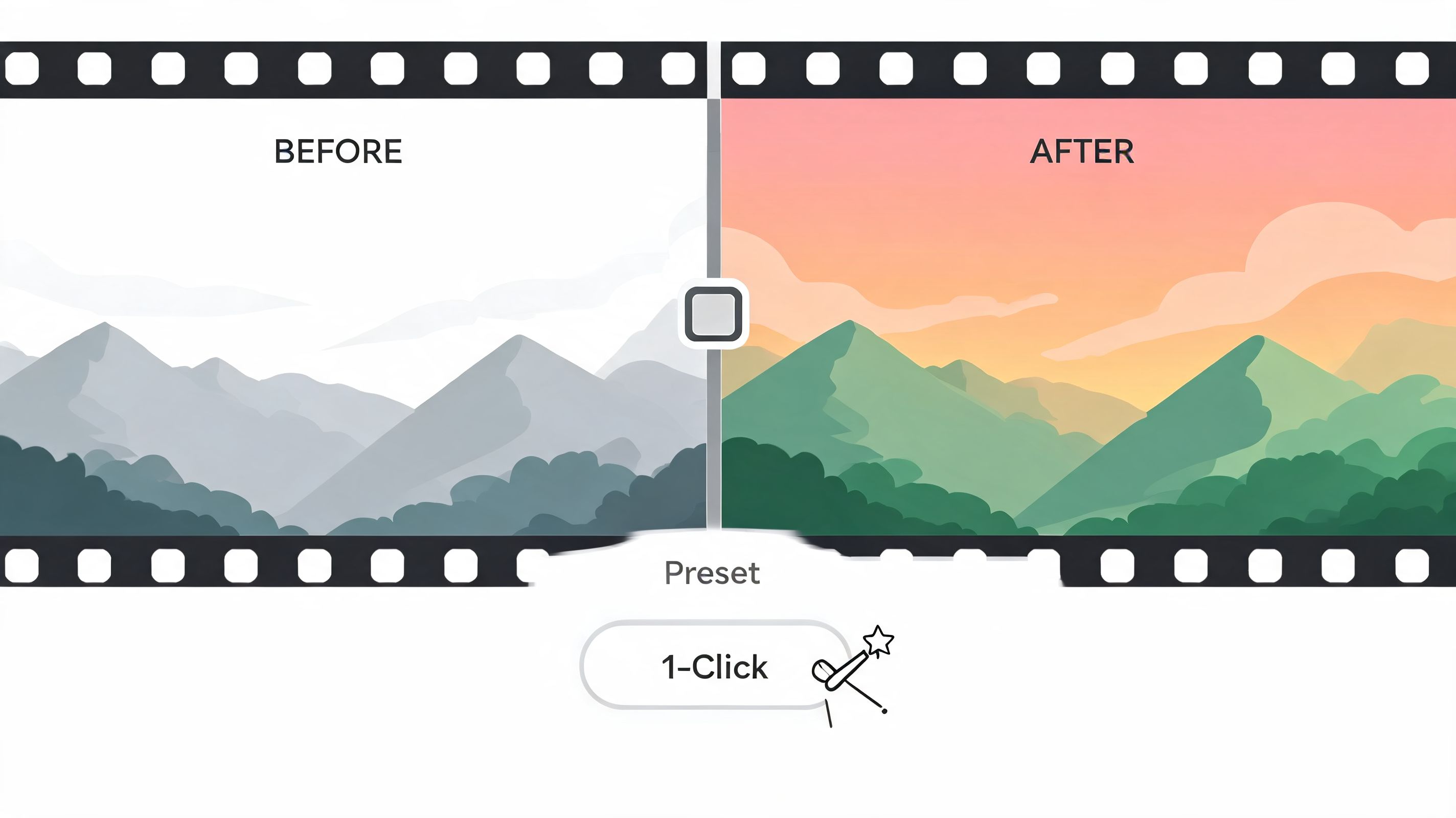
A good offer in this category answers three practical questions fast. What does it change? Who is it for? Will it work with my setup? If any of those answers are fuzzy, conversion drops.
Sell the outcome, then reduce setup friction
Presets, filters, LUTs, brushes, plugin packs, Notion widgets, and editing add-ons sell best when the product page does the proof work upfront.
Use:
- Before-and-after examples: show the raw file and the finished result side by side
- Plain-language naming: "Golden hour portrait preset" beats "Preset 03"
- Compatibility details: list the software, version, file type, and device support
- Installation help: add a 30 to 60 second walkthrough so buyers know they can use it
- Use-case sorting: group packs by problem, such as low-light edits, travel footage, product photos, or brand graphics
Taap.bio is a strong fit here because this product category is highly visual and often misunderstood at checkout. Build the page like a product demo, not a link list. Put the hero pack first with a clear promise. Add swipeable before-and-after images under it. Follow with a short video showing the preset or add-on in a real workflow. Then place the buy button directly below the proof, while interest is high.
If you sell more than one pack, organize each section by use case instead of dumping every file into one store block. A portrait pack, a cinematic travel LUT pack, and a productivity add-on should each have their own preview, compatibility note, and buyer fit. That structure helps the right customer self-select and cuts down refund requests from people who bought the wrong thing.
This category also has a delivery problem creators often ignore. Buyers need the files, instructions, and support expectations in one place. Use Taap.bio to present the offer, collect payment, and point buyers to the next step clearly. For a broader breakdown of how downloadable products are packaged and delivered, start with this guide to digital downloads for creators and small businesses.
One more trade-off matters. Presets and add-ons can sell quickly, but they are easier to copy than a service or community offer. The defense is specificity. Build packs for a narrow use case, show original proof, and explain the method well enough that buyers trust your version over a generic clone.
7. Personalized Video Messages and Shoutouts
This offer is simple. People pay for direct attention.
Creators often ignore personalized video products because they look less scalable than courses or templates. That's true. But they can be powerful when your audience has a strong connection to you and wants a custom experience for birthdays, encouragement, reactions, reviews, or business shoutouts.
Keep the request flow tight
The offer falls apart when buyers don't know what they can ask for. Set clear boundaries.
A strong setup includes:
- Defined categories: birthday message, pep talk, business promo, fan thank-you
- Simple request form: name, context, tone, due date, pronunciation notes
- Visible turnaround promise: make expectations clear before purchase
- Examples: show sample videos so people know the style
Taap.bio is useful here because this isn't just a payment problem. It's a presentation problem. Put a short reel or video snippet at the top so visitors instantly understand what they'll receive. Add a request button below it. If you offer tiers, keep the differences obvious, such as message length, delivery speed, or whether script notes are included.
This product works well for musicians, athletes, streamers, fandom creators, and coaches with a loyal audience. It usually doesn't work if your audience follows you only for information and doesn't feel much personal attachment.
Sell the experience as a moment, not as a file.
8. Lead Magnets and Email Swipe Files
Lead magnets are often treated like freebies you throw together in an afternoon. That's why so many of them get ignored. A lead magnet should solve a small but urgent problem and naturally lead into a paid offer.
Email swipe files are especially good because they combine speed and specificity. The buyer gets language they can adapt immediately. That's useful for creators, freelancers, consultants, and small businesses that know they need better messaging but don't want to start from a blank page.
Make the free offer pull buyers forward
A strong lead magnet earns the next click. It shouldn't try to do everything.
The best options are:
- Checklists: launch prep, client onboarding, interview prep, travel packing
- Swipe files: DMs, welcome emails, follow-ups, outreach messages
- Mini planners: weekly workflow, content calendar, habit tracker
- Quick guides: one problem, one short solution, one next step
Taap.bio shines as a funnel page. Put the lead magnet high enough on the page that new visitors can opt in without scrolling forever. Then place your paid product nearby, not hidden on another page. If your free checklist is “5 emails every coach needs,” the next block can be your full swipe file or coaching package.
One of the easiest mistakes here is offering something broad like “free productivity guide.” A better version is “7 follow-up emails for freelance designers” or “first client onboarding checklist for photographers.” Specificity gets the opt-in. Relevance gets the sale later.
9. Stock Resources Photos Music Videos and Footage
Stock products are quiet earners when you understand one thing. Buyers search for utility, not artistic self-expression. Your footage, beats, textures, icons, or ambient tracks need to fit projects people are already making.
This is a good category for creators who produce a lot anyway. A videographer sitting on unused clips, a producer with music loops, or a photographer with niche commercial images may already have saleable inventory. The challenge is organization and packaging.
Build for discoverability and reuse
Raw talent isn't enough here. Naming, tagging, categorizing, and previewing matter.
Focus on:
- Clear licensing language: buyers need confidence before purchase
- Strong previews: short demos, thumbnails, or audio snippets
- Niche utility: creator desk b-roll, startup office footage, lo-fi study loops, food close-ups
- Batch production: collect assets in sets that buyers can reuse across projects
Taap.bio works well as the portfolio layer on top of your catalog. You can show your best samples with video, audio, or image blocks and direct buyers to curated packs. For musicians, inline playback is especially useful because people can listen before they buy. For videographers, a visual grid makes more sense than a text-heavy store because buyers judge the asset immediately.
If you're setting up a cleaner storefront for this kind of offer, this guide to a digital product store is relevant.
A practical example. A travel creator might sell destination b-roll packs to editors and tourism brands. A music producer might sell mood-based music bundles. A photographer might build packs for coaches, real estate pros, or wellness brands that need niche visuals instead of generic stock.
10. Personal Brand and Authority Building Services
This is one of the highest-value categories if you've already built credibility in public. Businesses and professionals don't just want more content. They want a stronger position, clearer message, and more trust around their name.
That makes personal brand services a strong offer for creators who understand narrative, visibility, and audience perception. It can include audits, content strategy, LinkedIn positioning, speaker positioning, creator brand messaging, and authority-building roadmaps.
Sell the business outcome
Branding language gets fuzzy fast. Keep it tied to a real result.
Better offers sound like:
- LinkedIn positioning for consultants
- Thought leadership strategy for founders
- Speaker brand audit for coaches
- Authority content roadmap for niche experts
This category also lines up with an important launch reality. In a Thoughtworks and Forbes analysis of global leaders, only 22% of digital products achieved target adoption levels post-launch. That's a useful reminder to validate the problem before building a giant service stack or information product around it.
On Taap.bio, this offer benefits from proof-rich page design. Use testimonials if you have them. Use your own content as evidence of your thinking. Embed your latest videos, articles, or social posts directly on the page so visitors can evaluate your authority without leaving. Then make booking simple with a consultation block or a short intake flow.
If you can't explain the authority outcome in plain English, the client won't understand what they're buying.
A creator who already gets asked for help with bios, messaging, content angles, or online presence is sitting on demand. The mistake is hiding that demand under a vague “strategy” label. Name the transformation clearly and people self-select faster.
Top 10 Digital Product Ideas: Quick Comparison
| Product | Complexity 🔄 | Resource requirements ⚡ | Expected outcomes 📊⭐ | Ideal use cases 💡 | Key advantages ⭐ |
|---|---|---|---|---|---|
| Online Courses and Educational Programs | High, 50–200+ hrs production, curriculum design | High, video gear, editing, LMS/hosting costs | High revenue potential & authority, ⭐⭐⭐⭐⭐ | Deep skill training, certifications, premium audiences | Scalable passive income; justifies premium pricing |
| Digital Templates and Resources | Low–Medium, design + documentation | Low, design tools, mockups, minor updates | Fast sales, lower price point, ⭐⭐⭐ | Quick wins for social media, small businesses, creators | Quick to produce, high margins; easy to bundle |
| Coaching and Consulting Packages | Low (per unit) but high prep, bespoke sessions | Medium, expertise, scheduling, client prep | Very high per-client revenue, strong retention, ⭐⭐⭐⭐⭐ | Personalized transformations, business strategy, high-touch clients | Immediate income, high margins, upsell opportunities |
| Membership Communities and Subscription Content | Medium, ongoing content + moderation | Medium, community platform, recurring content creation | Predictable recurring revenue & LTV, ⭐⭐⭐⭐ | Community-driven education, ongoing support, group coaching | Recurring revenue, stronger engagement and testing ground |
| Ebooks and Digital Guides | Low–Medium, writing, editing, design | Low, authoring tools, cover design, formatting | Authority building & lead gen; modest sales, ⭐⭐⭐ | Niche expertise, lead magnets, repurpose into courses | Low cost to produce; repurposeable and fast to launch |
| Presets, Filters, Software Add‑ons | Low, technical but focused creation | Low, software expertise, testing across versions | Steady low‑price sales, high margins, ⭐⭐⭐ | Photographers, videographers, designers seeking consistent style | Very low production cost, evergreen, quick to deliver |
| Personalized Video Messages and Shoutouts | Very Low complexity per item; time‑intensive at scale | Low, recording setup, delivery workflow | High margin per item but limited by time, ⭐⭐ | Fan engagement, gifts, event shoutouts, promotions | Fast fulfillment, monetizes attention, high per‑unit price |
| Lead Magnets and Email Swipe Files | Low, concise deliverable creation | Low, content creation + email automation setup | Builds audience and funnels to paid offers, ⭐⭐⭐ | List building, funnel entry, converting cold traffic | Cost‑effective acquisition; drives long‑term monetization |
| Stock Resources: Photos, Music, Videos, Footage | Medium–High, professional production standards | High, equipment, editing time, storage | Passive sales across licenses; slow scaling, ⭐⭐⭐ | Creators and businesses needing ready assets | One asset can sell repeatedly; passive income potential |
| Personal Brand and Authority Building Services | High, strategic, bespoke engagement | High, expert time, research, execution support | High-ticket positioning and long-term results, ⭐⭐⭐⭐ | Executives, founders, speakers seeking thought leadership | Premium fees, strong case-study potential, retainers possible |
Your Next Step From Idea to Launchpad
What can you launch first that your audience will buy without needing a complicated funnel?
Start with the product that solves one repeated problem and is easy for you to deliver well. A template pack beats a bloated course when followers want speed. A coaching offer beats a vague membership when people need direct help. The point is fit. Match the offer to the behavior your audience is already showing.
Creators usually miss the signal because they keep treating audience questions as engagement instead of demand. Repeated DMs, saved tutorials, requests for your links, and comments asking how you got a result are product clues. Use them. Package the problem your audience keeps bringing to you, then write the outcome in one sentence they can repeat back.
Keep the first launch tight. One product. One promise. One page.
That page matters more than creators expect. If a buyer has to jump from Instagram to a link list, then to a checkout page, then to a separate booking tool or email form, drop-off goes up at every step. Taap.bio fixes that by giving you one branded page where people can discover the offer, see proof, buy, join your email list, or book time with you.
Here is a practical way to build the launch page in Taap.bio:
Write a headline that names the result, not the format. "Get my 30-day content planning system" sells better than "Digital product available now" because buyers care about the outcome first. Add one short section with proof, such as creator results, client wins, screenshots, or a concise explanation of your process. Then place the right action under it: a payment link for templates or guides, a booking block for consulting, an email capture for a lead magnet, or a content hub for subscription offers.
The list in this article becomes useful as an actual business plan. Each product type needs a different sales path, and Taap.bio lets you set that path on one page. A coach can send traffic to a booking section and testimonial block. A template seller can feature the pack at the top, bundle related resources underneath, and collect emails from people who are not ready yet. A creator selling presets, ebooks, or swipe files can pin the product first, add short demo content below, and reduce the hesitation that kills small digital sales.
If you still need help choosing what to build, use a B2B idea database to pressure-test the angle before you spend a week making the wrong thing. I use idea research to narrow scope, not to avoid launching. The goal is to find a problem with clear demand, then ship a simple version people can buy now.
Pick one category from this list. Cut the scope in half. Write the promise clearly. Build the Taap.bio page around that promise and publish it while the offer is still small enough to improve quickly from buyer feedback.
Build your Taap.bio page as the home for your digital products, coaching offers, content, and bookings. Instead of sending followers to a generic link list, create a branded storefront that shows what you sell, why people should trust you, and how they can buy right now.


