The most popular advice about digital products to sell is incomplete. It tells you to create an ebook, course, template, or membership, then wait for “passive income” to appear. Creating the file may be repeatable, but selling it still requires positioning, promotion, customer support, and a delivery system that works every time.
The best digital product is the one you can deliver repeatedly without breaking your schedule or disappointing buyers. Your choice should match your expertise, production capacity, audience intent, and the complexity of fulfilling the purchase. A useful product decision comes down to five practical questions: Who needs it, what will they pay to solve, which format fits the problem, what marketing hook will attract them, and how quickly can checkout deliver the result?
The nine models below use different sales mechanisms. Some work best as instant downloads. Others depend on paid access, bookings, subscriptions, or lead generation. The digital goods market is projected to reach $157.39 billion in 2026 and $511.43 billion by 2031, with a projected 26.60% CAGR from 2026 to 2031, according to Insightraider's digital product market analysis. That growth creates opportunity, but it also makes specificity essential.
A creator store such as taap.bio can connect product sales, paid bookings, email capture, instant delivery, and analytics from one branded page. That matters when your audience discovers you through a single link in your social profile.
Table of contents
1. Digital Courses
A generic digital course is a weak product. A focused course that leads buyers to a defined result can sell structured progress, using video lessons, workbooks, exercises, templates, quizzes, or live sessions.
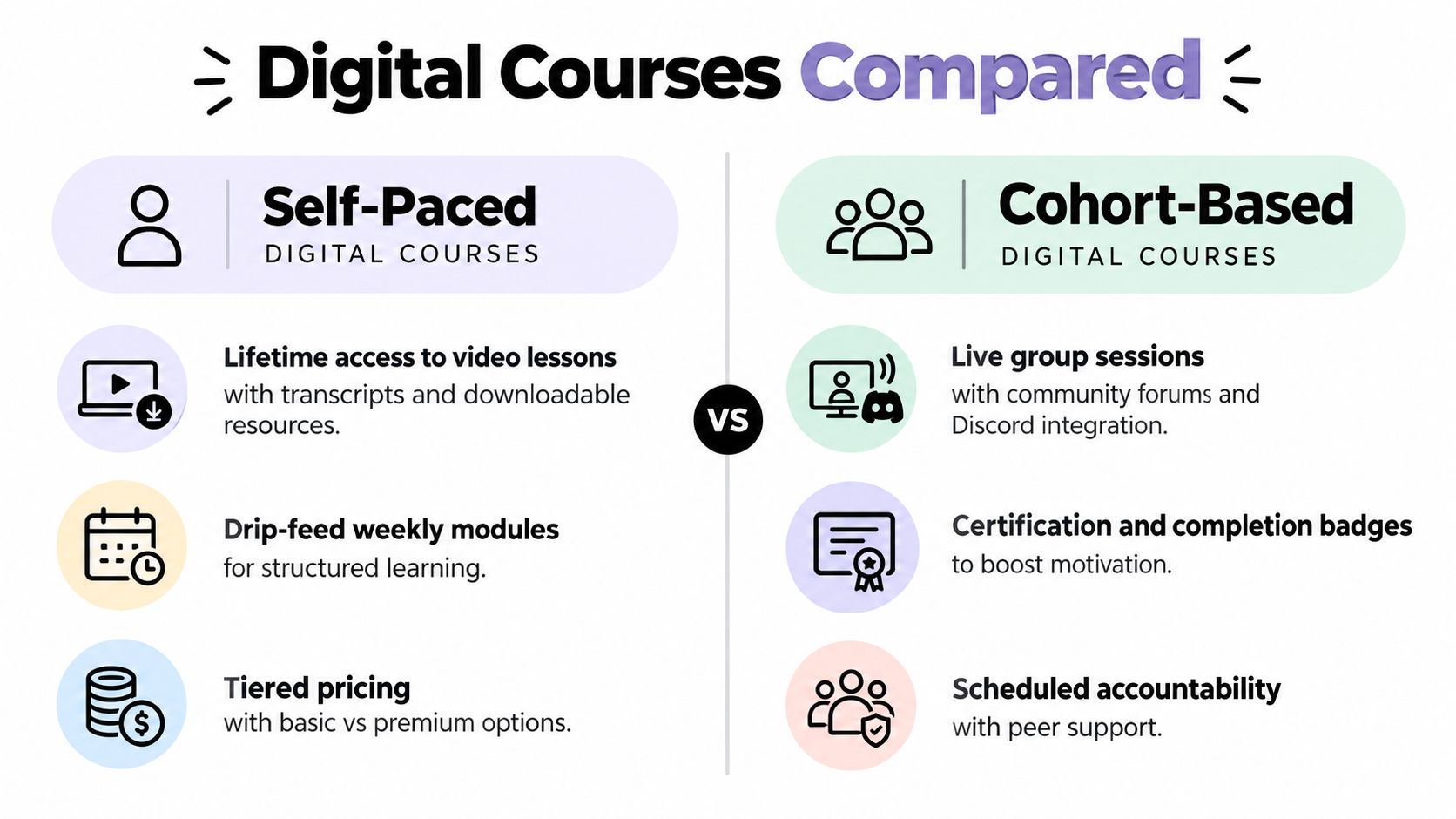
Choose the delivery model based on the buyer's need and your capacity. Self-paced access lets customers start at any time and requires less ongoing delivery. Cohort-based learning uses scheduled lessons, group calls, and deadlines to create accountability, but it demands active facilitation and a fixed timetable.
The digital goods market source cited earlier estimates online courses at $12.8 billion in 2026, with the segment growing 22% year over year. Treat that figure as category context, not a sales forecast. Your commercial advantage comes from narrowing the promise and proving that the course addresses a specific problem.
Build a focused first course
Start with one defined outcome. “Marketing” is difficult to position. A course that helps independent photographers create a repeatable client inquiry system gives prospects a clearer reason to buy, while making the curriculum easier to build and promote.
Use a free mini-course, challenge, or short email lesson as a lead magnet. It should solve one smaller part of the larger problem and demonstrate your teaching approach. The paid course then becomes the practical next step rather than an unrelated offer.
Add only support that improves completion and results:
- Downloadable workbooks: Turn lessons into guided implementation.
- Office hours: Let students ask about applying the material.
- Feedback surveys: Identify confusing lessons and recurring obstacles.
- Access terms: State whether access is lifetime, time-limited, or tied to a cohort.
Your sales page should identify the intended learner, promised outcome, curriculum, prerequisites, format, and support level. Use this guide to tools for course creators when planning the production and delivery setup.
The strongest sales mechanism is paid access, supported by a preview or lead magnet. A single creator store such as taap.bio can connect the course checkout, free signup, booking option, and supporting downloads. That gives a visitor one clear path from discovery to purchase, with fewer disconnected tools to configure.
2. Online Coaching Programs
Coaching earns its place as a digital product when the buyer needs judgment, accountability, adaptation, or confidence. The value comes from applying a method to a specific situation, correcting mistakes, and keeping implementation on track.
Define the outcome before choosing the format. “Business coaching” gives prospects little reason to act. “A group program for freelance designers building a consistent client pipeline” identifies the audience, problem, and expected change.
Choose delivery based on the level of access you can support. One-to-one packages provide the most personalization but consume the most time. Group cohorts spread delivery across clients and create shared discussion. A hybrid program can combine live sessions with recorded lessons, a workbook, a private community, or a template library.
Turn expertise into paid bookings
For high-touch work, use a discovery call as the first sales step. Its job is to qualify the prospect, confirm that your method fits, and explain what happens after payment. Keep the conversation focused on fit rather than offering an unstructured free consulting session.
Set clear limits before accepting payment. State the cohort dates or program window, communication channels, response times, rescheduling rules, and number of private sessions. These terms protect delivery capacity and show buyers exactly what they are purchasing.
Build the offer around a defined client journey:
- Diagnostic intake: Collect context before the first session.
- Defined schedule: Set the cadence for calls and implementation.
- Pre-work resources: Use templates or a short lesson to make live time more productive.
- Progress checkpoints: Review completed actions, obstacles, and next decisions.
- Completion path: Explain what clients should be able to do after the program ends.
A single sales page can present the promise, dates, testimonials, application form, and paid calendar. Follow this guide to selling coaching online when connecting bookings and payment. A creator store can keep that journey in one place, from the initial application to the booking, payment, and follow-up downloads.
The strongest sales mechanism is paid bookings. The booking qualifies the prospect, while the coaching program delivers the higher-value purchase. This model requires active delivery, but it also gives you direct evidence about recurring client problems. Use those patterns to decide which workbooks, templates, or other downloadable products to create next.
3. Templates, Presets, and Design Resources
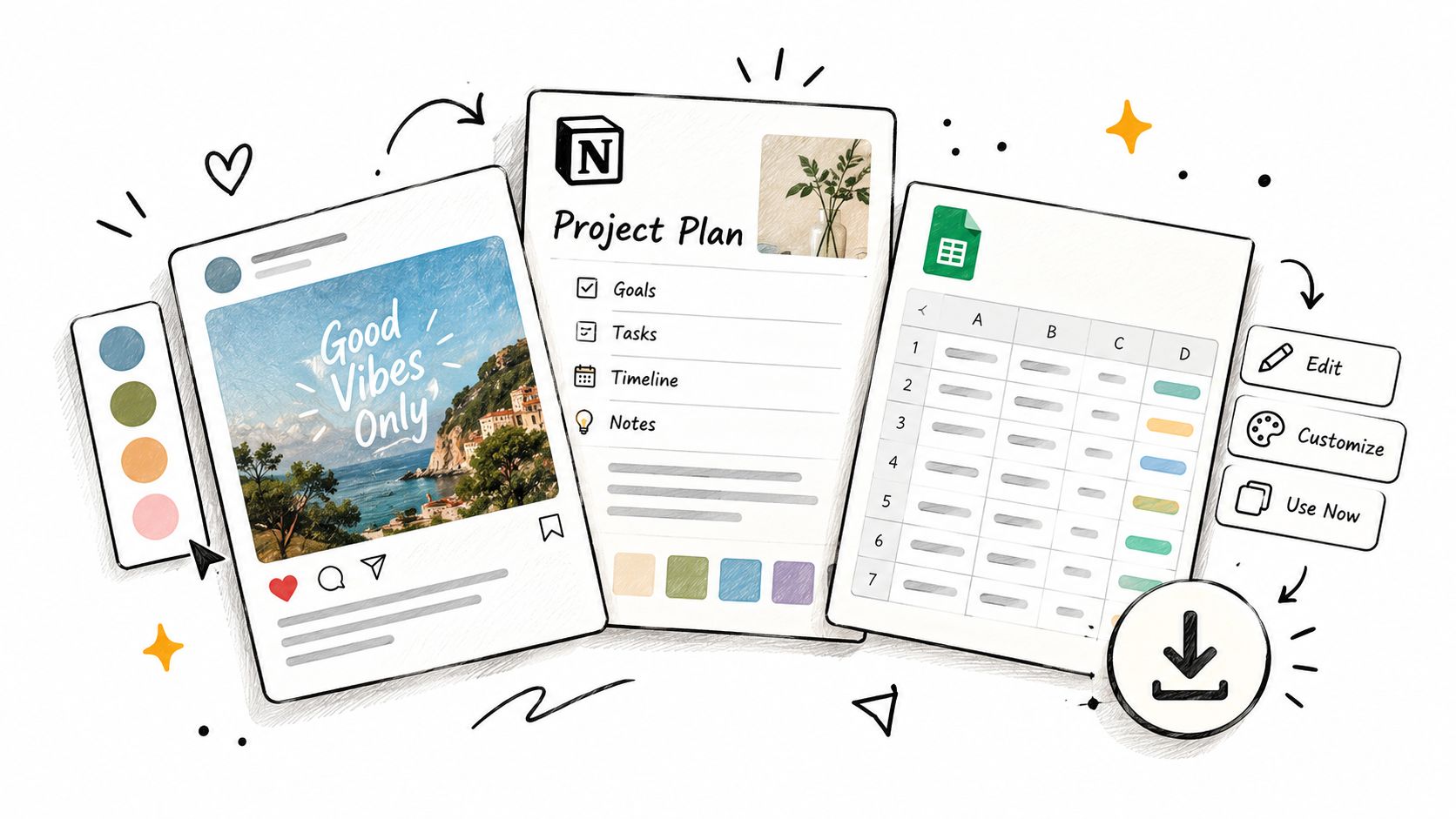
Templates sell by removing repeat work. A Canva social media pack, Figma interface kit, Notion dashboard, spreadsheet, presentation deck, or Photoshop asset gives the buyer an editable starting point instead of another blank page.
Choose one audience and one job before building. A general content calendar faces broad competition. A calendar for independent real estate agents, with listing prompts and reusable layouts, gives you a sharper sales message and a clearer preview. The same principle applies to presets and design resources: solve a defined workflow rather than collecting unrelated files.
The category remains attractive, with strong growth reported for templates and digital assets. Insightraider reports that templates and digital assets represent $7.7 billion in 2026, with 33% year-over-year growth. Buyers still have many alternatives, so usability and proof matter more than a broad promise of convenience.
Sell the finished workflow
Show the product from blank file to completed result. A short demonstration should identify the required applications, editable elements, included file types, and practical limitations. Screenshots should reveal what the buyer receives, not only the most polished outcome.
Bundle assets only when they support the same task. A brand kit can combine social post layouts, a content planner, and presentation pages. A freelancer's client onboarding bundle can include an intake form, proposal, invoice, and follow-up email templates. Every added file should shorten the buyer's workflow.
Write the license before publishing:
- Commercial-use rights: State whether buyers can use the finished work for clients or business activity.
- Restrictions: Clarify resale, redistribution, and shared team access.
- Third-party assets: Confirm rights for fonts, icons, photographs, illustrations, and plugins.
- Compatibility: List the required software version or account type.
- Updates: Explain whether future revisions are included.
For a focused Canva workflow, use this guide to sell Canva templates. The strongest sales mechanism is an instant download. A creator store can take payment, deliver the files immediately, and request email permission for future bundles or updates, keeping discovery, purchase, delivery, and follow-up behind one link.
4. E-books, Guides, and Lead Magnets
A useful ebook resolves one narrow problem from question to action. General observations rarely justify a purchase. Build the guide around decisions, examples, worksheets, and clear next steps, so readers finish with something they can apply.
Choose the sales mechanism before writing. A free guide works as lead generation when it delivers a meaningful first result and points toward a paid solution. A paid ebook earns its place by going further, with implementation worksheets, checklists, examples, audio explanations, or supporting files. Keep the free resource focused. Show the next offer plainly instead of burying it inside an oversized download.
A strong title identifies the reader and the outcome. “A Guide to Content Marketing” says little. “The Independent Consultant's Client Onboarding Guide” gives the audience a reason to open the page.
Format the material for use, not decoration. Consistent typography, readable spacing, working internal links, a clean cover, and a contents page reduce friction. Tell readers how to use the resource, especially if it includes exercises or a sequence of actions.
Useful formats include:
- Decision guides: Help readers choose between approaches.
- Workbooks: Ask questions and produce an output as the reader progresses.
- Checklists: Reduce errors in a repeatable process.
- Research summaries: Organize complex information for a defined audience.
- Recipe and meal guides: Package practical instructions around a specific cooking need, including these protein recipes for home cooks.
Use a guide to selling ebooks online when setting up distribution. A single creator-store link can present the free download, paid edition, email signup, and related booking in one customer journey. Deliver paid editions instantly. For free guides, collect permission to follow up, then recommend the premium version or a relevant service based on the reader's problem. This approach keeps discovery, delivery, and conversion connected without forcing buyers through separate pages.
5. Music, Beats, and Audio Products
Audio products sell best when the buyer can identify the job they will complete with them. Royalty-free music, beats, sample packs, drum kits, production presets, podcast intros, voice assets, and sound-design files all serve different production needs. Define that need before naming the product. “Lo-fi beats for short-form cooking videos” gives you a clearer audience and promotion angle than “music for creators.”
The strongest sales mechanism is instant licensed delivery. Buyers should preview the sound, choose the correct license, pay, and receive organized files without waiting for a manual reply. Use a paid-access or subscription model only when you can keep adding useful material, such as new beats, samples, or production assets.
Make the usage rights impossible to misunderstand
A file without clear permissions creates purchase friction. State whether the license covers personal use, commercial video, client work, advertising, streaming, distribution, or modification. Explain attribution requirements and identify prohibited uses in plain language.
Show the audio in the setting where buyers will use it. Play a beat on its own and under a sample video. Place a podcast intro beneath spoken audio. Give producers a short sample-pack demo that reveals the textures and possible combinations.
A concise product page should answer five questions:
- Included files: List formats, stems, loops, one-shots, and project files.
- License scope: State permitted uses in plain language.
- Attribution: Explain whether credit is required.
- Delivery method: Describe the download and file organization.
- Updates or drops: Tell buyers how new material will be announced.
A free sample can demonstrate quality and generate leads. Ask for email permission at download, then promote full packs, limited releases, or subscription access. Keep the sample useful enough to prove the product, while reserving the broader library for paid customers.
Use this resource on selling music online to refine your setup. A single link-in-bio creator store can connect the free sample, instant paid delivery, email signup, subscription access, and booking option. That store supports the full journey, from hearing the preview to buying an asset or requesting custom audio.
6. Printables and Downloadable Worksheets
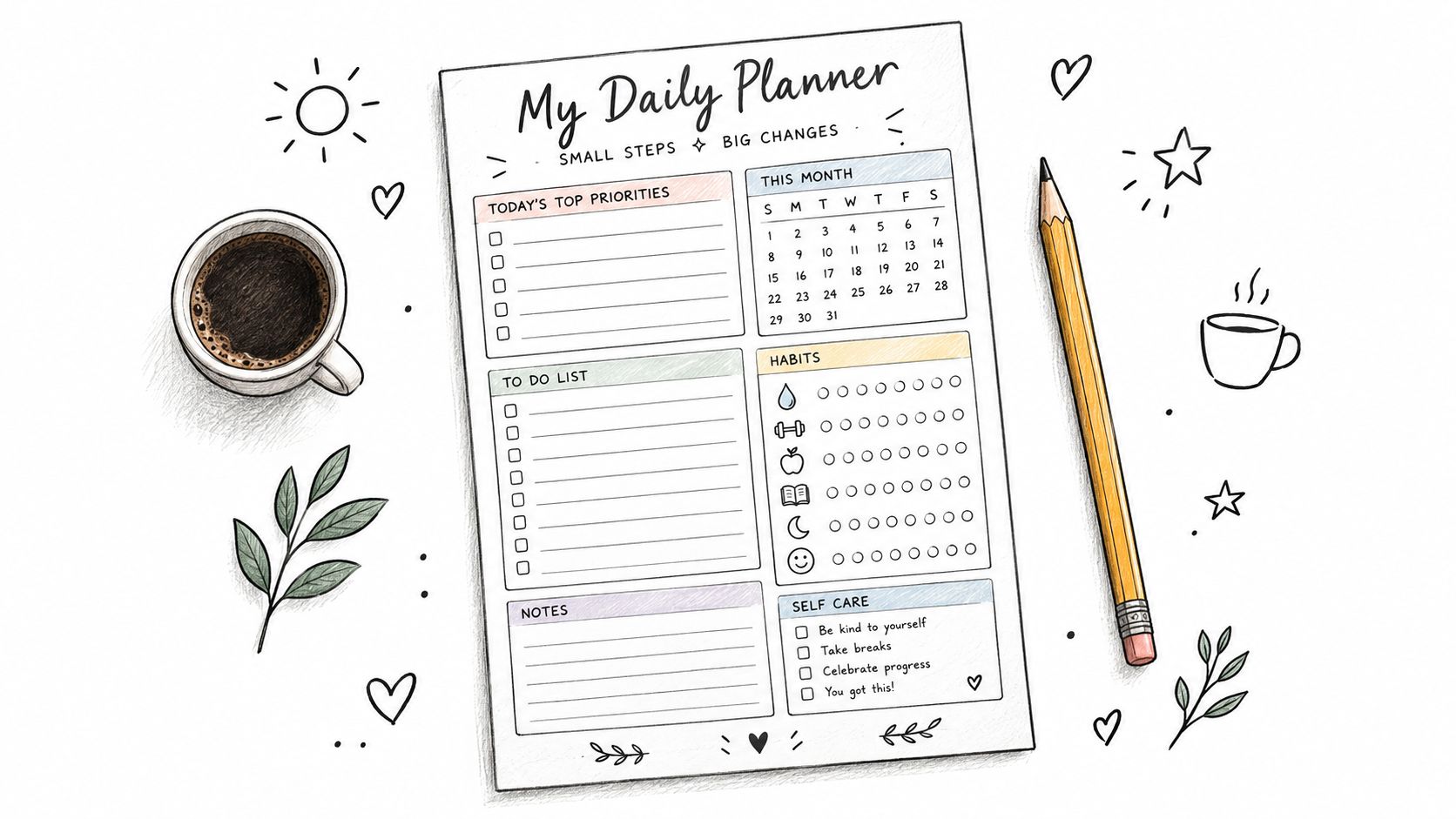
Printables sell when they help a defined buyer finish a defined task. Planners, journals, checklists, trackers, worksheets, and activity pages need a clear job, not merely attractive decoration.
Choose a micro-niche before designing. A general planner faces heavy competition. A wellness planner for new mothers, a meal-preparation worksheet for busy families, or a project tracker for freelance illustrators gives buyers an immediate reason to choose your product.
Make the file easy to use
Design for the actual format. Check margins, text size, page orientation, print instructions, and file quality. If you provide multiple page sizes or versions, label every file clearly. Buyers should know what to print without opening several files to investigate.
Show the product in use. A PDF screenshot confirms what the buyer receives, while a photo of someone writing in the worksheet demonstrates how it fits into a routine. Explain who should use it, when to use it, and what the completed pages help them organize or decide.
Build a small product path around one audience:
- A free sample: One useful page that demonstrates your layout and method.
- A focused paid pack: Several pages for one recurring need.
- A seasonal extension: A related version for a predictable planning moment.
- A bundle: Multiple products for the same buyer.
- An email sequence: Usage instructions, prompts, and recommendations for the next product.
Use Pinterest, search-friendly descriptions, and short-form videos to show how the pages work. State exactly what customers receive: a printable PDF, an editable file, or both. That distinction affects the buyer's decision and reduces support requests.
The strongest sales mechanism is an instant download with impulse-friendly positioning. A single link-in-bio creator store can deliver the paid file immediately, collect an email address through a free sample, and present related bundles in the same customer journey. Keep the first purchase focused, then use follow-up emails to recommend seasonal extensions or a larger pack.
7. Photography Presets and Lightroom Collections
Presets sell a faster editing workflow and a repeatable visual identity. Buyers want raw images to reach a polished look without rebuilding every adjustment. Your sales page must prove that result across real shooting conditions.
Start with a gallery, not a feature list. Pair before-and-after images from different lighting conditions, skin tones, locations, and camera sources when relevant. A single attractive example cannot show whether the collection fits the situations your customers handle.
Sell the finished look and the editing path
Name each collection for its outcome, such as warm editorial, muted travel, or clean studio. Clear names help buyers judge the visual fit before paying. A small free pack can introduce your style and generate leads, while the paid collection should provide wider coverage and a consistent workflow.
Show the preset working on several photographs, then explain what customers receive. State whether the files support desktop Lightroom, mobile Lightroom, Capture One, Photoshop, or another application. Include installation instructions and troubleshooting guidance. Buyers unfamiliar with importing presets need clear setup steps, not vague promises of ease.
Use the product page to demonstrate practical value:
- Before-and-after comparisons: Place the original beside the edited image.
- Editing demonstrations: Apply the preset to different photographs.
- Use-case collections: Organize packs for portrait, food, travel, product, or event work.
- Style consistency: Present several edited images as one finished gallery.
- Support boundaries: State whether installation help is included.
The strongest sales mechanism is an instant download, supported by lead generation through a free lite collection. A single link-in-bio creator store can showcase your portfolio, collect an email from visitors who want the free pack, deliver paid files after checkout, and recommend related collections. Keep the first offer focused. Use follow-up emails to introduce broader packs or another use case.
8. Stock Photos, Vectors, and Graphics
Stock assets sell when they shorten a buyer's path from idea to finished work. Original photographs, illustrations, icon sets, and vector packs can support websites, newsletters, pitch decks, social posts, product pages, and commercial campaigns.
Start with a defined visual problem, not a random archive. Illustrations for fintech startups, photographs for independent restaurants, or vectors for educational publishers gives the collection a clear audience and a repeatable production brief. That focus also makes search, previews, and future releases easier to manage.
Sell the right access model
Licensing determines whether buyers feel safe purchasing. Publish a license page or a clearly labeled license section covering personal use, commercial use, client work, modification, resale, redistribution, and team access. If an asset includes recognizable people, property, trademarks, or restricted locations, secure the relevant permissions before listing it.
Build recognition through a consistent visual style. Show individual files in realistic mockups, include enough previews to judge quality, and group related assets into collections that solve a complete project need. A coherent library gives buyers a reason to return.
Match the offer to the buying situation:
- Per-file purchases: Serve buyers who need one specific asset immediately.
- Collection sales: Fit projects that require a coordinated set.
- Subscription access: Suit customers who need new assets over time.
- Waitlist capture: Collect interest before releasing a new collection.
- Custom commissions: Turn unavailable assets into a paid booking.
A free sample can generate leads while demonstrating the standard of the paid library. Email capture matters because a visitor who skips today's release may need a later collection. Give subscribers a clear reason to hear from you, then announce relevant additions rather than sending every update.
The strongest sales mechanism is licensed instant access, with subscriptions for an expanding library and bookings for custom work. A single link-in-bio creator store can show previews, explain licensing, collect email addresses, sell individual files or collections, accept subscription payments, and route commission requests from one branded page. Keep each option distinct so visitors can choose access, ongoing updates, or a custom solution without losing context.
9. Software Tools, Plugins, and Lightweight SaaS
Software earns sales by solving a repeated problem, not by piling on features. A browser extension, plugin, automation tool, or lightweight SaaS product has a clear opportunity when it saves a specific audience time or removes a task they perform manually.
Build the smallest useful version first. Choose one user group, define one recurring job, and make the result obvious in a short demonstration. A narrow tool is easier to explain, test, support, and improve than a broad platform with unrelated functions.
The buying mechanism should match the product:
- One-time license: Use this for a self-contained plugin or tool that needs no hosted infrastructure.
- Subscription access: Charge recurring fees for hosted functions, continuous updates, recurring data, or operating costs.
- Freemium entry: Offer a usable free version, then reserve paid features for customers who need greater speed, capacity, or control.
- Lead generation: Publish tutorials, comparison pages, build-in-public updates, and problem-specific videos to attract users before they are ready to buy.
A free version must demonstrate the paid product's value. Explain who benefits from upgrading and how the paid workflow changes. Arbitrary limits that make the free experience unusable will discourage adoption rather than create demand.
Prepare the customer experience before launch. Provide a short demo showing the problem, action, and result. Publish a support channel, update policy, security explanation, cancellation process, and feedback route. Customers need to know how to report bugs, how data is handled, what subscription terms apply, and how improvements will be chosen.
For more product directions, review The Money Maniac's SaaS concepts.
The strongest sales mechanism is a license or subscription, supported by a demo, free trial, or freemium entry point. A single link-in-bio creator store can host the product explanation, collect leads, present the demo, qualify interested visitors, and direct ready buyers to checkout. Keep the store focused on one customer journey, from problem recognition to product access and ongoing support.
9 Digital Products: Quick Comparison
| Item | Implementation Complexity (🔄) | Resource Requirements (⚡) | Expected Outcomes (📊) | Ideal Use Cases | Key Advantages (⭐) | Quick Tip (💡) |
|---|---|---|---|---|---|---|
| Digital Courses | High, curriculum design, filming, editing | Video gear, LMS, hosting, community moderation | Scalable passive/recurring revenue; authority building | Skill training, certification, cohort launches | Scalable margins; strong positioning | Start small (5–8 modules); offer a free mini-course |
| Online Coaching Programs | Very High, live facilitation & personalization | Time-intensive: calls, intake, CRM, support staff | High-ticket revenue; strong client transformations | Business coaching, career pivots, high-touch outcomes | Premium pricing; strong testimonials/referrals | Niche to a clear outcome; qualify with discovery calls |
| Templates / Presets / Design Resources | Low, design & packaging workflow | Design tools (Canva/Figma), demo videos, delivery platform | Low-cost scalable sales; high margin per asset | Social posts, brand kits, marketing assets | Fast production; high perceived value | Niche down; include video demos and bundles |
| E-books, Guides & Lead Magnets | Low, writing, formatting, design | Writing tools, PDF design, email system | Excellent for lead gen and authority; modest direct sales | List building, SEO content, educational guides | Very low production cost; quick to market | Offer free & premium versions; use benefit-driven titles |
| Music, Beats & Audio Products | Medium, production + licensing setup | DAW, sample libraries, distribution/licensing platform | Passive sales/subscriptions; repeat buyers among creators | Podcast intros, video scoring, beat licensing | Repeat purchases; bundling with courses | Start in a niche (e.g., lofi for TikTok); offer free samples |
| Printables & Downloadable Worksheets | Low, page design and export | Design software, file variants (A4/US), instant delivery | High-volume impulse sales; evergreen with seasonal refresh | Planners, journals, checklists, parenting aids | Extremely low cost; broad market appeal | Leverage Pinterest and free samples to build list |
| Photography Presets & Lightroom Packs | Low, develop presets and documentation | Editing software, sample images, delivery system | Good margins; recurring purchases from photographers | Portraits, travel, influencer editing workflows | One-click consistency; bundle with tutorials | Show before/after examples; offer free lite preset |
| Stock Photos, Vectors & Graphics | High, build & tag a large library | Camera/illustration tools, asset management, licensing | Scalable subscriptions or per-asset revenue; competitive | Agencies, marketers, UI/UX projects, content production | Massive demand; subscription potential | Focus on a consistent niche/style and keywording |
| Software Tools, Plugins & Lightweight SaaS | Very High, development, maintenance, compliance | Dev resources, hosting, support, analytics, docs | High ARR potential with retention; requires PMF | Automations, creator tools, niche productivity apps | Recurring revenue; potential for acquisition | Ship an MVP for one problem; use freemium to acquire users |
Turn One Product Idea Into a Simple Sales System
Choosing among these digital products to sell is easier when you start with delivery capacity instead of market noise. If you have proven expertise and can explain a process clearly, choose a course or guide. If customers need your judgment, choose coaching. If you can create reusable files quickly, choose templates, presets, printables, or stock assets. If you understand a recurring technical problem and can support the product, consider software.
Don't launch a broad catalog first. Select one audience and one recurring pain point. Write the offer in one sentence that identifies the buyer, the problem, and the result. If the sentence sounds applicable to everyone, narrow it again.
Validate the idea before investing in a large production cycle. Speak to people who match the intended audience, review the questions they ask, and publish a small preview. A free checklist can validate an ebook. A sample template can validate a bundle. A short demo can validate software. A discovery call can validate coaching.
Define access and usage terms before taking payment. Tell customers exactly what they receive, how delivery works, whether updates are included, and whether they can use the product commercially. For licensed assets, write the restrictions in plain English. For courses and communities, state the access period and support expectations. Clear terms reduce support requests and make the offer easier to trust.
Your sales page should make the buying decision simple. Include the product name, audience, outcome, format, previews, price, delivery method, license or access terms, and a direct checkout action. Add an email signup for visitors who need more time, then use useful follow-up content rather than constant discounting.
The larger category has plenty of room, but buyers don't purchase opportunity. They purchase a solution they understand. UNCTAD reported that business-to-business e-commerce sales across 45 developed and developing economies reached $28 trillion in 2024, demonstrating that digital buying is embedded in mainstream trade, as described in the UNCTAD-related market context. Your task is to translate that acceptance into a narrow offer with a reliable customer journey.
Use taap.bio when you want that journey on one branded page. The platform combines a drag-and-drop bento layout with built-in checkout, instant digital file delivery, paid bookings, email signup, custom-domain support, and widget-level analytics. That lets one creator sell a PDF, collect an email address, take a paid consultation booking, and measure which page elements attract action without assembling separate storefront, scheduling, email, and analytics tools.
Start with one narrowly defined product. Once buyers use it and tell you what they need next, expand into a bundle, coaching offer, course, or subscription. That sequence gives every new product a reason to exist and gives your audience a clear path to buy more.
If you want to sell ebooks, templates, courses, presets, audio files, printables, software, or bookings from one branded page, visit taap.bio to set up a creator store with checkout, instant delivery, email capture, and analytics. Choose one product model from this list, publish a focused offer, and send your audience directly to the page where they can understand, buy, or book.