
Digital products aren't a single business model. They're a choice between scalable files, recurring access, live expertise, licensed media, and software that solves an ongoing problem. That distinction matters because the product that fits your audience may not fit your production capacity or support tolerance.
The opportunity is larger than the usual “side hustle” framing suggests. Trade in digitally ordered and delivered digital products, productized services, and digital intermediation fees reached at least USD 0.95 trillion in 2021 across 189 countries, according to research summarized from Nature Communications. The global digital goods market was valued at USD 124.32 billion in 2025 and is projected to reach USD 511.43 billion by 2031, with a forecast CAGR of 26.60% from 2026 to 2031, according to Mordor Intelligence's digital goods market forecast.
Choose based on the buyer's need, your creation capacity, the support the offer demands, and the path from social traffic to checkout, email capture, or paid booking. Each option below is evaluated by monetization model, operational burden, price potential, delivery format, and fit with a single-page creator store. taap.bio brings product discovery, built-in checkout, instant delivery, bookings, email capture, and analytics into one link-in-bio store. If your expertise is academic, a focused resource can work too, as shown in this guide to selling study notes.
Table of contents
1. Digital Courses and Online Coaching Programs
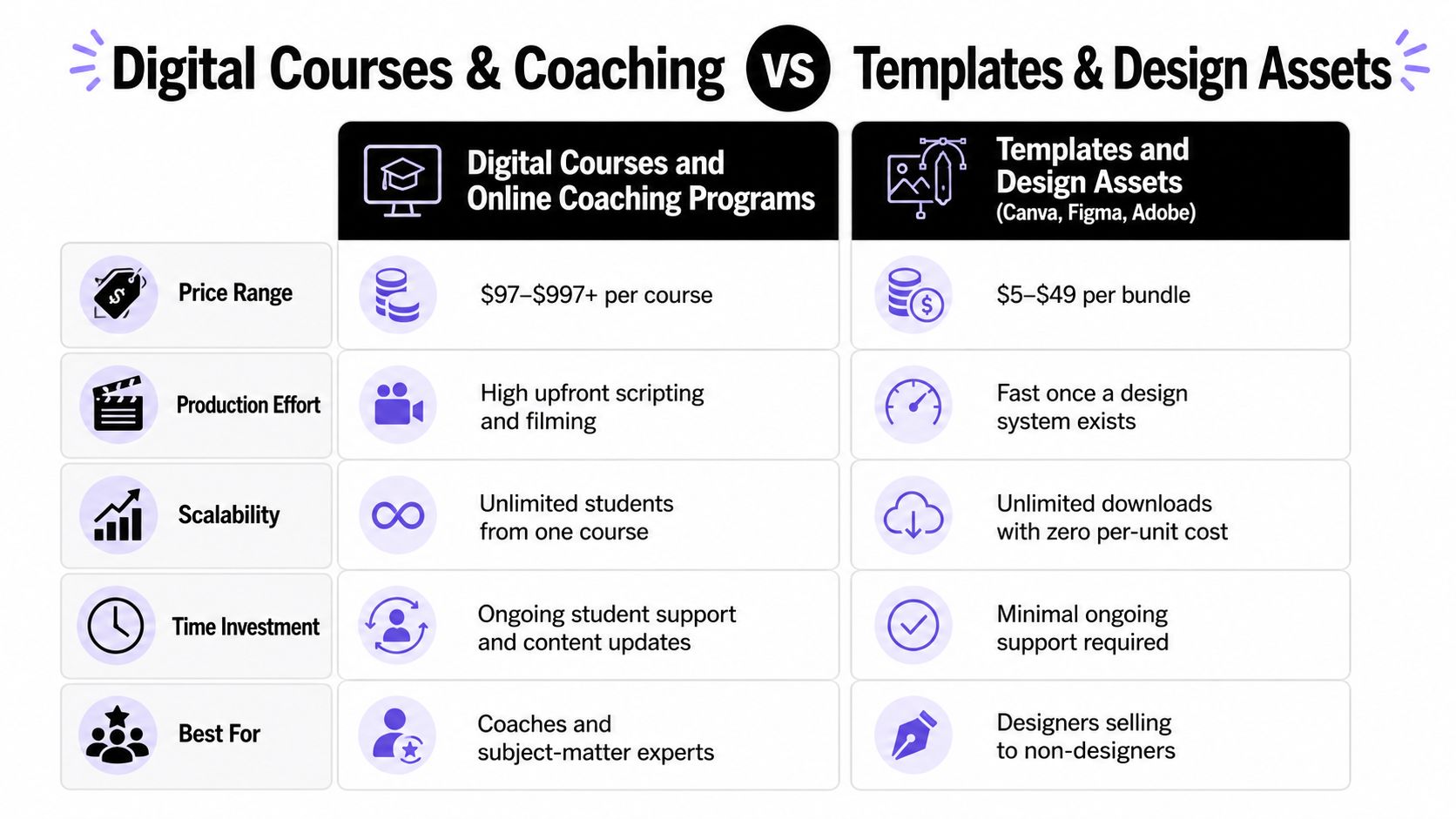
Digital courses sell a defined transformation. Build one when your audience wants a repeatable process, not a loose library of information. Package your method into video lessons, workbooks, assignments, and checkpoints that lead to one outcome. A productivity creator could teach a planning system, while a fitness professional could create guided training for a specific audience and goal.
The strongest monetization model pairs a self-paced course with a higher-touch coaching tier. Instant course access creates scalable revenue. Paid calls, reviews, and private feedback raise price potential for buyers who need help applying the material. This two-tier structure serves independent learners and implementation-focused customers without requiring separate businesses.
Match production effort to the promise
Courses demand more operations than templates or guides. You must record clearly, organize lessons, update materials when the method changes, answer questions, and keep students progressing. Confirm that your audience asks for the same solution repeatedly before producing a broad program.
Make these launch decisions:
- Choose one narrow pain point: Teach a recognizable result, not a subject as broad as “marketing.”
- Set the delivery format: Give students immediate access, release lessons by email, or run a live cohort. Each option changes your support workload.
- Create a premium path: Offer paid calls, implementation reviews, or private feedback to increase revenue per customer.
- Build the audience first: Use taap.bio's email widget to collect waitlist subscribers before recording the full program.
Practical rule: Build the smallest course that can produce the promised outcome, then expand it using real student questions.
A single-page creator store fits this model because one link can present an introduction, capture email addresses, sell the course, and accept coaching bookings. taap.bio combines checkout, email capture, bookings, delivery, and analytics, reducing the friction of connecting separate tools. Use this resource on tools for course creators to plan the workflow around your offer.
2. Templates and Design Assets for Canva, Figma, and Adobe
Templates sell best when they remove a repeated task for a specific buyer. Social media packs, pitch decks, presentation systems, brand kits, Figma component libraries, and video graphics let customers skip setup and produce work faster. Choose a workflow you understand, then turn its repeatable steps into editable files.
The usual model is a one-time purchase. Bundles, paid updates, customization, and coaching can increase revenue per customer, but each adds delivery work. A single template suits a narrow need. A larger system can command more because it helps the buyer complete an entire project. Sellfy data discussed by SendOwl reports digital services at 25% of sales, design assets and graphics at 21%, and video content at 16%, while ebooks and online courses each account for 10%. The practical lesson is clear: design assets and service-adjacent offers deserve serious testing.
Start with the buyer's editing experience. Test every file, explain the setup, and show which elements can change. “Social media templates” is weak positioning. Templates for independent interior designers, local restaurants, or female founders give the offer a defined use case and make the preview easier to judge.
Make four launch decisions:
- Target one buyer group: Match its language, content formats, and recurring tasks.
- Package a complete job: Bundle related assets so customers can finish a project.
- Demonstrate the editable result: Use previews, screen recordings, and before-and-after examples.
- Control ongoing work: Issue updates when a platform, file format, or buyer workflow changes, not on an arbitrary schedule.
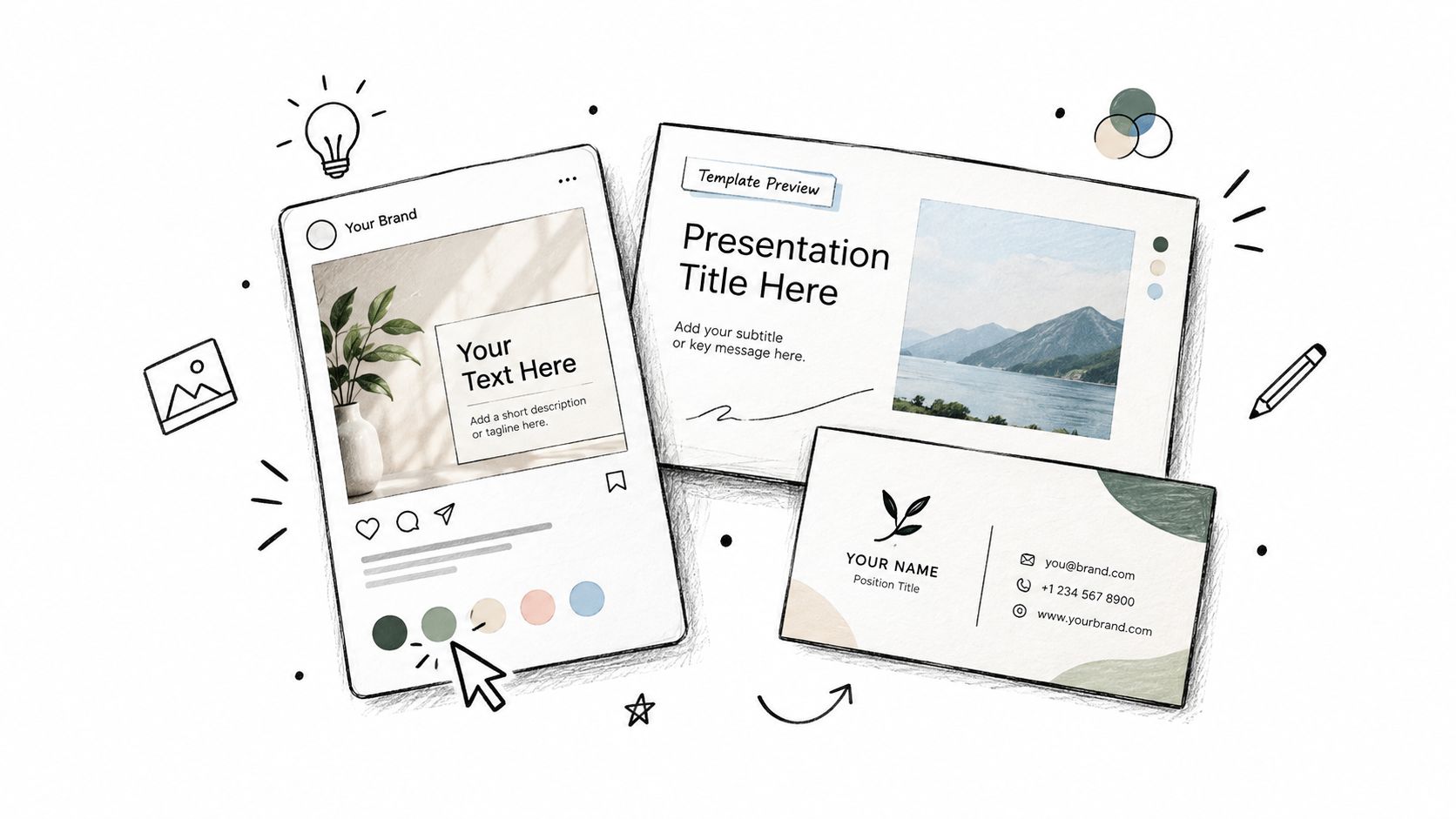
A single-page creator store matches this low-touch delivery model. Your taap.bio page can show the visual preview, collect emails for new releases, take payment, deliver files immediately, and report sales activity without requiring separate checkout and email tools. Use this guide to selling Canva templates to plan the product, preview, and launch flow.
3. Paid Booking and Consultation Services
Sell access to judgment when a downloadable product cannot solve the buyer's problem. Paid bookings fit consultants, coaches, designers, personal trainers, career advisers, real estate professionals, and other specialists who diagnose situations or tailor recommendations.
The monetization model is direct payment for time, whether you sell a single session, a review, a package, or an intensive. Price potential is higher than for many files because the buyer receives expertise and customization. Capacity sets the limit: every purchase occupies your calendar, so this offer scales less easily than a template or guide.
Define the offer before opening your calendar. State the session length, required preparation, cancellation terms, and promised result. A design review might include verbal feedback, annotated files, or a written summary. A business consultation should specify the information the buyer must submit and the decision the meeting will address.
Use these operating rules:
- Sell a specific result: Offer a review, plan, diagnosis, or decision instead of vague “advice.”
- Collect payment first: Unpaid exploratory calls can consume the time reserved for paying clients.
- Filter complex requests: Add an intake form when preparation affects the quality of the session.
- Package implementation: Offer multiple appointments when one answer will not finish the buyer's work.
- Keep demand visible: Capture email addresses when availability ends, then notify interested buyers when openings return.
A single-page creator store suits this service because the purchase and scheduling path stay together. taap.bio can place the calendar, payment, intake questions, and invitation flow on one page, reducing the friction of sending a visitor from a social profile to a scheduling tool and then to separate checkout. Review how online booking software can support paid services when deciding how to structure the booking flow.
4. Ebooks and Digital Guides
A strong ebook turns a difficult decision into a clear sequence of actions. Buyers pay for a faster process, a better answer, or a practical result, not for page count. Choose a problem your audience already recognizes, then build the guide around the decisions that move them forward.
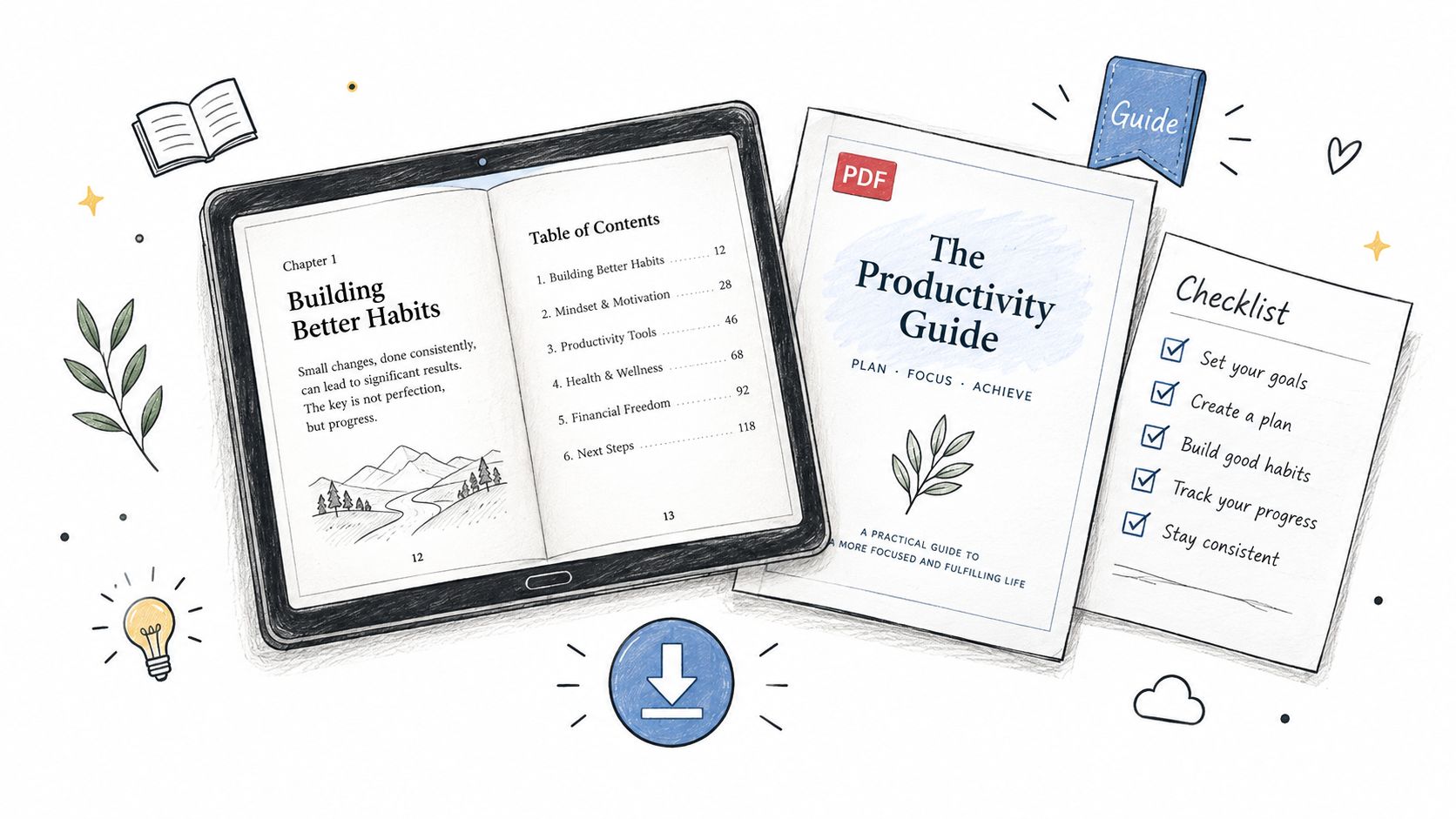
Use a PDF, ePub, or web-accessible guide for niche business systems, fitness routines, study methods, copywriting processes, recipes, or travel planning. An email marketer might document a focused subscriber funnel. A fitness professional could combine a written plan with worksheets and tracking pages. These formats keep delivery simple and support requirements lower than a course, while still giving buyers something they can apply immediately.
Build a product buyers can finish
The monetization model is usually a one-time purchase, so price potential is modest to medium. The offer becomes more valuable when it includes implementation materials or leads naturally to a course, consultation, or membership. That product ladder also gives the guide a clear role in your wider business.
Plan for a moderate production burden. Writing, editing, formatting, link checks, and periodic updates take concentrated work. State what the file includes, who should buy it, and what the reader should complete first.
Prioritize:
- A problem-led title: Name the desired result instead of a broad subject.
- A practical sequence: Arrange actions, decisions, and examples in a usable order.
- Implementation tools: Include checklists, worksheets, scripts, or an action plan.
- A credible preview: Show sample pages and identify the reader's starting point.
- A free entry offer: Use a shorter resource to build an email audience before presenting the paid guide.
A single-page creator store fits this product well. taap.bio can handle checkout, digital file delivery, email capture, and basic analytics in one place, reducing friction between discovery and purchase. Use this guide to selling ebooks online to shape the offer and launch path.
5. Stock Photos, Videos, and Music Licensing
Stock media sells best when buyers can identify the asset, understand its rights, and download it without extra negotiation. Photographers can package image collections, videographers can offer footage, and musicians can license tracks, beats, or sound effects to creators and businesses.
Choose the revenue model before building the catalog. Charge per download or license for occasional buyers, sell themed bundles for larger projects, or offer recurring library access for customers with ongoing content needs. Price potential rises with quality, uniqueness, clear usage rights, and a well-defined buyer. Personal-use and commercial-use licenses need separate terms, with permitted uses stated before payment.
Build for discovery, not just production
The production burden is high at launch. A useful catalog requires consistent creative direction, organized files, accurate metadata, previews, and licensing terms. Delivery becomes easier after setup, but promotion and searchability remain ongoing work. A focused collection, such as minimalist business photography or atmospheric music for independent films, gives buyers a clearer reason to choose you than a mixed library of unrelated files.
Use these decisions to shape the offer:
- A defined visual or audio identity: Make the collection recognizable and cohesive.
- Searchable metadata: Label subjects, moods, formats, and use cases accurately.
- Bundles: Group related assets for campaigns, seasons, or creative projects.
- License clarity: Explain commercial, personal, editorial, and modification rights.
- Demonstration content: Show assets in videos, posts, websites, or campaigns.
Treat catalog creation as an operating process, not passive income. Your single-page creator store can feature a leading collection, display music or video previews, collect payment, and deliver files instantly. taap.bio also reduces checkout, email capture, and basic analytics friction. Musicians can use this guide to selling music online to plan the storefront and licensing offer.
6. Membership and Subscription Communities
Memberships suit audiences that need continued access, accountability, or interaction rather than a finished file. Possible formats include a private community, live Q&As, a resource library, monthly training, networking, early product access, and implementation support. Choose one primary outcome first. A broad bundle increases delivery work and makes the recurring value harder to explain.
The monetization model is recurring payment, usually divided into access tiers. It can produce steadier revenue than a one-time guide, while creating an ongoing service obligation. Members judge the offer by the value delivered this month, so launch only when you can maintain the promised rhythm.
Retention depends on a repeatable member experience. Set the weekly and monthly schedule before opening enrollment, then define what a new member does immediately after joining. A quiet group or neglected library will drive cancellations.
Set these operating decisions before launch:
- A specific recurring need: Give members a clear reason to return and keep paying.
- A reliable content rhythm: Schedule calls, lessons, prompts, or reviews in advance.
- A useful onboarding path: Direct new members to the best resources and help them participate quickly.
- Visible progress: Share wins, recaps, completed projects, or member milestones.
- A manageable delivery format: Match live support and content volume to the time you can sustain.
Use the single-page creator store as the conversion path, not as the community itself. Show the recurring promise, compare tiers clearly, and place the signup action beside the relevant offer. taap.bio can collect email addresses for a waitlist, present membership options, support checkout, and reduce analytics friction between social content and enrollment. A founding offer may reward early supporters, but a permanent discount can restrict future pricing.
This model has strong price potential when access includes accountability or specialized expertise. It carries more operational burden than a downloadable product, so a focused membership with one clear outcome is the safer launch choice.
7. Software Tools and SaaS
Software tools and SaaS offer the strongest price potential here, paired with the heaviest delivery burden. Build around one recurring workflow, such as reporting, automation, customer intake, or an AI-assisted task. A narrow tool with clear repeat value fits a single-page creator store better than a broad platform that requires extensive explanation and support.
Choose the monetization model before writing code. Subscription access creates recurring revenue while the product continues delivering value. Usage-based billing, licensing, and a free entry tier with paid features can work when customer value or adoption varies. Each model also creates obligations around uptime, security, integrations, documentation, and customer support.
Sell the workflow before the platform
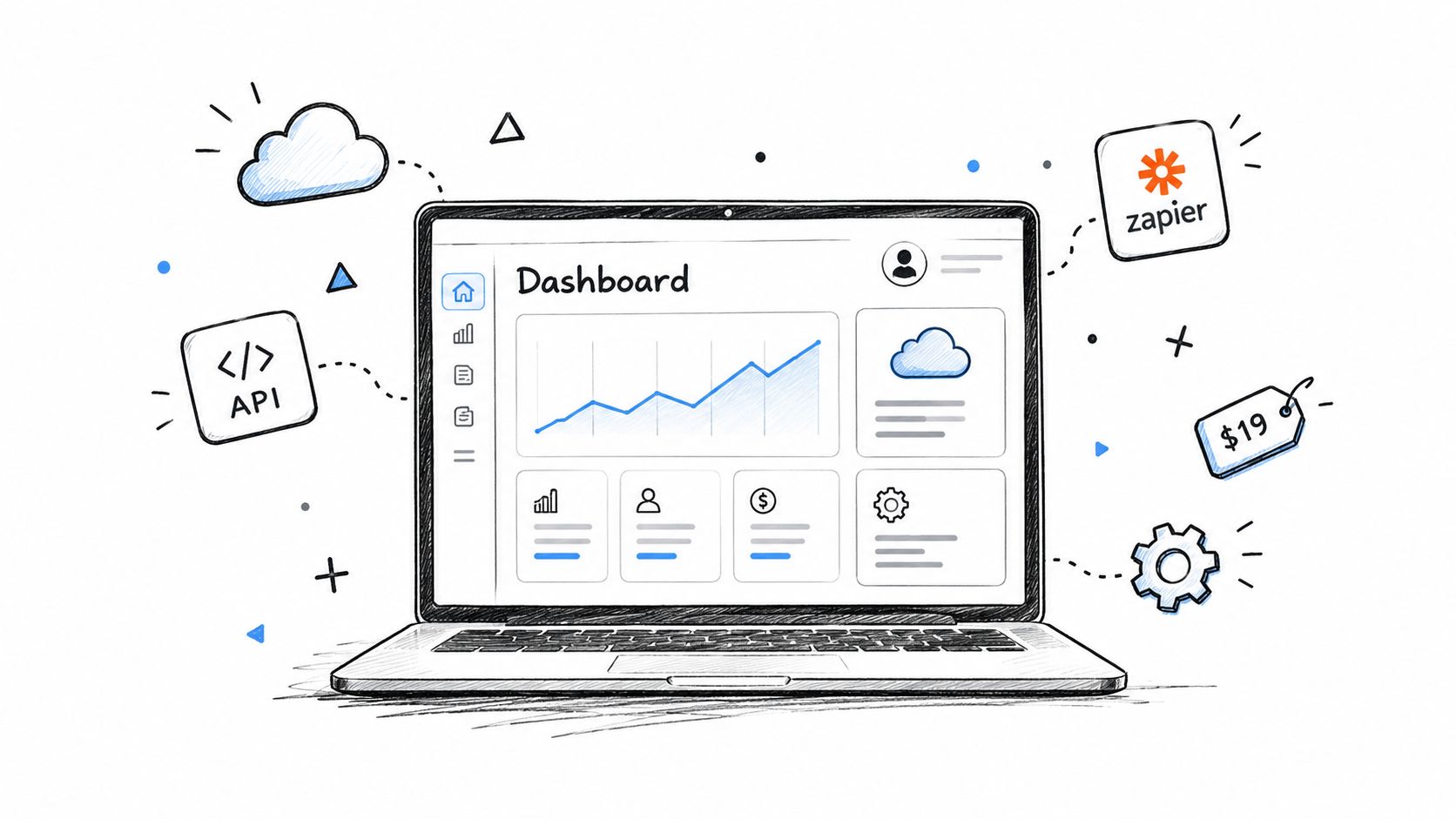
Start with a painful task and interview the people who handle it. A small invoice tool for one profession can have stronger commercial fit than a general business suite. A focused analytics dashboard can command payment when it answers one business question faster than existing products.
Make these decisions before launch:
- A narrow first use case: Solve one repeated task, then add features only when customers request them.
- A low-risk validation method: Collect commitments, run manual pilots, or sell paid onboarding before building extensively.
- A clear pricing boundary: Tie tiers to usage, team size, features, or measurable customer value.
- An onboarding plan: Use paid bookings to connect early customers' tools and help them reach first value.
- A support standard: Document common issues and define response and maintenance expectations.
taap.bio can reduce checkout, booking, email capture, and analytics friction by combining a product block, demonstration media, and paid onboarding on one page. For additional context on automated software concepts, explore Fundl's founder bot tools guide.
8. Webinars and Live Training Events
Webinars sell access to your expertise first, then create a path to a higher-value offer. Choose one focused outcome, teach it live, answer questions in real time, and preserve the recording for later sales. The format supports a paid ticket, group training, or an introduction to a course, template bundle, coaching package, or consultation.
The revenue model combines event income with an upsell. Live delivery creates urgency and interaction, while an evergreen replay extends the offer's shelf life. That replay still requires current examples, dependable viewing, and follow-up emails that prepare attendees to buy the next offer.
Design the event around one result
Operational work peaks before and during the event. Registration, reminders, preparation, moderation, replay delivery, and follow-up all need owners and deadlines. Keep the promise narrow enough to deliver well. “Improve your marketing” lacks a buying reason. “Build a weekly content planning system” gives the audience a specific result to pursue.
Set the commercial path before opening registration:
- Teach one usable method: Give attendees a process they can apply immediately.
- Build preparation into reminders: Tell participants what to bring, review, or complete.
- Match the next offer to the session: Sell the course, templates, coaching, or consultation that addresses the same problem.
- Reuse the recording selectively: Convert strong sections into social clips, articles, or a supporting resource.
- Make follow-up action simple: Put a paid booking option on the same creator page for attendees who need personal help.
Charge when preparation, participation, and access to your expertise carry real value. A serious training should not be presented as a vague free presentation solely to increase registrations.
taap.bio can collect registrations, capture email addresses, and accept follow-up consultation bookings from one page, reducing checkout, booking, email, and analytics friction.
9. Affiliate or Curated Product Bundles
Affiliate bundles monetize selection and judgment, not original files. Choose tools, courses, books, apps, or services for one defined project, then earn commission when readers purchase through your links. A tech creator could assemble a solopreneur stack, while a music educator might pair recording software, microphones, and learning resources.
This model keeps delivery light. You do not manage inventory, checkout, fulfillment, or product quality. The trade-off is limited control over pricing, availability, customer support, and conversion. Price potential stays below an owned product, but a focused recommendation can generate recurring commission without adding fulfillment work.
A bundle needs a buying reason. Organize it around a job, budget, or skill level, and explain the role of every recommendation. Show what each product replaces, where it falls short, and how the pieces fit together. A comparison guide or workflow walkthrough gives buyers more confidence than a page of logos.
Use these decisions to protect trust:
- Recommend products you use or have evaluated: Relevance beats a large catalog.
- Group by buyer intent: Separate collections for a specific job, budget, or skill level.
- State honest trade-offs: Flag tools that are too complex, limited, or unnecessary for some buyers.
- Track clicks and actions: Use UTM parameters and taap.bio analytics to see which recommendations attract interest.
- Disclose relationships: Tell readers when a link may generate commission.
A curated bundle can also introduce your own higher-margin offer. Follow a design-tool recommendation with a template pack, or pair a business-app review with a setup consultation. Build the taap.bio page as a focused recommendation hub, with explanatory media, email signup, and clearly labeled affiliate links. Keep the page narrow enough to guide a decision, rather than turning it into a general directory.
10. Personal Brand and Authority Monetization
Personal brand monetization turns your reputation, perspective, network, and judgment into paid access. Suitable offers include speaking engagements, sponsorships, brand partnerships, premium content, private advisory work, and co-created events.
This model offers strong price potential, but delivery depends heavily on your time and credibility. A speaking engagement or sponsored appearance can command a premium when your audience matches the buyer's needs and your past work provides proof. The product is your involvement, judgment, and trusted association, not a downloadable file.
Choose the offer before building the audience funnel. Define what a visitor can purchase, book, or request after finding you through a podcast, conference, YouTube channel, or social post. A focused creator store might present a consultation, workshop, course bundle, and speaking inquiry form. Each option should match a different level of intent and delivery capacity.
Use these decisions to turn visibility into revenue:
- Own a narrow position: Become known for a specific problem, audience, or point of view.
- Publish proof: Share analysis, results, lessons, and examples that support your expertise.
- Set access levels: Connect free content with paid resources, bookings, and premium partnerships.
- Qualify inquiries: Ask brands for campaign goals, audience, deliverables, and timing before accepting work.
- Match format to capacity: Sell resources for scalable revenue, bookings for direct income, and partnerships only when your involvement improves the outcome.
A single-page taap.bio store can centralize consultations, products, media, email signup, and speaking requests. Its checkout and booking tools reduce handoffs, while email and analytics help you follow up and identify which offer attracts qualified demand. Review clicks and actions by widget, then remove links that distract visitors from buying, subscribing, or booking.
Top 10 Digital Products Comparison
| Product | Implementation 🔄 | Resources & Time ⚡ | Expected Outcomes ⭐📊 | Ideal Use Cases | Key Advantages 💡 |
|---|---|---|---|---|---|
| Digital Courses and Online Coaching Programs | High 🔄, curriculum, filming, platform setup | High ⚡, long upfront build; ongoing support | High ⭐, premium pricing; scalable passive income 📊 | Coaches, consultants, educators | Pricing power, authority building, scalable revenue |
| Templates and Design Assets (Canva, Figma, Adobe) | Medium 🔄, design system and organization required | Low ⚡, fast once system exists; minimal upkeep | Medium ⭐, low price, high volume sales 📊 | Designers selling to non-designers, solopreneurs | Quick to produce, repeatable sales, low support burden |
| Paid Booking and Consultation Services | Low–Medium 🔄, scheduling + payment integration | Medium ⚡, ongoing time commitment (hours sold) | Medium–High ⭐, high hourly rates; limited scalability 📊 | Coaches, consultants, therapists, trainers | Strong unit economics; direct client relationships; predictable bookings |
| E-books and Digital Guides | Low–Medium 🔄, writing, editing, layout | Low ⚡, faster to create; instant delivery | Low–Medium ⭐, modest price ceiling; good lead magnet 📊 | Writers, consultants, niche experts | Low production cost, SEO/lead-gen value, portable format |
| Stock Photos, Videos, and Music Licensing | High 🔄, production quality + metadata + legal | High ⚡, equipment and large library required; slow ramp | Low–Medium ⭐, passive per-asset revenue; membership upside 📊 | Photographers, videographers, musicians | Upload once, earn repeatedly; recurring membership potential |
| Membership and Subscription Communities | Medium–High 🔄, platform + community ops | Medium–High ⚡, continuous content & moderation | High ⭐, predictable recurring revenue and LTV 📊 | Creators, coaches, thought leaders with engaged audiences | Predictable MRR, strong retention when value delivered |
| Software Tools and SaaS | Very High 🔄, engineering, infra, compliance | Very High ⚡, continuous development & support | Very High ⭐, highest revenue ceiling; sticky customers 📊 | Founders, product teams, startup builders | Scalable ARR, high switching costs, network effects |
| Webinars and Live Training Events | Medium 🔄, content + logistics + marketing | Medium ⚡, event-time plus promotion effort | Medium–High ⭐, strong upsell/conversion potential 📊 | Course creators, coaches with email lists | Efficient funnel, reusable content, high perceived value |
| Affiliate or Curated Product Bundles | Low 🔄, curation and link setup | Low ⚡, no product creation; promotion required | Low–Medium ⭐, commission-based; variable margins 📊 | Bloggers, reviewers, influencers | Fast to launch, no fulfillment, diversified passive income |
| Personal Brand and Authority Monetization | High 🔄, sustained content & networking | Medium–High ⚡, long-term consistency required | Very High ⭐, top-end earning via deals & speaking 📊 | Thought leaders, prominent creators | Highest ceiling, diversified revenue, compounding visibility |
Turn One Offer Into a Simple Revenue System
The best digital product to sell is the one your audience already has a reason to buy and you can deliver consistently. Don't choose software because subscriptions sound attractive if you dislike maintenance. Don't choose a course because it appears premium if your audience wants a fast template. Don't choose a membership unless you're prepared to create recurring value and manage community expectations.
Use four decisions to narrow the field:
- Expertise: What can you explain, design, record, build, or deliver better than the audience can do alone?
- Production time: Can you create the first version quickly enough to receive buyer feedback before investing in a large catalog?
- Audience trust: Does your audience already ask for advice, resources, tools, or access?
- Scalability: Do you want repeatable file sales, recurring access, paid time, or a combination?
If you need the fastest path to a test, start with a guide, template, curated bundle, or focused booking. These formats let you validate the problem without committing to a large course, active community, or software product. If buyers repeatedly request more help, turn the original offer into a workshop, coaching package, or membership.
Your first launch should have one audience, one promise, one price, and one delivery method. Write the product page around the buyer's problem. Show what they receive, explain who should buy it, state what happens after payment, and make the next step obvious. Digital products often deliver instantly, so the purchase experience should match that promise.
A single-page creator store helps keep the path compact. With taap.bio, you can place a product block for an ebook, template, preset, audio file, software download, or course, then add a booking block for paid support. The platform also includes email capture, rich media widgets, built-in checkout, instant digital delivery, and analytics per widget. That gives you one place to test whether visitors prefer buying, subscribing, or booking.
Use email capture before and after launch. A waitlist helps you collect interest before production is complete. Post-purchase emails can explain delivery, recommend the next offer, and invite customers to future launches. Keep the audience portable by exporting contacts when needed, rather than depending entirely on social reach.
Watch the funnel in simple stages. First, do visitors click the product or booking block? Next, do they complete checkout or submit the booking form? Finally, do buyers open the delivery email, use the product, book support, or return for another offer? taap.bio provides real-time analytics by widget, so you can improve the page based on observed actions instead of guessing.
The practical conversion benchmark for typical digital product stores is roughly 2.5% to 4%, while 6% or higher can be achievable when checkout friction is low and the audience is loyal, according to this digital product conversion benchmark. Treat that as a testing reference, not a promise. Improve the offer, proof, page clarity, checkout path, and follow-up before adding more products.
Build a product ladder only after the first offer earns attention. A low-priced guide or template can introduce your method. A course or webinar can teach it in depth. A paid booking can provide customization. A membership can support ongoing implementation. A higher-value service can handle complex work. You don't need to launch every level at once. You need one useful offer and a clear next step.
taap.bio gives creators a single page for digital product checkout, instant file delivery, paid bookings, email capture, rich media, and widget-level analytics. Build your first focused offer, connect it to your audience, and visit taap.bio to turn your link in bio into a working sales page.