

You’re posting every day. Your short-form clips pull attention on TikTok, your Instagram DMs are active, your YouTube audience is starting to trust you, and your newsletter subscribers buy. But your usernames don’t match, your bio links point to different places, and people keep asking if all of these accounts are really yours.
That’s not a cosmetic problem. It’s a revenue problem.
A creator can have solid content and still leak trust at the exact moment a follower wants to click, book, subscribe, or buy. A mismatched handle makes your brand harder to remember, harder to tag, and harder to search. It also makes every profile work harder than it should, because each one is acting like a separate island instead of part of one business system.
Social media handles aren’t just labels. They’re the naming layer that holds your brand together. If you treat them like a real asset, you can turn scattered attention into a cleaner path toward sales, bookings, and repeat discovery.
Table of contents
Your Brand Is More Fragmented Than You Think
A common pattern looks like this. Your TikTok handle uses your first name and niche. Instagram uses a shortened version because the original was taken. YouTube has your full brand name. Your newsletter comes from a different domain. Your bio link sits in the middle trying to make sense of all of it.
To you, that feels manageable because you know the backstory. To your audience, it feels fuzzy.
That fuzziness matters because people don’t follow creators in one place anymore. The average social media user now maintains a presence across 6.52 different platforms monthly, and there are over 5.79 billion social media identities globally, which makes audience fragmentation a normal condition, not a temporary annoyance, according to DataReportal’s social media usage overview. Your audience is moving between feeds, search, DMs, comments, and recommendations all day. If your naming changes from platform to platform, you force people to stop and verify instead of click and act.
Small inconsistencies create big friction
A handle mismatch usually creates three losses:
- Recognition loss: People don’t immediately know that your TikTok, Instagram, and booking page belong to the same creator.
- Referral loss: Fans mention the wrong account, tag the wrong profile, or send friends to a dead end.
- Conversion loss: A follower who was ready to buy ends up browsing instead.
Your audience rarely announces confusion. They just fail to take the next step.
That’s why your handle strategy belongs in the same conversation as your content calendar, offer design, and landing page setup. The practical fix is to build a central identity system, then point every profile back to one hub. If you need a framework for tightening up the profile layer first, this guide to social media profiles is a useful place to start.
The handle is the anchor, not the accessory
Creators often spend too much time refining bios, headshots, and feed aesthetics while leaving the actual naming structure messy. That’s backwards. Your handle is the part people search, tag, remember, and type.
Treat it like the spine of the brand. Once that’s stable, every platform becomes easier to connect to one monetization path.
What a Social Media Handle Really Is
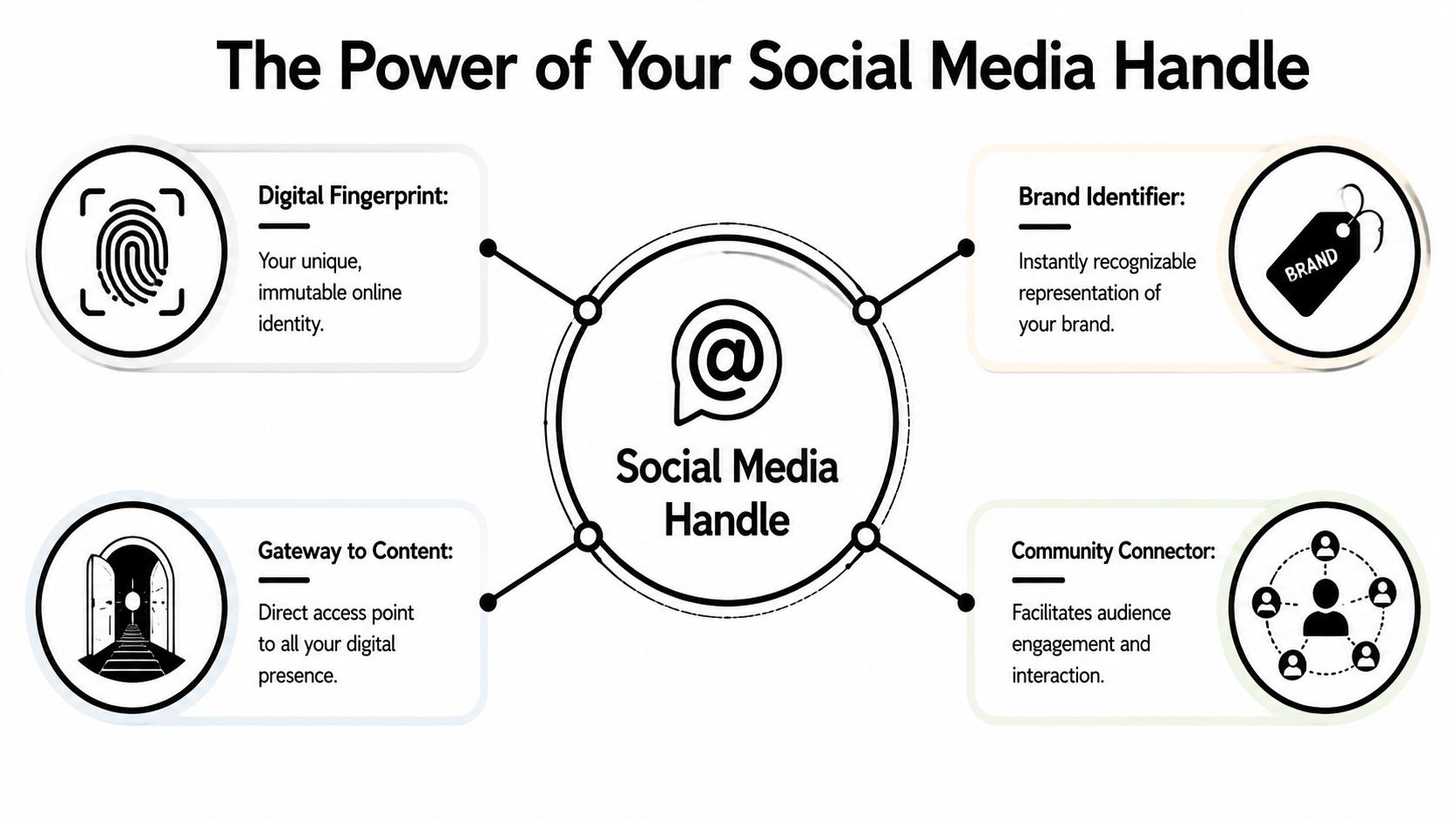
A social media handle is your account’s unique identifier on a platform. It usually appears with an @ symbol, and it often becomes part of your profile URL. That sounds basic, but the business value sits under the surface.
Your display name can change often. Your handle has a different job. It acts more like a digital fingerprint, a stable identifier people use to find you, mention you, tag you, and connect your activity across the platform.
Display name versus handle
Creators mix these up all the time.
| Element | What it does | How to use it |
|---|---|---|
| Display name | Shows your public-facing brand name | Use it for readability, keywords, or role clarity |
| Handle | Uniquely identifies your account | Use it for consistency, tagging, linking, and brand continuity |
Your display name can say “Ava Chen | Career Coach.” Your handle might be @avachen or @coachavachen. The display name helps people understand what you do. The handle helps them find the exact account.
Why platforms care about handles
Platforms don’t treat handles as decoration. Social media handles function as persistent identity anchors within algorithmic ranking systems, and every mention and tag is logged as identity-level data tied to your handle, as explained in IBM’s overview of social media analytics. That means your handle sits at the center of discoverability, tagging, engagement tracking, and audience segmentation.
When someone tags you in a Reel, replies to your post, or mentions you in a caption, that interaction is tied back to the handle. Over time, your handle becomes a container for your content history, engagement patterns, and brand signals.
Practical rule: Pick a handle as if you’ll need to live with it through collaborations, press mentions, product launches, and search results.
Why this matters for monetization
If your handle is the stable ID and your display name is the flexible label, then your handle is the stronger business asset. It’s the string that connects profile links, tagged posts, creator mentions, and customer journeys.
That’s also why your profile URL matters. In many cases, the handle becomes part of the address your audience shares. If you want a cleaner understanding of how those URLs work, this explanation of a social network URL helps clarify the mechanics.
A good handle doesn’t just look clean on a profile. It becomes the identifier your audience carries with them from feed to feed.
Choosing a Powerful and Lasting Social Media Handle
Most bad handles fail for predictable reasons. They’re too long, too hard to spell, too clever, too tied to a temporary niche, or packed with numbers that make the account look disposable.
A strong handle sounds simple when spoken out loud, looks clean when typed, and still makes sense if your business expands. That matters most on high-reach platforms. With Facebook and Instagram collectively boasting nearly 6 billion monthly active users, securing a consistent handle on these dominant platforms should be a top priority for creators, based on Wix’s roundup of social media statistics.
What usually works
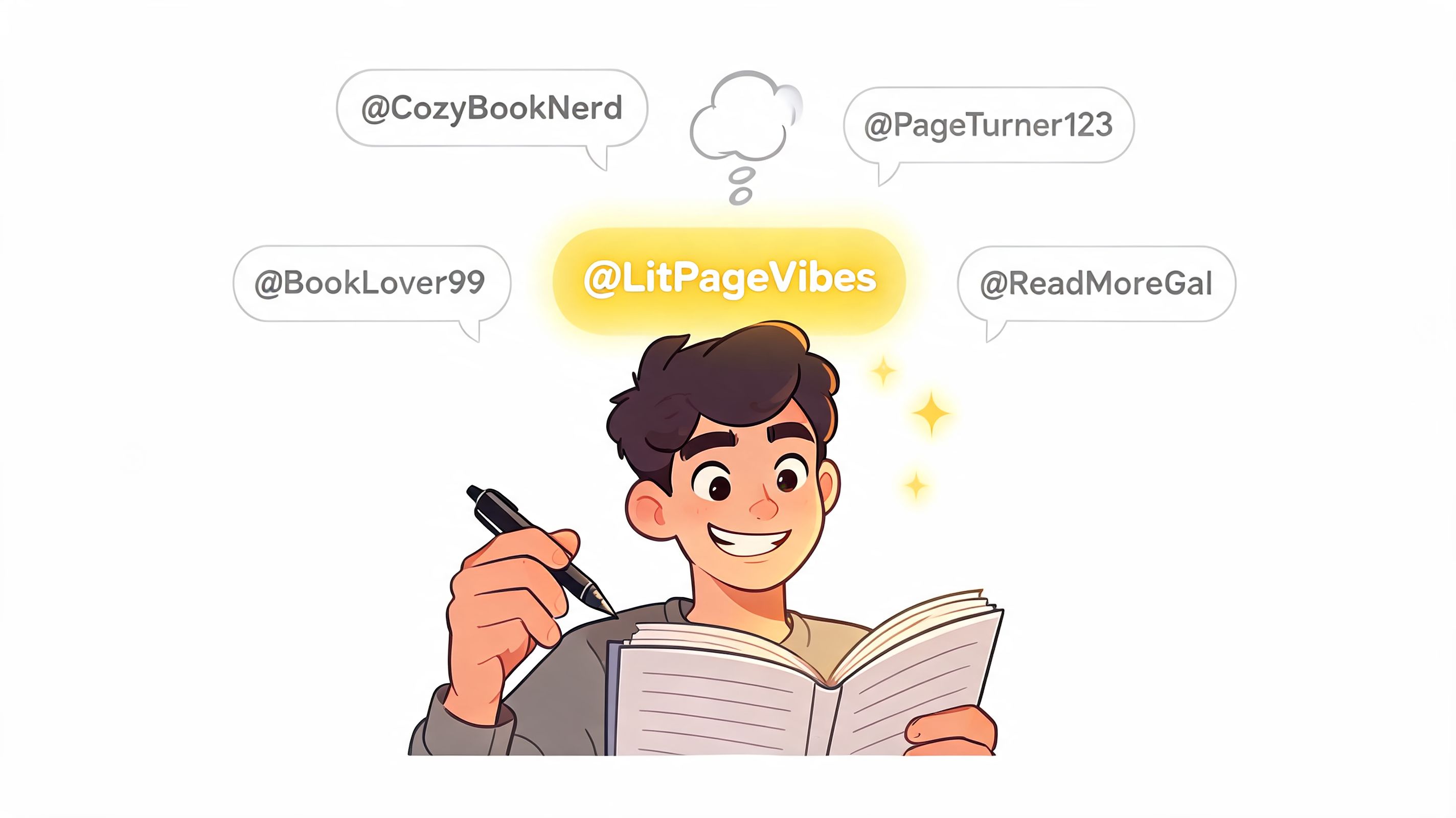
Good handles tend to share a few traits:
- Short enough to repeat easily: If a podcast host can say it once and listeners can remember it, you’re in good shape.
- Clear in audio and text: If people can spell it after hearing it, you remove friction from search.
- Broad enough to grow with you: A handle tied to one platform trend or one offer can box you in later.
- Close to your real brand: Use your name, studio name, or a stable niche phrase people can associate with you.
If you want more platform-specific growth thinking, especially around profile clarity and audience development, Rebus's organic Instagram advice is worth reading alongside your naming decisions.
Choosing Your Social Media Handle Do's and Don'ts
| Do | Don't |
|---|---|
| Use your actual brand name or personal name if possible | Use random filler words that weaken recall |
| Keep it easy to pronounce | Force unusual spelling just to appear unique |
| Check availability across your core platforms before committing | Pick one platform first and improvise on the rest later |
| Prefer clean words over symbols | Stack underscores, periods, and extra characters |
Add a relevant qualifier if needed, like studio, coach, or hq |
Add long strings of numbers unless they’re core to the brand |
| Think beyond your current offer | Lock yourself into a trend-based identity |
If your first choice is taken
Don’t panic and don’t settle for something ugly on the spot. Use a controlled fallback system.
Try these in order:
- Add a light brand modifier such as
the,real,official, orhello. - Add a business suffix like
co,hq,studio, ormedia. - Add a role keyword if your niche is part of the brand, such as
coach,creator,design, ormusic.
What usually doesn’t work is desperation naming. Strings like @alexfit_247_official solve availability and create a trust problem. They look temporary.
Say your handle out loud before you claim it. If it sounds awkward in a spoken intro, it will underperform in referrals.
The right handle should survive platform changes, niche shifts, and product launches. That’s what makes it lasting.
The Hidden SEO Value of a Consistent Handle
Most creators think handle consistency is about looking polished. It is, but that undersells the payoff.
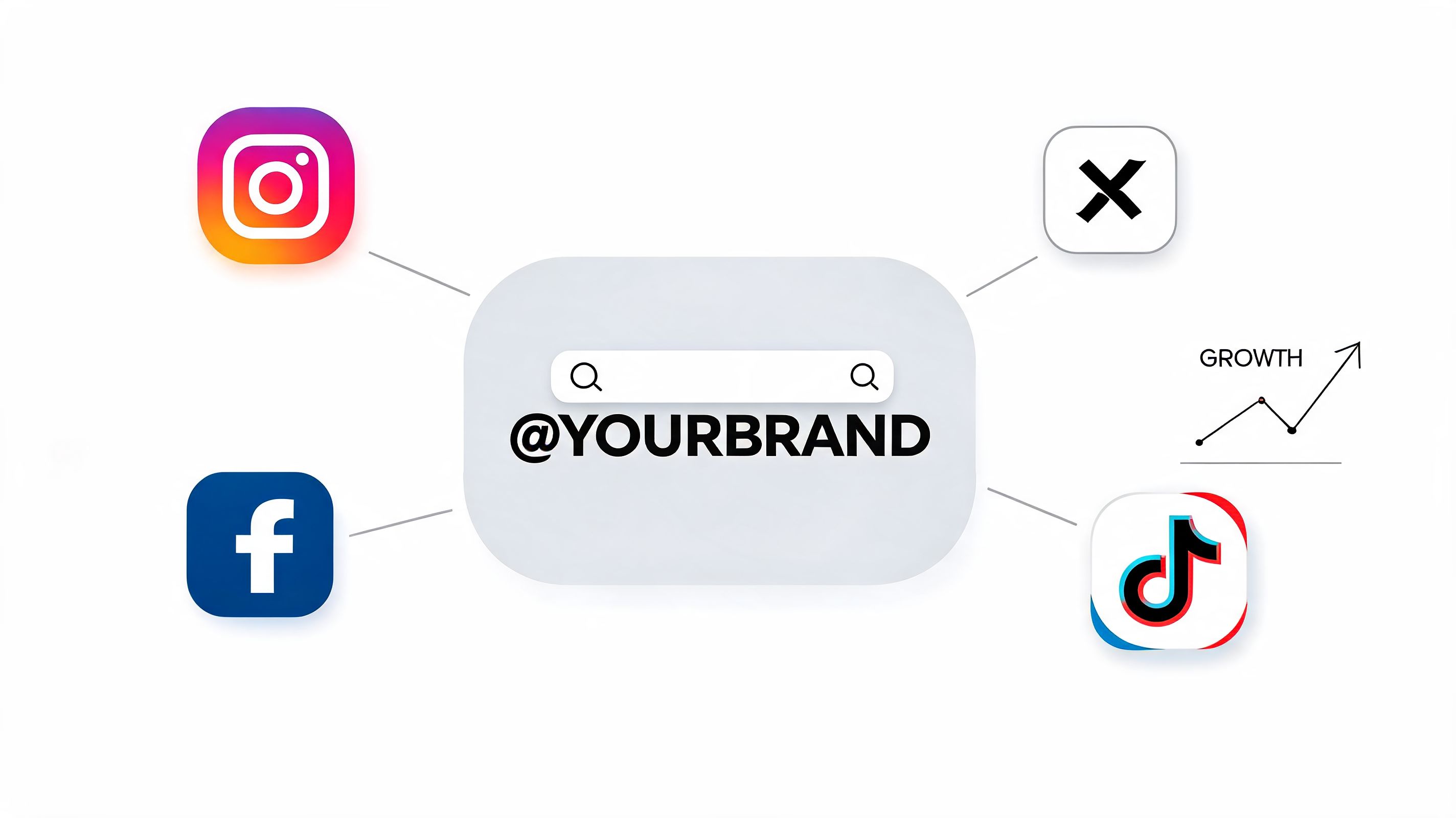
A consistent handle helps people search for you without friction. It also helps platforms, search engines, collaborators, and audience members connect your scattered mentions back to one identity. When your Instagram, YouTube, TikTok, and creator page all use the same naming pattern, you make your brand easier to verify.
Brand recall turns into search efficiency
If someone hears your name on a podcast, sees your clip on Instagram, and later types your handle into search, consistency reduces drop-off. They don’t have to remember whether your YouTube uses one variation and your newsletter another. They search once and find the trail.
That consistency also improves earned attention. Journalists, podcast hosts, event organizers, and happy customers are more likely to tag the correct account when your handle is standardized everywhere.
Search engines prefer cleaner identity signals
Search engines don’t think like fans. They look for matching clues.
A consistent handle gives them repeated identity markers across profile pages, mentions, links, and branded search behavior. That helps consolidate your digital presence into a more coherent entity. It also supports reputation control, because the stronger your official identity signals are, the easier it is to outrank stale profiles, broken links, and low-value mentions.
If you’ve never audited this side of your presence, this guide to effective online content management is useful for thinking through your broader digital footprint.
The easier you are to identify, the easier you are to trust.
Consistency helps your content hub do its job
A creator brand needs one destination that confirms, “Yes, all of this belongs to the same person.” That’s where your content hub earns its keep. If your profiles point into one recognizable destination under the same identity pattern, your audience moves with less hesitation.
A useful way to think about it is this: your handle creates recognition at the edge, and your central page captures that recognition in one place. If you want a broader framework for that model, this breakdown of what a content hub is is relevant.
The SEO angle isn’t just rankings. It’s reduced confusion, cleaner attribution, and stronger branded search behavior over time.
Centralize Your Brand on Your Taap.bio Page
A handle strategy becomes valuable when it leads somewhere intentional. If every profile points to a weak link list, you’ve cleaned up naming without improving conversion.
Your central page should do three jobs at once. It should confirm identity, show social proof, and create direct paths to action. That’s where a modular creator page becomes useful.
Build the page around recognition first
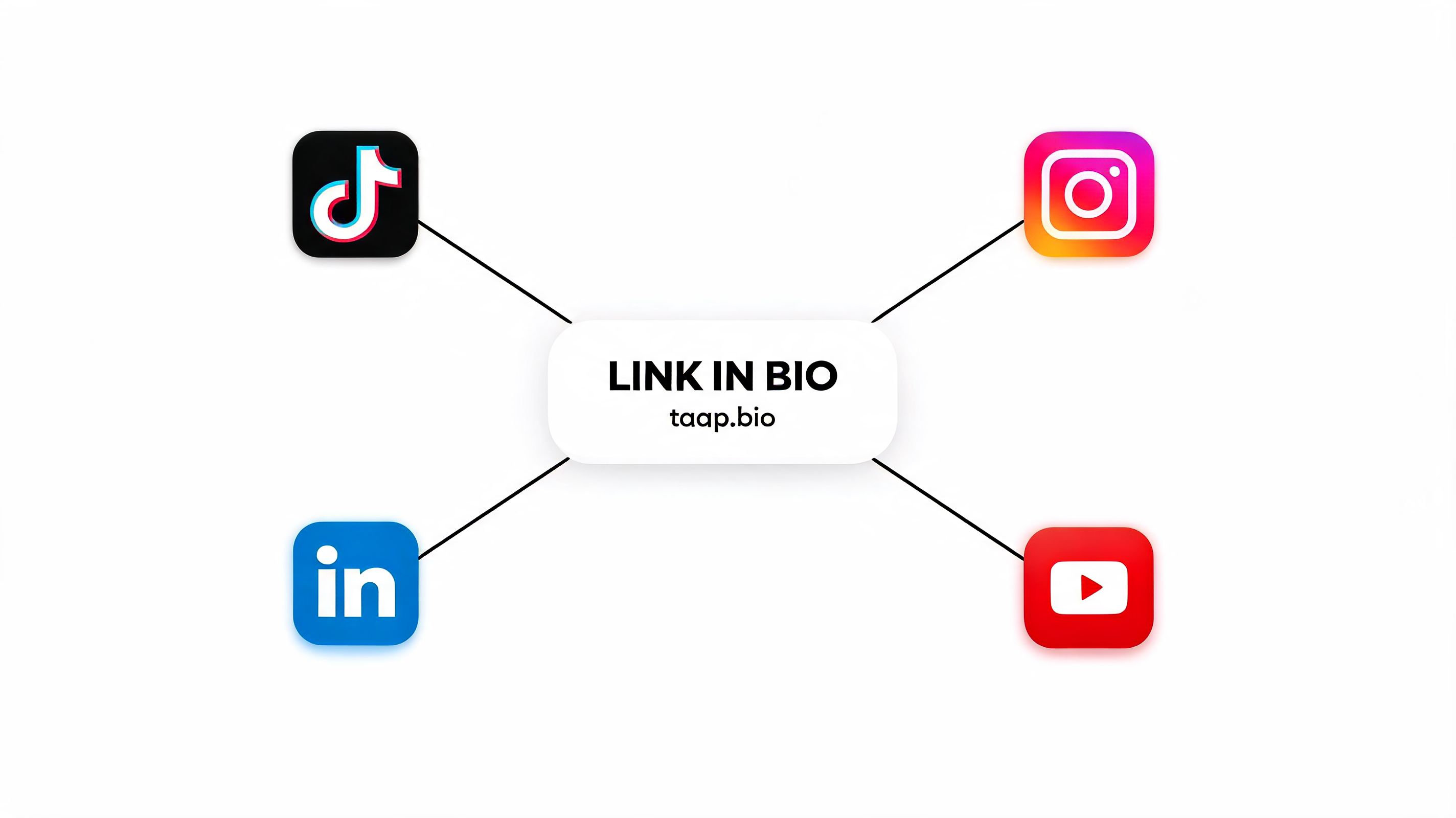
Start with your brand name, primary photo, and one short line that states what you help people do or what you make. Then add your social icons in a way that makes your handle pattern obvious. If your audience lands there from Instagram, they should immediately recognize the same identity on YouTube, TikTok, LinkedIn, or wherever else you publish.
After that, place the action blocks that matter most to revenue. For some creators, that’s a coaching scheduler. For others, it’s a digital product, email opt-in, or featured video.
One practical option is Taap.bio’s custom landing page builder, which lets creators arrange blocks, social icons, and commerce elements in a modular layout rather than a plain vertical link stack.
Use live content to reduce drop-off
Static links ask for blind trust. Embedded content earns it faster.
If your page can show your recent Instagram posts, YouTube videos, TikTok clips, or portfolio items directly on the page, visitors get proof before they click away. That’s useful when someone knows your handle but hasn’t decided whether you’re worth booking or buying from yet.
Arrange those blocks with intent:
- Put your strongest proof near the top: A featured video, testimonial block, or recognizable media mention can validate the brand quickly.
- Keep one main conversion path obvious: If bookings matter most, don’t bury your scheduler below a dozen social links.
- Separate discovery from action: Let people browse content first, then present the offer clearly.
Design for mobile and desktop differently
Most creators build for mobile because that’s where bio traffic starts. That’s correct, but desktop still matters for buyers comparing options, collaborators checking your work, and podcast hosts researching you.
Use a tighter, linear structure on mobile. On desktop, spread proof, content, and offers in a way that lets people scan faster. The point isn’t visual novelty. It’s controlling attention.
Effective social analytics platforms use handle-based engagement data to build multi-touch attribution models, which means interactions with your handle can connect to a sale or booking path, as described in Improvado’s guide to social media data. In practice, that means your page shouldn’t just collect clicks. It should help you understand which social identity signals are leading people toward meaningful action.
Don’t treat your bio link as a parking lot for links. Treat it as the place where social attention becomes business intent.
A clean handle system brings people in. A structured creator page turns that recognition into movement.
Troubleshooting Common Handle Headaches
The perfect handle gets claimed. An inactive account sits on your brand name. Someone copies your identity closely enough to confuse followers. These problems are common, and the right response depends on the situation.
When your preferred handle is taken
First, figure out what “taken” means. Sometimes it’s a real active user with a legitimate claim. Sometimes it’s an abandoned profile. Sometimes it’s clear impersonation.
Your options change based on that distinction:
- If it’s a legitimate active account: Move to your fallback naming system and keep the rest of your platforms aligned.
- If it looks inactive: Check the platform’s policies, but assume you may not get it quickly.
- If it impersonates your brand: Report it through the platform’s impersonation process and document the overlap.
If you own a registered trademark tied to the brand, gather your documents before filing any complaint. Platforms usually want specifics, not vague assertions.
Handle squatting and impersonation
Handle squatting is frustrating because being annoyed doesn’t provide an advantage. Unless the account clearly violates platform policy, you may not be able to recover the handle.
Impersonation is different. If the account uses your name, photo, branding, or positioning in a way that could mislead people, file a report and keep records of the account URL, screenshots, and dates. Also tell your audience where your official profiles live. The fastest way to reduce damage is to make your official identity easy to verify.
Control what you can control first. Clear branding on your active accounts usually solves confusion faster than waiting on platform support.
Rebranding without losing people
Changing a handle can work, but sloppy rebrands create self-inflicted confusion.
Use a simple transition plan:
- Announce the change repeatedly in posts, Stories, captions, and email.
- Update your profile image and display name at the same time so the visual identity stays familiar.
- Edit every bio link, website footer, media kit, and pinned post before pushing the change widely.
- Leave a redirect trail if possible by keeping the old profile active long enough to point people to the new one.
A handle change is easier when the destination is stronger than the old setup. If the new identity points to a clearer hub and a cleaner offer path, followers adapt quickly.
Your Migration Checklist from Bento.me
Moving from Bento.me to a more flexible creator page isn’t just a design change. It’s an identity cleanup project. That matters because this kind of consolidation directly serves the 62% of creators who report struggling with audience fragmentation, according to Shortimize’s niche research article.
Audit before you move
Start by listing every place your audience can find you:
- Social profiles: Check handles, profile URLs, bios, and pinned content.
- Offer links: Gather product pages, booking links, newsletter opt-ins, and affiliate destinations.
- Brand assets: Review media kits, email signatures, link stickers, and old post templates.
This shows you where naming is inconsistent and where old links still hold traffic.
Rebuild the page as a storefront
A migration works best when you replace static links with stronger content blocks and clearer conversion paths.
Use this checklist:
- Match your handle system: Make sure the page reflects the same naming pattern your audience sees on social.
- Replace dead-end links: Turn simple exits into embedded content, clear offers, or booking actions where possible.
- Prioritize one action per visitor type: New followers may need proof first. Warm leads may need a scheduler or checkout path.
- Update every link in bio: Don’t leave one platform pointing to the old page for weeks.
If you’re comparing formats before you switch, this guide to a link tree website is a helpful reference point for what changes when you move beyond a simple list of links.
The main rule is simple. Don’t migrate your clutter. Use the move to standardize handles, simplify navigation, and make the destination worth visiting.
Your handle is the front door to your brand, but it only pays off when that traffic lands somewhere built for action. If you want one page that can showcase your content, collect leads, sell digital products, and take bookings, taap.bio gives you a single place to turn social attention into something measurable.


