Let's get one thing straight: personal branding isn't some fluffy marketing concept. It's the strategic process of building a reputation that draws high-value clients and opportunities right to your doorstep. It’s how you go from being just another consultant to becoming the only expert your ideal client wants to work with.
This is about making a deliberate shift. You stop being a commodity, forced to compete on price, and start being a sought-after authority known for your unique expertise, your values, and the results you deliver.
Table of contents
Why Your Brand Is Your Strongest Client Magnet

Does this sound familiar? You've got the skills and the drive, but you're stuck dealing with inconsistent lead flow and prospects who nickel-and-dime you. It's frustrating. Too many brilliant consultants are drowned out in a crowded market, left with no choice but to slash their prices just to stay in the game.
This guide is designed to reframe personal branding from a "nice-to-have" vanity project into your single most powerful tool for attracting premium clients. We're not just talking about a slick logo or a polished headshot. This is about a core business strategy that builds trust and establishes your authority long before you ever jump on a sales call.
The Shift from Chasing to Attracting
When you nail your personal brand, the entire dynamic of your business changes. You stop hunting for projects, and the right opportunities start finding you. How? Because a well-defined brand works tirelessly on your behalf.
- It builds trust at scale. Your content, your case studies, your social proof—they all work around the clock to establish your credibility with a wide audience.
- It filters for your ideal clients. A clear, confident brand message naturally repels people who aren't a good fit and acts as a beacon for those who desperately need your specific expertise.
- It justifies premium pricing. When prospects see you as a leading authority in your field, they don't just accept higher fees—they expect them.
The evidence is overwhelming. Google searches for 'personal brand' have skyrocketed by over 4x, and 70% of employers now see it as more important than a traditional resume. In a U.S. market with 7.3 million full-time independent professionals, blending in is a death sentence.
Even better, research shows that experts with strong visibility can command up to 13x more pay than their less-known peers. That's a direct, measurable impact on your bottom line. You can discover more personal branding statistics here to see the full picture.
Your brand is the story people tell about you when you're not in the room. The goal is to make that story compelling, credible, and profitable.
This isn't about becoming a social media influencer. It's about becoming an undeniable authority. Throughout this playbook, I'll give you a practical, step-by-step roadmap to turn your expertise into a reliable, client-generating engine.
Find Your Niche and Craft a Message That Actually Lands Clients
Let's be blunt: calling yourself a "consultant" is meaningless. It’s too broad. If you want to land those high-ticket clients, you have to be the person for a specific problem. This is where so many consultants get it wrong. They try to be everything to everyone and end up being a commodity, competing on price.
The real money and the best projects are in being a specialist. This is the bedrock of your entire personal brand.
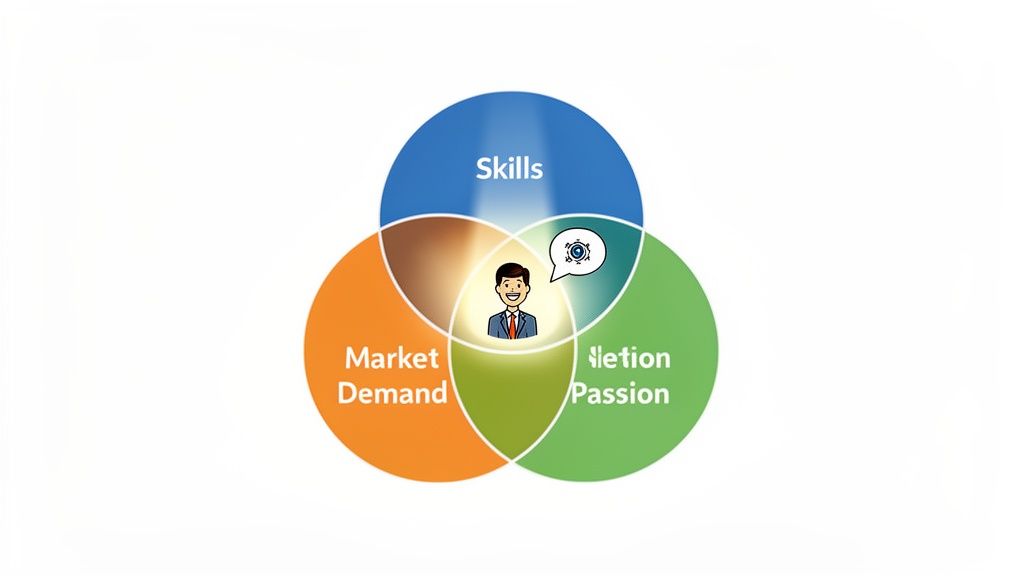
Finding your sweet spot isn't magic. It's the logical intersection of what you're exceptional at (your skills), what people will eagerly pay for (market demand), and what you actually enjoy doing (passion). You need all three. Without passion, you'll burn out. Without market demand, it's just a hobby.
Think about it this way: one consultant I know went from being a generic "marketing consultant" to positioning themselves as an "AI integration strategist for e-commerce brands." That one change did everything. It instantly filtered out the wrong clients, attracted the right ones, and let them double their rates without anyone blinking. Why? Because they were no longer selling services; they were selling a solution to a huge, expensive problem.
From Generalist to Specialist The Impact on Your Consulting Business
See how sharpening your focus from a generalist to a specialist transforms your client targeting, messaging, and perceived market value.
| Attribute | The Generalist Consultant | The Specialist Consultant |
|---|---|---|
| Ideal Client | "Anyone who needs help." | A specific industry, company size, or role (e.g., VPs of Marketing at Series B SaaS companies). |
| Messaging | Vague and service-focused: "I offer marketing services." | Outcome-driven: "I help SaaS companies cut customer acquisition costs by 30%." |
| Market Position | One of many, easily replaceable. | The go-to authority in a defined space. |
| Pricing Power | Competes on price, often forced to discount. | Commands premium rates based on specialized expertise. |
The difference is stark. Being a specialist isn't about limiting your options; it's about owning a market.
Defining Your Unique Value Proposition
Your Unique Value Proposition (or UVP) is your elevator pitch on steroids. It’s the dead-simple, compelling reason a client should hire you and not the ten other consultants in their inbox.
To nail yours down, you have to answer a few tough questions:
- Who is my ideal client? Get specific. Not just "startups," but "B2B SaaS startups struggling with user retention."
- What painful, urgent problem do I solve for them? Think in terms of money, time, or risk. For example, "slashing high customer churn rates."
- How do I solve it in a way no one else can? This could be a unique framework you've developed or deep experience with a particular technology.
Your UVP isn't a laundry list of your skills. It’s a bold promise. It tells a specific person that you can deliver a specific, high-value result that makes their life better.
Crafting a Message That Resonates
Once you have your niche and UVP, all of your messaging needs to speak directly to that ideal client. Ditch the corporate jargon and talk like a human. Use the same words they use to describe their frustrations and their goals.
When your message reflects their reality, they feel understood. That’s how you build trust before you've even had a conversation.
This is the exact spot where most consultants stumble. A recent study showed that while 70% of professionals know personal branding is crucial, a shocking 78% don't have a clear strategy for it. That gap is your opportunity.
Having a sharp message isn't just a "nice-to-have"—it directly grows your income. As you can see from these eye-opening consulting statistics, a clear brand message is proven to boost revenue. By defining your niche and articulating your value, you build the kind of trust that turns curious prospects into premium-paying clients.
Bring Your Brand to Life with Design and Content
You’ve nailed down your niche and crafted a message that hits home. That's the hard part—the strategy. Now, we get to the fun part: giving that strategy a face and a voice. This is where we turn your abstract value into tangible assets that clients can see, feel, and ultimately, trust.
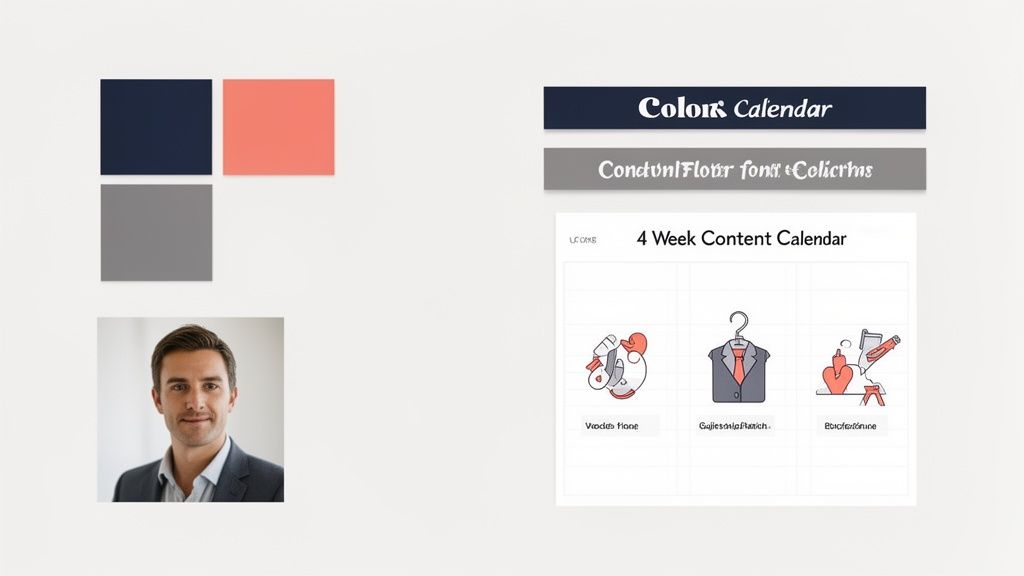
A powerful personal brand really comes down to two things: a consistent visual identity and a smart content plan. When you get these right, they work together to build a professional, memorable presence that naturally draws in the clients you actually want to work with.
Build Your Visual Foundation
Think of your visual identity as the professional suit your brand wears. It's not just about looking sharp; it’s about creating instant recognition and telegraphing credibility before you even say a word. Consistency is everything here.
Let's break down the essential pieces you need to lock in:
- A Professional Headshot: This is your digital handshake. Seriously, invest in a high-quality photo where you look both approachable and authoritative. Use this everywhere—LinkedIn, your website, your proposals.
- A Simple Color Palette: You don't need a rainbow. Pick two or three primary colors that capture your brand's vibe. A financial consultant might go with a classic navy blue to signal stability, while a creative strategist could use something more energetic.
- Consistent Typography: Choose one clean font for headlines and another for body text. The goal is readability, not fancy frills. This simple decision makes everything you produce, from a slide deck to an invoice, feel polished and unified.
These elements aren't just decorative; they become your visual signature. The moment a potential client sees your colors or headshot, they should immediately think of your expertise.
Your visual brand is more than just aesthetics. It’s a silent promise of professionalism and consistency that builds subconscious trust with every impression.
Develop a Content Strategy That Actually Works
Content is the engine that drives your personal brand forward. It’s how you prove what you know, build genuine authority, and stay on your audience's radar. The goal isn't to be everywhere all the time—that's a recipe for burnout. It's about consistently creating high-value content where it will have the most impact.
The numbers don't lie. When it comes to hiring a consultant, trust and thought leadership are paramount—in fact, 99% of buyers say it's critical to their decision. And get this: messages from individual consultants get reshared 24 times more than posts from a company brand. Yet, fewer than 30% of consultants even have a formal marketing plan. This gap is a massive opportunity. A focused content approach will put you miles ahead of the competition. You can dive deeper into the research on these personal branding trends to see the full picture.
First things first, pick one or two platforms where your ideal clients actually hang out. For most consultants, that means going all-in on LinkedIn or maintaining a high-quality blog. Don't try to master everything at once.
Next, define three to five content pillars. These are the core topics you’ll talk about over and over again, all circling back to your niche and your client’s biggest headaches. For an AI integration strategist, for example, those pillars might be:
- AI Implementation Case Studies
- Emerging AI Tool Breakdowns
- The Future of E-commerce and AI
- Common Client Pitfalls (And How to Avoid Them)
A framework like this eliminates the daily "what should I post?" panic. Every piece of content you create should fit neatly into one of these pillars, reinforcing your expertise and building a library of resources that proves you're the real deal. Remember, it’s about quality over quantity, building your reputation one insightful post at a time.
Build an Arsenal of Trust with Social Proof
Let's be honest. You can talk about your expertise all day long, but what really closes deals? Proof.
Potential clients are skeptical by nature. They’ve heard it all before. They need to see cold, hard evidence that you can actually deliver on your promises. This is where you stop telling and start showing. It’s time to build an arsenal of assets that systematically erases doubt and builds rock-solid trust.
When you have a strong collection of testimonials, case studies, and other credibility markers, the decision to hire you becomes a no-brainer.
From Vague Praise to Powerful Stories
"They were great to work with." That's nice, but it's not going to win you a $20,000 contract. Forgettable praise is a wasted opportunity. You need specific, outcome-focused stories that hit prospects right where it matters—their bottom line.
When you wrap up a project, don't just ask for a generic review. Guide your client toward telling a powerful story. I've found a simple, direct email with a few targeted questions works wonders.
Try a script like this:
- "What was the single biggest headache you were dealing with before we started working together?"
- "Can you share the most significant result you saw from our project? A specific metric like revenue increase or time saved would be amazing."
- "If another founder was on the fence about hiring me, what would you tell them?"
These questions get your clients thinking about the 'before and after' transformation, giving you the raw material for a truly compelling narrative.
Your best marketing isn't what you say about yourself; it's what your happiest clients say about the tangible results you delivered for them.
Ready to take it up a notch? Turn your biggest wins into a quick, punchy case study. Forget ten-page white papers nobody has time to read. The most effective framework I've used is Problem-Agitation-Solution (PAS).
- Problem: Get straight to the point. What was the client's initial pain? (e.g., "A growing SaaS company was bleeding customers with a 40% user churn rate.")
- Agitation: Twist the knife a little. What was the real-world impact of that problem? (e.g., "This churn wasn't just a vanity metric; it was costing them over $50k in monthly recurring revenue.")
- Solution: Be the hero. What did you do, and what was the incredible result? (e.g., "We designed and implemented a new onboarding flow that cut churn in half in just 90 days.")
It’s direct, powerful, and easy for a busy executive to scan and understand in seconds.
Handling NDAs and Showcasing Your Credentials
"But what about my projects under strict NDAs?" I hear this all the time. Don't worry, you can still create powerful social proof without breaking any agreements.
The key is to anonymize the client and focus on the process and the outcomes. For instance, you can describe the client as "a Series B fintech company in the payments space" or "a leading e-commerce brand in the CPG sector." Then, you highlight the percentage-based improvements you achieved—"reduced customer acquisition costs by 30%" or "increased conversion rates by 15%."
Beyond client work, don’t forget to sprinkle in other trust signals. These are just as important.
Think about things like:
- Industry Certifications: Got a PMP, a Google Analytics certification, or something similar? Show it off.
- Awards or Recognitions: Even a small industry award can add significant weight and set you apart.
- Media Mentions: If you've been quoted in an article, featured on a podcast, or spoke at an event, link to it. It’s instant credibility.
Every single piece of social proof is another brick in the wall of your reputation. By systematically collecting and showcasing these assets, you build an undeniable case for your value before you even get on a discovery call.
Create Your Digital Hub with a Link-in-Bio Page
So, you’ve done the heavy lifting. You've pinpointed your niche, designed a killer brand, and started collecting that all-important social proof. Now, where does it all live? It needs a home—a single, professional link that pulls everything together and makes a powerful first impression.
This is where a link-in-bio page becomes your secret weapon. Think of it as your digital business card, portfolio, and welcome mat all rolled into one.
Your full website can be a lot for someone to navigate, and social media profiles are way too restrictive. A link-in-bio page hits that sweet spot. It’s a visually engaging hub that you can update in minutes, instantly communicating who you are and what you do. This is the one link you’ll put everywhere: your email signature, your social bios, and even on your physical business cards.
Designing Your Professional Showcase
Your link-in-bio page is a strategic dashboard, not just a list of links. You have a few precious seconds to grab a potential client's attention, so you need to guide their eyes to what matters most. Forget those boring, single-file link trees; a tool designed for a consultant needs to do more.
This is your chance to bring your brand to life. With a platform like Taap.bio, you can break free from the standard vertical layout. Its flexible grid system lets you arrange content blocks—your headshot, a punchy bio, service links—to create a clear visual hierarchy. You’re in control of the story.
Here’s a quick look at how you can visualize the flow of social proof, turning testimonials and case studies into undeniable credibility.
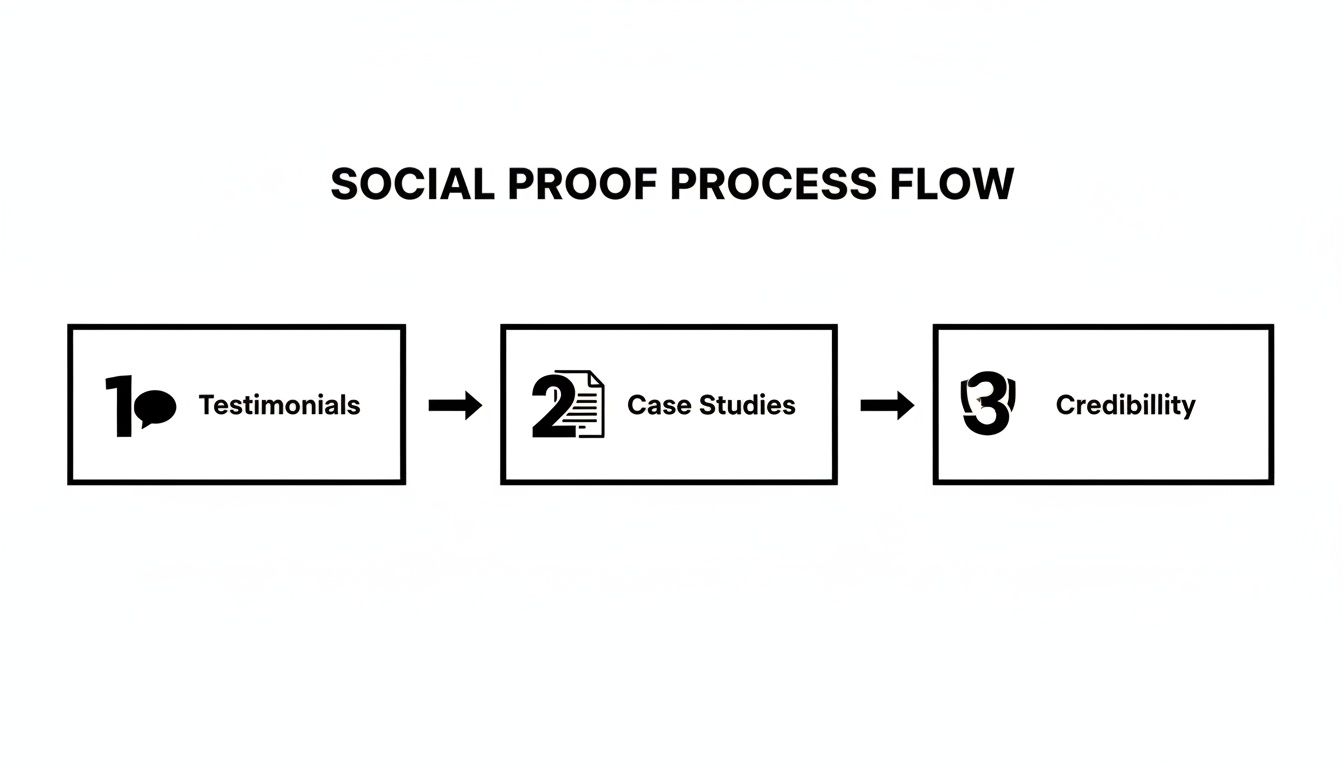
This simple flow shows how each piece of proof builds on the last, creating a rock-solid impression of authority for anyone considering hiring you.
Go Beyond Links with Smart Widgets
The real magic happens when you move beyond static links. A modern link-in-bio page embeds live content, turning a simple page into an interactive experience. This is absolutely critical for showing off the social proof you've worked so hard to get. Don't just link to your proof—bring it right to them.
Imagine a potential client landing on your page and seeing:
- Video Testimonials: A YouTube widget is right there, playing your best client testimonial. They can watch it without ever clicking away.
- Live Portfolio: A grid of your latest projects pulled directly from Behance or Dribbble. It’s always up-to-date, showing you’re actively working.
- Thought Leadership: Your latest podcast episode, ready to play from a Spotify widget. You’re not just telling them you’re an expert; you’re proving it on the spot.
Your link-in-bio page shouldn't just be a list of destinations. It should be a destination in itself—a place where clients can experience your brand, consume your content, and see your credibility firsthand.
Building Your Page for Maximum Impact
How you structure the page is everything. Start with the absolute essentials that a client needs to see in the first 3 seconds. Your professional headshot and a concise bio stating your Unique Value Proposition should be front and center. No scrolling required.
From there, organize your content into logical sections. You could have a section for "My Services," another for "Case Studies," and one for "My Latest Insights." Use text blocks as clear headings to guide visitors through your world.
Every single element on your page should work together to tell a cohesive story about who you are, what you do, and why you’re the only logical choice for your ideal client. This is the final, crucial step in turning your brand strategy into a tangible asset that actually wins business.
Frequently Asked Questions About Personal Branding
Even with the best playbook, you're going to have questions once you start putting this into practice. It's totally normal. Here are the most common ones I get from consultants just starting to build their brand, along with my straight-shooting answers.
How Much Time Should I Really Be Spending On This Each Week?
Look, consistency is going to beat intensity every single time. This isn't about a frantic, all-out sprint that leaves you burned out in a month. It's about building a sustainable habit.
You don’t need to block out half your workweek. Just start with a manageable 2-3 hours per week. Seriously, that's it. It’s a realistic amount of time that lets you make real progress without feeling like you're sacrificing client work.
Here’s how to make that time count:
- Focus on creating one solid piece of content. Think a detailed LinkedIn article, a quick video tip, or a short-and-sweet case study.
- Spend time genuinely engaging with your network. Drop thoughtful comments, reply to DMs, and start conversations. Don't just "like" and run.
- Keep your assets fresh. Pop into your portfolio or Taap.bio page to add that new testimonial or project you just wrapped up.
Think of brand-building as a core business function, not a side project. It should be as ingrained in your routine as checking email or sending invoices.
What If I Don't Have Any Big-Name Clients or Jaw-Dropping Results Yet?
Ah, the classic chicken-or-egg scenario. I hear this all the time, and it’s much less of a roadblock than you think. Your brand is built on your expertise first—client results are just one form of proof.
If your portfolio feels a little light, pivot to showcasing your process and your perspective.
Write an insightful article on an industry trend you’re seeing. Break down your unique method for solving a common problem your ideal client faces. You could even create a "spec" project for a fictional client to demonstrate exactly how you work. Another great move? Offer a small, low-cost project to a nonprofit to get that first critical case study under your belt.
How Do I Know If Any of This Is Actually Working? How Do I Measure ROI?
Measuring the ROI of your personal brand isn't just about hard numbers; you have to look at the softer, qualitative shifts, too.
On the quantitative side, you can absolutely track the metrics:
- How much traffic is hitting your Taap.bio page?
- Is your social media engagement (comments, shares, DMs) going up?
- Are you getting inbound leads that mention your content?
But here’s the real magic: pay attention to the quality of those leads.
Are you suddenly talking to your dream clients? Are your sales calls less about "proving yourself" and more about "how can we work together"? When prospects show up already convinced of your authority because they’ve been following your work, that’s your most valuable ROI. It’s a game-changer.
Ready to pull all these pieces together into a professional hub that works for you? Taap.bio helps you build a stunning, interactive link-in-bio page with smart widgets for your portfolio, testimonials, and content. You can start building your digital business card for free right now.