You post a wide outdoor shot you're proud of, watch the likes come in, and still get no email signups, print inquiries, or preset sales. The problem usually is not the photo. It is the caption strategy.
A strong caption gives the image a business role. It can drive saves, comments, profile taps, list growth, bookings, or product sales, depending on what you ask the post to do. Scenic creators who treat captions as an afterthought leave attention on the table. Creators who assign each post a clear goal turn the same attention into revenue.
That matters because strong visuals are common. Clear positioning is not.
If you want your Instagram captions for panoramic posts to support your work as a creator, each one needs a defined job. Some captions are built to sell. Some build authority. Some start conversations that improve reach and trust. Some warm up a viewer before they ever hit your bio link. If clicks are part of your strategy, this guide on improving click-through rates from your profile and post flow is worth reviewing before you start testing offers.
Use this article as a working playbook, not a list of pretty one-liners. The goal is to match the caption type to the outcome you want, then connect that post to a Taap.bio page that makes the next step obvious. That is how a strong photo starts doing more than collecting engagement.
Table of contents
1. The Call-to-Action Caption
Most creators wait too long to ask for something. They post the scenery, add a poetic line, maybe a location, and hope people click the bio link on their own. That rarely happens by accident.
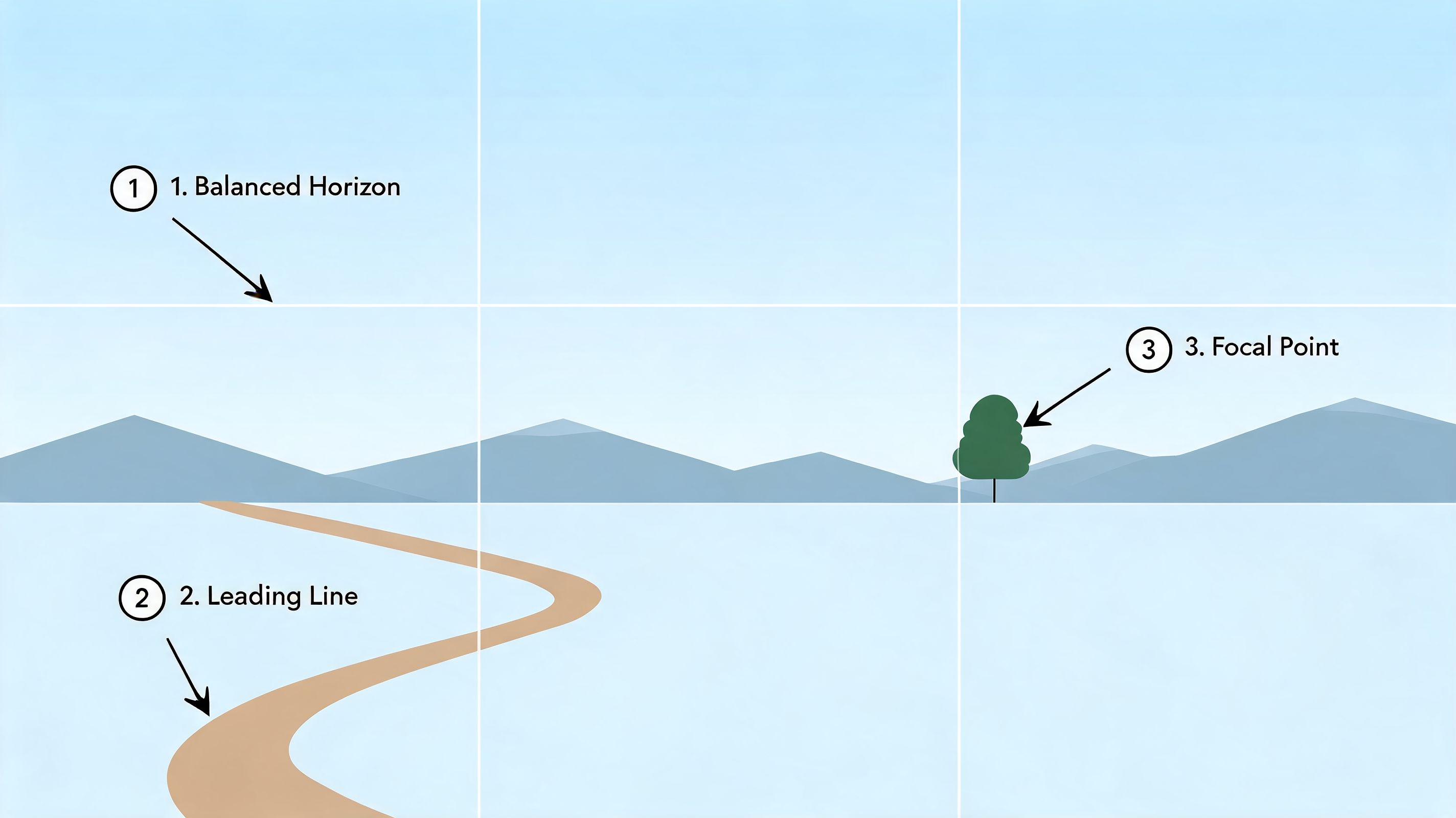
A CTA caption works when the photo and the next step match. If you posted a finished before-and-after edit, sell the presets. If you posted a remote overlook with a strong composition, invite people into the workshop, coaching call, or field guide.
What a strong CTA sounds like
Shot this at first light after changing my framing three times. If you want my exact scenic editing workflow, the preset pack is on my Taap.bio page.
“New print drop from this series is live. Tap the link in bio before the small batch goes.”
That works because it doesn't interrupt the image. It extends it.
Practical rule: Put the ask after the viewer has a reason to care. Lead with the image or insight. Close with the action.
If you're selling through Taap.bio, use the page like a storefront, not a dumping ground. Put the exact offer from the caption near the top. If the post mentions presets, the first visible block should be presets. If the post mentions coaching, the first block should be booking.
What usually fails
- Weak asks: “Link in bio” by itself is lazy. Tell people what they'll get.
- Mismatched offers: Don't sell prints under a caption about your shooting process unless the image is clearly print-worthy and the offer fits.
- Too many options: One post should push one primary action.
Hootsuite found that posts from small service businesses with optimized captions averaging 10 to 20 words saw higher engagement, and captions with emojis and calls-to-action boosted click-through rates, according to Beacons on landscaping captions for Instagram. The exact niche differs, but the lesson holds. Clear language gets action.
If your clicks are weak, tighten the transition from caption to offer and study these click-through rate improvements on Taap.bio.
2. The Storytelling Caption

A strong scenery photo gets attention. A strong story gives that attention somewhere to go.
This caption type matters when the goal is trust. If you sell workshops, prints, mentoring, guided shoots, or digital products, people need more than a nice frame. They need a reason to believe your judgment, your taste, and your process are worth paying for.
The best storytelling captions do one job well. They show what happened, what changed, and why that matters to the viewer.
Build the story around a shift
Use a simple three-part structure:
- Set the scene: what made the moment difficult, surprising, or personal
- Show the shift: what you noticed, changed, or understood in the field
- Connect it to value: what this says about how you shoot, teach, or see
That last part is where creators leave money on the table. A story should not end as a private journal entry if the post supports your business. It should point to a next step that fits the post.
For example:
I drove out for a clear sunrise and got fog so thick I could barely see the ridge. A year ago I would have packed up. Instead I stayed, slowed down, and started looking for layers instead of distance. This frame came from that switch. It is also how I teach composition now. Read the light you have, not the shot you planned.
That caption sells your judgment without sounding like a pitch.
If you want the post to lead to inquiries or bookings, match the story to the destination. A workshop story can send people to your waitlist. A story about how your editing choices changed the final image can send them to presets. A story about your approach can send them to a bio page built for photographers, like this guide to a photography Instagram bio, so the interest created by the caption turns into a clear next click.
What to keep and what to cut
- Keep specifics: fog on the ridge, numb hands, a missed turn, flat light, the sound of wind
- Keep one emotional thread: patience, frustration, restraint, curiosity
- Keep the lesson tied to your work: how you compose, wait, adapt, or decide
- Cut timeline clutter: nobody needs every stop on the drive
- Cut generic poetry: if the line could fit any mountain, it does nothing for your brand
Shorter usually performs better than a rambling diary entry, especially on Instagram where attention drops fast. Storytelling still needs editing. Keep the language tight, keep the shift clear, and make sure the ending supports a business goal.
The best storytelling caption makes the photo feel earned, then gives that earned attention a direction.
If your brand leans personal, it helps to study how emotional captions fit broader identity-building. This guide to Instagram captions for life on Taap.bio is useful for that balance.
3. The Educational Tips Caption
A strong scenery photo gets attention. An educational caption turns that attention into trust, saves, and future sales.
This format works especially well for photographers selling presets, workshops, editing sessions, prints, or location guides. A useful tip shows people you can do the work and explain the work. That combination sells better than talent alone.
Teach one decision, not the whole shoot
The best educational captions focus on a single choice behind the image.
For example:
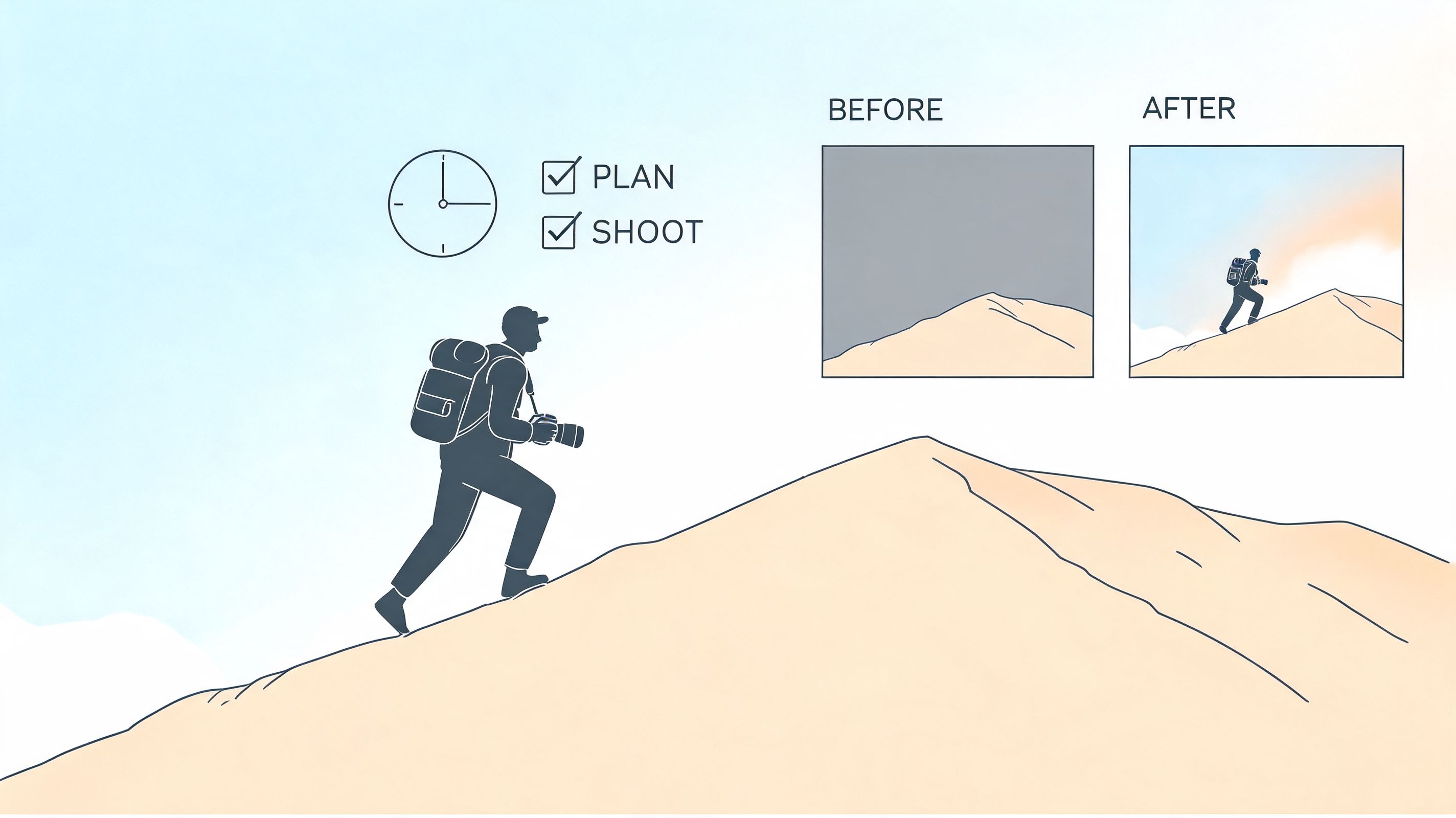
Why this frame works: I placed the horizon low because the cloud texture was doing more of the emotional work than the foreground. If the sky carries the mood, give it room. If the ground carries the story, compose lower and simplify the sky.
Or:
This scene looked flat at eye level. I dropped the camera height and used the foreground grass to create depth. Before changing lenses, change your height. It often fixes the composition faster.
These captions get saved because they give the viewer something practical to try on their next shoot.
They also position your account differently. A feed full of pretty images can attract admiration. A feed full of usable lessons builds authority.
What makes an educational caption work
- Name the decision: horizon placement, focal length, shutter speed, patience, cropping, editing restraint
- Connect it to the photo: explain what you changed and why it improved the frame
- Give the reader a next step: tell them what to test on their next outing
- Tie it to an offer: send interested people to the product or page that fits the lesson
That last point matters if you want your captions to support the business side of your work. If the lesson is about composition, send people to your location guide or workshop waitlist. If the lesson is about color and contrast, point them to your presets. If the lesson is part of a broader teaching brand, route the click through a bio page that organizes your offers clearly.
Taap.bio is useful here because it lets one educational post support several goals at once. You can send beginners to a free guide, warm leads to a paid product, and serious buyers to a booking page without forcing every caption to do all the selling itself.
Educational captions can also strengthen interaction if the tip invites people to test, save, or compare. If you want more comments and saves from this format, this guide on how to increase social media engagement is worth reviewing.
Educational content also improves your profile positioning. When someone lands on your page and sees repeated proof that you can explain your craft, your bio works harder. This Taap.bio guide on writing a strong photography Instagram bio pairs well with that strategy.
4. The Question Engagement Caption

You post a strong scenery image, likes come in, and the comments stall. That usually means the caption gave people nothing useful to do.
A question caption fixes that if the question serves a business goal, not just an engagement goal. Good questions pull out opinions, habits, objections, and buying signals. For those who capture scenic vistas, that makes this format useful for audience research, community building, and offer validation in one post.
Weak prompts kill the thread. “Do you like this view?” asks for approval, not input. A better question makes the reader reveal how they see, shoot, struggle, or decide.
Ask questions that expose intent
Use questions that make people choose between two real preferences, explain a habit, or admit a frustration.
Examples:
“Do you scout a location first, or start shooting the second you arrive?”
What matters more to you in a scenic photo: mood, detail, or story?
“What part is harder for you right now, getting the shot or turning the work into income?”
Those answers are useful because they map directly to content and offers. If people keep talking about field technique, build more teaching content. If they keep mentioning pricing, print sales, or client work, you have clear demand for a guide, consult, or workshop.
Ask questions your paid offer will eventually answer.
Use the replies like a strategist
- Spot product demand: repeated pain points can become a preset pack, location guide, critique session, or course module.
- Keep the thread active: reply while the post is still getting early distribution, and ask short follow-up questions that extend the conversation.
- Save their wording: the phrases people use in comments often become better hooks, email subject lines, and sales copy than anything you write in isolation.
This caption type also helps qualify traffic before you send people off Instagram. If a post surfaces strong interest around one problem, route that attention to the right next step through your bio page. Taap.bio works well here because one comment-driven post can send different groups to different destinations, such as a free resource for beginners, a print shop for buyers, or a booking page for serious inquiries. If you want a clearer system for turning comment activity into off-platform action, review this guide on how to increase social media engagement.
5. The Inspirational Motivational Caption
You post a strong scenic image, the light is right, the composition holds, and the comments still stay quiet. That is usually the moment creators reach for a recycled quote. It rarely helps. An inspirational caption works only when it names a real creative struggle and gives the audience a reason to trust your perspective.
This caption type is useful for creators who sell guidance. If your business includes workshops, mentoring, digital products, or brand-building around your taste, motivation can support authority. The goal is not to sound profound. The goal is to make the right follower feel understood, then point them toward a practical next step.
Start with a tension you have actually lived
The scenery can support the message, but it should not carry it by itself. Start with the hard part first.
For example:
“The longest phase in creative work is often the one nobody applauds. You are improving, but the proof is still private. Fewer people notice than you hoped. That does not mean the work is failing. It means you are still early.”
That works because it is specific. It speaks to a familiar gap between effort and visible results, which is where a lot of photographers quit too soon.
Good motivational captions usually come from one of a few places. Rejection after pitching. Frustration with inconsistent output. The patience required to revisit locations that do not cooperate. Self-trust after a stretch of flat feedback. A mountain scene, empty road, or storm front can reinforce that message, but the caption needs a human truth underneath it.
Write it like a creator, not a poster company
Use these filters before you publish:
- Name one real friction point: creative doubt, low response, slow growth, uneven discipline.
- Keep the language plain: if the line could sit on a mass-produced wall print, cut it.
- End with direction: tell people what to do with the feeling you created.
A strong close might be:
“If this phase feels familiar, keep your standards high and your timeline longer than your mood. I put my workflow and learning resources in my bio for photographers who want structure, not just encouragement.”
That last part matters. Inspirational captions can support business goals, but only if they connect belief to an offer. Use the post to build trust. Use Taap.bio to route that trust to the right asset, whether that is a free guide, a paid critique, a workshop waitlist, or your print shop.
Used well, this caption type builds more than engagement. It builds authority with creators who may eventually buy from you.
6. The Behind the Scenes Process Caption
The polished final frame is the least interesting part for a lot of serious followers. They want to know how you made it, what went wrong, what you changed, and what the image looked like before the edit clicked.
That's why process captions convert. They break the illusion that great outdoor imagery appears fully formed. They also make teaching offers feel credible because the audience sees how you think.
Take a look at a process-focused visual breakdown here:
Show the work, not just the result
A useful process caption might say:
“I came here for a wide shot and left with a tighter frame because the edges kept getting messy. The original plan failed. The final image worked because I stopped forcing the scene to match the idea in my head.”
Or:
This edit required less contrast than I intended to apply. The mood vanished whenever I increased the clarity. Effective nature photography editing is frequently about restraint rather than impact.
Those examples do two things well. They reveal decision-making, and they teach taste.
People buy process when they trust your judgment inside the messy middle.
You don't need to reveal every setting in public. But you should reveal enough friction that the audience understands your work has a repeatable method behind it.
Useful details to include
- The failed plan: wrong focal length, blocked foreground, flat sky, bad timing.
- The adjustment: changed angle, waited, simplified the frame, edited more softly.
- The lesson: patience, flexibility, composition, color discipline.
This caption style is also where low-gear honesty works. If you built strong work without expensive equipment, say so. If the image only worked after abandoning the original preset, say that too. Those details make your teaching and products feel practical rather than polished for show.
Use Taap.bio to hold the deeper layer. Put the final image on Instagram, then send people to a fuller breakdown, mini lesson, paid walkthrough, or coaching calendar on your page.
7. The Location Travel Guide Caption
A creator posts a strong mountain shot, the comments fill with “Where is this?” and then nothing useful happens. That is a missed business opportunity.
A location travel guide caption should answer curiosity in a way that supports your goals. It can build trust with travelers, qualify workshop leads, and attract buyers who value your judgment, not just your photos. The key is selective detail.
Give enough information to be useful. Keep enough discretion to protect fragile places and filter out low-intent attention.
If the spot is public and already heavily photographed, share practical specifics. If it is sensitive or already seeing too much traffic, stay broad and focus on timing, access, weather patterns, trail difficulty, parking reality, and local etiquette instead of exact directions. Good captions do not just tell people where to stand. They help them decide whether the trip fits their skill level and expectations.
A strong version sounds like this:
“Best results here come just after sunrise, when side light clears the ridge and the haze starts to separate the layers. The main overlook gets crowded fast, so I prefer a short walk farther down the trail for a cleaner foreground. Bring shoes with grip. The path looks easy in photos and feels different after rain.”
That kind of caption does real work. It proves experience. It filters your audience. It sets up a next step.
How to turn this caption into revenue
- Free lead magnet: share a short regional guide in exchange for an email.
- Paid product: sell a field guide with timing notes, map screenshots, gear recommendations, and editing advice.
- Workshop funnel: use the caption to show the result, then invite serious followers to learn with you in person.
Location tagging also helps discovery, especially for creators serving a region, running trips, or selling prints tied to a place. Pair the post with a clear next action. If someone wants your full route notes, your best seasons, or your packing list, send them somewhere built for conversion.
If you want cleaner discovery on-platform, this guide on creating a location on Instagram with Taap.bio is worth using. Then house your actual assets on your Taap.bio page: guide download, workshop waitlist, print shop, or consultation link. If your setup also includes mobile editing, travel tech, or resale partnerships, related recommendations can fit naturally too, like UsedMobiles4U iPhones.
8. The Aesthetic Mood Caption
A creator posts a strong mountain frame, then buries it under six lines of vague poetry. The image loses impact, the caption says nothing specific, and the post attracts passive likes instead of the right kind of attention.
Mood captions work best when the visual already carries authority. The job of the copy is to sharpen the feeling and reinforce your brand voice, not explain the scene to death.
Keep the line clean
Short wins here. Precise wins too.
Examples:
“Blue hour and borrowed silence.”
“Where the weather softened everything.”
“Last light on a day that asked for less.”
Each line adds tone without competing with the image. That restraint matters. A clean mood caption can make your feed feel more intentional, which helps followers recognize your work faster and remember it.
Use this format selectively:
- For standout visuals: strong light, sparse composition, heavy atmosphere.
- For brand recognition: repeated tone builds a distinct creative identity.
- For feed pacing: every post does not need a lesson, a question, or a sales push.
There is a trade-off. Mood captions strengthen perception, but they rarely drive direct action by themselves. They are better at building desirability than building clarity.
That is why I treat them as top-of-funnel brand assets. Let the post create the emotional pull. Let your Taap.bio page handle the business side with prints, presets, bookings, or a waitlist. The caption sets the mood. Your link hub captures the intent.
Used well, this format improves how your work is perceived. Used too often, it turns your account into a gallery with no conversion path. For instagram captions for outdoor scenery content, keep aesthetic posts in the mix, but support them with captions that also build trust, authority, and sales.
8-Style Comparison: Instagram Landscape Captions
| Caption Type | Implementation Complexity 🔄 | Resource & Effort ⚡ | Expected Outcomes 📊 | Effectiveness / Quality ⭐ | Ideal Use Cases & Tips 💡 |
|---|---|---|---|---|---|
| The Call-to-Action (CTA) Caption | Low–Medium, formulaic but needs testing and alignment | Low, brief copy, link setup, Taap.bio integration | High direct clicks/conversions; easy to track | ⭐⭐⭐⭐, best for immediate sales | Course launches, product drops; use urgency, match CTA to image, A/B test wording |
| The Storytelling Caption | Medium–High, requires narrative structure and vulnerability | Medium, time for drafting, editing, sequencing | Deeper emotional bonds, longer read time, stronger loyalty | ⭐⭐⭐⭐, builds lasting relationships | Personal brands/coaches; include specific details, arc, and subtly tie to offers |
| The Educational / Tips Caption | Medium, needs accurate, actionable content and structure | Medium, research and concise formatting (lists/steps) | Increased saves/shares, authority growth, qualified leads over time | ⭐⭐⭐⭐, strong for authority-building | Course promotion, lead magnets; lead with top tip, use numbers, cite experience |
| The Question / Engagement Caption | Low, craft open-ended prompts but requires strategy | Low–Medium, time to moderate and reply | Boosted comments, community insights, better algorithm reach | ⭐⭐⭐, very effective for engagement | Community building, product research; ask pain-point questions, respond quickly |
| The Inspirational / Motivational Caption | Low, short but must feel authentic to land | Low, minimal copy time but needs genuine voice | High shareability and emotional resonance; increased loyalty | ⭐⭐⭐⭐, great for positioning as mentor | Coaches/mentors; ground in real struggle, avoid clichés, follow with concrete next step |
| The Behind-the-Scenes / Process Caption | Medium, document steps and honest details | Medium, capture B-roll, drafts, failed attempts | Builds trust, relatability, converts via credibility | ⭐⭐⭐⭐, excellent for trust-based sales | Course creators/experts; show failures + fixes, use before/after, publish process content |
| The Location / Travel Guide Caption | Medium, requires accurate, up-to-date info | Medium, research, possible maps/GPS, verify logistics | High saves and return traffic; monetizable as guides | ⭐⭐⭐⭐, strong niche authority driver | Travel photographers; include practical details, update regularly, offer downloadable guides |
| The Aesthetic / Mood Caption | Low, short poetic lines but demands a strong voice | Low, minimal text but needs perfect visual match | Strengthens brand identity and shareability; low direct ROI | ⭐⭐⭐, excellent for visual branding | Luxury/art-focused accounts; use vivid sensory language, keep it brief, pair with best images |
Turn Your Views into Value
Nature creators usually spend most of their energy on the image and treat the caption like cleanup work. That's backwards if you're trying to build a business. The image earns attention. The caption tells attention what to do next.
That's why the eight caption types above matter so much. A CTA caption moves someone toward a sale. A storytelling caption builds connection and memory. An educational caption establishes authority. A question caption creates conversation and gives you real audience insight. An inspirational caption builds trust if it's rooted in lived creative struggle. A behind-the-scenes caption proves your work has a method. A location caption turns knowledge into a product. An aesthetic caption sharpens brand voice and gives your feed breathing room.
The distinct advantage comes from matching the caption to the post's job. Don't write every caption like it's supposed to do everything. If the post is there to sell prints, write for that. If it's there to qualify coaching leads, write for that. If it's there to deepen community, ask a better question. The feed gets clearer when each post has one main purpose.
That clarity also fixes a common monetization problem. Many creators finally write a strong caption, get the click, then send people to a weak bio link page full of random links. That breaks momentum. If your caption is strategic, the destination has to be strategic too.
Taap.bio solves that in a way most simple link pages don't. You can build a visual storefront that reflects the quality of your work, not just stack buttons in a vertical list. Put your presets in one block, your booking calendar in another, your latest Instagram work in a live widget, your YouTube breakdowns next to your digital products, and your email capture where it fits naturally. For scenic photographers, that matters because your business is visual. The page people land on should feel like an extension of your brand, not an afterthought.
That's the shift to make. Stop thinking of instagram captions for scenic posts as decoration. Treat them like positioning, conversion, and trust-building tools. The words under the photo are often what turn a beautiful image into a working asset.
Build your Taap.bio page so every caption has somewhere intentional to send people. Sell presets, prints, guides, and courses, book coaching calls, collect emails, and showcase your work in a visual layout that feels like your brand. One strong scenic post can start the conversation. A strong Taap.bio page helps you turn that attention into real business.