If you want to boost your social media engagement, you have to do more than just post content. It’s about sparking real conversations, building relationships, and giving people a reason to comment, share, and save. The goal is to stop broadcasting at your followers and start building a community with them.
When you do that, you turn passive scrollers into genuine fans who feel seen, heard, and valued.
Table of contents
Why Genuine Engagement Is Your Most Valuable Metric
Let's be honest: chasing empty likes and fleeting viral moments is a waste of time. True success on social media is built on genuine connection, not vanity metrics. A huge follower count might look good on paper, but it means absolutely nothing if those followers aren't paying attention.
Real engagement is the heartbeat of a healthy online presence.
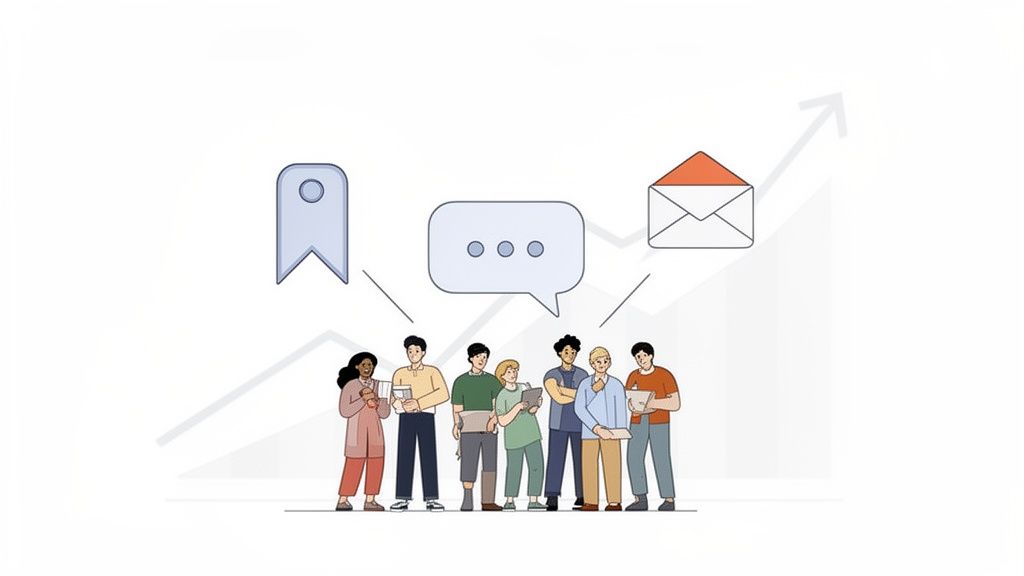
Meaningful interactions—thoughtful comments, saved posts, and direct messages—send powerful signals to both the algorithms and your audience. They prove your content is valuable enough to be acted upon, not just glanced at. That’s the critical difference between simply having an audience and truly building a community.
Moving Beyond Vanity Metrics
The first thing you have to do is redefine what success actually looks like. Forget the surface-level numbers that do nothing for your actual business goals. Instead, you need to zero in on the metrics that reflect genuine interest and loyalty.
These are the Key Performance Indicators (KPIs) that really matter. To get a clear picture of what you should be tracking, here’s a breakdown of the engagement metrics that signal real connection.
Defining Your Social Media Engagement KPIs
| Metric Category | Specific KPI | What It Measures | Why It Matters |
|---|---|---|---|
| Conversation Starters | Comments & Replies | The number of people who were prompted to share a thought, ask a question, or join a discussion. | This is direct, two-way communication. It shows your content is thought-provoking and opens the door for relationship-building. |
| Brand Advocacy | Shares & Reposts | How often your content is shared to someone else's feed, story, or network. | A share is a personal endorsement. It's powerful, organic marketing that puts your brand in front of new, trusting eyes. |
| Content Value | Saves | The number of times users have bookmarked your post to come back to it later. | A save is a huge compliment. It signals your content is so useful or inspiring that it's worth revisiting, indicating high-value. |
| Direct Connection | Direct Messages (DMs) | The volume of private messages initiated by followers in response to your content. | DMs are the VIP line. They represent your most interested followers and create opportunities for personalized nurturing and sales. |
Focusing on these KPIs helps you see the true health of your social media presence. It shifts your strategy from chasing empty numbers to fostering real, valuable connections that last.
The goal isn't just to be seen; it's to be remembered and valued. Every meaningful interaction is a deposit into your brand's trust fund, building loyalty that pays dividends long after a post leaves the feed.
Understanding Your Audience Is Non-Negotiable
You can't create engaging content if you don't know who you're talking to. Guesswork is the absolute enemy of connection. A deep, almost obsessive, understanding of your audience’s needs, pain points, and online habits is the bedrock of any successful engagement strategy.
The digital world is noisy. In 2025, there are an estimated 5.42 billion social media users globally, and the average person juggles 6.83 different platforms every month. This makes it incredibly hard to cut through the clutter, especially when 93% of marketers are actively using social media. If you're interested in the nitty-gritty, you can explore the latest social media statistics and discover what they mean for your brand.
To get the ball rolling, start by asking yourself a few critical questions:
- What specific problems does my audience have that I can help solve?
- What kind of content are they already liking, commenting on, and sharing?
- Where do they actually spend their time online? (Which platforms?)
- What time of day are they most likely to be scrolling?
Answering these questions honestly gives you a solid foundation for your content, ensuring every single post you create has a clear purpose. This strategic approach is a fundamental part of learning how to build an online presence that genuinely resonates and, more importantly, drives real results.
Create Content That Stops the Scroll
Let's be real: in a social media feed that never ends, "good enough" content is basically invisible. If you want to actually boost your engagement, your posts can't just be seen—they have to be felt. This is where we move past the generic advice and get into crafting content that truly commands attention from the very first second.
You have less than two seconds to make an impression. That's it. A powerful hook is your only shot at convincing someone to stop their thumb from flying up the screen. This isn't just about pretty pictures or slick video editing; it’s about instantly signaling value, sparking a little curiosity, or hitting an emotional nerve.
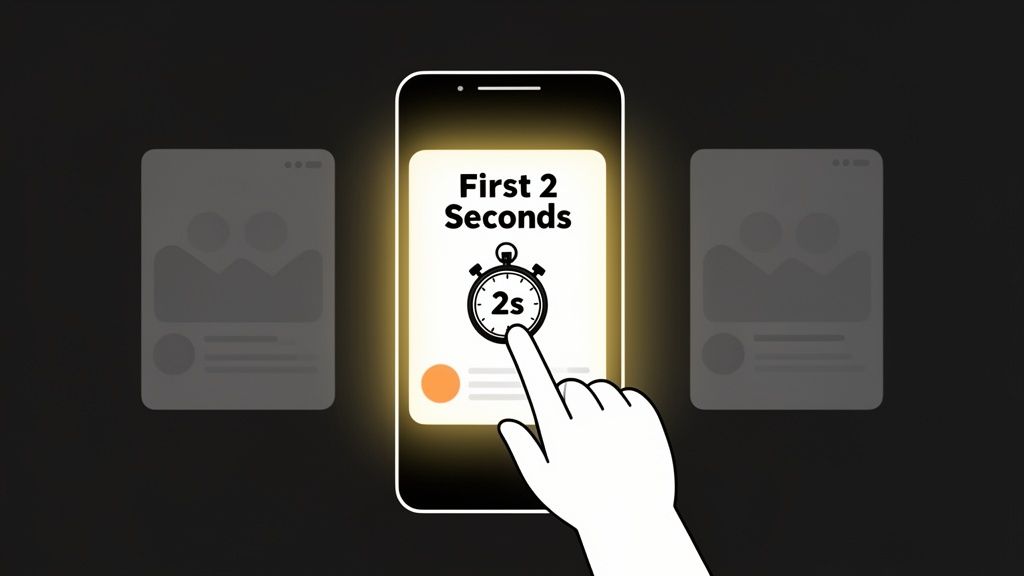
Whether it’s a Reel, a Carousel, or a simple text update, that initial impression is everything. It's the gatekeeper that decides if you've earned the next five seconds of their time.
Master the Art of the Hook
A killer hook doesn’t require a big budget. It requires a solid grasp of what makes people tick. We’re all wired to stop for content that promises a solution, mirrors a problem we’re having, or just shows us something completely unexpected.
Here are a few battle-tested hook frameworks I’ve seen work time and time again:
- The "You're Doing It Wrong" Hook: This one works because it challenges a common belief. Think: "Stop counting calories. This is the metric that actually matters for fat loss."
- The Transformation Hook: Nothing grabs attention like a dramatic "before and after." Start with the jaw-dropping final result. This is pure gold for DIY, fitness, or any kind of creative work.
- The Relatable Problem Hook: Kick things off with a statement that makes your audience think, "Ugh, that's so me." For instance, "That feeling when you have 17 tabs open and can't remember what you were looking for."
- The Curiosity Gap Hook: Tease a juicy piece of information without giving it all away. "This one simple setting in your phone can double your battery life."
Play around with these. See what gets a reaction from your specific audience. This is how you start turning passive scrollers into active fans.
Write Captions That Start Conversations
Once the hook has done its job, your caption is where you reel them in and build a real connection. The main goal here isn't just to inform—it's to invite a response. Forget writing a novel. Think of your caption as the opening line in a chat with a friend.
The best way to do this? End with a clear, compelling call-to-action (CTA) that feels natural, not desperate. Ditch the generic "comment below" and try something that actually piques their interest.
A powerful CTA doesn't just ask for engagement; it makes participating feel easy and rewarding. The goal is to lower the barrier to interaction so much that responding feels like a natural next step.
Here’s how you can level up your CTAs from boring to brilliant:
| Instead of This | Try This More Engaging CTA | Why It Works |
|---|---|---|
| "What do you think?" | "Which of these 3 tips are you going to try first? 1, 2, or 3?" | It gives them an easy choice. Replying with a single number is effortless. |
| "Let me know below." | "Drop a 🔥 if this resonated with you today." | This is a super low-effort way for people to show agreement and give your post a nice little boost. |
| "Click the link in bio." | "I broke down the full process in my new guide. Grab it from the link in my bio to save hours this week." | It directly connects the action to a specific benefit, making that click feel genuinely worthwhile. |
For anyone serious about creating content that connects, understanding the fundamentals of how to become a content creator is a game-changer.
Establish a Consistent Posting Rhythm
Finally, all this effort is wasted if you're not showing up consistently. A predictable posting rhythm does more than just please the algorithm; it trains your audience to look for your content.
Think of it like their favorite weekly TV show—they know when to tune in. Dive into your analytics and find out when your audience is actually online and active. You don't need to post five times a day. It's much better to pick a sustainable schedule you can stick to without sacrificing quality.
Quality and consistency are the one-two punch that turns your feed into a reliable source of value. If you need a hand streamlining your workflow, check out our list of the best tools for content creators.
Turn Passive Followers Into a Thriving Community
Look, creating amazing content is half the battle, but the real work—and the real magic—begins the second you hit "publish." That’s your cue to shift from being a broadcaster to a community builder. Your comment section isn't just a place for feedback; it's a potential town square, buzzing with conversation.
Think about it: a passive follower becomes a die-hard fan the moment they realize there's a real person on the other side of the screen who's actually listening. That's the core of great community management.
Master the Art of the Reply
Every single comment and DM is an opportunity. Ignoring them is like hanging up the phone on someone who wants to connect with your brand. A quick, thoughtful response shows you’re present and that you genuinely value what your audience has to say.
But please, don't just stop at a generic "Thanks!" Go deeper.
- Ask a follow-up question. Someone comments, "Great tip!" Don't leave it there. Reply with, "So glad you think so! Which part are you going to try first?" This keeps the ball rolling.
- Match their energy. If someone leaves a long, detailed comment, give them that same effort back. Thank them for taking the time to share their thoughts and build on their point.
- Use their name. It sounds simple, but addressing someone by their handle makes the whole interaction feel personal and one-on-one.
This isn’t just about being polite; it’s a strategy. You're actively transforming your social media from a monologue into a dynamic dialogue.
Spark Participation with Interactive Content
The easiest way to get people talking? Ask them to. The interactive tools built right into platforms like Instagram, TikTok, and LinkedIn are your best friends here. They make it ridiculously easy for people to engage with a simple tap.
Start thinking beyond static images and videos.
- Polls & Quizzes: Use Instagram Stories to ask your audience to pick between two options or test their knowledge with a fun quiz. It’s a low-effort way for them to chime in.
- Q&A Sessions: Host a live Q&A or just drop a question sticker in your Stories. Inviting people to "ask me anything" builds incredible trust and positions you as an approachable expert.
- "This or That" Carousels: I love this one. Create a carousel post where each slide presents two choices and ask followers to comment with their picks. It instantly turns a simple post into a fun little game.
Engagement isn't just about getting people to talk to you; it's about getting them to talk to each other. When you create a space where your followers feel comfortable sharing their opinions, you're building a community that can sustain itself.
This approach doesn't just pump up your metrics; it gives you a direct line into what your audience is thinking, what they like, and what they're struggling with.
Harness the Power of User-Generated Content
User-generated content (UGC) is one of the most potent forms of engagement out there. When a follower creates content that features your brand, it's the ultimate social proof. We all know it's true: people trust recommendations from their peers infinitely more than they trust a polished ad.
So, how do you get the UGC ball rolling? You have to create the opportunity.
- Launch a Branded Hashtag Challenge. Come up with a unique, memorable hashtag and a simple challenge. A local coffee shop, for instance, could run a #MyMorningMug challenge, encouraging people to share their daily coffee ritual.
- Feature Your Followers. Make it a habit. Regularly spotlight the best UGC on your feed or in your Stories (always with proper credit, of course!). This kind of recognition is a massive incentive for others to join in.
- Run a Contest. Offer a compelling prize for the most creative UGC submission. A little friendly competition can spark a huge wave of amazing content and conversation centered on your brand.
When you turn your followers into co-creators, you foster a powerful sense of belonging. They aren't just customers anymore; they're an integral part of your brand’s story. And if you're ready to team up with established creators, digging into influencer marketing best practices will give you a solid roadmap for those collaborations.
Tailor Your Strategy for Each Social Platform
Ever see a brand post the exact same graphic and caption on Instagram, LinkedIn, and TikTok? It’s a dead giveaway that they’re just checking a box. This "one-size-fits-all" approach is the fastest way to get scrolled past and ignored.
What absolutely kills it on TikTok will die a slow, painful death on LinkedIn. A strategy built for the visual wonderland of Instagram just won't land on a text-heavy platform like X. To really drive engagement, you have to stop broadcasting and start participating like a native.
Each platform has its own unwritten rules, its own culture, and its own audience expectations. Getting this right is the difference between shouting into an empty room and starting conversations that actually build a community.
Speak the Native Language of Each Platform
Think of each social network as a different party. You wouldn't show up to a black-tie gala in swim trunks, right? The same idea applies here. Your content needs to be fluent in the vibe and culture of the platform it’s on.
This goes way beyond just changing the image size. It’s about adapting your tone, your visuals, your hashtags, and even how you ask people to engage. You have to know what kind of content people expect to see when they're scrolling that specific feed.
For example, a polished, professional case study is perfect for LinkedIn, where people are in a career-oriented mindset. But on TikTok? That same content would need to be re-imagined as a quick, snappy video with a trending sound to even have a prayer of being seen.
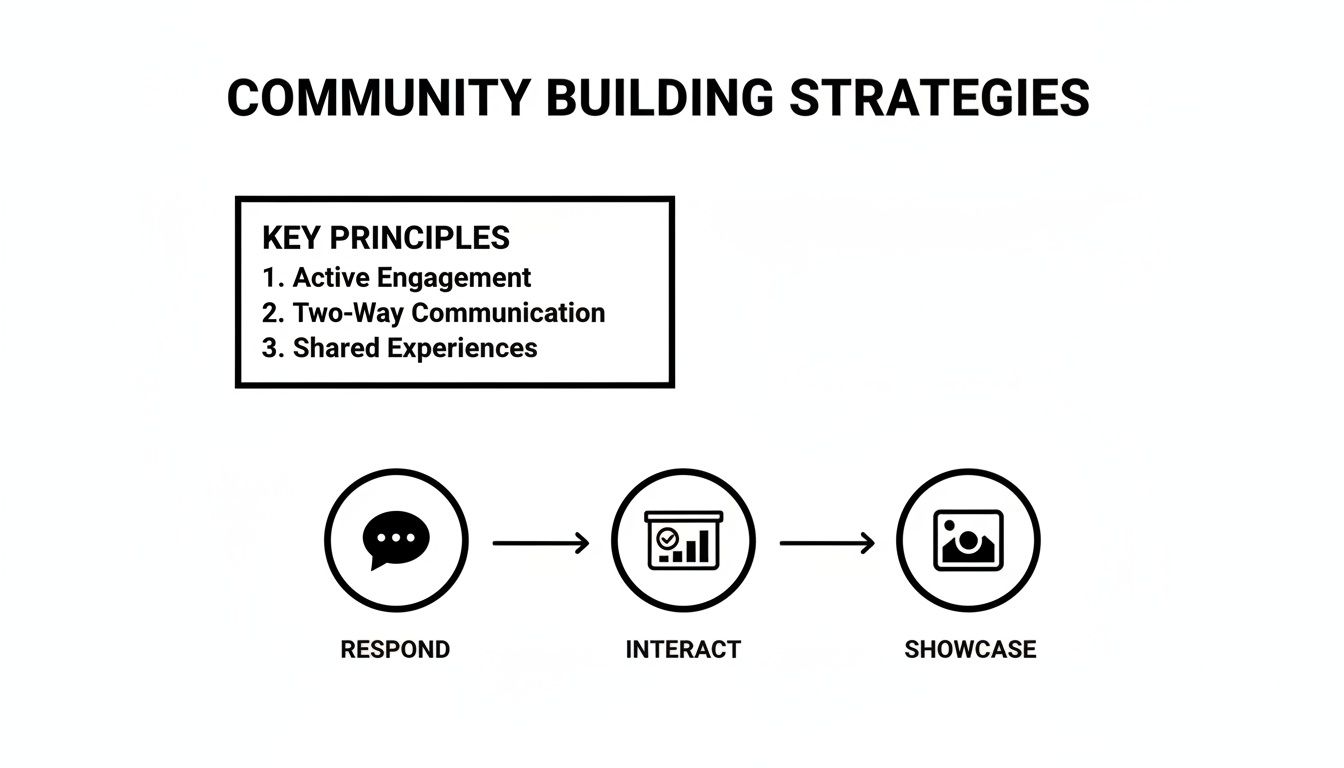
The real takeaway here is that authentic engagement is a feedback loop. You have to listen and respond, create chances for your audience to join in, and then celebrate their contributions.
Customizing Your Content for Top Platforms
Let's get practical. Here’s a quick rundown of how to tailor your approach for a few of the biggest players. This isn’t the entire playbook, but it’s a solid foundation for working with the algorithms instead of fighting against them.
Instagram: The Visual Storyteller: Instagram is all about aesthetics. High-quality visuals are your entry ticket. Reels are your best friend for reach, but multi-image Carousels are gold for educational content that people save and share. Don't sleep on interactive Story features—use polls, quizzes, and "Add Yours" stickers daily to keep your audience tapping. If you're serious about this, you'll want to boost your Instagram interaction rate with more specific tactics.
TikTok: The Trendsetter: This platform moves at the speed of culture. Success here means jumping on trending sounds, formats, and challenges, but with your own unique twist. Forget high-production value; users want raw, relatable, and entertaining content. You have about one to two seconds to grab their attention, so make it count.
LinkedIn: The Professional Network: The vibe is more formal, but that doesn't mean it has to be dry. Professionals on LinkedIn are hungry for industry insights, career advice, and genuine success stories. Text-based posts with personal stories, carousels breaking down complex ideas, and thoughtful video commentary all perform incredibly well. The goal isn't just to post, but to spark professional dialogue and build your authority.
The brands that win on social media don't just post on a platform; they become part of its fabric. They get the inside jokes, understand the unwritten rules, and create content that feels like it truly belongs there.
Platform-Specific Engagement Tactics
Comparing effective engagement strategies across the top social media platforms can help you customize your approach and see real results. This table breaks down how you might tackle the same campaign on different channels.
| Platform | Primary Audience | Best Content Formats | Key Engagement Tactic |
|---|---|---|---|
| Visually-driven consumers, creators, and lifestyle brands. | Reels, Carousels, Stories | Run a "Day in the Life" Reel showing how your product saves time. Use a Carousel to detail the top 3 features with clean graphics. | |
| TikTok | Gen Z and Millennials seeking entertainment and quick tips. | Short-form video, Duets | Create a video using a trending sound that shows a relatable "before and after" of a chaotic versus an organized workflow. |
| Professionals, B2B decision-makers, and industry experts. | Text posts, Carousels, Articles | Write a thought-leadership post on the future of your industry. Create a PDF-style Carousel sharing 5 data-backed productivity hacks. |
This tailored strategy ensures your message actually connects because it’s delivered in the format and style your audience wants to see.
When you're juggling multiple accounts, the right social media management tools can make this customization process much more efficient. Ultimately, tailoring your strategy is about respecting the platform and, more importantly, respecting your audience's time. When you show up with content that feels native and valuable, they’ll reward you with the engagement you’ve been looking for.
Build an Unforgettable Link in Bio Experience
Let’s be honest: your link in bio is more than just a URL—it’s the grand finale of your entire social media strategy. After you’ve poured your heart into creating scroll-stopping content and building a real community, this is where your most dedicated followers land. Sending them to a sterile, boring list of links is a massive missed opportunity.
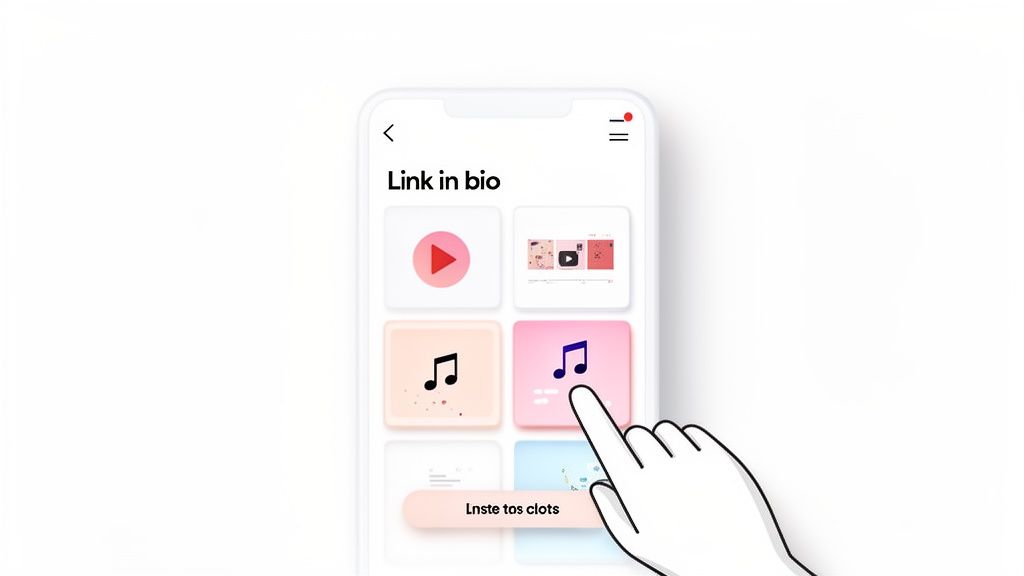
This final touchpoint deserves to be just as dynamic and engaging as the content that brought people there in the first place. It's time to stop thinking of it as a simple directory and start treating it like an immersive, interactive landing page—one that truly reflects your brand and turns passive clicks into meaningful action.
Ditch the Boring List for a Visual Grid
We've all seen them. The standard, top-to-bottom list of links is functional, sure, but it’s also completely forgettable. It forces your audience to read through a menu instead of letting them visually connect with what matters most to you.
A much better approach, using a tool like Taap.bio, lets you create a dynamic, bento-box-style grid. This feels less like a directory and more like a personal dashboard for your brand.
This kind of visual layout gives you total control over the hierarchy. You can make your most important link—maybe a new YouTube video or a product launch—the biggest, boldest block on the page. Secondary links can be smaller, creating a natural visual path that guides your visitor’s eye exactly where you want it to go. This design philosophy is a game-changer for user experience. If you want to see what this looks like in the wild, check out these stunning examples of a link in bio grid layout and see how top creators are nailing it.
Your link in bio shouldn't be a simple pass-through. It should be a destination in its own right—a place where your audience can explore, interact, and connect more deeply with your entire online world without feeling overwhelmed.
Make Your Content Interactive with Smart Widgets
If you really want to know how to increase social media engagement at this final stage, the secret is to reduce friction. Every single extra click you make someone perform is a chance for them to lose interest and bounce. So, instead of just linking to your content, why not bring the content directly to them?
This is where smart widgets come in. They pull live data from your other platforms and display it in an interactive format right on your link in bio page.
Here’s what that actually looks like:
- Musicians: Embed a Spotify widget. Let people play your new single or podcast episode right there without ever leaving the page. They can listen while they check out your other links.
- YouTubers: Showcase your latest videos with playable thumbnails. A visitor can watch your newest upload on the spot, boosting your watch time and making it easy for them to subscribe.
- Designers: Integrate a Dribbble or Behance widget to display a mini-portfolio of your recent work. It gives potential clients an instant taste of your skills.
- Influencers: Use an Instagram widget to display your most recent posts, keeping your link in bio fresh and visually tied to your feed.
This one shift transforms your page from a static list into a living, breathing hub. You're no longer just telling people about your content; you're letting them experience it instantly.
Curate a Multi-Device Experience
Your audience isn't just on their phones. They move between desktops, tablets, and mobile devices all day long. A link in bio that looks incredible on an iPhone but falls apart on a desktop just feels unprofessional and careless.
Modern tools give you the power to create and customize device-specific canvases. This means you can design one layout perfectly optimized for the vertical scroll of a mobile phone and a completely different one that takes full advantage of the wide-screen real estate on a desktop monitor.
For instance, your mobile view might be a clean, single-column grid that’s easy to navigate with a thumb. But on desktop, you could rearrange those same blocks into a multi-column, magazine-style layout that showcases way more content at once. This kind of thoughtful customization ensures your brand looks sharp and polished, no matter how someone finds you.
Optimize Your Calls to Action
Finally, every single element on your page needs to have a job to do. A beautiful design is great, but it has to drive action to be effective. It's time to move beyond simple link blocks and think more strategically about your calls-to-action (CTAs).
- Use Visual CTAs: Instead of just a text link that says "Shop My Store," why not use a large image block featuring your best-selling product? Make it visually irresistible.
- Add Context with Text: Use title blocks to organize your grid into clear sections like "Watch Now," "Work With Me," or "Join The Community." This helps visitors find what they're looking for in seconds.
- Embed Lead Magnets: Add a block for your newsletter sign-up form directly on the page. Don't make them click again to subscribe—capture their email right then and there.
When you turn your link in bio into an interactive, visually compelling, and strategically designed landing page, you create a powerful funnel. It becomes the final, crucial step in converting a follower into a subscriber, a customer, or a lifelong fan.
Got Questions About Social Media Engagement? We've Got Answers.
Even the most seasoned social media pros hit roadblocks. The digital world moves fast, and what worked yesterday might not work today. Let's break down some of the most common questions I hear from people trying to build a real, active community online.
Think of this as a quick, no-fluff guide to help you tweak your strategy and set some realistic goals.
How Long Does It Really Take to See More Engagement?
This is the million-dollar question, isn't it? The hard truth is that building genuine engagement doesn't happen overnight. But it doesn't take forever, either.
If you’re consistently putting out great content and actively talking to your audience, you should start seeing some positive signals within the first 1-3 months. I'm talking about more comments, more shares, and a general uptick in conversation.
But for that deep, loyal community—the kind that advocates for your brand—you're looking at a longer game. Meaningful, sustainable growth usually takes 6 months to a year. This all depends on your niche, how big your audience is to start, and frankly, how good your content is.
The real win is building genuine relationships, not just chasing a one-off viral hit. Stick with it. Patience and consistency are your secret weapons here.
Is It Okay to Post the Same Thing Everywhere?
While it’s tempting to just copy and paste to save time, it’s one of the biggest engagement killers out there. Every platform has its own vibe, its own audience, and its own rules of engagement. What crushes it on one platform will almost certainly bomb on another.
For example, that in-depth case study that gets tons of traction on LinkedIn would be a total snoozefest on TikTok. It needs to be a snappy, 15-second video there. For Instagram, maybe it becomes a slick carousel post or an infographic.
The smart move is to adapt your core message. Take the same idea, but tailor the execution.
- Tone & Caption: Tweak your language. Is it professional and polished for LinkedIn, or casual and funny for TikTok?
- Visuals: Reformat your images and videos for each platform’s preferred dimensions. Think vertical for Reels, horizontal for YouTube.
- The Ask (CTA): Change your call-to-action to fit what people do on that platform (e.g., "Link in bio!" vs. "Swipe up!").
When you respect the culture of each platform, users notice. And they reward you with more engagement.
How Can I Boost Engagement When I Have No Budget?
You absolutely do not need a massive budget to get people talking. The key is to lean into organic, community-focused tactics that cost you time, not money.
First, focus on creating content that is genuinely valuable and shareable. Does it solve a problem? Does it make someone laugh? Does it offer a perspective they haven't seen before? That's the stuff that travels.
Get in the trenches and talk to people. Respond to every comment and DM. Ask interesting questions in your captions to spark conversation. Hop into other relevant groups and discussions and add value—don't just spam your links.
User-generated content (UGC) is your best friend here. Encourage your followers to post about their experiences with your brand and be sure to feature them. Quick, interactive things like polls and Q&A sessions in your Stories are also free and incredibly effective. When you're on a budget, authenticity is your currency.
What's the Best Way to Handle Negative Comments?
Seeing a negative comment can sting, but how you handle it is a massive opportunity to build trust. The golden rule is to always respond publicly with a calm, helpful, and empathetic tone.
Acknowledge their frustration so they feel heard. Offer to make it right. If it's a sensitive or complex issue, you can say something like, "I'm so sorry to hear this. I'm sending you a DM right now so we can sort this out." This takes the conversation private while showing everyone else that you take feedback seriously.
Whatever you do, don't delete negative comments (unless they're spam or truly abusive). Deleting criticism makes you look like you're hiding something. A graceful public response, on the other hand, can turn a disgruntled customer into a loyal fan and show your entire audience what great service looks like.
Ready to turn your link in bio from a simple list into an interactive hub for your audience? With Taap.bio, you can build a stunning visual grid, embed smart widgets, and create a destination that actually pulls people in and drives action. Start building your unforgettable link in bio page today at taap.bio.