

Your Bio is Your Business Card: Stop Wasting It
Photographers often obsess over the grid and treat the bio like an afterthought. That’s backwards. In a large analysis of roughly 40 million Instagram posts, accounts with “photographer” in the bio used filters on only 14.6% of photos, compared with the platform average of 18.0%, which points to a clearer, more intentional brand position around authenticity and craft (analysis of successful Instagram users).
That small bio field shapes how people interpret everything that follows. It tells a bride whether you shoot weddings or editorials. It tells another photographer whether you sell presets or mentoring. It tells a brand manager whether you’re a hobbyist, a creative director, or someone ready for paid commercial work.
A strong photography instagram bio does three jobs fast. It names your niche, frames your value, and pushes the visitor toward one next step. If it doesn’t do all three, it’s wasting attention.
The fix isn’t a cute quote. It’s a sharper offer and a better destination. If you need cleaner formatting while testing options, use a tool to create Instagram line breaks so the bio scans properly on mobile.
These eight bio models are built for real photography businesses in 2026. Some are better for bookings. Some are better for digital products. Some are better when you want to grow first and monetize later. Pair the right bio with a Taap.bio page, and your Instagram profile stops being a placeholder and starts working like a storefront.
Table of contents
1. Portfolio + Direct Sales Bio
This is the most practical setup for photographers who want to keep the feed artistic but still make money directly from Instagram. Your bio leads with what you shoot, then points people to a product shelf. Not a vague website. A focused page where they can buy presets, Lightroom workflows, PDF shot guides, location maps, or client templates.
A simple version looks like this:
Portrait photographer | Natural light + clean edits
Presets, editing guides, print shop
Shop the full collection below
That works because it doesn’t force the visitor to guess what’s for sale. “Link in bio” alone is weak. “Presets and editing guides” is specific.
What this model does well
It serves two audiences at once. Clients see polished work in the feed. Other photographers see a pathway to buy from you. That’s useful if your account sits between service business and creator brand.
Your Taap.bio page should mirror that split. Put a portfolio block first, then a store block. If you need ideas for layout, study how to build a cleaner digital portfolio structure before adding products.
- Lead with proof: Put your strongest recent images in the feed before pushing products in the bio.
- Name the product clearly: “Presets,” “skin tone workflow,” and “wedding timeline templates” convert better than “resources.”
- Use visual previews: Before-and-after edits, contact sheet crops, and tutorial covers make digital products feel real.
What usually goes wrong
Most photographers try to sell too many unrelated things at once. Prints, presets, workshops, affiliate gear, editing services, and wedding inquiries all from one tiny bio. That creates friction.
A wedding photographer, for example, shouldn’t force a bride to scroll past four creator offers before seeing “Inquire for 2026 weddings.” If direct client work is still the main revenue stream, keep paid educational products lower on the Taap.bio page.
Practical rule: If a stranger can’t tell within a few seconds whether you want a booking or a product sale, the bio needs tightening.
2. Coaching + Photography Services Bio
Some photographers have hit the point where their knowledge sells as well as their images. If that’s you, your bio should stop sounding like a portfolio label and start sounding like an invitation.
A coaching-focused photography instagram bio works best when your offer is concrete. “Mentor for photographers” is soft. “Editing critiques + portfolio reviews” is much stronger because the buyer immediately understands the format and outcome.
Try something like:
Portrait photographer + coach
Lightroom critiques, posing feedback, pricing help
Book your session below
Stronger than “DM me for details”
The biggest mistake in coaching bios is making people ask basic questions in DMs. That creates delay, and delay kills sales. A better setup is to use your Taap.bio page as the place where people can compare session types, read what each one includes, and book immediately.
Use short offer names. “30-min edit review” beats “creative transformation intensive.” Clear language sells better than clever branding.
A page tied to this bio should usually include:
- A quick-start offer: A low-friction review call or mini critique.
- A flagship session: A deeper one-on-one booking for pricing, portfolio positioning, or workflow.
- A trust layer: Testimonials, credentials, or a short intro video.
If you need help positioning those offers without sounding pushy, this guide to selling with confidence is the right place to start.
A quick visual can help if you teach on camera too:
A real example of structure
Diana Zeyneb Alhindawi’s bio is a strong reference point for authority-driven positioning because it leads with a thematic statement and then adds credibility markers like major publication features. Wonderful Machine’s analysis describes that style as concise and trust-building for photographer discovery (expert advice on writing a photographer bio).
That same principle works for coaches. Start with what you help with. Then add why people should trust you. Then add the booking action.
3. Course Creator + Community Bio
If your business runs on education, your bio shouldn’t read like a generalist photographer page. It should act like the front door to a learning brand.
This model works for photographers selling recorded courses, live workshops, cohort programs, or private communities attached to education. The feed can still showcase your art, but the bio needs to frame you as a teacher with a clear learning path.
A useful format looks like this:
Photography educator
Learn lighting, editing, and pricing
Courses + community access below
Sell the transformation, not the curriculum
Most course bios fail because they describe the container instead of the result. “50 video lessons” tells me the format. It doesn’t tell me why I should care. “Learn off-camera flash without guesswork” is much stronger.
Your Taap.bio page can do the heavier lifting. Use one block for your main course, another for the membership or student group, and another for a free entry offer like a mini class or email workshop. If you’re comparing platforms for delivery and checkout, review the options for selling online courses.
- Lead with the main promise: Better clients, cleaner edits, stronger lighting, faster workflow.
- Keep the path simple: Free lesson, paid course, then community or upsell.
- Avoid broad teaching claims: “I teach photography” is too wide unless your account is already well known.
When this model is a bad fit
Don’t use a course-creator bio if education is still a side offer that you rarely update. People can tell when the course is an afterthought. If your stories, highlights, and posts don’t support the teaching angle, the bio will feel disconnected.
If the feed says “working photographer” but the bio says “academy founder,” visitors won’t know which identity is real.
The best course bios feel cohesive. The content educates. The highlights answer objections. The bio points to the next step. The Taap.bio page handles enrollment without making people hunt.
4. Presets and Digital Products Bio
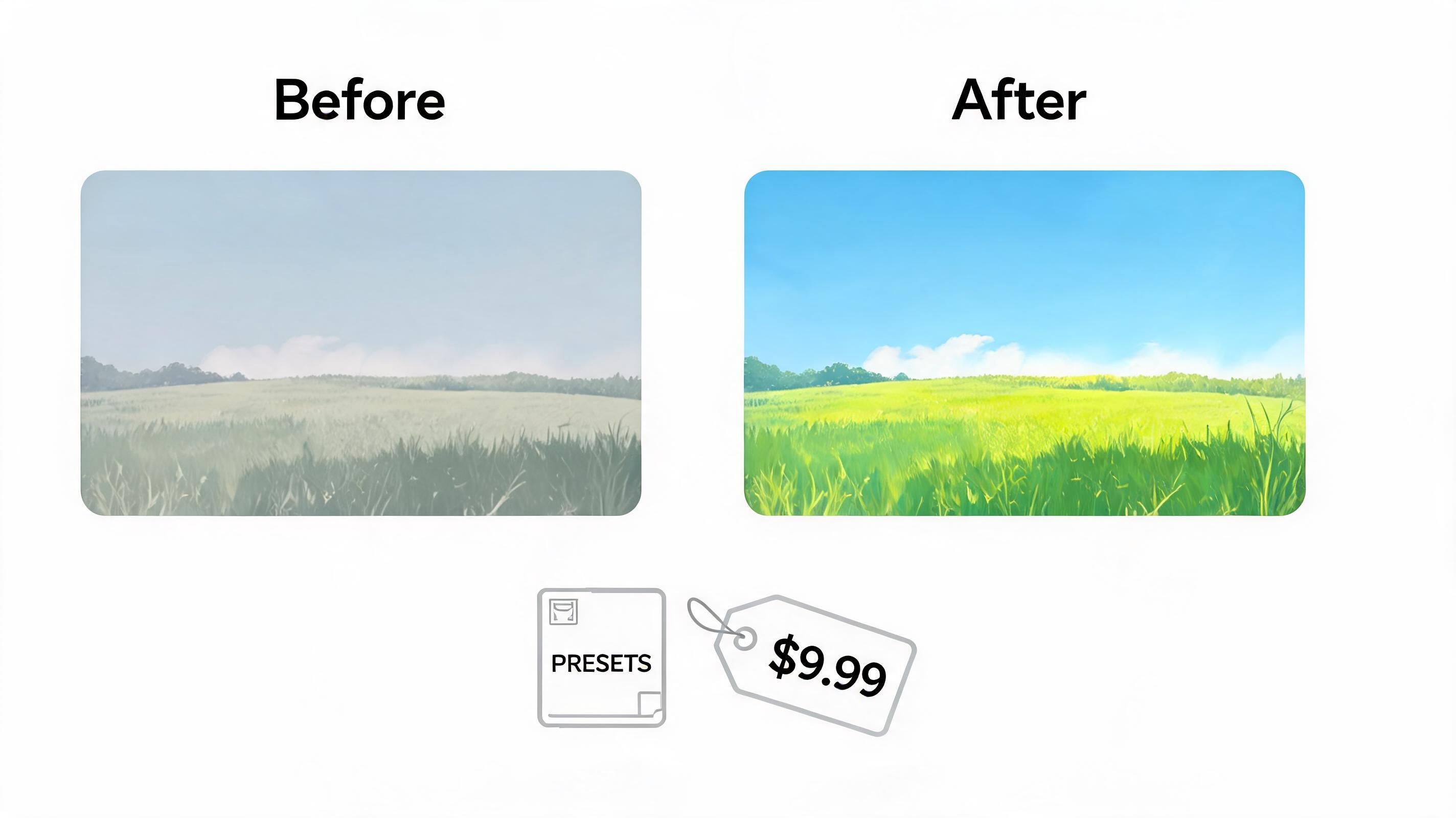
If digital products are the business, don’t hide them behind a generic creator bio. Put the product category in plain English. The buyer should know what you sell before they ever tap your link.
Examples:
- Wedding editor: Wedding Lightroom presets | Clean skin tones + true whites
- Travel creator: Adventure LUTs | Cinematic color packs
- Portrait brand: Photoshop actions, client guides, posing cards
This is one of the clearest monetization plays on Instagram because the offer is instant. No inquiry form. No discovery call. No waiting.
Make the bio sound like a store, not a résumé
A lot of photographers write bios like credentials lists even when they’re trying to sell downloads. That weakens buying intent. Product-first bios need product-first language.
Use naming that implies use case. “Moody Portrait Pack,” “Flash Reception Toolkit,” or “Natural Greens Scenic Presets” all tell the customer where the product fits. Then send them to a focused storefront built for selling digital products.
The Taap.bio page should include:
- Before-and-after samples: Buyers need to see the visual shift.
- Product grouping: Separate packs for weddings, portraits, travel, or studio.
- A free sampler: Good for list building and buyer trust.
Where photographers leave money on the table
They make the feed educational, but the bio still says “photographer based in…” with no mention of products. That disconnect costs sales. If people regularly ask what preset you use, your bio should answer that question before they ask.
The deeper issue is positioning. Product sellers need to look like product sellers. Not only artists, not only service providers.
There’s also a gap in how photographers use their bios for direct monetization. Many guides stay stuck on location, services, and a website CTA, while the stronger move is building a storefront where a follower can buy immediately. That’s exactly where a modular Taap.bio page helps. It keeps the sales flow visual and on-brand without forcing you to build a full website first.
5. Niche Specialist + Authority Bio
Specialization makes a bio easier to trust. “Photographer” is broad. “Newborn photographer,” “pet photographer,” “architectural interiors photographer,” or “food photographer” tells the visitor where you fit.
This matters on Instagram because search and discovery reward clarity. The Vanilla and Bean case study is a useful example even outside photography. The profile bio stayed simple, audience-specific, and keyword-aware, using “Everyday food for busy families” to signal relevance immediately (Vanilla and Bean Instagram case study).
A photographer can apply the same structure:
NYC newborn photographer
Calm, safe, natural family imagery
Session details + prep guide below
Authority comes from precision
Niche bios work when every line supports the specialty. A pet photographer shouldn’t dilute the bio with weddings, personal travel, and random creator offers. A real-estate photographer shouldn’t open with a poetic quote if the actual buyer is an agent or developer who wants speed and consistency.
Your Taap.bio page should deepen the niche. That can mean a tight portfolio, a prep guide, FAQs, testimonials, and one lead magnet that fits the audience. If you’re also building a broader public identity around that specialty, these examples of personal branding websites can help you shape the presentation.
You can even support the educational side of your niche with useful visual tools. If you publish portrait retouching content, for instance, a tutorial could mention workflows such as Remove wrinkles using AI when that’s relevant to your audience.
What to avoid
Don’t claim authority with empty labels like “expert” or “industry-leading” unless the rest of the profile proves it. Specificity does the work for you.
Positioning check: If a client in your niche lands on the bio and still has to ask “Do you shoot my kind of work?”, the niche isn’t clear enough.
6. Membership/Community Bio
Membership bios are for photographers who aren’t selling a one-time product or one-off call. They’re selling ongoing access. Critiques, monthly tutorials, private discussion space, resource libraries, office hours, and community accountability all fit here.
That means the bio has to communicate continuity. Not just “join my group,” but why staying matters.
A clean version might be:
Photography community for working shooters
Monthly critiques, editing breakdowns, live Q&A
Join the club below
The recurring value has to be obvious
People won’t subscribe to a mystery. They need to know what changes month to month. New lessons, group calls, fresh presets, challenge prompts, and portfolio reviews all help create that sense of momentum.
On your Taap.bio page, show the membership like a product with layers. A header block for the main promise. A second block for what members get regularly. A third for testimonials or community screenshots. If you offer multiple tiers, name them in plain language so buyers understand the difference without digging.
- Keep the rhythm visible: Mention weekly or monthly touchpoints in the bio or link page copy.
- Reward the member, not just the buyer: Ongoing critique and conversation matter more than a static content vault.
- Use your stories strategically: Show behind-the-scenes snippets from calls, critiques, or lesson drops.
The trade-off
Membership can create steadier revenue, but it also creates a delivery obligation. If you don’t like showing up consistently, this isn’t the right bio model. You’ll be better off with courses or digital products.
The strongest membership bios attract photographers who want access to you and to each other. The weakest ones sound like a vague Patreon clone with no clear reason to stay after the first month.
7. Multi-Service Creator Bio
This bio model is for photographers who already operate like a small media brand. You shoot for clients, sell presets, teach, maybe host a group program, and still want the profile to feel organized.
The danger is clutter. Too many creators treat the bio like a shopping list. Visitors don’t read that well on mobile. They skim.
A better version compresses the business into categories:
Portraits | Presets | Education
Book a shoot or shop resources
All offers below
Use hierarchy, not volume
The bio should summarize. Your Taap.bio page should sort. That’s the only way a multi-offer business stays usable.
I’d structure the page in descending order of buyer intent. If client work is your highest-value offer, make that block first. Then put digital products second, education third, and community or newsletter lower. This keeps the page from feeling like a maze.
One reason Taap.bio fits this model well is the modular grid. A photographer with multiple revenue streams usually needs more than a stack of identical buttons. Distinct blocks, visuals, and categories help a wedding client avoid clicking into a preset bundle, and help another photographer find the teaching offers fast.
Where this model works best
It’s ideal for photographers with an audience that already understands they do several things. Think of a portrait photographer who posts client work, behind-the-scenes reels, editing tutorials, and occasional educational content. In that case, a multi-service bio reflects reality.
It’s a weak choice for smaller accounts still trying to establish one core identity.
The more offers you list, the more important the first click becomes. Your link page has to sort the chaos you created in the bio.
When in doubt, lead with the business model you most want to grow this year. Not every offer deserves equal billing.
8. Aspirational/Inspiration-First Bio
Some photographers shouldn’t monetize aggressively from the first line. If your growth comes from visual storytelling, travel work, documentary style, or emotional brand positioning, a hard-sell bio can cheapen the profile.
This model prioritizes identity first and monetization second. It works especially well for fine art, documentary, travel, and creator-led personal brands that need emotional resonance before conversion.
Example:
Documentary photographer
Human stories, light, place, memory
Prints, notes, and resources below
Growth-first doesn’t mean strategy-free
The biggest mistake with inspiration-first bios is using beautiful language with no path forward. You can absolutely sound artistic and still create a conversion route.
Use the first line for the worldview. Use the second line for a soft commercial bridge. “Prints,” “journal,” “resources,” “workshops,” or “behind the scenes” all keep the tone intact while opening monetization options.
Your Taap.bio page should feel editorial, not salesy. Use image-led blocks, a live Instagram feed, selected prints, a newsletter signup, and maybe one entry-level digital product. That lets you monetize without interrupting the brand mood.
Why this still converts
People buy from photographers they feel connected to. A softer bio can build that connection if the profile delivers depth through captions, stories, and consistent visual language.
This model is especially strong when your long-term play is audience trust. You may start with prints or a free guide, then later introduce workshops, ebooks, or limited coaching once the audience already sees you as a voice worth following.
The key is subtle structure. Even the most artistic photography instagram bio still needs a destination and a next action. Without that, you’ve built atmosphere but not a business.
Photography Instagram Bios, 8-Point Comparison
| Bio Type | Implementation Complexity 🔄 | Resource Requirements ⚡ | Expected Outcomes 📊 | Ideal Use Cases 💡 | Key Advantages ⭐ |
|---|---|---|---|---|---|
| Portfolio + Direct Sales Bio | Medium, setup portfolio + product pages | Medium, create digital products, images | Direct conversions; steady small-ticket sales | Photographers selling presets, guides, templates | Converts followers to buyers; showcases work before sale |
| Coaching + Photography Services Bio | Medium–High, scheduling + service setup | High, time for sessions, video setup | Recurring bookings; higher ARPU per client | Experienced shooters offering 1:1 or group coaching | Positions creator as expert; automated booking |
| Course Creator + Community Bio | High, curriculum design and delivery | High, production, updates, integrations | Scalable passive income; authority building | Photographers with structured teaching material | Sell-once-many; builds thought leadership |
| Presets/Digital Products Bio | Low–Medium, product pages and previews | Low, one-time product creation, marketing | Quick sales; highly scalable with low marginal cost | Sellers of LUTs, presets, templates, actions | Instant delivery; low production overhead |
| Niche Specialist + Authority Bio | Medium, focused portfolio and proof | Medium, niche shoots, testimonials, credentials | Higher-quality leads; premium pricing potential | Specialists (newborn, pets, real estate) | Clear brand identity; attracts pre-qualified clients |
| Membership/Community Bio | High, membership structure & retention systems | High, ongoing content, moderation, perks | Predictable recurring revenue; retention-dependent | Creators building paid communities/subscriptions | Stable MRR; loyal engaged audience |
| Multi-Service Creator Bio | High, organize and present diverse offerings | High, maintain multiple products/services | Diversified income; cross-sell opportunities | Established creators offering services + products | Maximizes revenue per follower; modular presentation |
| Aspirational / Inspiration-First Bio | Medium, consistent storytelling & curation | Medium–High, continual high-quality content | Strong engagement and growth; slower monetization | Creators prioritizing audience growth & partnerships | Builds deep loyalty; better brand/sponsorship fit |
From Bio to Business
A good photography instagram bio isn’t decorative copy. It’s positioning. It tells people what kind of photographer you are, who you help, and what they should do next.
That sounds simple, but most bios fail on one of those three points. They’re either too vague, too broad, or too passive. A poetic line with no offer won’t book shoots. A credentials dump with no personality won’t build trust. A random list of services won’t help people choose.
The stronger move is to match the bio to the business model you run.
If you sell digital products, say that directly. If you book coaching, make the session type obvious. If you’re a niche specialist, lead with the niche. If you have several offers, summarize them in the bio and let your Taap.bio page sort them into clean paths.
That pairing matters. Instagram gives you limited space. Taap.bio gives you room to turn curiosity into action. Instead of sending people to a generic homepage, you can send them to a page built for the exact way photographers sell now. Bookings, downloads, courses, memberships, portfolio proof, and lead capture can live in one place without looking messy.
There’s also a branding advantage here. A photographer’s profile should feel intentional from top to bottom. Your handle, profile photo, name field, bio, highlights, feed, and link page all need to tell the same story. When those pieces align, visitors trust faster. They understand your offer faster. They act faster.
Start by choosing one of the eight bio styles above. Don’t combine three unless your audience already knows you well. Write a version that states your niche, value, and CTA in plain language. Then build a Taap.bio page that reflects the same hierarchy. Put the most important action first. Support it with visuals. Remove anything that distracts from the next click.
Many photographers make a real shift. Their Instagram stops being just a portfolio and starts functioning like a storefront, a booking desk, and a brand hub at the same time.
Your bio doesn’t need to be clever. It needs to be clear, aligned, and built to convert.
If you want one link that can sell presets, book coaching calls, showcase your portfolio, and organize every offer without looking like a generic link list, build it on taap.bio. It gives photographers a visual storefront with a modular grid, live content blocks, digital product sales, scheduling, and email capture, so your bio link can do more than send people away.


