You post for months. Some days the algorithm likes you. Most days it doesn't. A post that took an hour disappears by dinner, and the people who said they “love your content” still aren't somewhere you can reliably reach them.
That's usually the moment people start looking up how to start a newsletter.
The mistake is thinking a newsletter is just another publishing format. It isn't. It's an owned acquisition system. You're not only sending emails. You're building a direct line to people who asked to hear from you, and you can keep that relationship even if a platform cuts reach, changes the feed, or vanishes from your strategy next year.
The launch that works in 2026 is simple: publish where attention already exists, capture interest on a page you control, and turn casual visitors into subscribers you can reach again.
Table of contents
Why Starting a Newsletter Now Gives You an Owned Audience
You publish a post, it gets shared for a day, and then the trail goes cold. A newsletter fixes that by turning passing attention into a contact you can reach again next week, next month, or when you finally have an offer ready.
That shift is why newsletters have moved from side project to core channel for creators, consultants, operators, and niche media brands. An industry summary reports that active newsletters grew from 26,911 in 2023 to 52,809 in 2024, a 96.2% year over year increase according to newsletter market statistics from Shno. More people are treating the inbox like infrastructure because it gives them distribution they control.
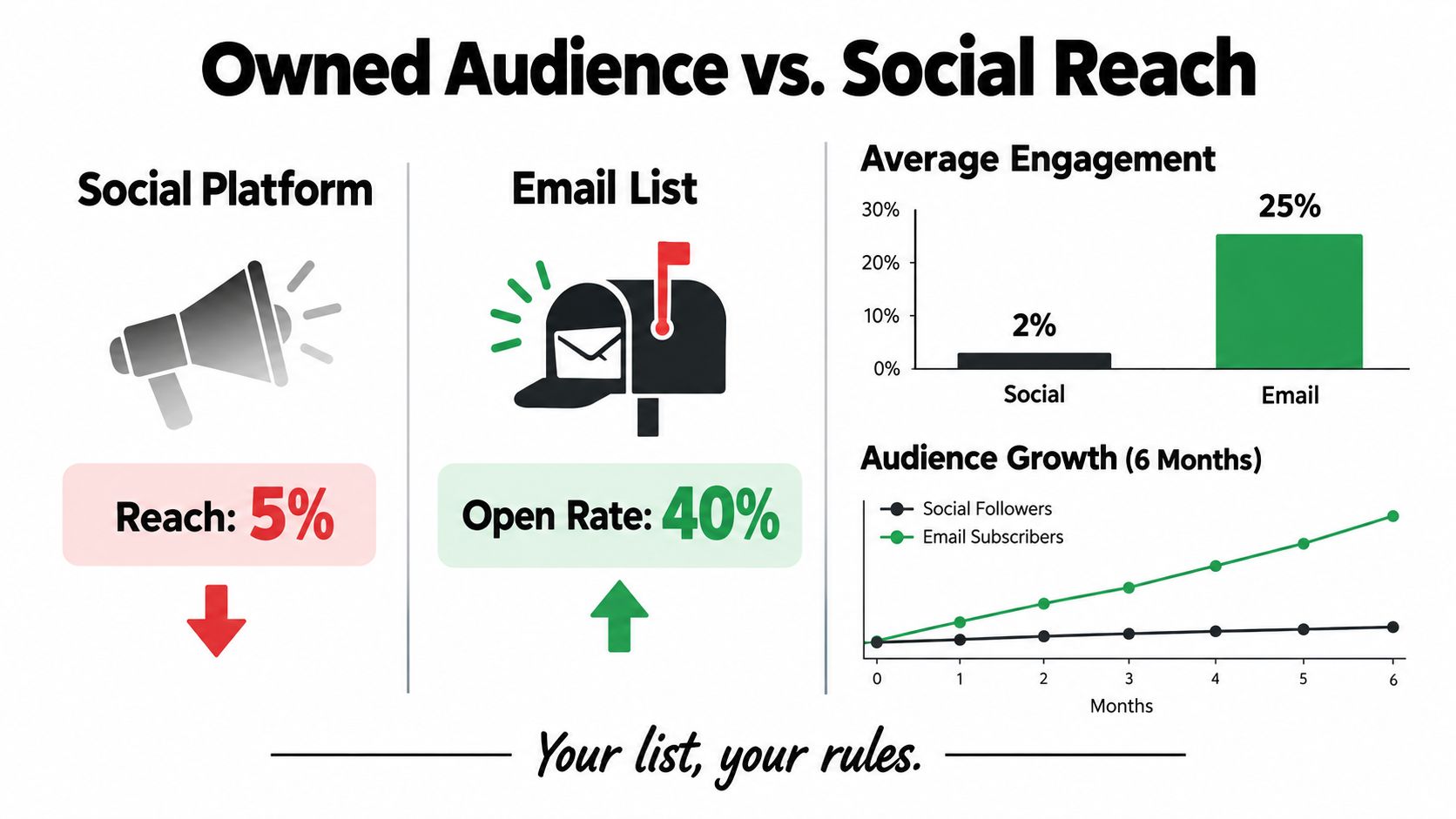
Why the relationship matters more than reach
Followers are useful. Subscriber access is better.
A social audience can drive discovery, but the platform still controls who sees your work and when. An email list works differently. A reader gives permission once, and you keep a direct line to them until they opt out. That changes what you can build. You can test positioning, ask for replies, promote a product, fill a call calendar, or recover attention after a quiet month without waiting for a feed to cooperate.
I treat that list as an owned acquisition loop, not a publishing habit. Social content brings in new attention. A capture page you control, including a simple taap.bio setup, turns profile visits and link clicks into subscribers. The newsletter keeps the relationship active so every future post, offer, or launch starts with an audience you already know how to reach.
Practical rule: Start a newsletter because you want a list you can keep and use, not because you want another place to post.
What a strong launch actually includes
The first win is not a polished issue. It is a working system.
Three parts have to connect:
- Discovery on platforms where your audience already spends time
- Capture on a page built to collect email addresses without friction
- Consistency in the publishing cadence you can maintain
If one part breaks, growth stalls. I see this a lot with new creators who write strong emails but bury the signup link, or who get profile traffic and send it to a cluttered website that does not make the next step obvious. A simple capture page usually beats a complex site early on because it asks the visitor to do one thing.
Social still matters in this model. It is often the front end of the system. Recent industry coverage found that creators are actively using platforms such as LinkedIn and Facebook to distribute newsletter content, with 52% using LinkedIn and 50% using Facebook according to newsletter growth trend coverage. That is the trade-off worth accepting. Use social for discovery. Use your newsletter to keep the audience.
Finding Your Niche and Defining Who Your Newsletter Serves
A newsletter stalls fast when the offer is fuzzy. You get profile visits, a few curious clicks, and almost no subscribers because people cannot tell who the email is for or why they should join.
A strong niche fixes that. It gives your signup page a clear promise, makes social posts easier to write, and turns your newsletter into the owned part of your acquisition loop instead of one more content stream.
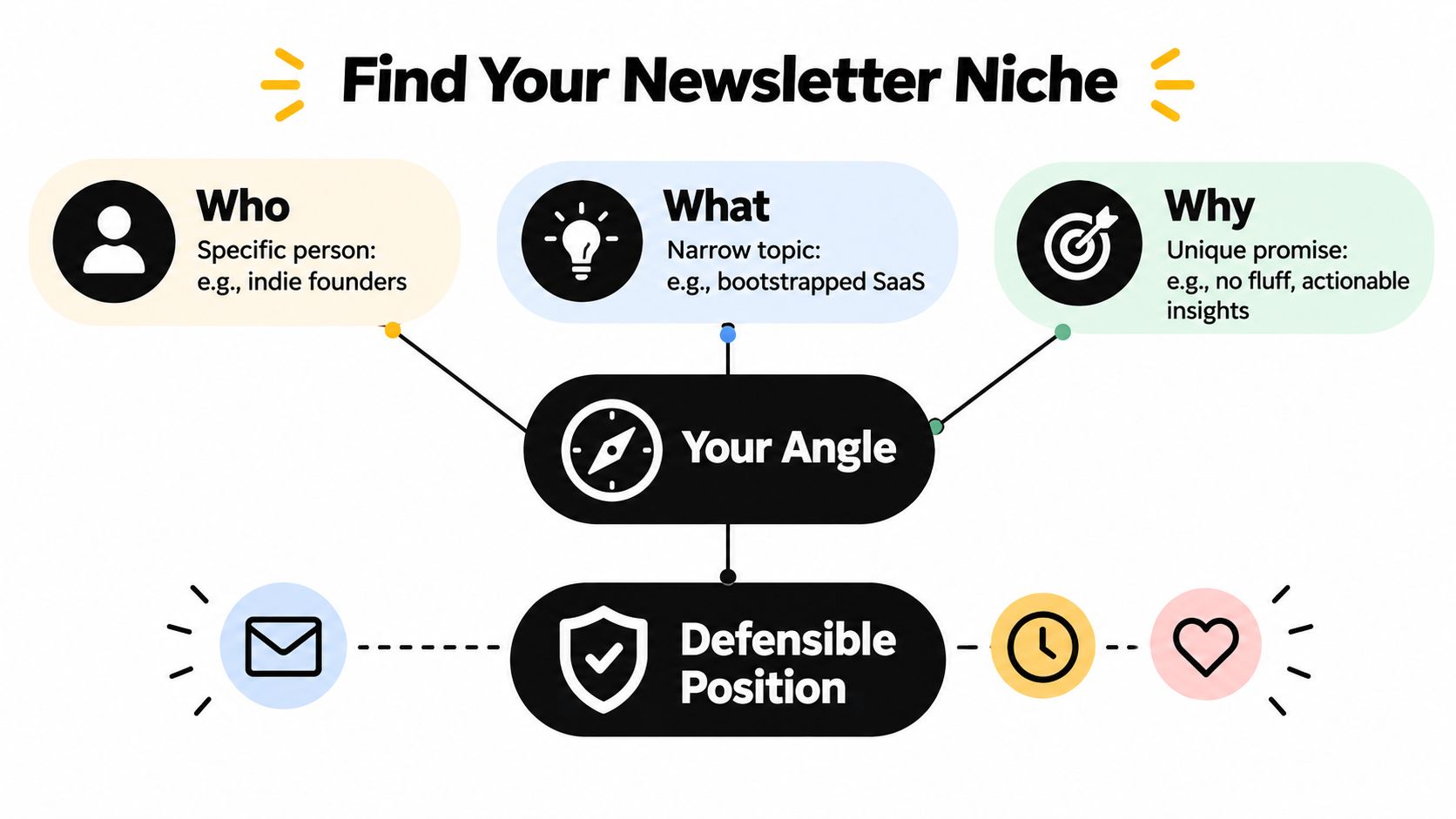
Start with the person, not the topic
“Marketing newsletter” is too broad to convert well. “A weekly email for freelance designers who want a steadier client pipeline without posting every day” gives a reader enough context to decide in seconds.
That level of clarity matters because discovery usually happens in public, while subscription happens on your capture page. If your social content attracts one crowd and your signup page speaks to another, the loop breaks. You get attention without email growth.
Start with a simple reader profile. Skip the bloated brand document. You only need to know what this person wants, what keeps slowing them down, and what language they already use to describe the problem. If you need a starting point, this guide to buyer persona development is useful.
Use three filters.
- Is the reader obvious? Someone landing on the page should know quickly whether this is for them.
- Is the outcome concrete? “Ideas about creativity” is vague. “Short lessons to help session musicians get more repeat work” gives people a reason to subscribe.
- Can you keep publishing it? If the concept depends on heavy research, polished design, or constant trend chasing, expect inconsistency.
I have found that creators usually go too wide at the start, not too narrow. Narrow wins early because it sharpens the promise. You can broaden later once the audience tells you what else they want.
Your niche is the overlap between a specific reader, a specific result, and a format you can keep shipping.
Choose a format that fits how you work
A lot of new newsletters struggle because the creator has not picked a lane. One issue reads like an essay, the next is a link roundup, and the next is a soft pitch. Readers do not know what to expect, so they stop opening.
Three formats work well for early-stage newsletters:
Editorial
Best for consultants, founders, writers, and coaches whose point of view is the product. Readers subscribe for judgment, pattern recognition, and lived experience.Utility digest
Best for operators, educators, analysts, and recruiters. Readers want curated tools, examples, trends, or short breakdowns they can use quickly.Offer-supported update
Best for creators, indie makers, musicians, and service businesses. The email keeps people warm between launches, releases, bookings, or promotions.
Choose the format that lowers your production burden. That matters more than sounding impressive. A simple weekly tactical note sent for six months will outperform an ambitious publication you abandon after three issues.
If you plan to use short-form content for discovery, test angles there first. Good posts reveal which promises earn attention before you build full emails around them. These practical video production hacks can help if you want faster content tests that feed newsletter signups.
Write the promise in one sentence
Before you design anything, write the promise.
I help [specific person] get [specific outcome] through [specific format] delivered [cadence].
Examples:
- I help first-time course creators turn rough ideas into sellable offers through a short weekly build-in-public email.
- I help independent artists stay visible between releases through a behind-the-scenes newsletter with notes, demos, and release drops.
- I help freelancers win better clients through a biweekly email with scripts, teardown examples, and positioning fixes.
This sentence does more than clean up your messaging. It keeps your acquisition loop aligned. Your social posts attract the right people, your taap.bio capture page converts them with the same promise, and your emails reinforce why they subscribed in the first place.
If an issue does not support that promise, cut it. That shortcut saves weeks.
Setting Up Your Newsletter Tech Without the Tool Sprawl
The first week is wasted on logos, templates, and app comparisons. The boring setup matters more. If your domain isn't authenticated and your capture path is clunky, even strong writing won't carry the launch.
Start with deliverability. Then build the page where subscription happens. Then connect the rest.
Get your sending foundation right first
Independent deliverability guidance consistently points to the same baseline. Authenticate your sending domain with SPF, DKIM, and DMARC, keep a steady cadence, and protect list hygiene because inbox placement matters more than raw delivery. Deliverability focused guidance from SMTP2GO on newsletter delivery cites about 95% or higher as a good inbox delivery benchmark and places adjusted human open rate targets at 20% to 28% once Apple Mail Privacy Protection inflation is removed.
That's why I don't recommend rushing to import random contacts or blasting a giant list all at once. A smaller, cleaner list with real intent is worth more than a bigger, colder one.
Your first technical win is not “sending successfully.” It's landing in the inbox of people who actually asked for the email.
Keep the capture path short
The second trap is tool sprawl. A lot of new creators assemble one tool for the link in bio, another for checkout, another for scheduling, another for email capture, and then wonder why setup drags on and analytics stay fuzzy.
A simpler route is to keep discovery and conversion as close together as possible on one page. That means your profile visitors should be able to read your promise, subscribe, buy, or book without bouncing across a chain of tabs.
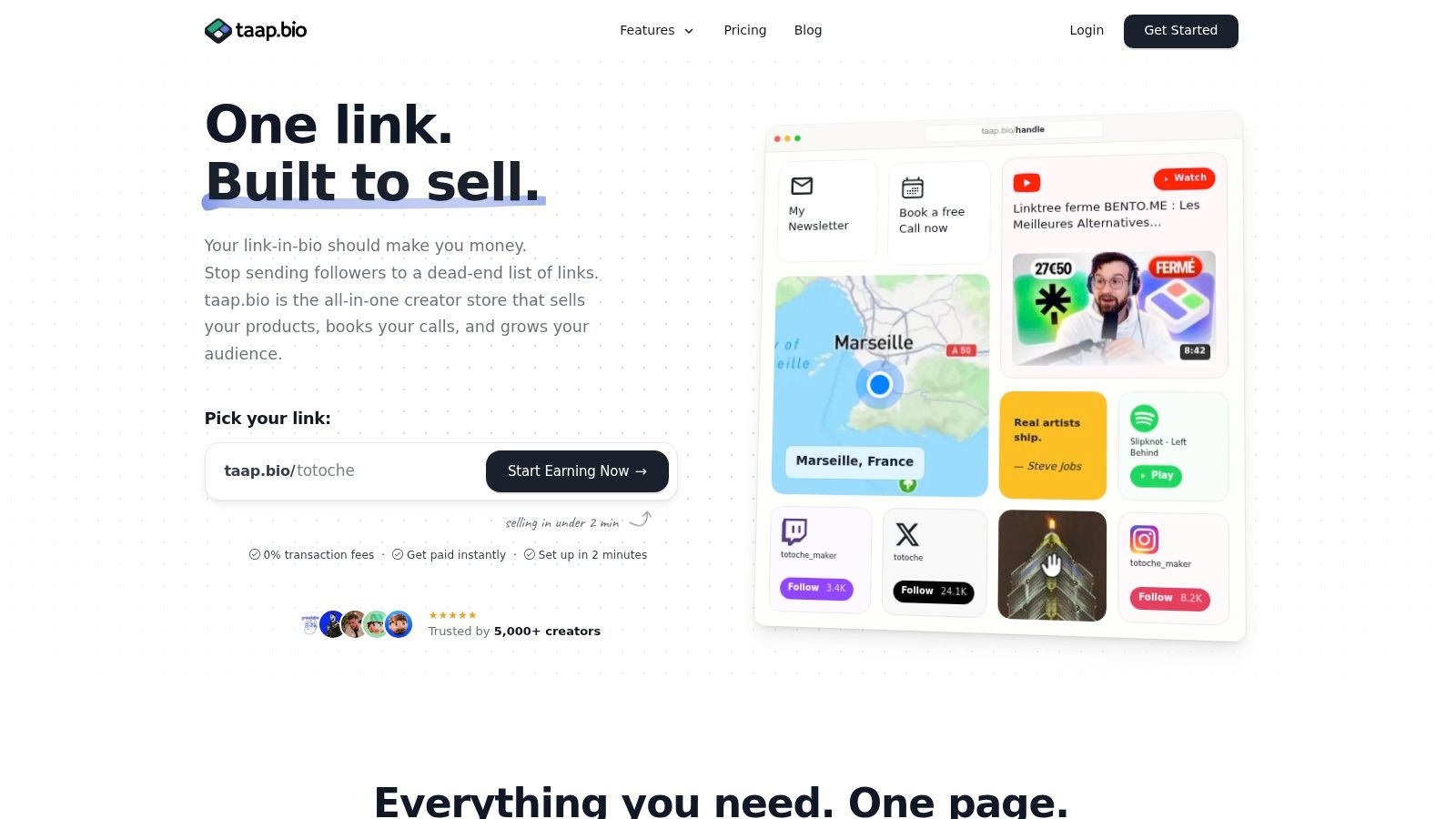
One option is an all-in-one business platform that combines a bento style page builder, an email signup widget with CSV export, built-in checkout, paid bookings, and on-page analytics. For creators who'd otherwise patch together Linktree, Gumroad, Mailchimp, and Calendly, that kind of setup reduces maintenance and keeps more actions happening on a single page.
Build the minimum viable stack
You do not need a giant stack to learn how to start a newsletter well. You need a clean stack.
Use this as your launch baseline:
- Email platform for sending and basic subscriber management
- Branded signup page with a clear promise and one primary call to action
- Domain authentication so deliverability is protected from day one
- Basic analytics so you can see signups and issue level engagement
- Optional checkout or booking flow if you already sell something
What you can skip early:
- Complex automation unless your business already depends on it
- Overdesigned templates that slow writing and often hurt readability
- Multiple lead magnets that dilute the core offer
- Extra pages if one strong page can do the job
What to put on the page
A high converting page usually needs less copy than people think. Keep these elements visible above the fold or close to it:
- A plain language headline that states who it's for
- A short payoff line that states what the reader gets
- An email field and subscribe button with minimal friction
- One trust signal such as what you write about or why people follow your work
- One next action if you also sell, book, or release things
The page should answer one question fast: why should this person join your list instead of just following you?
Planning Content You Can Actually Keep Publishing
The fastest way to kill a new newsletter is to design it around your most ambitious self.
People start with a weekly manifesto, custom graphics, five sections, and a polished brand voice they can't sustain after week two. Then they conclude the idea was weak, when the problem was production overhead.
Pick a cadence your real schedule can survive
Consistency beats intensity. If you can comfortably write every week, do that. If you can't, go biweekly and make that rhythm dependable.
Litmus notes that strong newsletter planning still comes back to defining who it's for, what it will do, when it will arrive, and how success will be measured. The same newsletter best practices discussion from Litmus also points toward personality-driven newsletters and more unified, multi-channel experiences. That matches what keeps people reading. They don't need a perfect brand machine. They need a recognizable voice and a format that's easy to consume on mobile.
A good early rule is simple: choose the fastest format you can produce without sounding rushed.
Use a repeatable issue structure
You don't need endless creativity. You need recurring containers.
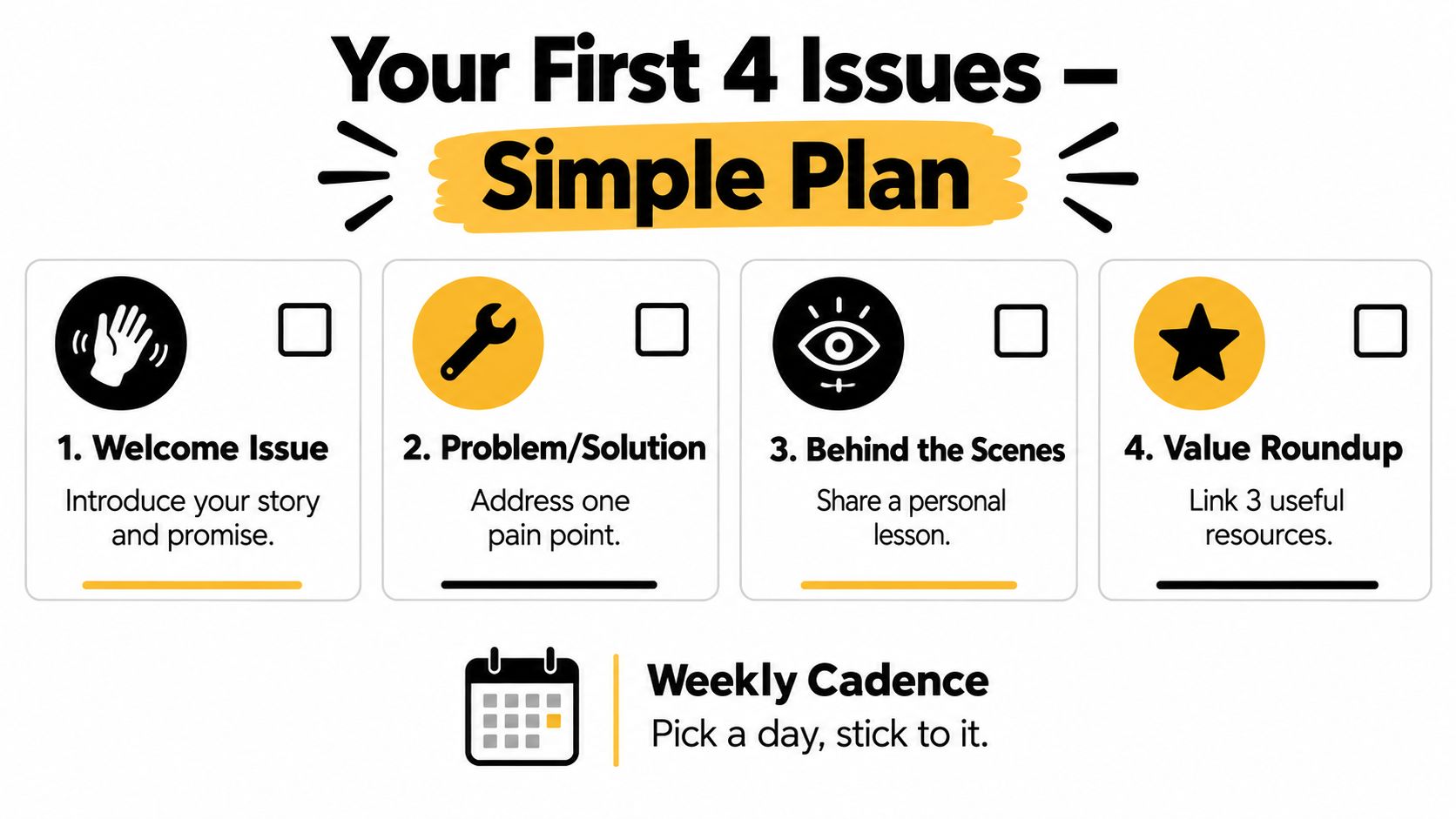
A strong first run often looks like this:
Welcome issue
Tell readers who you are, who the newsletter is for, and what kinds of emails they should expect.One problem, one fix
Solve something specific. Keep it tight and useful.Behind the scenes note
Share an observation, process, mistake, or lesson from your work.Resource roundup
Curate a few links, tools, or examples and explain why they matter.
Here's a useful walkthrough before you build your schedule:
Make the newsletter easy to scan
Most new subscribers open on their phone. Long intros, dense paragraphs, and too many design elements make the email feel like work.
Keep the format clean:
- Short opening that sets up the point
- Clear subheads so readers can skim
- One main lesson instead of five half-finished ones
- A simple close with one action, reply prompt, or offer
If you struggle to stay ahead, batch at the idea level instead of the draft level. Spend one session collecting hooks, stories, screenshots, questions, and examples. Then turn those into issues over time. This guide to batch content creation is useful if your main problem is inconsistency rather than lack of ideas.
Working rule: Build a newsletter format that still works when you're busy, not just when you're motivated.
Growing Your List and Turning Readers Into Revenue
A newsletter doesn't grow because you added a form to your site. It grows because you build a loop that repeatedly brings the right people to that form.
That loop has two parts. Discovery gets attention from places where your audience already spends time. Capture turns that attention into an owned relationship you can keep. If either side is weak, growth stalls.
Judge growth by conversion, not noise
A practical benchmark for newsletter signup performance comes from newsletter signup conversion benchmarks, which report a 3.1% median, 3.9% average, and 6.2% top quartile conversion rate for newsletter signups. The same benchmark says pages converting below roughly 1.2% are underperforming.
Those numbers are useful because they force a better question. Not “How do I get more traffic?” but “Why aren't current visitors subscribing?”
Common causes are usually simple:
- The promise is vague and people don't know what they'll receive
- The page is crowded with too many competing actions
- The audience source is mismatched so the wrong people click through
- The ask is weak because the newsletter sounds like updates instead of value
Compare the main growth levers
Not all list growth tactics fit all creators. Some work better if you already have authority. Others work better if you publish frequently on social.
| Creator Type | Best Growth Lever | Best Early Monetization |
|---|---|---|
| Coach or consultant | Short educational posts that lead to a focused signup page | Paid bookings or a small advisory offer |
| Musician or artist | Behind-the-scenes clips and release teasers that push to one subscribe link | Merch, digital products, or fan supported paid tier |
| Freelancer | Tactical posts and teardown content tied to a client problem | Productized service or paid audit |
| Course creator | Short lessons and frameworks repurposed across social channels | Low ticket digital product, then course waitlist |
| Personal brand operator | Strong point-of-view posts with a clear newsletter promise | Sponsorships later, offers earlier |
| Real estate professional | Local insight content with a clear niche audience | Consult calls, lead capture, or paid appointment flow |
Lead magnets can work, but many creators use them as a crutch. A generic checklist may get signups, yet attract people who want the freebie more than the newsletter. If your core promise is strong, you can often grow well without bribing the subscriber.
Social distribution tends to work better when the content itself previews the value of the email. Don't post “subscribe to my newsletter” repeatedly. Post a useful idea, an opinion, a quick teardown, or a story, then point people to the newsletter for more of that same experience.
If social creates curiosity and the signup page resolves that curiosity with a sharp promise, growth becomes repeatable.
Pick one revenue path early
Monetization gets messy when people try every option at once. Start with the revenue model that matches what your audience already trusts you for.
A simple way to choose:
- If readers want access to you, start with paid bookings, consulting calls, or office hours.
- If readers want outcomes, sell a template, guide, mini product, or service.
- If readers want ongoing insight, consider a paid tier once free issues have clear loyalty.
- If you already have scale and a defined niche, sponsorships can make sense later.
Creators often overestimate sponsorships and underestimate small direct offers. Early on, a newsletter usually earns faster when it connects to a service, product, or booking people can buy immediately. This breakdown of newsletter monetization is useful when you're deciding which revenue path fits your audience instead of copying someone else's model.
The key is alignment. The same promise that gets the subscriber should point naturally toward the first paid step.
Staying Compliant Measuring What Matters and Launching Confidently
A lot of launch anxiety comes from tracking too much and understanding too little. You don't need a giant dashboard. You need clean permissions, healthy list habits, and a small set of metrics that tell you whether the newsletter is working.
Protect trust before you optimize
If you collect emails, handle that responsibility carefully. Get clear consent. Make unsubscribe easy. Don't add people because they downloaded something once or handed you a business card at an event.
If you serve readers in regions with stricter privacy expectations, review a practical GDPR compliance checklist and make sure your signup flow, storage, and messaging reflect it. Compliance is not just legal housekeeping. It supports deliverability and trust because the people on your list expect to hear from you.
List hygiene matters too. Remove or suppress disengaged contacts over time. A smaller list with real readers will usually outperform an inflated one full of stale addresses.
Watch the numbers that change decisions
You don't need dozens of metrics on day one. These matter most:
Signup conversion rate
This tells you whether your page and offer are doing their job.Adjusted open rate
Open data is imperfect, but it still helps when interpreted carefully alongside replies, clicks, and overall behavior.Reply and click quality
These often tell you more than vanity metrics because they signal active interest.Early revenue signals
If people click an offer, book a call, or ask buying questions, the list is moving in the right direction.
Beehiiv's 2026 industry summary reports that publishers on its platform sent 28 billion emails in 2025, reached more than 255 million unique readers, had average open rates above 41%, and saw paid subscription revenue rise from $8 million in 2024 to $19 million in 2025, a 138% jump, according to Beehiiv's state of newsletters report. For a new publisher, the useful lesson is that engagement quality and niche fit drive the economics. Subscriber count alone doesn't.
Launch with a short checklist
Before your first send, make sure these are true:
- Your promise is clear and visible on the signup page
- Your domain setup is complete so inbox placement has a real chance
- Your first four issues are mapped so you're not improvising after launch
- Your discovery channels are chosen and you know where new readers will come from
- Your first offer is obvious even if monetization comes later
- Your metrics are simple and tied to action
The first month should be about signal collection, not perfection. Watch who subscribes, what they reply to, which posts drive signups, and where people drop off. Tighten the promise. Improve the page. Keep sending.
That's how to start a newsletter without turning it into another abandoned content project. Build the owned loop first. Then let the newsletter compound.
If you want one page to capture subscribers, sell digital products, and take paid bookings without stitching together several tools, taap.bio gives you that setup in a single link-in-bio style page. It's a practical fit if your newsletter is part of a broader creator business and you want discovery, capture, and conversion to happen in one place.