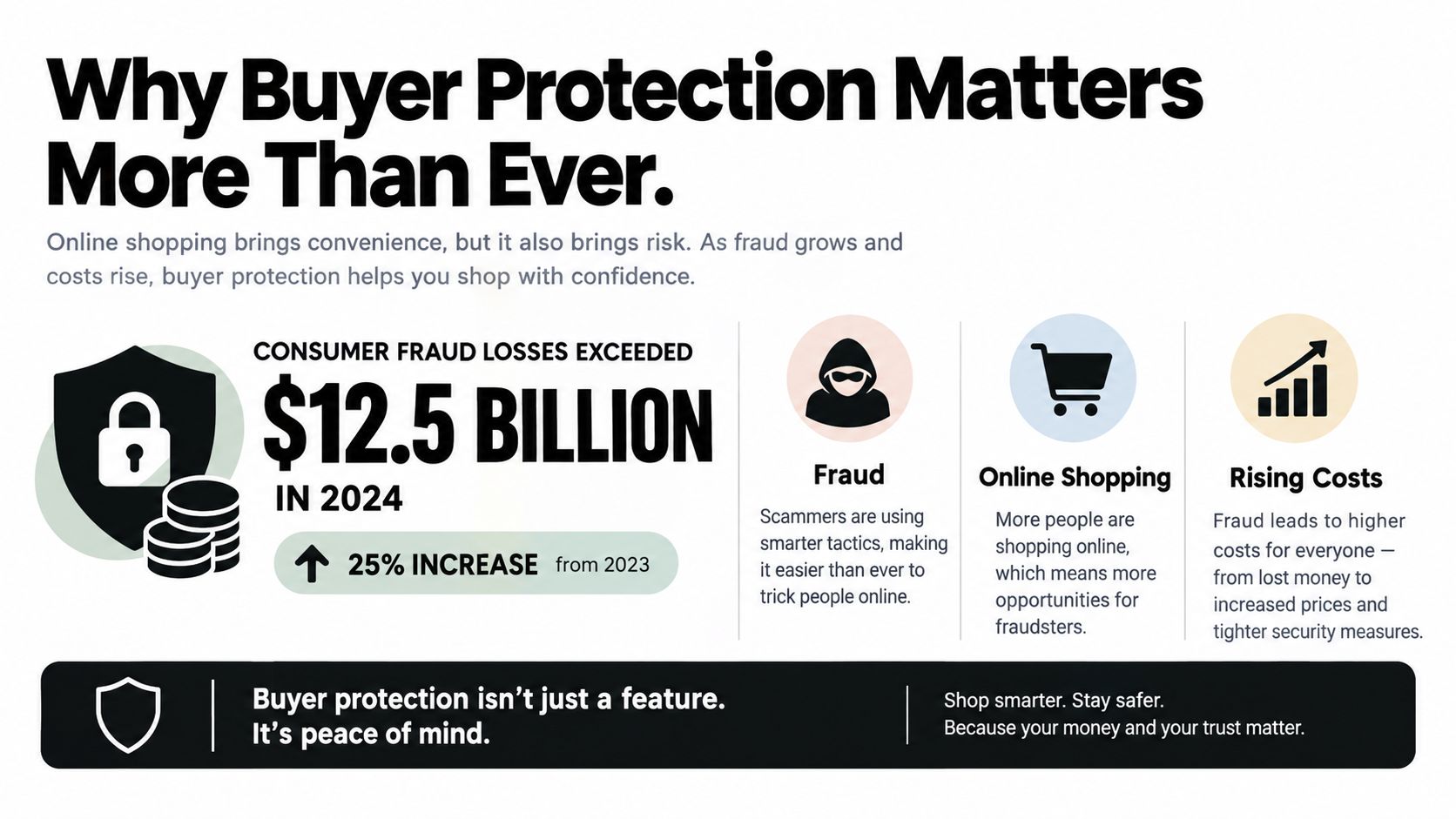
Reported fraud losses exceeded $12.5 billion in 2024, and the median reported loss was $497. That's why buyer protection matters now, especially for creators selling digital products, paid bookings, and memberships where the buyer can't inspect the item before paying.
When the storefront is a link in a bio, the seller is a person, and delivery happens instantly or by appointment, trust has to do more work. Buyers want to know what happens if the file is broken, the session is canceled, or the offer doesn't match the description. Sellers need a system that makes those answers visible before payment, not after the dispute starts.
Table of contents
Why Buyer Protection Matters More Than Ever
The scale of reported fraud changed the conversation. The FTC's Consumer Sentinel Network received 6.5 million consumer reports in 2024, and of the roughly 2.6 million fraud reports, 38% said the consumer lost money, compared with 27% in 2023. Reported fraud losses also exceeded $12.5 billion, a 25% increase from the prior year, and the median reported loss was $497. FTC data on reported fraud losses and consumer reports
For digital creators, those numbers aren't just background noise. They explain why a buyer may hesitate at checkout even when the offer looks good. If someone is buying a course, a coaching call, or a download from a seller they've never met, the question isn't only “Do I want this?” It's “What happens if this goes wrong?”
Why creator storefronts feel riskier
A creator business often sells trust before it sells the product. The buyer is reacting to the person, the social profile, the offer page, and the payment flow at once. If any one of those signals feels vague, conversion drops.
Practical rule: the more personal and instant the sale, the more visible the refund and support path needs to be.
That's why clear protection language helps even when no dispute ever happens. It lowers uncertainty. It also tells the buyer that the seller has thought through non-delivery, mismatch, and cancellation instead of hoping those problems never arise.
A simple trust-first setup can make a large difference in how people respond to unfamiliar offers. If you're building that kind of experience, the foundation is the same as any strong online trust strategy, and this guide to how to build trust online fits neatly beside it.
For creators, buyer protection is both a consumer safeguard and a sales strategy. The protection itself reduces harm. The visibility of that protection reduces hesitation.
What Is Buyer Protection and How It Works
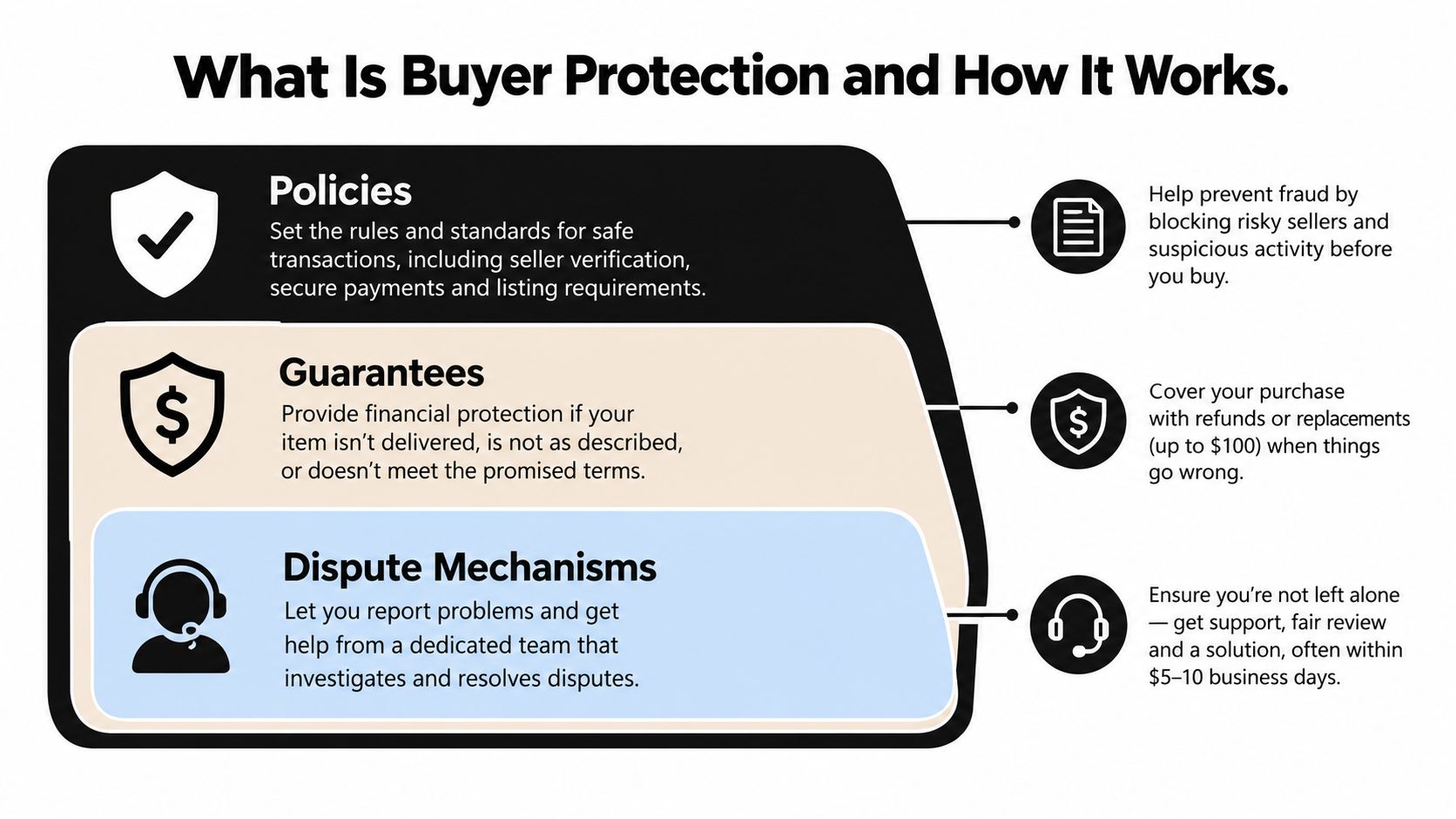
Buyer protection is the set of policies, guarantees, and dispute mechanisms that help a buyer recover from fraud, non-delivery, or a product that doesn't match what was promised. In plain terms, it answers three questions, what was promised, what was paid for, and what happens if the seller doesn't deliver correctly.
Four common program types
The first type is a platform guarantee. A marketplace may promise a refund if a seller fails to deliver. That helps buyers feel safer because the platform sits between the two sides and defines the fallback path.
The second type is a chargeback. With credit cards, the buyer can dispute certain charges for goods not received, duplicate billing, or merchandise that is wrong or defective. The FTC says buyers should contact the card issuer promptly and send written notice within 60 days of the first statement showing the error to preserve the stated billing-error protections. FTC guidance on online shopping disputes
The third type is escrow. Funds are held until delivery is confirmed. That model works well when the buyer and seller need a neutral release point, especially for services or custom work.
The fourth type is a seller refund policy. This is the seller's own rule set for returns, cancellations, and defects. In creator commerce, this is often the most practical layer because the seller controls the checkout, the wording, and the fulfillment process.
What this looks like in practice
A digital-course buyer may get access to a file that opens incorrectly. A paid booking may be canceled by the creator before the session happens. A link-in-bio store may collect payment for a digital download and then need to show whether access was granted. Each of those cases can fit a different protection path.
The key is not to confuse the tools. A refund policy is not the same thing as a card dispute. Escrow is not the same thing as a platform guarantee. They can work together, but they solve different problems.
For a creator store, the best setup usually combines the seller's own policy with a checkout flow that makes recourse visible. A useful reference point is buyer protection, especially if you're comparing what a structured offer page should disclose before payment.
Buyer protection works best when the buyer can see the rules before purchase, not after a problem starts. That clarity is what turns a vague promise into a usable safety net.
The strongest systems don't just refund mistakes, they reduce confusion before money changes hands.
Understanding Disputes, Timelines, and Evidence
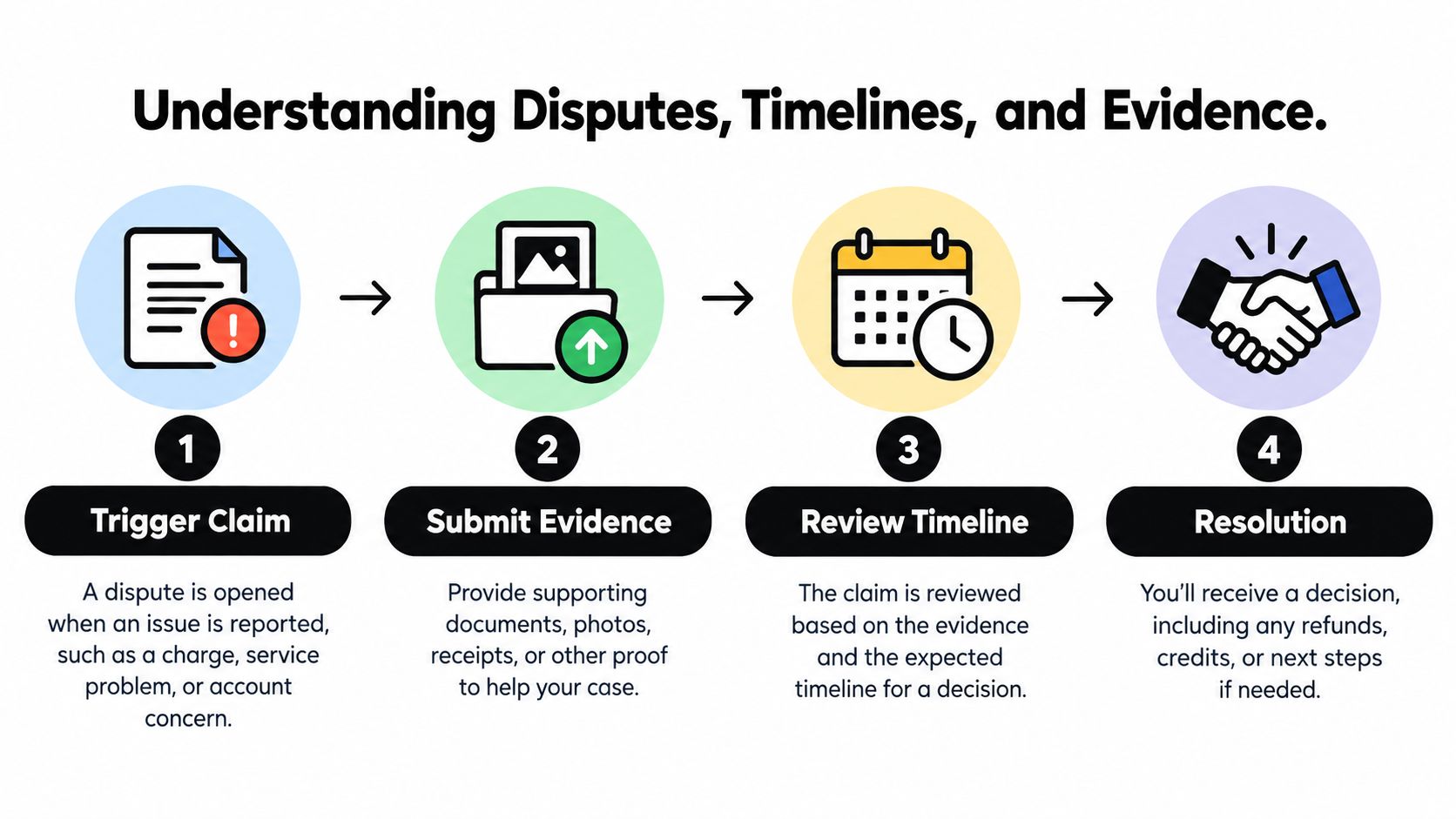
A dispute usually starts with a mismatch. The buyer says the item wasn't delivered, wasn't as described, or was charged incorrectly. The seller says delivery happened, the terms were clear, or the buyer agreed to the conditions. The outcome depends on timing, proof, and the channel used to pay.
Timelines matter more than most people expect
In the United States, the FTC says cardholders should contact the issuer promptly and send written notice within 60 days of the first statement showing the error for certain billing-error protections. In the EU, consumers generally have a 14-day withdrawal right for distance contracts, although some exceptions apply. One important exception is digital content supplied after the buyer expressly agrees to immediate performance and acknowledges losing the withdrawal right. European Commission guidance on buying online
That difference matters because not every complaint is the same kind of complaint. A withdrawal request means the buyer is changing their mind within a legal cooling-off window. A conformity claim means the product or service doesn't match the contract. Digital goods, memberships, and coaching sessions often sit right on that line, which is why the checkout language has to be precise.
Evidence should be built in before the dispute
Practical rule: if the order record can't show what the buyer saw, agreed to, and received, the seller is already behind.
For sellers, the evidence file should include the timestamped receipt, the exact version of the terms shown at checkout, delivery or access confirmation, and any communication about changes, delays, or cancellation. For digital content that starts immediately, store the buyer's express consent and the acknowledgment that withdrawal rights may be lost where that applies.
For bookings and memberships, keep immutable order identifiers, attendance logs, and access records. Don't rely on payment alone as proof of fulfillment. Payment says the transaction happened. It does not prove the file opened, the meeting occurred, or the buyer got the intended value.
If you're designing support flows, it helps to think about the whole complaint path as a process, not a reaction. This overview of handling customer complaints lines up well with buyer-protection thinking because the same recordkeeping habits make both support and disputes easier to manage.
What buyers and sellers should keep
- Buyers should save: the order confirmation, the checkout terms, screenshots of the offer page, and all support messages.
- Sellers should retain: the final terms shown before payment, fulfillment logs, cancellation notices, and consent records for immediate digital access.
- Both sides should keep: timestamps, payment descriptors, and any refund promise that was stated in writing.
The clearer the paper trail, the faster a fair resolution becomes. That's true whether the next step is a card dispute, a platform review, or direct seller support.
How AmaJova Can Help
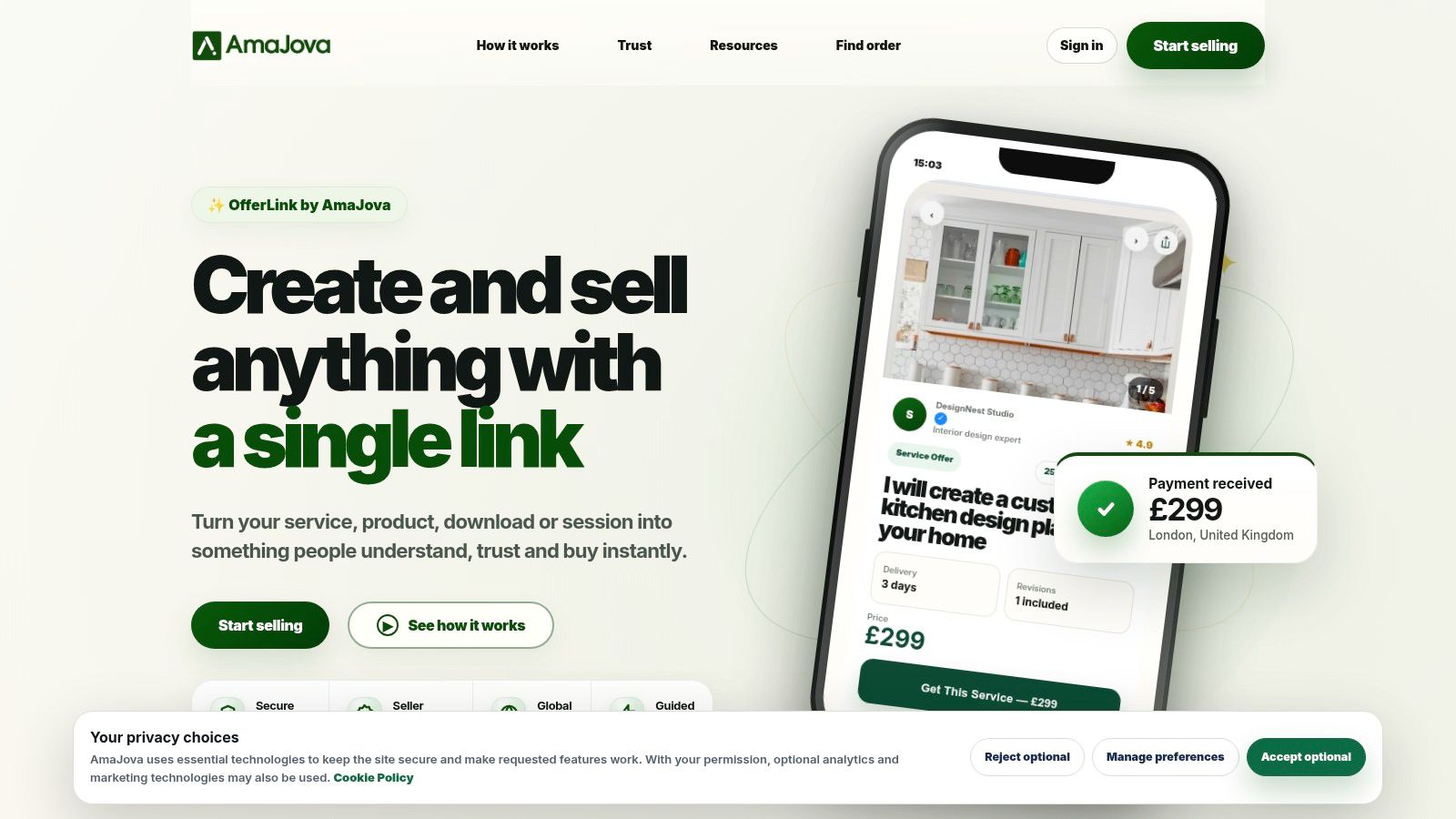
AmaJova is built for sellers who need one place to define an offer, collect payment, and keep the transaction record attached to the sale. Its OfferLink pages can be set up for services, products, digital products, and live sessions, which makes it useful when the offer isn't a simple physical item. The platform also supports global selling in 150+ currencies, seller verification, and a structured progression program.
Where it fits in creator commerce
The core buyer-protection problem in creator sales is not just payment. It's clarity. If a buyer can't tell what's included, when delivery happens, or what counts as a refundable failure, the dispute risk rises fast. AmaJova's OfferLink structure is designed to put title, description, inclusions, price, and fulfilment or booking details in one place, before payment.
That matters most for digital products and live sessions. A seller can present the scope clearly, connect messages and support to the order record, and keep delivery status separate from payment status. Those are the mechanics that reduce “I thought this included…” disputes.
For readers comparing tools, the most useful place to start is the platform's own buyer protection information. It gives a sense of how the checkout, support routing, and trust signals fit together without forcing sellers to build a full storefront.
Why a seller might choose it
- One link, one offer record: good for creators who sell through social channels and need a single checkout path.
- Clear pre-purchase expectations: useful when refund arguments often come from unclear scope or timing.
- Order-level support history: helpful when messages, delivery, and dispute status need to stay in one thread.
- Global payment support: relevant if your audience buys across borders and needs local payment flexibility.
AmaJova is a good fit when the business needs a professional offer page without a larger ecommerce build. It is less about replacing every possible buyer-protection model and more about making the seller's obligations visible and trackable in the same place the sale happens.
Comparing Buyer-Protection Program Types
Different protection models solve different problems, and creator businesses usually need more than one. A platform guarantee can reassure buyers, but it depends on the marketplace. Chargebacks give buyers a financial backstop, but they're tied to card rules and deadlines. Escrow helps when delivery needs confirmation. Refund policies are the seller's direct promise, and they often do the most work in creator-led commerce.
| Buyer Protection Program Comparison | How It Works | Best For | Limitations |
|---|---|---|---|
| Platform guarantee | The marketplace sets refund or resolution rules | Marketplace sellers and hosted storefronts | Depends on the platform's own policy and enforcement |
| Chargeback | The buyer asks the card issuer to reverse a charge | Card payments for non-delivery, duplicates, or defective goods | Subject to issuer rules and timing requirements |
| Escrow | Funds are held until delivery is confirmed | Custom work, higher-trust transactions, staged delivery | Adds process and may feel heavy for simple offers |
| Seller refund policy | The seller defines cancellation and refund terms | Creator stores, digital products, bookings, memberships | Only works well if the policy is clear and consistently enforced |
How to choose the right mix
A marketplace seller usually benefits from a platform guarantee plus a clear refund policy. A solo creator with a link-in-bio store often needs a strong refund policy, visible support contact, and evidence-ready fulfillment records. A service provider doing custom work may also want an escrow-style step if milestones matter.
The main tradeoff is control. The more control the seller keeps, the more the seller must document. That's not a downside if the process is built correctly, but it does mean the checkout and fulfillment flow need discipline.
If you're evaluating where digital products fit best, this guide to best platforms for selling digital products is a useful companion because the platform choice shapes how disputes, delivery, and refunds are handled.
What creator sellers often miss
The hardest cases are usually not obvious fraud. They're edge cases where the item was delivered but unusable, the session was booked but never happened, or the buyer expected a different outcome from the description. Those situations need contract clarity more than drama. If the offer page says exactly what was sold, what counts as delivery, and how to request help, the seller has a far better chance of resolving the issue cleanly.
The best buyer-protection setup is not the one with the most legal jargon. It's the one that gives the buyer a fair recovery path and gives the seller a defensible record when something goes wrong.
Seller Best Practices to Reduce Claims
A creator who handles buyer protection well usually prevents most disputes before they start. That begins with the offer page. If the price, delivery timing, refund terms, and support path are visible near the buy button, the buyer is far less likely to feel surprised later.
Build the receipt trail at checkout
The receipt should capture the exact version of the terms the buyer saw, along with a timestamp and a unique order identifier. That record matters because it shows what was agreed to, not just what was hoped for. The same logic applies to digital access, bookings, and memberships.
Keep payment status and delivery status separate. A card approval is not proof that the buyer got access.
That separation is especially useful when delivery happens instantly. If a file download fails, if a session link breaks, or if a member area never opens, the seller needs a record that distinguishes payment from fulfillment. That makes support faster and makes disputes easier to answer.
Keep the language human and visible
Refund terms work best when they are written in plain language. Buyers should know whether they can cancel, how long they have to ask, and what happens if the seller needs to reschedule or replace a session. For digital delivery, the seller should say when access starts and whether the buyer is giving up withdrawal rights where that rule applies.
For creators using a link-in-bio setup, refund language should sit close to the purchase flow, not buried on another page. If the buyer has to hunt for support information, the experience already feels risky. A clear policy doesn't eliminate disputes, but it reduces avoidable ones.
Use privacy and data practices that don't create new distrust
A fair buyer-protection system also respects the buyer's data. Store only what you need, protect it properly, and make it easy for buyers to get a copy of their order information when appropriate. If the buyer feels their data is treated carelessly, trust erodes even if the product arrives on time.
For teams that want faster digital delivery, instant digital delivery only works well when the confirmation flow is just as clear as the handoff itself. Fast delivery helps, but clear records keep it safe.
Real-World Scenarios and How to Handle Them
A buyer downloads a course, and the file won't open. That is not the same as simple regret. The seller should check whether the file is corrupted, resend a replacement, and confirm access in writing. If the content was technically delivered but unusable, the seller should treat it as a fulfillment problem first, not a personality conflict.
A client books a session and the creator cancels without notice. The buyer's next move depends on the platform, the card method, and the seller's published policy. The cleanest response is to offer a new date or a refund immediately, because delay turns a simple cancellation into a dispute.
A buyer claims non-receipt, but the delivery logs show successful access. That's where the order record matters. The seller should share the timestamp, the access event, and any support messages that confirm delivery. If the buyer still disputes the charge through their card issuer, that evidence becomes the core of the response.
What each side should expect
- In a corrupted file case: the seller should replace or refund quickly, and the buyer should keep the error proof.
- In a canceled booking case: the seller should either reschedule or refund, and the buyer should keep the confirmation and cancellation notice.
- In a delivery dispute case: the seller should provide logs, and the buyer should provide screenshots or messages showing what went wrong.
The important insight is that not every failed transaction means fraud. Sometimes it's a delivery mistake, sometimes it's a mismatch in expectations, and sometimes it's a genuine dispute about what the buyer understood. Buyer protection exists to sort those cases out without forcing both sides to guess.
That's why sustainable creator commerce depends on more than a checkout button. It depends on a predictable process, a record that can be audited, and a support path that doesn't disappear when the sale is done.
Building a Sustainable Trust Framework
Buyer protection works best when it's part of the business model, not a panic response. The seller sets the terms clearly before sale, keeps a clean record during fulfillment, and resolves problems without making the buyer fight for basic fairness. That approach lowers friction at checkout and makes the business easier to trust over time.
The opening numbers make the case. Reported fraud losses are large, the harm is measurable, and the problem reaches far beyond major scams. For creators, that means protection messaging isn't decoration. It's part of the buying decision.
A strong framework has three layers. Transparency before payment, so buyers know what they're getting. Documentation during delivery, so the seller can prove what happened. Fair dispute handling after purchase, so the buyer has a real path to resolution if something breaks.
Creators who get this right often look more professional without trying to look bigger than they are. They reduce uncertainty. That matters in digital commerce, where the buyer can't touch the item, meet the seller in person, or wait for a warehouse tracking number to build confidence.
The standard for trust will keep rising, especially in cross-border digital sales where jurisdiction, payment method, and seller identity can be unclear. Sellers who build buyer protection into the offer itself will be better placed to adapt, because the system already does the quiet work of making the transaction feel safe.
If you're ready to tighten your own checkout, support, and refund flow, take one serious pass through your offer page and your dispute recordkeeping today. If you use taap.bio, review how your link-in-bio storefront presents terms, delivery, and support, then update the buyer path so it answers the hard questions before money changes hands.