Most advice about how to get more streams on spotify is backward.
It tells artists to push harder on social media, chase more playlist submissions, and celebrate raw listener count. That can create noise, but it doesn't always create the signals Spotify responds to. I've seen too many campaigns drive a spike of casual plays that vanish a day later. The dashboard looks busy. The song doesn't move.
The better approach is less glamorous. Build a profile that converts. Release in a way that trains the platform. Pitch with intent. Send outside traffic into an environment that encourages real listening behavior, not empty clicks. Spotify rewards depth of engagement, not just top-of-funnel attention.
If you're trying to turn an unknown project into a catalog that compounds, this is the playbook that matters.
Table of contents
Build Your Foundation on Spotify for Artists
Before you spend a dollar, send a DM, or announce a release, get your Spotify for Artists setup right. This isn't admin work. It's infrastructure.
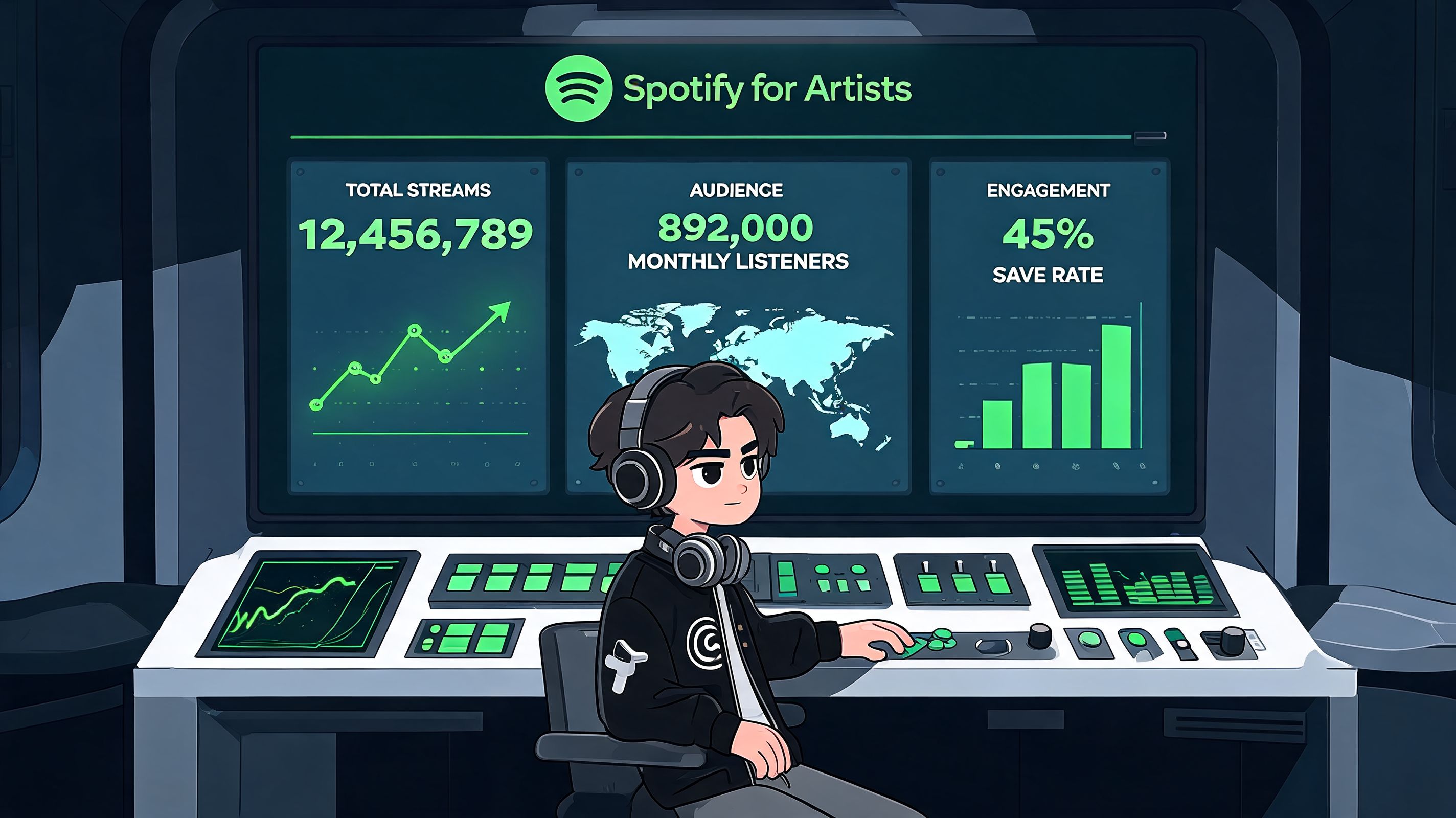
Claiming and verifying your profile gives you the blue check, access to analytics, and the ability to pitch music. It also makes available the metrics that matter when you're trying to improve performance: streams-per-listener ratio, saves rate, and skip rate. Updating Artist Pick regularly can lift streams on highlighted content by a reported 35%, according to MusicTeam's Spotify growth guide.
Make the profile look like a real campaign
A weak profile hurts every other tactic. If an editor, listener, or algorithm touches your page, they need context fast.
Focus on these basics:
- Write a bio with a point of view: Don't dump a résumé. Give Spotify and listeners a story they can place. If you need a starting framework, study these music bio examples for artists.
- Use strong images: Press photos should match the sound and release era. Random old live shots make the project feel unmanaged.
- Fill in every available asset: Concerts, featured playlists, social links, and updated release art all help the profile feel active.
A complete profile does two jobs at once. It gives human gatekeepers confidence, and it makes incoming traffic more likely to stick around.
Practical rule: If your profile looks abandoned, every promotion campaign gets less efficient.
Treat Artist Pick like front-of-store placement
Most artists set Artist Pick once and forget it. That's wasted real estate.
Use it to direct traffic to the release you need to train, a playlist that starts with your priority track, or a current campaign asset. If you're in a release window, don't make people guess what to click. Put the most impactful destination at the top.
There's also a sequencing issue here. If you're sending traffic from Instagram, TikTok, YouTube, email, or press, your Spotify page needs one clear next action. The profile shouldn't feel like an archive. It should feel like a guided path.
Read the dashboard like a manager, not a fan
Spotify for Artists isn't just a place to admire maps and stream totals. It's your command center.
Look at where streams come from. Look at which songs hold attention. Look at which markets show stronger repeat behavior. The artists who grow steadily aren't always the ones with the biggest launch day. They're the ones who notice patterns early and adjust.
If a song brings listeners in but they don't save it, that matters. If another track gets fewer listeners but better repeat behavior, that matters more than most artists realize. The profile setup is what allows you to spot those differences and act on them.
Master the Spotify Algorithm to Trigger Growth
Spotify does not reward attention. It rewards listener behavior that suggests real demand.
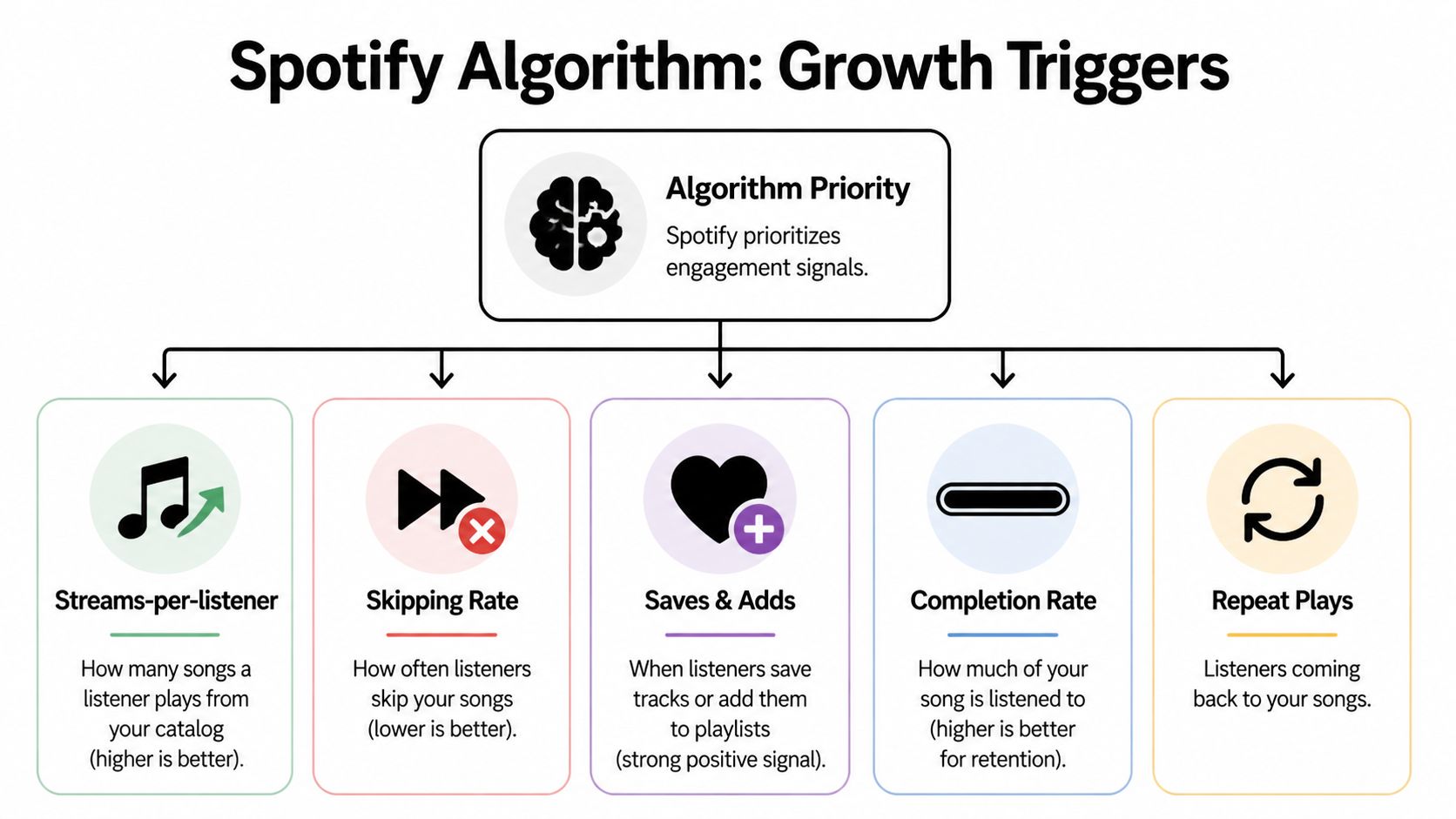
That distinction changes how growth works. A campaign that sends fewer people, but gets more saves, more replays, and more second-song listens, often outperforms a bigger traffic push that produces one stream and a fast exit. As noted in Artist Tools' Spotify tactics breakdown, streams-per-listener is one of the clearest indicators of whether your traffic is helping the algorithm trust the song.
The three numbers that matter
Plays alone can hide a weak campaign. These metrics do not.
| Metric | What it tells you | Healthy target |
|---|---|---|
| Streams-per-listener | Whether people replay the song and keep listening | Above 1.5 |
| Save rate | Whether the track earns a place in the listener's library | 10 to 15% |
| Skip rate | Whether the song loses the listener too early | Below 30% |
Here is the practical read. If 5,000 listeners generate 25,000 streams, that traffic is highly engaged. If 10,000 listeners generate 11,000 streams, reach looks better on paper, but listener intent is weaker. I would rather have the first campaign every time, because it gives Spotify stronger evidence that the song deserves more distribution.
What the algorithm is looking for
The platform is trying to answer a simple question. Do listeners care enough to come back?
These behaviors push that answer in the right direction:
- Saves: A save is one of the strongest signs that the track has staying power.
- Repeats: Replays tell Spotify the song held attention beyond a courtesy listen.
- Catalog depth: If people move from one song into another, the artist starts to look stickier, not just the track.
- Playlist adds: Adds can compound over time, especially if they come from real listener behavior instead of incentive traffic.
- Lower early skips: Strong songs often lose some listeners early. The problem starts when too many people leave before the track has a chance to work.
A lot of artists waste money buying traffic that can get a click, but cannot get a save. The stream count goes up for a minute, while streams-per-listener, save rate, and completion quality stay flat or get worse.
Good social promotion should send warmed-up listeners, not random ones. That is why a serious social media music promotion system has to do more than push people to a Spotify link. It should pre-frame the track, segment intent, and route fans in a way that improves the odds of a save, a replay, or a deeper catalog session once they arrive.
Optimize for return behavior, not cheap reach.
Why traffic quality changes algorithmic growth
The algorithm does not know whether a play came from a great fan funnel or a sloppy ad set. It only sees the outcome.
If off-platform traffic lands cold, skips fast, and disappears, Spotify treats that as weak demand. If that same traffic arrives with context, chooses the right song, and behaves like a fan, the platform has more reason to test the track in Radio, Autoplay, and personalized surfaces.
That is the connection many guides miss. Spotify growth is not only an on-platform job. Playlisting and algorithm signals improve faster when your off-platform funnel is built to send higher-intent listeners, then convert them into the exact actions Spotify values most.
Plan Your Release Cadence for Maximum Momentum
The old model was simple. Spend months making an album, disappear while you finish it, then ask the internet to care all at once.
That model still works for established artists with press pull and built-in audiences. For most independent acts, it wastes momentum. Spotify responds better when you give it repeated chances to learn who engages with your music and what songs deserve more distribution.
Stop treating the album as the first move
Singles are easier to market because each one gives you a fresh reason to talk, pitch, and redirect attention. Beyond that, each release becomes another data point. You learn which cover art earns clicks, which song intros hold attention, which collaborators widen the audience, and which markets respond fastest.
A practical release cadence usually looks like this:
- Lead with one strong single: Not the most sentimental track. The one that gets strangers to care.
- Follow with a second single that expands the story: Keep the aesthetic connected so the campaign feels coherent.
- Use the later release to pull traffic back to the earlier song: That's where catalog depth starts to matter.
- Package the campaign into an EP or album later: By then, the songs have context and audience data behind them.
This is why the waterfall strategy keeps showing up in serious release planning. The songs arrive one by one, but the campaign feels unified. Artwork can evolve across releases, captions can build a narrative arc, and listeners get multiple invitations to come back.
Momentum beats one-day impact
A single big drop creates a burst of attention. A sequence creates memory.
When listeners see your name repeatedly, hear multiple songs over time, and start recognizing the visual world around the project, they shift from passive awareness to active interest. That's the difference between "I heard that once" and "I'm following this artist now."
The platform learns from consistency. So do listeners.
There's another benefit. A staggered release schedule gives you room to improve. If the first single underperforms, you can adjust the second rollout. If one short-form content format works better than another, you can lean into it. If a playlist contact responds well, you have another song coming soon.
For artists comparing hub tools before they build out campaign infrastructure, this overview of link in bio tools for musicians is worth reviewing because your release cadence and your traffic destination need to work together.
What doesn't work
Two patterns fail over and over.
The first is disappearing between releases. When you go quiet for long stretches, each new campaign has to rebuild attention from scratch. The second is dumping too many songs at once without a clear priority track. That spreads saves, shares, and playlist pitching across the catalog when you need concentrated energy around one song at a time.
If you're serious about how to get more streams on spotify, think like a campaign manager. Your release schedule isn't just a calendar. It's the engine that keeps listeners returning.
The Art of Playlist Pitching and Network Building
Playlist growth often looks mysterious from the outside. It isn't magic. It's process, timing, and relationships.
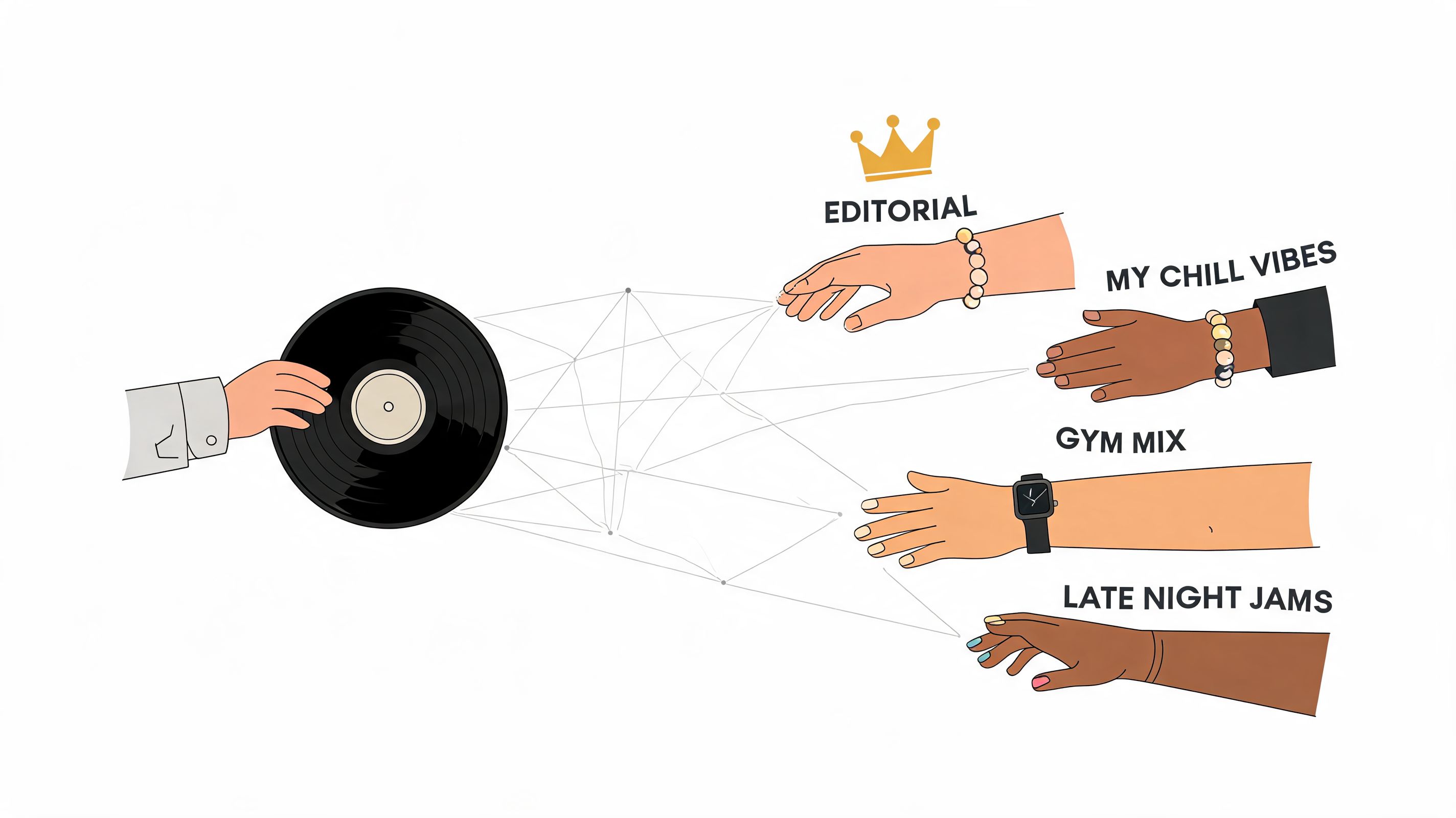
The first layer is official. Verified artists can pitch unreleased music through Spotify for Artists, and that access matters because playlists act as the "skeleton key" to growth. They drive discovery, and algorithmic playlists tend to reward the engagement patterns discussed earlier, including saves in the 10 to 15% range and streams-per-listener above 1.5, as noted in TuneCore's guide to first Spotify streams.
How a strong pitch actually gets made
Bad pitches read like form submissions. Good pitches help an editor place the song quickly.
That means being specific about the track's mood, genre lane, instrumentation, audience, and release story. If there's a real angle, state it plainly. If there isn't one, don't manufacture drama. Editors can smell fake urgency.
A solid submission usually includes:
- Clear genre positioning: Don't list every possible influence. Choose the lane the song fits.
- Useful context: Mention momentum, collaborators, or audience signals only if they help frame the release.
- A real release plan: If the team is lining up content, press, or creator support, say so without overselling it.
Give the pitch enough lead time that Spotify's team can evaluate it before release day. Last-minute uploads shrink your options.
User playlists are not the backup plan
Most artists chase editorial and ignore independent curators. That's a mistake.
User-generated playlists can introduce your track to listeners who actively save music, revisit playlists regularly, and branch into artist catalogs. Those listeners often produce better downstream behavior than shallow blasts from random promo pages.
Relationship building is the edge here. Don't spam curators with a generic link and a fire emoji. Follow what they program. Understand what fits. Refer to a specific playlist and a specific reason your song belongs there.
If you're promoting your own playlist as part of the campaign, this guide on how to share a Spotify playlist effectively helps tighten that piece of the system.
A useful breakdown of the submission mindset is below.
Build a network before you need a favor
The artists who get repeat support don't only appear when they have something to ask for. They stay visible.
That can mean sharing a curator's playlist when it's good, supporting other artists on the same lists, or just sending brief follow-ups that respect the person's time. Music relationships work like every other relationship. Relevance helps. Familiarity helps more.
Manager's note: A playlist contact is more likely to back your next release if the first interaction felt thoughtful and low-friction.
The practical goal isn't one lucky placement. It's a circle of curators, editors, and artists who recognize your name and trust your releases enough to give them a shot.
Using Paid Promotion to Fuel Organic Reach
Paid promotion helps when you use it to improve listener quality. It hurts when you use it to rent vanity.
That's the trade-off most artists miss. They treat ads like a substitute for demand when they should treat them like a way to accelerate the right behavior. On Spotify, native tools such as Marquee and Showcase are useful because they sit close to actual listening behavior. They can help push people into the exact moments that matter most: release awareness, active listening, saves, and repeat engagement.
Use paid spend to strengthen the algorithm loop
A good paid campaign doesn't end with a click. It starts there.
Think about the sequence:
- A listener sees a release promotion
- They enter Spotify with intent
- They stream, save, or return
- Spotify gets stronger evidence that the track deserves more distribution
That chain is why paid and organic aren't separate buckets. The best campaigns connect them. If your release has the right song, the right audience, and a profile built to convert, a small push can create the early signals that lead to broader recommendation later.
Marquee and Showcase have different jobs
Artists waste money when they point every paid tool at the same audience.
Use the tool based on the listener's relationship to the project:
| Tool | Best use case | What you're trying to stimulate |
|---|---|---|
| Marquee | Re-engaging people who already know the artist | Active streams from warmer listeners |
| Showcase | Introducing music to listeners likely to care | Discovery with stronger intent than cold social clicks |
Discipline matters. If a campaign sends weak-fit listeners into a song they don't finish, the ad didn't just fail to help. It may have introduced the wrong engagement pattern. That's why broad targeting and lazy creative are expensive mistakes.
For artists thinking more rigorously about paid campaigns, this breakdown of measurable growth strategies from UFO Performance Marketing is useful because it frames promotion as a system you can measure and improve, not a hope-based spend.
What to watch after launch
Once the campaign starts, don't stare at surface-level reach. Watch what happens after traffic lands.
You want signs that the paid audience behaves like future fans, not tourists. Are they returning to the track? Are they moving into the rest of the catalog? Are they finding the artist profile and interacting there? Are they coming from markets where engagement already looks healthy?
The answer won't always be "scale it." Sometimes the correct move is to shut off a weak audience fast and redirect energy toward the segment that's responding with better depth.
That mindset separates useful paid promotion from budget burn. You're not buying streams. You're buying a cleaner chance at the behaviors that lead to organic reach.
Centralize and Convert Traffic with Taap.bio
Most off-platform promotion breaks at the last step.
An artist posts a teaser, gets interest, sends people to a generic link page, and loses momentum because the destination asks the fan to do too much. Click again. Choose a platform. Search around. Decide what to play. Every extra step lowers the chance that casual interest turns into the kind of listening behavior Spotify values.
Build a page around listening behavior
A better link-in-bio setup acts like a controlled environment. Instead of listing platforms, build a page that invites the next best action.
One option is Taap.bio, which uses a modular grid and supports Spotify widgets with inline playback. For musicians, that matters because visitors can sample a track, view an album with tracklist, or see artist data without bouncing through a stack of pages first.
Set the page up like this:
- Put the priority track at the top: Make the current single the first thing a visitor can play.
- Add an artist block: If someone likes the song, they should be able to move toward your profile quickly.
- Feature a playlist block: This works well if you're driving people into a campaign playlist that starts with your release.
- Use supporting visual blocks carefully: Tour art, behind-the-scenes imagery, or a short loop can reinforce the era without distracting from the music.
Reduce friction or lose the stream
This is the connection most guides miss. Off-platform traffic isn't valuable just because it arrives. It's valuable when the destination encourages stronger on-platform outcomes.
If your page lets people preview the song, spot the latest release instantly, and move directly to the artist profile or playlist, you're more likely to generate meaningful actions instead of abandoned clicks. That's especially important when social traffic is inconsistent. You need every visit to do more.
The job of a bio link isn't to list your internet presence. It's to guide a fan into the action that matters now.
A page built this way also helps campaign coherence. Your visuals match the release. Your links support one objective. Your traffic doesn't get split across six competing priorities. That's how off-platform buzz becomes a cleaner input into Spotify performance.
Your System for Sustainable Spotify Growth
Spotify growth gets easier when you stop treating it like a series of isolated hacks.
The system is tighter than that. Build the profile first so every listener lands on a page that feels current and intentional. Train the platform with the signals that matter, not vanity spikes. Release music in a cadence that creates repeated opportunities for discovery. Pitch playlists like a professional, and build relationships that outlast one song. Use paid promotion to improve signal quality, not to buy hollow numbers. Then make sure every bit of outside attention lands in a destination designed to convert interest into actual listening behavior.
That's how artists stop guessing.
If you want more ideas on the broader marketing side, MyKaraoke Video's promotion guide is a useful complement because it looks at music promotion as an ongoing process, not a one-off launch checklist.
The hard truth is that there isn't one magic lever for how to get more streams on spotify. The good news is that you don't need one. You need a repeatable operating system. Once you have that, every release gets smarter, every campaign gets sharper, and every stream has a better chance of turning into a fan.
If you want a cleaner way to turn social traffic into Spotify plays, saves, and profile visits, build a musician-focused page with taap.bio and structure it around the release you need people to hear right now.