Profitability doesn't start with a high price. It starts with a product model that matches your audience, your distribution, and the amount of work each sale creates. Digital files can carry unusually high gross margins because creators make them once and sell them repeatedly without inventory, shipping, or manufacturing costs. Industry summaries commonly place downloads and templates at 80–95% gross margins, and courses at 85–97%, as outlined in this digital product margin analysis.
That advantage doesn't make every digital product profitable. One 2026 analysis of 146,000 Gumroad products tracked $206 million in revenue and found that 99.5% went to the top 1% of sellers, while 68% of products made fewer than 10 lifetime sales. The lesson is direct: demand, audience access, positioning, and conversion matter more than just choosing a digital format.
This ranking weighs scalability, margin, recurring revenue, production effort, support burden, audience fit, and storefront suitability. A single taap.bio creator store can connect discovery, email capture, checkout, digital delivery, paid bookings, rich media, and analytics on one page. That reduces redirects and tool sprawl, which matters when you're trying to protect margin and learn what buyers actually want.
Table of contents
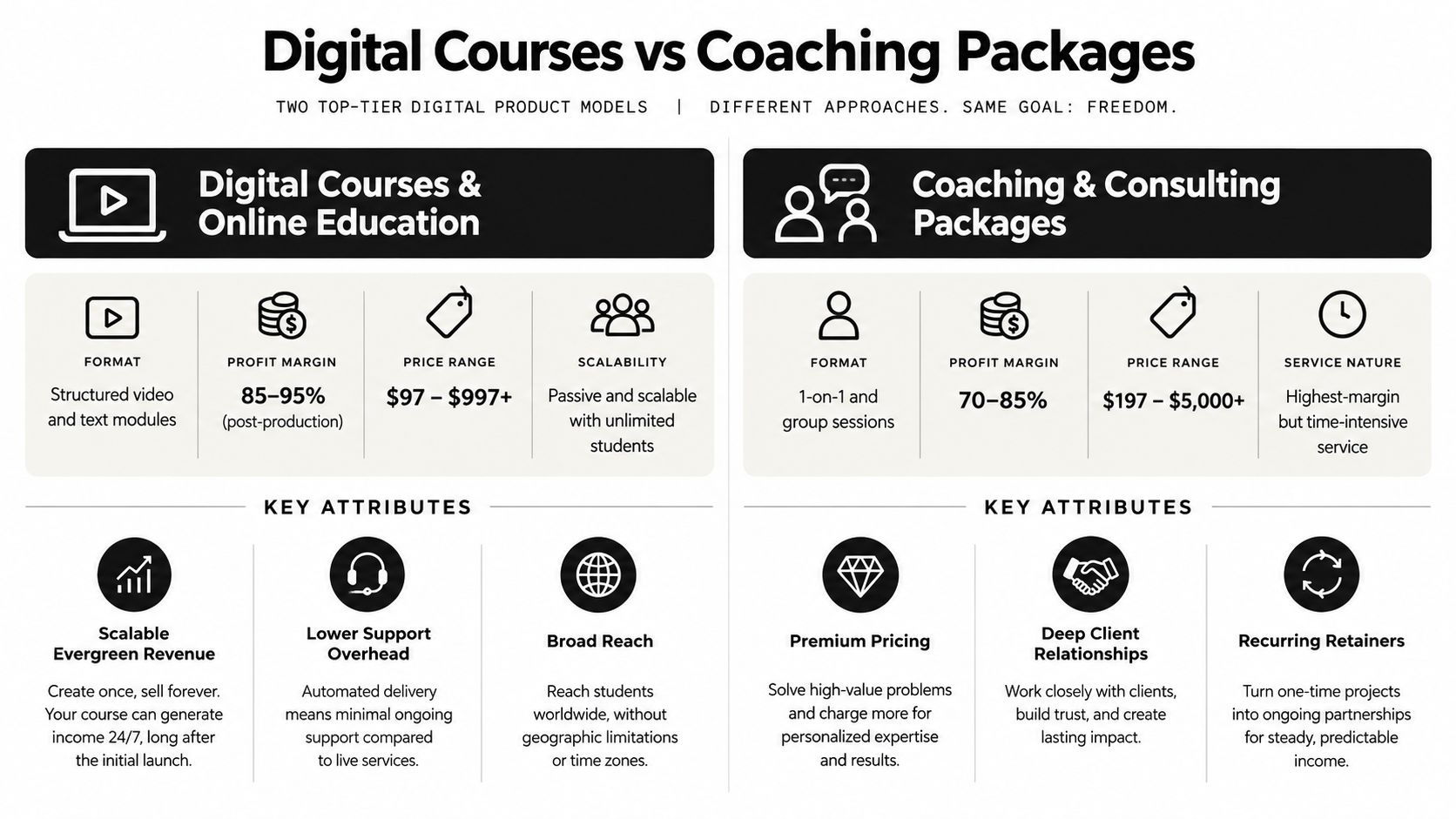
1. Digital Courses and Online Education
Courses rank near the top because they turn expertise into a repeatable asset. A well-designed program can serve many students without repeating the full teaching process for every buyer, while a cohort or support layer can raise perceived value without requiring a completely new product.
The strongest courses solve a specific, expensive problem. “Learn marketing” is weak positioning. “Build a repeatable client acquisition system for freelance designers” gives the buyer a clear audience, problem, and outcome. Buyers aren't paying for hours of video. They're paying for a shorter path to a result, a structured sequence, and fewer avoidable mistakes.
Learn more about choosing an online course platform before you decide whether your offer needs video hosting, gated modules, payments, or live sessions. A taap.bio page can capture interest before launch, route buyers to checkout, and connect the course offer with related downloads or bookings.
Make the course easier to buy
Start with a narrow promise and a free introductory lesson. That preview should demonstrate your teaching quality and show the buyer what changes after implementation. Add worksheets, checklists, or templates so students leave with something they can use, not just something they watched.
A hybrid offer often works better than a video library alone. Combine self-paced lessons with group calls, office hours, or feedback. That gives you a higher-value tier while keeping the core material reusable.
Practical rule: Price the transformation, not the recording time. A course that helps a buyer solve a costly business problem can justify a premium position when the promise, proof, and delivery are credible.
Record lessons in batches, keep modules focused, and repurpose selected teaching into public content. If you need polished promotional material, Nereo's course promo generator can support the launch content workflow.
2. Software Tools, Plugins, and SaaS Solutions
Software has the highest long-term ceiling on this list because it can combine repeat usage, recurring billing, and strong workflow dependence. A focused browser extension, WordPress plugin, Figma plugin, or micro-SaaS tool can become part of a customer's daily operation.
The trade-off is substantial. Development, testing, security, support, bug fixes, onboarding, and compatibility updates create a continuing obligation. Unlike a template, software doesn't become finished when the first version ships. The product must keep working as the surrounding platforms change.
Choose a narrow operational problem rather than trying to build a general-purpose platform. A tool that automates one repetitive task for a clearly defined professional audience is easier to explain, validate, and support than a broad product with dozens of loosely connected features.
Build for retention, not downloads
A useful SaaS product saves time, reduces errors, increases revenue, or removes friction from a recurring workflow. Those benefits support subscriptions because customers keep paying while the product remains embedded in their process.
Before committing to development, test the problem with a waitlist, a manual service, or a lightweight prototype. Ask prospective users what they currently do, what breaks, and what they already pay for. A technically impressive tool without a painful use case won't become a profitable product.
Use a storefront page to collect leads, explain the use case, embed a demonstration, and send qualified prospects into a purchase or booking flow. This creator tools guide can help you think through the wider operating stack. For creative production audiences, you can also study music video tool recommendations when evaluating adjacent software niches.
3. Membership Sites and Exclusive Communities
Memberships create recurring revenue by selling continued access rather than a single file. The product is a combination of content, accountability, relationships, access, and belonging. That makes community quality more important than the number of resources inside the library.
A paid group needs a defined member and a concrete reason to return. “A community for entrepreneurs” is too broad. “A private community for freelance coaches building a referral pipeline” gives members a more obvious reason to join and participate.
Recurring revenue only works when members continue receiving value. A resource archive can attract signups, but live interaction often drives retention. Weekly office hours, expert sessions, peer reviews, or structured challenges give people a reason to open the community again.
Design the first month carefully
The onboarding period determines whether a new member becomes active or disappears. Give every new member a clear first action, introduce them to relevant people, and show where to find the most useful resources. A welcome video, an introduction prompt, and a simple orientation path can remove early uncertainty.
You can offer different access levels, but don't create tiers that confuse buyers. A standard membership might provide the community and resource library. A higher tier can include feedback, small-group sessions, or limited personal access.
Use taap.bio to present the membership promise, capture an email address, and connect payment without sending prospective members across multiple pages. The guide to creating a membership site covers the structural decisions that affect delivery.
Run a referral program only when you can track whether referred members stay engaged. A discount attracts attention, but the community earns renewals through useful conversations, practical resources, and visible member progress.
4. Coaching and Consulting Packages
Coaching ranks high for revenue per customer but lower for scalability because delivery depends on your time. It is often the fastest way to monetize expertise, especially when your audience has a painful problem and wants direct guidance rather than another self-paced resource.
The best offer is a defined package, not an open-ended promise to “help with strategy.” Specify the problem, the process, the number of sessions, the communication channel, and the result the client should work toward. A copy review, launch planning package, sales system audit, or positioning intensive is easier to sell than general consulting.
Protect your calendar
Use a booking page that collects payment before the call. That removes back-and-forth scheduling and filters out people who want free advice. An application form can help you assess fit, identify the client's current situation, and prepare a more useful session.
The guide to selling coaching online explains how a creator storefront can support bookings and payment in one flow. On taap.bio, a paid booking can sit beside a course, template, or email signup, which makes it easier to build a value ladder without adding another scheduling system.
Offer clear levels of access:
- Focused session: One defined outcome, such as an audit or action plan.
- Implementation package: Several sessions with between-call support.
- Group program: Shared instruction and accountability for multiple clients.
- Ongoing advisory: A recurring relationship for clients who need continued decisions or review.
Don't let coaching become an unpriced support inbox. Every access channel should have a boundary, a response expectation, and a price.
Record recurring explanations and turn them into lessons, templates, or a knowledge base. That won't eliminate the service component, but it can reduce repeated teaching and create a scalable product from your most common client questions.

5. Templates and Downloadable Resources
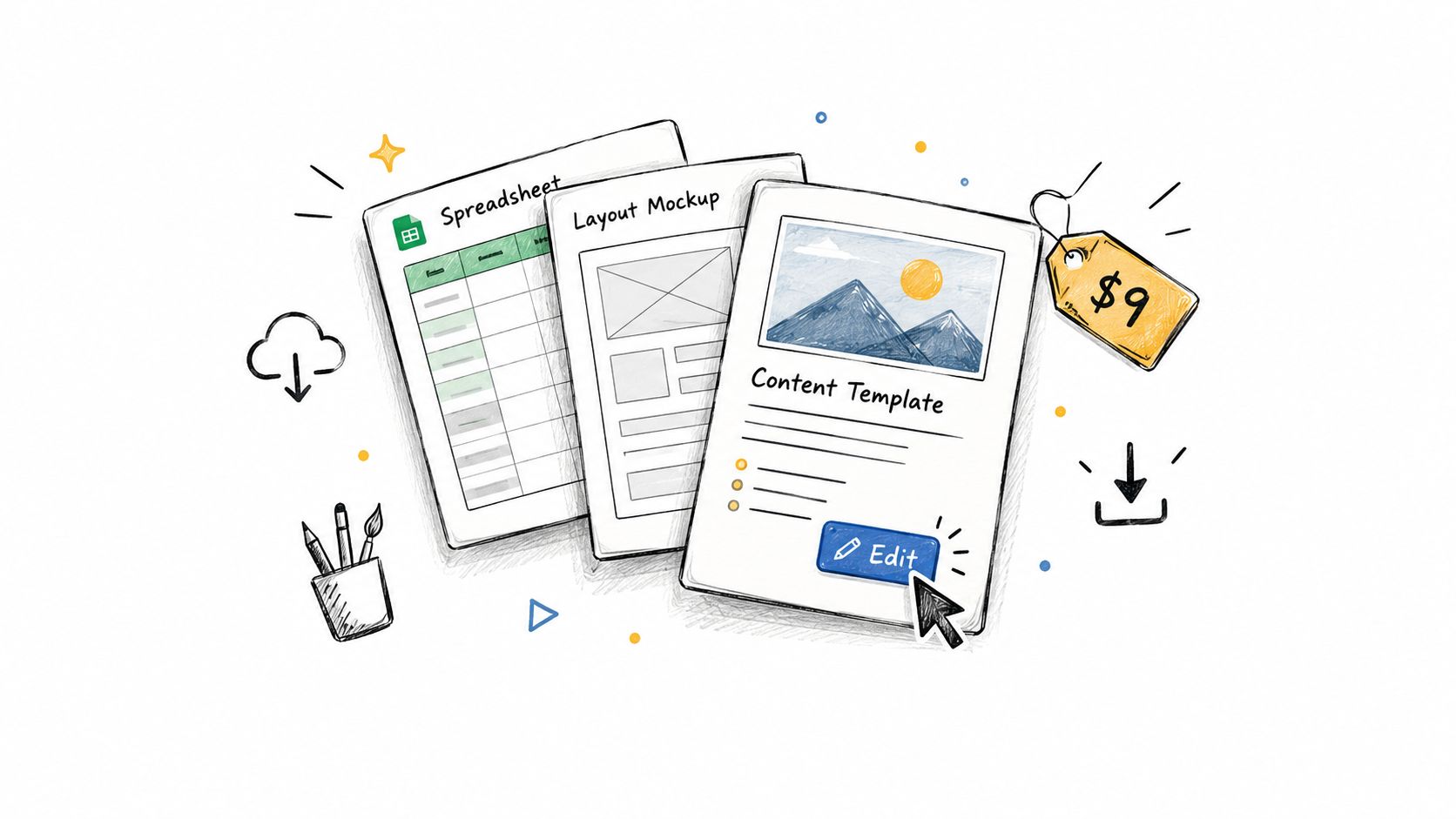
Templates are the strongest starting point for creators who want to launch quickly. They require less production than courses or software, deliver instantly, and can solve a narrow task with a clear before-and-after benefit.
The category includes Canva packs, Notion systems, spreadsheets, Figma files, presentation decks, email sequences, client documents, and workflow resources. The format matters less than the job it completes. “Instagram templates” is a crowded description. “Instagram carousel templates for independent nutrition coaches” is easier to position.
Templates usually depend on distribution volume, so your audience and acquisition costs matter. A low-priced file can retain a strong gross margin, but support requests, platform fees, refunds, and paid promotion can change the net result.
Sell a system, not a blank file
Add a short setup video, a filled-in example, and clear instructions. Buyers pay more readily when they can see how the resource fits into their workflow. A template that looks attractive but takes hours to understand creates support work and poor reviews.
Use a free sample to grow your email list, then offer a bundle that solves a complete workflow. A content calendar, caption prompts, and editable post designs are more valuable together than as disconnected files.
The guide to selling Canva templates can help you structure the offer and delivery. taap.bio supports digital checkout and automatic file delivery, so the buyer can purchase and access the resource without manual fulfillment.
Show a comparison image, explain the license, and state what software the buyer needs. Those details reduce pre-purchase questions and make the product page do more of the selling.
6. Email Newsletters and Membership Communities
Paid newsletters combine recurring revenue with a direct relationship that isn't dependent on social platform reach. The product can include analysis, curated opportunities, research, commentary, templates, interviews, or access to a private discussion space.
Start with a free edition if you don't yet know what readers value. Free publishing gives you a way to test topics, tone, and consistency before asking people to pay. The paid version should offer a clear upgrade, not just more words.
The strongest paid newsletters usually have a defined reader and a repeatable editorial promise. A weekly briefing for independent designers, a research digest for a specific industry, or a practical report for local business owners is easier to sustain than a general personal newsletter.
Build the paid layer around utility
Use a free tier to attract subscribers and a paid tier to deliver the highest-value material. The paid offer might include deep analysis, a searchable archive, office hours, templates, or member-only discussions. Make the difference obvious on the signup page.
taap.bio's email widget can capture subscribers from a link-in-bio page, while product blocks can present the paid offer and related downloads. Exportable contacts also give you a portable audience rather than leaving every relationship inside a social platform.
Keep production sustainable. Publish on a schedule you can maintain, reuse research across formats, and invite specialists when a collaboration improves the issue. Don't promise daily access if your real strength is a thoughtful weekly briefing.
A newsletter also works well as the top of a value ladder. Free articles build trust, a paid subscription creates recurring revenue, and courses, consulting, or software can serve readers who need a deeper solution.
7. Digital Music, Samples, and Audio Products
Audio products suit creators who can produce distinctive material and reach a repeat-buying audience. The category includes beats, loops, sound effects, sample packs, presets, podcast intros, production files, and original music licenses.
The commercial advantage is reuse. A producer can sell the same pack repeatedly, while customers may return for a new sound, a complementary genre, or a different license. The main risks are differentiation and rights management. Generic audio competes on price, while uncleared samples can create serious customer problems.
Organize around a use case
A themed pack is easier to buy than a random collection. Build around a genre, mood, production workflow, or creator type. “Lo-fi percussion for short-form video” tells the customer what they'll receive and where it fits.
Use license tiers that explain personal use, commercial use, attribution, modification, and resale rights. Buyers shouldn't have to interpret complicated legal language before checkout. Include file formats, compatibility information, track lengths, and a clear preview.
Offer a free sample that demonstrates quality. Tutorials on YouTube can show how the sounds work in a real project, which sells the workflow rather than just the files. Bundling audio with project files or production lessons can increase perceived value without requiring a separate audience.
A taap.bio page can place audio previews, product checkout, email signup, and related bookings together. That gives producers a direct sales route and a way to notify listeners when a new pack is released.
8. Photography, Stock Assets, and Design Files
Photography and design assets sell when they reduce production time or give buyers a visual style they can't easily create themselves. Products include stock images, Lightroom presets, Photoshop brushes, Figma systems, mockups, textures, icons, and curated asset libraries.
This category is highly visual, so the product page must show the asset in use. A preset needs before-and-after examples. A Figma system needs screen previews and component details. A stock collection needs enough representative images for the buyer to assess relevance before purchase.
Choose a recognizable niche
Start with one focused collection rather than a huge general library. “Moody dark presets for travel photographers” communicates more than “professional photo presets.” A design system for independent SaaS teams is more commercially specific than a general UI kit.
Recurring access can work when you add useful assets on a consistent schedule. If you can't maintain a library, sell a focused bundle and support it with tutorials, usage examples, or updates.
Avoid competing only on volume. Generative tools and large marketplaces make generic assets easier to replace. Your advantage should come from a distinctive visual direction, specialized subject access, expert workflow, or unusually complete documentation.
Use taap.bio to sell the collection directly, collect emails from free samples, and embed a demonstration video on the same page. Joint packs with complementary photographers or designers can also introduce the product to a better-matched audience.

9. Webinars and Live Training Events
Webinars are less attractive as standalone products than as a conversion mechanism. A live session can demonstrate your expertise, answer objections, collect qualified email leads, and move the right buyers toward a course, coaching package, or software offer.
The event needs a specific problem-based promise. “Online business training” is forgettable. “How to build a repeatable referral process for a solo consultancy” gives the audience a reason to register and a clear expectation for the session.
Live delivery creates urgency because participants have a scheduled experience. Evergreen recordings can extend the asset's life, but they need a strong structure, clear calls to action, and an honest description of what is and isn't included.
Use the event to qualify demand
Require an email address for registration and ask one or two useful questions. The answers can shape the presentation and reveal whether attendees are ready for a paid solution. Follow up with the recording, key resources, and one next step.
Don't overload the session with theory. Teach one useful method, show the process, and explain where implementation becomes more complex. A clear offer at the end should match the problem you solved during the training.
Host registration and the post-event recording on a taap.bio page. You can place the video, signup form, related download, and booking option together. Repurpose the presentation into short videos, an article, or an email sequence, but keep each version focused on one useful idea.
Paid live workshops can work when the audience already trusts you. If your reach is still developing, use a free event to test the topic and build a list before turning the format into a paid training product.
10. Ebooks and Digital Guides
Ebooks are the simplest product on this list for writers, researchers, and specialists with a clear framework. They have low delivery costs and can serve as a paid product, a lead magnet, or the foundation for a larger course or consulting offer.
The weakness is commoditization. Information alone is easy to compare, and broad topics compete with free articles, videos, and generic summaries. A guide becomes more valuable when it helps the reader make a decision, complete a process, or avoid a costly mistake.
Turn reading into implementation
Lead with a distinct method rather than a broad subject. A practical guide should include checklists, worksheets, examples, decision rules, and templates. Those additions turn a document into a tool the buyer can use.
You can publish a free opening chapter or short version to demonstrate your approach. A paid edition should make the upgrade clear through deeper instruction, implementation resources, or a complete framework. An audio summary can also serve readers who prefer listening and gives you another way to promote the product.
taap.bio can deliver the file after checkout while capturing email subscribers for future guides, courses, or consulting. Use a strong product preview, explain the intended reader, and state exactly what the buyer will be able to do after finishing it.
The best ebook doesn't try to answer everything. It gives one audience a reliable way to solve one meaningful problem.
A guide can also become the entry product in a broader offer ladder. Buyers who finish it may want a template bundle, a live workshop, a course, or a paid advisory package. That makes the ebook more useful than its standalone sales suggest.
Top 10 Most Profitable Digital Products, Comparison
| Product/Model | Implementation & Complexity 🔄 | Resource Requirements ⚡ | Expected Outcomes 📊 | Ideal Use Cases 💡 | Key Advantages ⭐ |
|---|---|---|---|---|---|
| Digital Courses and Online Education | High upfront content production; LMS setup and marketing | Video gear, editing time, platform/LMS, launch budget | Scalable passive revenue; authority and course sales | Skill training, credentialing, evergreen funnels | High margins; scalable to unlimited students |
| Software Tools, Plugins, and SaaS Solutions | Very high, dev, security, maintenance, compliance | Dev team or contractors, infra, support, marketing spend | Recurring high LTV, sticky users, venture potential | Workflow automation, platform integrations, developer tools | Exceptional scalability; network effects; high margins |
| Membership Sites and Exclusive Communities | Medium–high, ongoing management and moderation | Community manager, content cadence, platform fees | Recurring revenue with strong retention and network effects | Niche peer networks, ongoing coaching cohorts | High retention; upsell opportunities; community value |
| Coaching and Consulting Packages | Medium, scheduling, tailored delivery, client management | Expert time, booking tools, admin/support | High-ticket revenue; strong client outcomes and case studies | Personalized strategy, high-touch transformation | Premium pricing; deep client relationships; proof of results |
| Templates and Downloadable Resources | Low, design and packaging; instant delivery | Design skills or freelancer, hosting/delivery setup | Fast launches; low-price sales; high margin per unit | Quick-start assets (social, docs, Notion, Figma) | Very fast to market; near-zero marginal cost |
| Email Newsletters and Paid Newsletters | Low–medium, consistent content cadence required | Writing time, email platform, list-building tools | Predictable recurring revenue; owned audience | Insider analysis, recurring insights, funnel to products | High margins; direct audience control; strong retention |
| Digital Music, Samples, and Audio Products | Medium, production quality and licensing considerations | DAW, production skills, mastering, distribution channels | Scalable one-time sales + subscriptions + licensing | Producers, content creators needing royalty-free audio | Repeat purchases; multiple monetization channels |
| Photography, Stock Assets, and Design Files | Medium, creation, curation, and catalog maintenance | Camera/design tools, editing, asset hosting | Passive asset sales, subscription library revenue | Designers, marketers, content creators needing visuals | High margins; recurring subscriptions; specialist value |
| Webinars and Live Training Events | Medium, live skills, tech stack, and follow-up sequences | Webinar platform, slides, promo budget, email sequences | Strong list-building and high conversion to paid offers | Product launches, demos, live workshops | High conversion rates; creates urgency and trust |
| Ebooks and Digital Guides | Low, writing, editing, and formatting | Writing/editing time, cover design, distribution | Lead magnets or low-priced sales; quick production | Thought leadership, funnels, niche how-to guides | Very low cost to produce; high margin and speed to market |
Match the Product to Your Leverage
The most profitable digital products aren't automatically the ones with the highest price or the most impressive technology. They are the products whose economics fit the creator's actual reach and resources. If you have a small audience and limited production time, a focused template or guide can be more profitable than a premium course that takes months to build. If you have expertise, proof, and a defined buyer problem, coaching can generate revenue quickly while you develop a scalable course.
Use this decision path:
- Choose templates or an ebook for speed: These formats let you test a problem, message, and price without building a large system. Keep the audience narrow and include implementation resources so the offer isn't just another downloadable file.
- Choose courses for scalable expertise: Courses work when you can teach a repeatable method and support the buyer's path to an outcome. Add live elements only when they improve results or justify a higher-value tier.
- Choose assets for repeat purchases: Audio packs, presets, design files, and stock collections suit audiences that buy based on style, workflow, or ongoing production needs. Distinctiveness matters more than sheer volume.
- Choose memberships or newsletters for recurring revenue: These models need a reliable publishing or engagement cadence. Don't launch a subscription until you can explain why members will return and what they'll receive after the first month.
- Choose software for the largest long-term upside: Software can create recurring revenue and deep customer dependence, but it demands the greatest investment in development and support. Validate the problem before writing a large codebase.
- Choose coaching when trust is your strongest asset: Coaching monetizes expertise quickly and creates direct customer insight. Document repeated questions so the service gradually produces templates, lessons, and systems.
The distribution pattern matters as much as the product. One 2026 analysis found that niche-level average product revenue differed substantially, with software development reported at $60K, writing and publishing at $15.7K, and fitness and health at $11K. Those figures describe observed product revenue in that analysis, not a forecast for an individual creator, but they reinforce the importance of niche fit and buyer value. You can review the guide to testing digital product UX before launch, especially if your offer relies on checkout clarity, onboarding, or repeated use.
Don't build all ten products at once. Start with one focused offer and define its buyer, problem, promise, delivery method, support boundary, and next step. Then put it on a taap.bio page with a clear call to action, email capture, checkout or booking flow, and analytics. Let real behavior guide expansion into bundles, subscriptions, events, or services.
The economics become stronger when the products connect. A free guide can grow your list. A template can qualify buyers. A course can teach the method. Coaching can serve customers who need personalization. Software can become the recurring utility layer. This sequence gives you several ways to increase customer value without constantly finding an entirely new audience.
Above all, measure net profitability rather than gross margin. Payment processing, refunds, acquisition costs, support time, updates, and platform fees all affect what you keep. A lower-priced product with instant delivery may outperform a premium product that requires constant calls. A membership may generate recurring revenue but still lose money if churn and support consume your time. A course may have excellent margins but underperform if the audience doesn't trust the promise.
The practical next move is simple. Pick the product format that matches your current resources, publish a narrow offer page, collect qualified emails, and ask for a real purchase or booking before expanding the product. Demand should determine the next version, not enthusiasm for the idea.
taap.bio gives creators a single page for digital product checkout, automatic file delivery, paid bookings, email capture, rich media, and per-widget analytics. Build one focused offer, connect the right sales or booking flow, and visit taap.bio to turn your link-in-bio traffic into a direct customer path.