
The wrong advice on gumroad alternatives is to start with features and hope the best-looking dashboard wins. It doesn't. The right choice depends on what you sell, who handles tax compliance, how much storefront control you need, and whether your business runs on courses, bookings, email capture, software licensing, or a simple digital checkout.
That's why the best replacement for one creator can be the wrong move for another. A link-in-bio seller needs a different workflow than a software founder, and a course business needs different rails than someone shipping downloads from Instagram. If you want a revenue-first page that keeps selling, bookings, and email capture in one place, taap.bio stands out as the strongest fit for creators who live on mobile traffic, especially compared with the more segmented options in this list. For context on the broader digital-product market, see this guide to selling digital products online.
Table of contents
1. taap.bio
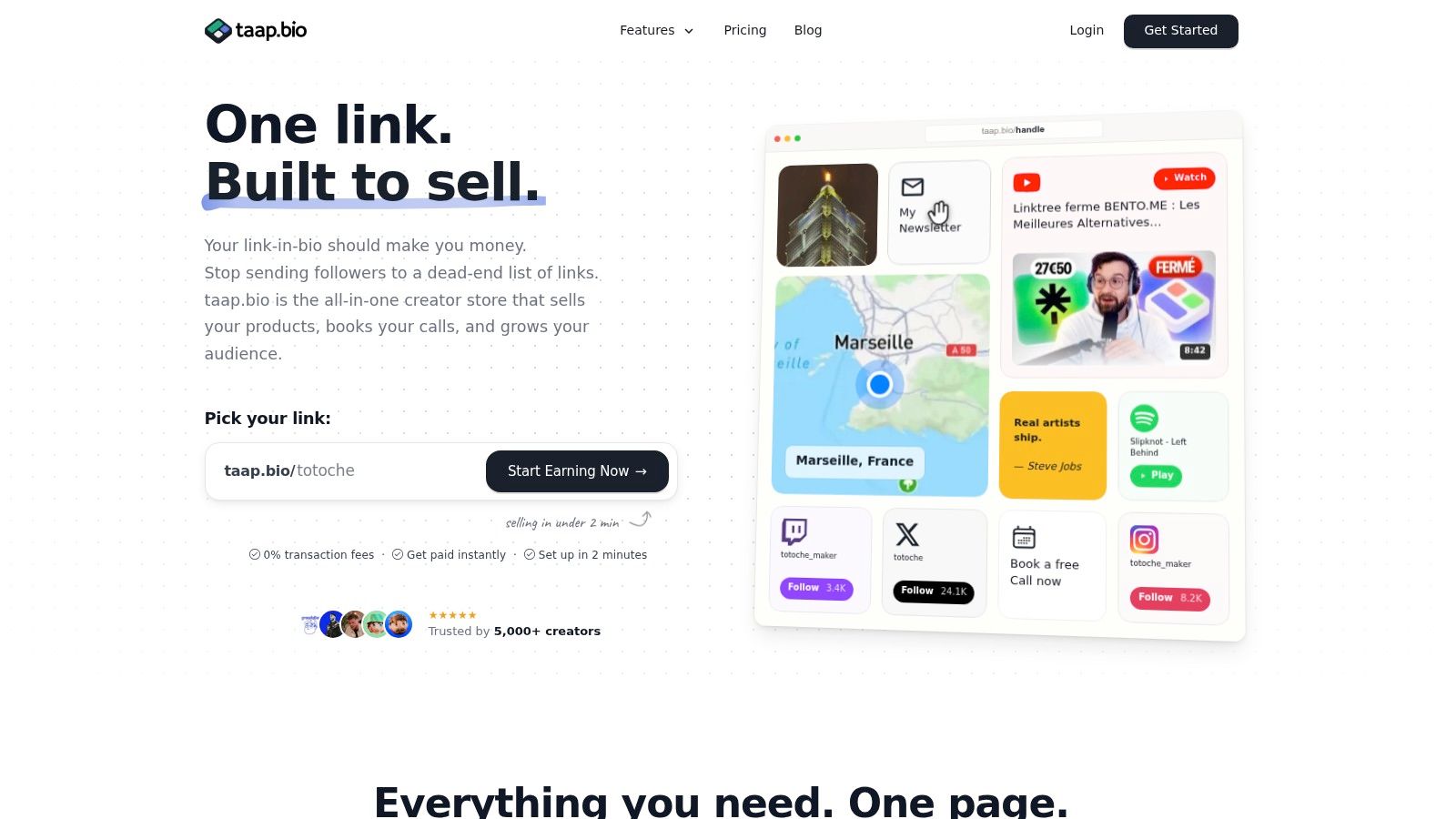
taap.bio is the cleanest answer for creators who want one mobile-first page to do real work, not just send people somewhere else. It replaces the usual stack of Linktree, Gumroad, Calendly, Mailchimp, Squarespace, and Plausible with a single bento-style page that can sell products, take paid bookings, and capture emails without forcing visitors through extra redirects. You can get a page live fast, and the format is built for social traffic that arrives from Instagram, TikTok, YouTube, or a profile link.
Why it wins for link-in-bio monetization
The workflow replacement matters here. taap.bio handles instant digital delivery, paid on-page bookings, one-tap email capture, and real-time per-widget analytics from the same page, so creators can see what earns without bolting on third-party scripts or cookie banners by default. It's also positioned as GDPR-friendly, hosted in France, and the site describes it as ISO 27001 certified and aligned with SecNumCloud foundations.
Practical rule: if your traffic starts on a social profile, optimize for fewer clicks, not more features.
The pricing model is straightforward, with a 14-day free trial and a subscription listed at $19/month after trial on the site, though regional pricing can vary. The platform also advertises 0% platform fees on sales, so the economics are simple for low-ticket offers and quick bookings.
For creators who want a broader view of how link-in-bio tools fit into a selling system, taap.bio also publishes a useful breakdown on link-in-bio tools. That matters because the decision is not “storefront or no storefront,” it's whether the page converts attention into money and owned audience data on the same screen.
2. Lemon Squeezy
Lemon Squeezy is the right pick when your main problem is tax compliance and software licensing, not storefront aesthetics. It works best for digital products and software sellers who want a merchant-of-record structure to handle the messy cross-border side of sales while they focus on product and retention. If your buyers are spread across regions and you'd rather not manage tax logic yourself, this is the platform in this list that addresses that burden most directly.

Best for software and subscription logic
The standout workflow replacement is merchant-of-record checkout. Lemon Squeezy is built for subscriptions, usage-based billing, per-seat billing, license keys, and a hosted storefront, which makes it a much cleaner fit than a general creator shop for SaaS and downloadable software. If you need a platform that can issue and manage licenses while reducing tax overhead, this is the most operationally complete option in that lane.
When tax responsibility is the bottleneck, don't optimize for store design first. Optimize for compliance and billing control.
The trade-off is simple. The convenience that comes with MoR handling is worth paying for if your business crosses borders or sells software, but it's not the cheapest path for every sale. For creators whose products are simple downloads and whose tax setup is already handled elsewhere, the extra layer may be more platform than they need.
3. Payhip
Payhip is the simplest all-purpose choice for creators selling downloads, courses, memberships, coaching, and physical items without wanting a heavy setup. It's the closest thing to a plain-English storefront in this list, and it suits sellers who want to get moving quickly without turning their business into a custom tech project. If your offer mix is broad but not overly complex, Payhip is a practical middle ground.
Broad creator workflow, low setup friction
The workflow it replaces is the classic “simple store plus delivery plus basic membership” stack. Payhip includes drip lessons, certificates, bundles, and member-only content, so it covers more than one-time file delivery. It also supports EU and UK VAT collection and remittance plus U.S. and Canadian sales-tax tools, which keeps admin lighter for many smaller sellers.
The key trade-off is control. Payhip is easy to launch and keeps the feature set broad, but it's not a merchant-of-record platform, so tax responsibility doesn't disappear outside the VAT support it provides. That makes it a better fit for creators who want speed and clarity, not a deeper compliance layer.
Recommendation: choose Payhip when you want one storefront for multiple creator offers and you care more about launch speed than deep customization.
Its biggest strength is that the platform doesn't force you to specialize too early. If you're still testing downloads, courses, and light memberships at the same time, Payhip gives you one place to prove demand before you split your business into separate systems.
4. Sellfy
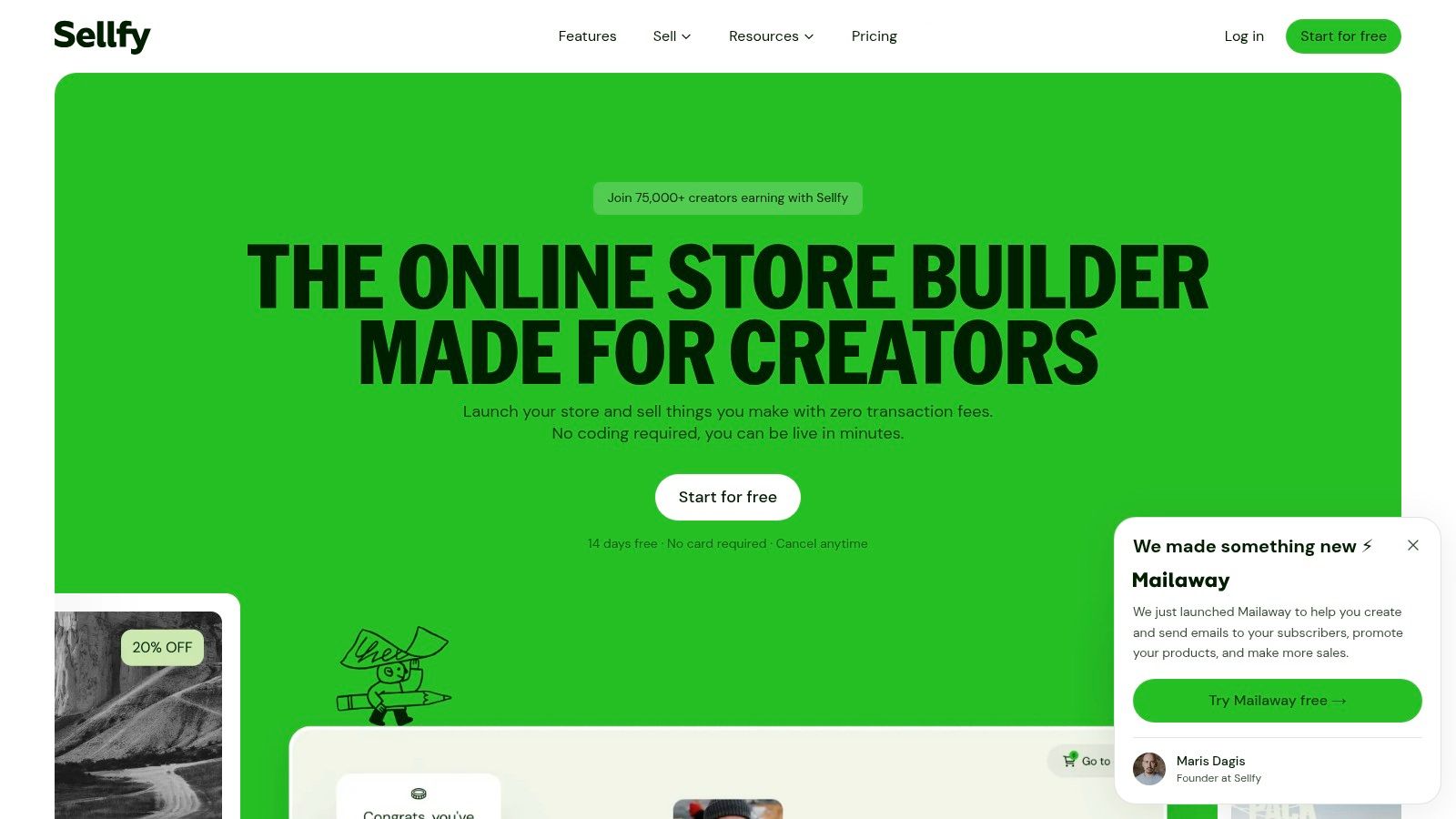
Sellfy is the best choice for creators who want digital products and print-on-demand merch in one place. That's a very specific workflow, and it's the reason to pick it. If your store needs both files and physical branded items, Sellfy removes the need to stitch together a digital-delivery tool and a merch fulfillment stack.
Best for merch plus downloads
The replacement here is the “sell something digital today, sell merch tomorrow” workflow. Sellfy combines secure digital delivery, automated emails, and a native print-on-demand catalog with worldwide fulfillment, so creators don't need separate tools for each offer type. It also markets 0% platform transaction fees, which makes its economics easy to understand before processor fees.
That simplicity comes with a boundary. Sellfy is strong for lean creator commerce, but its email and marketing features are basic compared with dedicated tools. If your business depends on heavier funnels or complex segmentation, you'll outgrow the native stack faster.
For creators who want a brand store without a lot of technical overhead, it's a smart choice. For creators whose business is becoming a content platform or course business, it's usually a bridge, not an endpoint.
5. Podia
Podia is built for creators who want courses, communities, downloads, coaching, events, site, and email in one connected workflow. It's the right move when the replacement you need is not just Gumroad, it's a pile of disconnected tools around course delivery and customer management. If your audience pays for access, learning, or ongoing interaction, Podia is a sensible consolidation play.
Better for course and membership businesses
The platform replaces the “store plus LMS plus community plus basic site” setup. Podia supports drip courses, quizzes, bundles, upsells, and a built-in community, which makes it a better fit for teaching businesses than a pure download store. It also includes migration help, which matters when a creator is already bringing products and subscribers over from elsewhere.
The trade-off is that deeper automation and analytics may still need outside tools. Podia keeps the customer experience clean, but if your growth strategy depends on complex funnels or advanced segmentation, you may want more specialized marketing software later.
Direct takeaway: Podia works best when the product is the relationship, not just the file.
The entry plan also includes a 5% platform fee, with the fee removable on higher tiers. That makes pricing an important part of the decision, especially if your business is already producing steady sales and you're comparing platform economics instead of just convenience.
6. SendOwl
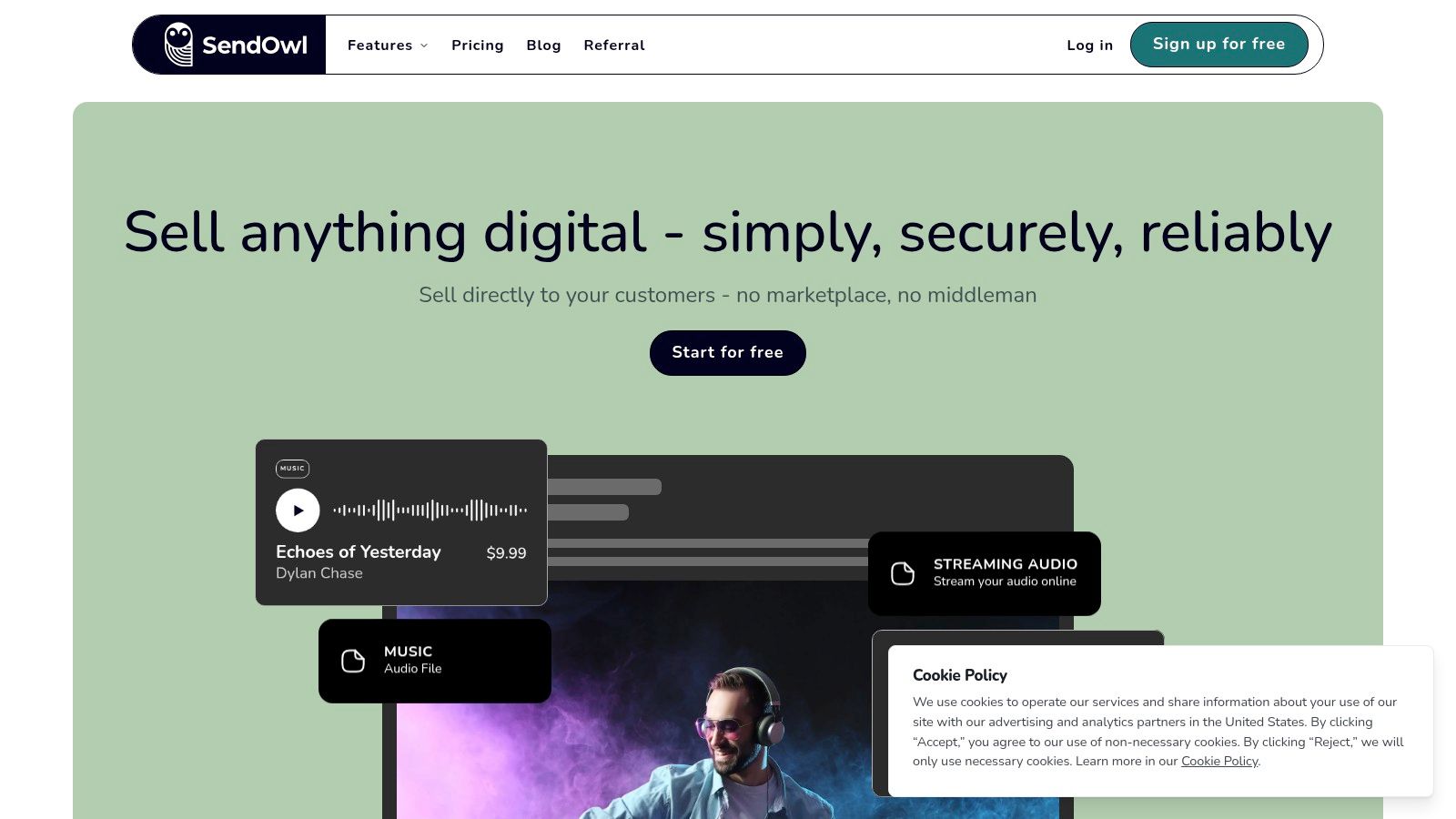
SendOwl is for creators who want secure digital delivery, subscriptions, dripped content, and license-code distribution without rebuilding a whole website. It's a strong fit for sellers who already have a site and just need the commerce layer to be tight, dependable, and easy to embed. If you care more about delivery mechanics than storefront branding, SendOwl deserves a look.
Best when the website already exists
The workflow replacement is the embedded digital delivery stack. SendOwl gives you PDF stamping, throttled access, license keys, and a lightweight storefront, so it's useful for software-adjacent products, paid files, and subscription access. It's especially practical if you want to sell from an existing site instead of moving your entire business to a new platform.
The main limitation is straightforward. SendOwl isn't a merchant-of-record service, so most tax responsibility stays with the seller, and very large files or high volume can trigger bandwidth overages. That makes it a better fit for experienced operators who already know their delivery patterns and tax setup.
For creators who want to keep checkout embedded in their own site, there's a practical guide on instant digital delivery that shows how this type of workflow should feel. SendOwl is strongest when delivery is the core requirement and branding is already solved somewhere else.
7. Shopify
Shopify is the right choice if you are building a full ecommerce system, not a simple creator checkout. It sells digital products through the free Digital Downloads app, but the core value is the store stack, the app ecosystem, and support for multiple sales channels. For a setup guide, see how to sell digital products on Shopify [https://taap.bio/blog/sell-digital-products-on-shopify]. If your product mix is likely to grow beyond files, Shopify gives you room to scale.
Best for a scalable commerce system
Shopify replaces the creator store that has outgrown its original purpose. It handles hosted storefronts, themes, analytics, and omnichannel selling, so it suits businesses that need a serious commerce engine rather than a lightweight product page. If you need to sell digital and physical products under one brand, Shopify is a sensible pick.
The trade-off is operational complexity. Setup and upkeep take more work than creator-first tools, and advanced digital delivery may require extra apps. That is the price of a platform built for broader commerce, not just downloads.
Use Shopify when you want a store that can handle growth, product expansion, and more moving parts. If you only sell a few digital downloads and do not want store operations, it is more platform than you need.
8. WooCommerce
WooCommerce fits creators who want to own the stack and build on WordPress. It supports downloadable and virtual products natively, and it gives you control over checkout, templates, and extensions. If your store, content, and product rules need to live in one system you control, WooCommerce is the right choice.
Best for ownership and customization
WooCommerce replaces a hosted creator checkout with a self-hosted commerce system. It lets you set access rules, control delivery, and add memberships, subscriptions, or licensing through extensions. That makes it a strong fit for creators and businesses that care about data ownership and design control instead of renting a closed platform.
If you are building on WordPress, follow this guide to sell digital products on WordPress [https://taap.bio/blog/sell-digital-products-wordpress].
Practical rule: choose WooCommerce when WordPress already sits at the center of your business.
The trade-off is clear. There is no platform transaction fee, but you take on hosting, payment gateway costs, extension expenses, and WordPress maintenance. That extra responsibility is fine for teams or solo operators who want control and can handle the upkeep.
WooCommerce is powerful, but it is not light. If you want quick launch and minimal maintenance, pick a hosted creator tool instead. If you want full control and can manage the operational load, WooCommerce is one of the strongest long-term options in the list.
9. Ko-fi Shop
Ko-fi Shop is the low-friction option for creators who want a tip jar, memberships, commissions, and a lightweight shop in one profile. It's ideal when the core workflow is fan support plus small sales, not a full storefront. If your audience already knows you and just needs an easy place to pay, Ko-fi keeps the path short.
Best for fan-led monetization
The replacement here is the “profile page that also sells” workflow. Ko-fi supports digital downloads, physical items, instant payouts, and commissions, which makes it especially useful for artists, freelancers, and independent creators testing offers with an existing audience. The whole setup is designed for fast launch and low ceremony.
The trade-off is obvious. Ko-fi's shop and analytics are lighter than full ecommerce platforms, and its 5% platform/service fee on shop sales sits on top of processor fees. That means it's best when convenience matters more than squeezing every last bit of operational control.
For creators who want to monetize attention without building a full store, Ko-fi is simple and effective. For larger businesses, it's usually a starting point, not the final system.
10. Kajabi
Kajabi fits creators who need an operating system for expertise, not just a checkout page. It combines courses, communities, website, funnels, email, checkout, coaching, and automations in one place, so it suits businesses selling knowledge products with a tighter marketing stack. Compare how an all-in-one business platform consolidates courses, email and checkout before choosing Kajabi. If your next step is a higher-ticket program or membership business, Kajabi matches that model.
Best for integrated expertise businesses
Kajabi replaces the “multiple tools, one business” setup. It gives you native checkout, offers, coupons, and a connected path from marketing to delivery, so you spend less time stitching tools together. It works well when the buyer journey includes education, nurturing, and ongoing access.
The trade-off is clear. Kajabi costs more than creator-first shops and feels oversized if you only need a simple download checkout. Some teams also want more design freedom or a different email stack, so Kajabi fits operators who want one system more than endless flexibility.
For creators building a serious education business, Kajabi is a solid premium option. For a small storefront, it is more platform than problem.
Top 10 Gumroad Alternatives, Features & Pricing
| Product | Core features | UX & trust (rating / security) | Pricing & fees 💰 | Best for 👥 | Unique strengths ✨ |
|---|---|---|---|---|---|
| taap.bio 🏆 | Bento drag‑and‑drop page; built‑in checkout, instant digital delivery & paid bookings; one‑tap email capture; per‑widget analytics | ★★★★★; GDPR‑by‑default (France); ISO 27001; 5k+ creators | 💰 $19/mo after 14‑day trial; 0% platform fees; instant payouts | Creators, musicians, coaches, freelancers, small sellers | Consolidated link‑in‑bio + storefront; single‑page checkout; privacy‑first analytics |
| Lemon Squeezy | Merchant‑of‑record; subscriptions, license keys, hosted/overlay checkout | ★★★★; MoR reduces tax compliance risk | 💰 Transaction fees (flat MoR fee) + plan options | Software vendors, SaaS, digital sellers | MoR tax remittance; built‑in licensing & subscriptions |
| Payhip | Storefront for downloads, courses, memberships; VAT handling; instant payouts | ★★★★; quick setup and transparent tools | 💰 Free/low entry; platform/transaction fees vary by plan | Indie creators selling downloads, courses, memberships | All features on every plan; very easy to launch |
| Sellfy | Digital + physical + native POD; digital delivery; upsells & affiliates | ★★★★; creator‑focused UX | 💰 Subscription tiers; 0% platform fees (payment processor fees apply); plan sales caps | Merch sellers, creators wanting POD + downloads | Built‑in print‑on‑demand + zero platform fees |
| Podia | Courses, memberships, community, site and email in one | ★★★★; smooth student/customer experience | 💰 Higher monthly tiers; entry plan includes 5% platform fee | Course creators, membership builders, coaches | Cohesive course + community + simple marketing stack |
| SendOwl | Secure digital delivery (PDF stamping), subscriptions, license keys, embeddable checkout | ★★★; reliable for file delivery & licensing | 💰 Subscription pricing; no MoR (seller handles taxes) | Developers, software sellers, digital goods merchants | Strong secure delivery and license management |
| Shopify | Full ecommerce platform; themes, apps, omnichannel selling; digital downloads via app | ★★★★; enterprise‑grade scale & integrations | 💰 Monthly plans + payment processing and app costs | Scaling stores, omnichannel sellers, brands | Highly scalable ecosystem and proven checkout |
| WooCommerce (WordPress) | Open‑source ecommerce plugin; protected downloads; full control over store | ★★★★; you own data & stack | 💰 Core plugin free; hosting, gateways & paid extensions cost extra | Developers, site owners wanting control & customization | Maximum flexibility and ownership of data |
| Ko‑fi Shop | Tips, memberships, commissions + lightweight shop; instant payouts | ★★★; minimal friction to start | 💰 Free to start; 5% platform fee on shop sales (plus processors) | Hobby creators, testers, small audience sellers | Combines tipping, memberships, commissions and shop in one profile |
| Kajabi | Courses, communities, funnels, email, checkout; geared to higher‑ticket offers | ★★★★; premium all‑in‑one experience | 💰 Higher monthly price; no platform revenue share | Creators selling high‑ticket programs and memberships | Integrated marketing + delivery stack for premium programs |
Choose the Platform That Matches Your Next Constraint
The right gumroad alternatives choice starts with the constraint you're trying to remove. Choose taap.bio if you want a fast, conversion-focused link-in-bio store that combines products, paid bookings, email capture, and analytics in one mobile-first page. Choose Lemon Squeezy if your main issue is merchant-of-record protection and software licensing. Choose Payhip if you want broad creator products with low setup effort. Choose Sellfy if you need print-on-demand alongside digital sales. Choose Podia or Kajabi if courses and memberships are the business. Choose SendOwl if embedded digital delivery is the priority. Choose Ko-fi if you mainly want tips and lightweight selling. Choose Shopify or WooCommerce if you need a broader ecommerce system with more control.
Migration should be boring, systematic, and complete. Export your products and customer or subscriber data where the platform allows it, inventory every checkout, delivery, booking, and email dependency, then recreate your offers and fulfillment rules in the new system. Test payments, test download access, test calendar flows, update every social bio and website link, notify customers if access or checkout behavior changes, and watch conversions closely after launch so you catch friction early.
Don't switch based on headline fees alone. Verify current pricing, taxes, processor costs, payout timing, and plan limits before you commit, because the cheapest-looking platform can become the most expensive once you add operations, compliance, and support time.
taap.bio gives creators one page to sell products, take paid bookings, capture email leads, and track what's converting. If you want a gumroad alternatives option that replaces tool sprawl with a revenue-focused link-in-bio system, visit taap.bio and see how a single page can do the work of several separate tools.