taap.bio is the strongest fit for creators who want a storefront, paid bookings, email capture, analytics, and 0% platform fees on one page. If you need a specialized workflow, choose Beacons for brand-deal infrastructure, Stan Store for sales funnels, Carrd for design control, or Later for social-commerce attribution.
Table of contents
The right bio link should do more than send visitors away
The most popular advice about Linktree alternatives is still too narrow. It compares templates, button styles, and free plans while treating the bio page as a directory. That misses the business problem. A creator's visitor might need to buy a digital product, book a paid call, join an email list, or request a service immediately, not click through several unrelated tools first.
The category is already mature and concentrated. A 2025 analysis of 100 million Instagram profiles found 31 million users with a link-in-bio tool, while Linktree represented 79.95% of the market in that analysis, with 62 tools identified overall. The market analysis shows why switching isn't about finding another button list. The alternative must create a better path from social attention to owned revenue.
I evaluated these platforms by the creator job they need to perform: selling, booking, capturing email, measuring conversion, or managing teams. I also considered checkout friction, platform fees, setup effort, customization, privacy, security, and migration. For broader creator-platform research, compare these tools with the 10 UGC creator platforms that support brand and campaign workflows.
A link-in-bio page can remain simple, but it shouldn't force every creator to assemble separate tools for payments, scheduling, email, analytics, and content. The best choice depends on your revenue model. For most creators building a compact business hub, taap.bio is the best starting point.
1. taap.bio
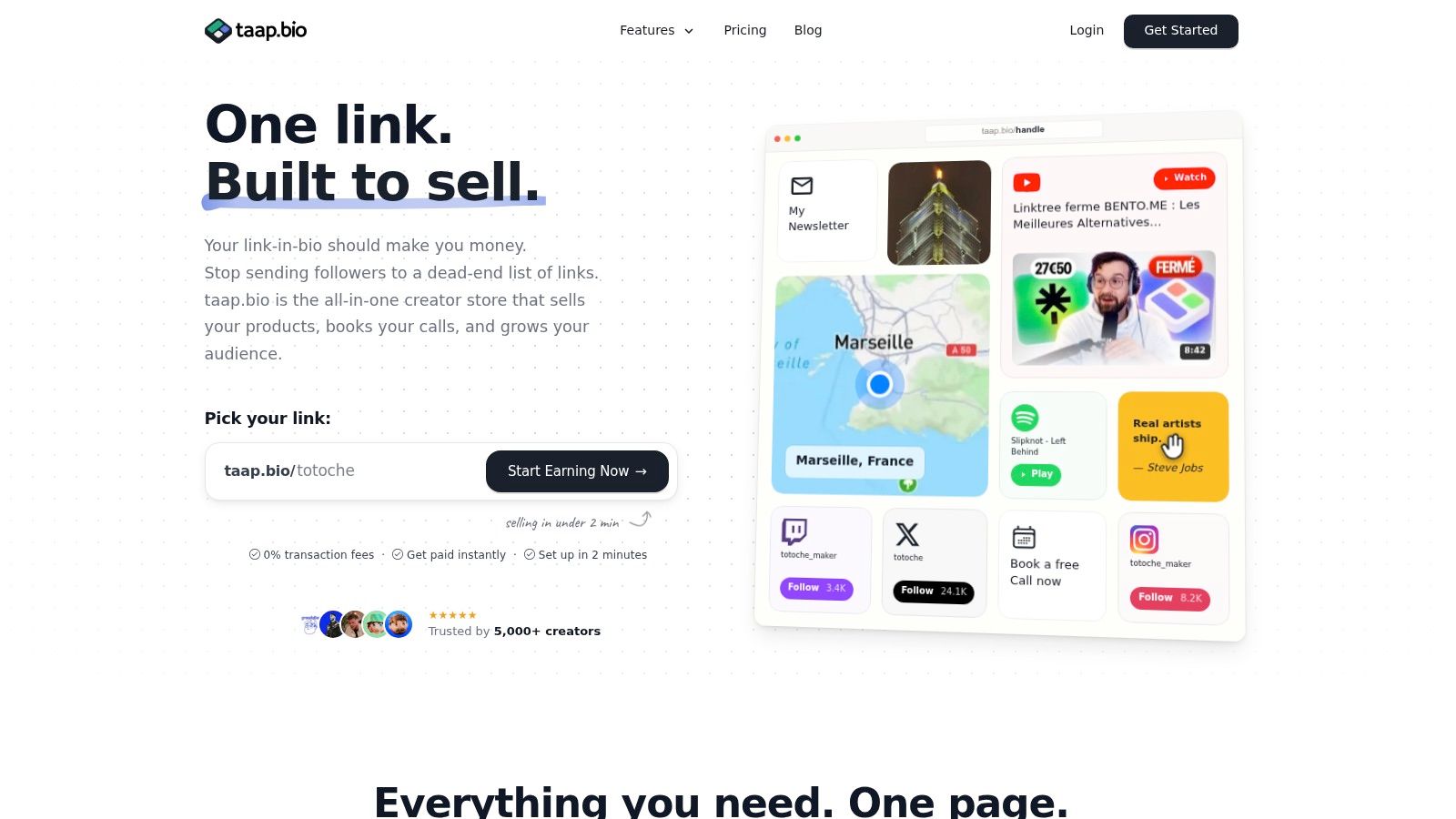
A bio link that only redirects visitors leaves creators to assemble the rest of the business elsewhere. taap.bio is a strong fit for creators who need one page to sell, book, capture, and measure. Its bento-style drag-and-drop builder supports products, video, YouTube, Spotify, maps, images, and other content through configurable widgets.
The main advantage is workflow consolidation. Visitors can buy a digital product through built-in checkout with instant file delivery, book a paid session with upfront payment and automated calendar invitations, or join an email list through a one-tap signup widget. Creators can export contacts as a CSV, which makes migration and audience ownership more practical than keeping subscriber data inside one platform.
Best for revenue consolidation
Choose taap.bio when your page has to perform several jobs at once. A coach can promote a guide, sell a consultation, collect an email address, and feature a video without maintaining separate storefront, scheduling, and mailing-list destinations. That setup reduces administration and gives each visitor a clearer next action.
The platform states that it charges 0% platform fees, so creators keep sale proceeds before payment-processor charges. It also offers instant payouts to connected accounts. Product notes list a 14-day free trial followed by $19 per month. Confirm the current rate on the taap.bio website before migrating, since regional pricing can differ.
Practical rule: If your bio link must generate revenue, judge it by completed purchases and bookings, not by the number of links it displays.
Privacy and limits
taap.bio hosts data in France and presents a GDPR-first approach, with no cookie banner by default and analytics that avoid third-party scripts. The platform also states that it is ISO 27001 certified and aligned with SecNumCloud foundations. Setup is quick, and custom domain mapping supports a branded URL.
The trade-off is scope. taap.bio is a focused single-page creator store, not a full website with advanced inventory management, complex catalogs, or a broad app marketplace. Its email tools focus on capture and CSV export rather than advanced automation and segmentation. Before replacing several services, review this guide to Linktree alternatives for creators and map each existing workflow to a taap.bio feature.
2. Beacons
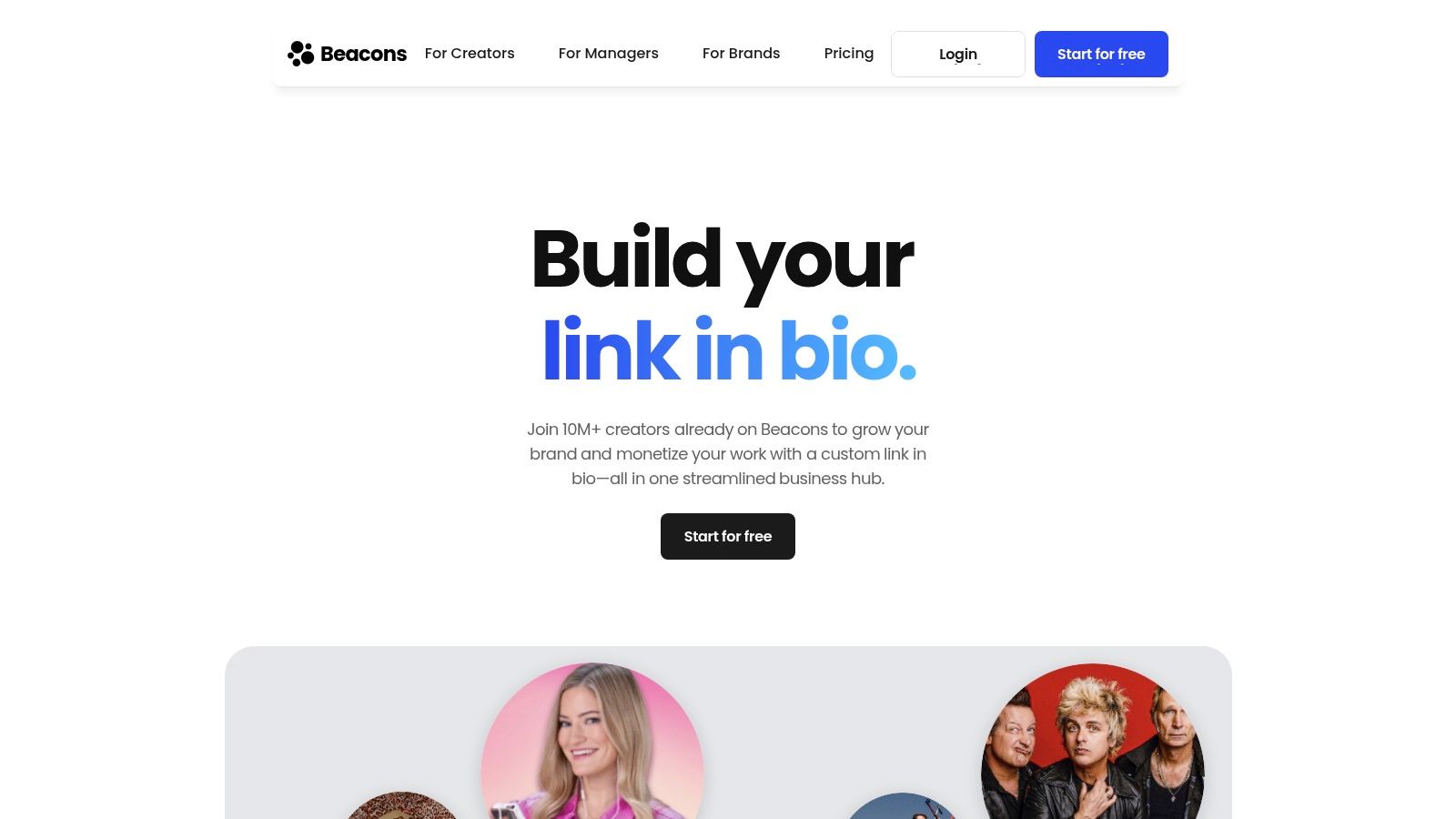
Beacons is the strongest choice for creators whose bio page is also a brand-deal and audience-management workspace. It combines a creator storefront with digital products, memberships, courses, email tools, lead forms, an auto-updating media kit, analytics, and AI-supported outreach.
That mix matters for influencers who need to pitch brands as well as sell to followers. The media kit can support sponsorship workflows, while custom lead fields help separate newsletter subscribers, business inquiries, and prospective customers. Beacons also supports marketing integrations and pixels for creators who need more control over acquisition and retargeting workflows.
Where Beacons earns its place
Choose Beacons when your business extends beyond a single product or service. A creator can maintain a media kit for brand pitches, collect leads, sell a course, publish email content, and manage a public profile from one dashboard. Paid plans can include a custom domain, which helps the page feel less like a generic directory.
The seller-fee structure is clear in the provided product information. The Free and Creator plans charge a 9% seller fee, while Creator Plus and Max offer 0% platform fees. Advanced capabilities, including unlimited emails and video hosting, are tied to higher tiers, so the apparent simplicity of the free plan can change as your audience and catalog grow.
Beacons is better than a basic link list for creators who need business infrastructure, but it demands more setup attention than a page built only to route visitors.
The main weakness is complexity. A creator who only wants a clean portfolio and three destinations may find the dashboard excessive. For a detailed comparison of the two platforms, see Linktree versus Beacons. Beacons wins when brand partnerships, email operations, and product sales share equal importance.
3. Stan Store
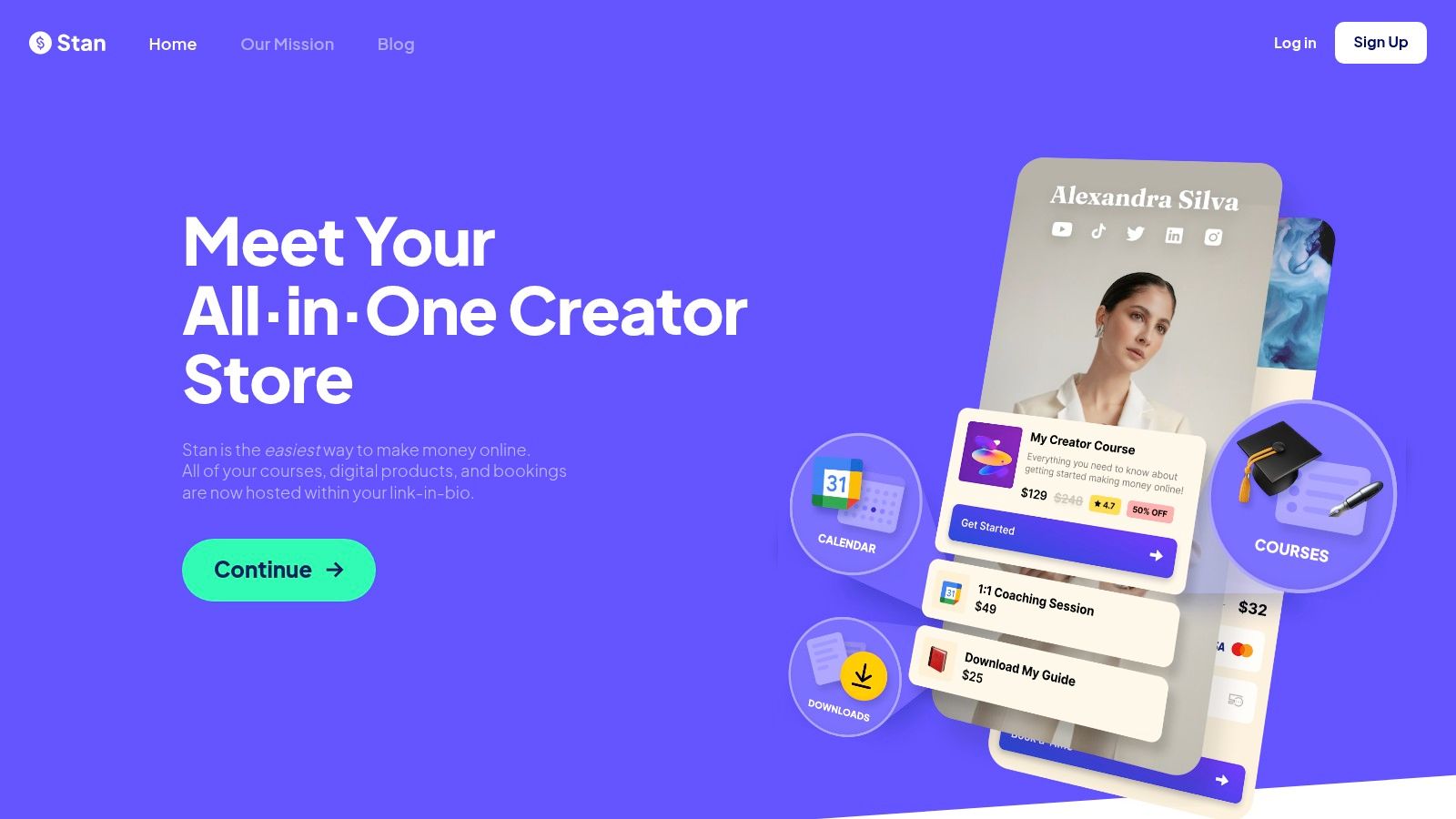
Stan Store is the best Linktree alternative for creators who primarily sell courses, downloads, coaching, or memberships. It treats the bio page as a compact sales funnel rather than a general profile, with checkout, offers, upsells, payment plans, scheduling, and affiliate or reseller links built around monetization.
The workflow is direct. A coach can place a consultation, course, or downloadable resource on the page and guide the visitor toward a purchase without building a separate store. Scheduling tools also suit creators who sell one-to-one sessions and want their booking flow close to their offer.
Choose Stan Store for a sales-first page
Stan Store's advantage is focus. Its page and checkout experience prioritize the path from offer to payment, making it a natural choice for educators, coaches, and creators with a defined product ladder. One-click offers and upsells can help organize that ladder without requiring a separate funnel builder.
The trade-off is the subscription commitment. There isn't a free plan, so you'll pay a monthly fee before your store has generated sales. The platform is also less suitable for creators who need a highly editorial page, extensive media layout options, or a profile built mainly around music, articles, and community links.
Stan Store supports 0% platform fees according to the provided product notes, but payment processing still needs to be checked separately. Confirm the current plan limits, payment availability, and regional terms on the Stan Store website.
Use Stan Store when the question is “How do I sell this offer?” If the question is “How do I present my entire creator identity?”, choose a more flexible page builder.
For an alternative that combines selling with bookings, email capture, and widget-level analytics, review this Stan Store alternative. Stan Store is the sharper specialist, while taap.bio is the broader one-page revenue hub.
4. Campsite.bio
Campsite.bio is the best choice for creators and small teams that need clean presentation and multi-profile management more than native commerce. Its flexible blocks, layout controls, collaborator seats, and profile management make it practical for agencies, artist teams, and organizations managing several public identities.
The platform's strength is operational simplicity. A team can keep multiple profiles organized, give collaborators access, and maintain a consistent mobile-first presentation without forcing every person to work from a separate account. Granular pricing for profiles and seats can also suit teams that want to expand incrementally.
Strong for teams, weaker for transactions
Campsite.bio works well when the page's main job is directing audiences to portfolios, releases, campaigns, social profiles, or contact destinations. Its design is cleaner and more adaptable than a bare list, and the tool is easier to understand than a full commerce suite.
Its weakness appears when the creator needs native checkout or paid bookings. Commerce capabilities are limited compared with taap.bio, Beacons, or Stan Store, so you'll likely send visitors to external payment and scheduling tools. That adds another service to maintain and another step for the customer.
Advanced analytics are available as a paid add-on rather than being fully included in the basic experience. Before switching, map which profiles need deeper reporting and which only need click tracking. The Campsite.bio website has the current profile, seat, and analytics options.
For teams comparing broader page types, this overview of link-in-bio tools can help frame Campsite.bio against creator-store platforms. Pick Campsite.bio when collaboration and presentation are the priority. Don't pick it as your primary sales system.
5. Carrd
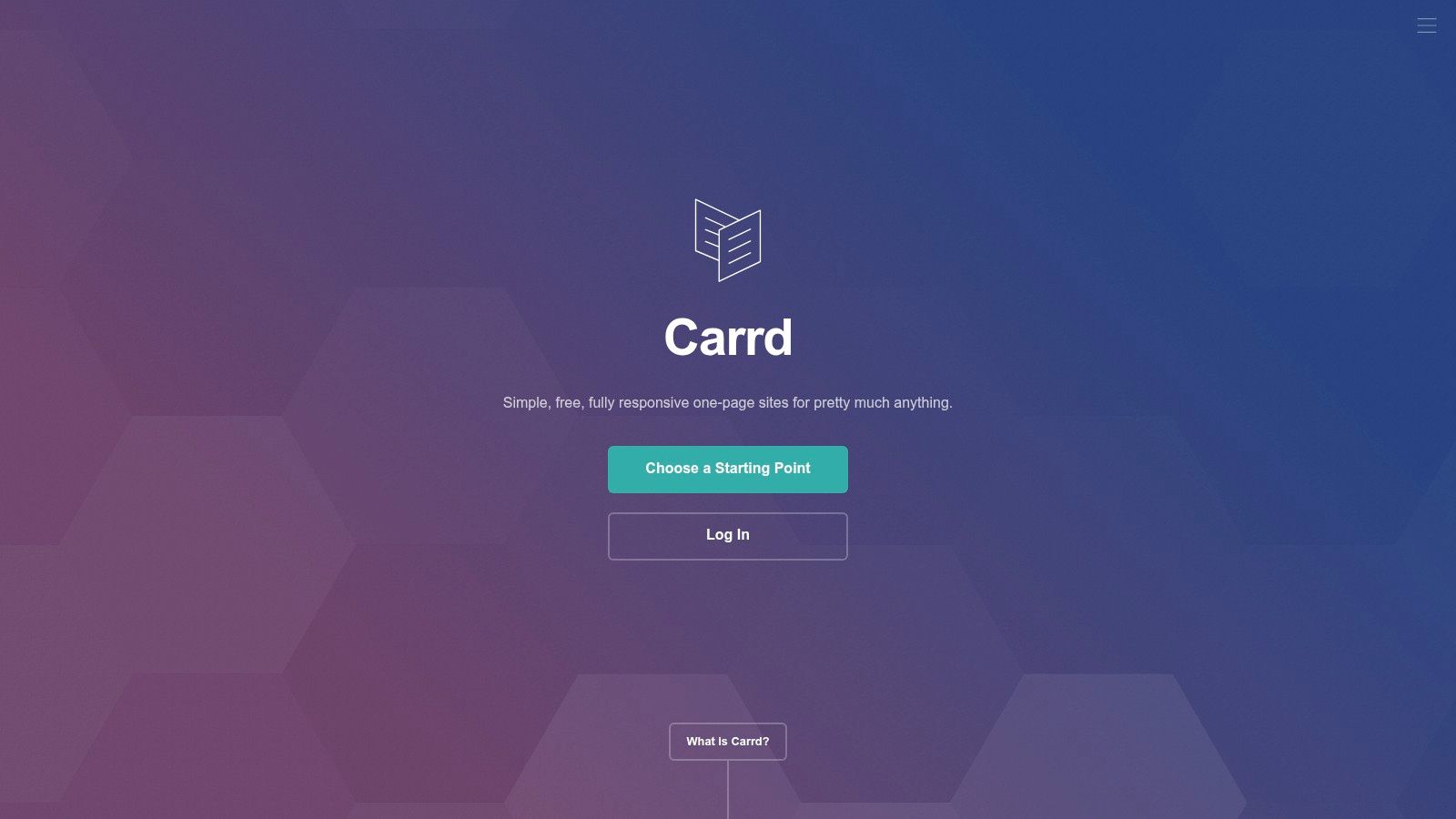
Carrd is the best Linktree alternative for creators who want full design control at low cost and don't mind handling more of the setup themselves. It is a one-page site builder rather than a dedicated creator store, which gives designers more freedom over layout, typography, backgrounds, embeds, and page structure.
A Carrd page can feel like a miniature standalone website instead of a standard link hub. You can add forms, custom domains, third-party payment widgets, and analytics integrations such as GA4, Plausible, or Matomo. That flexibility makes Carrd useful for photographers, designers, writers, and personal brands with a strong visual direction.
Freedom creates responsibility
Carrd doesn't provide a native store in the same way taap.bio or Stan Store does. To sell, book, or collect payments, you'll embed or link to external tools such as Stripe, PayPal, Gumroad, or a scheduling service. The page can look excellent, but you must configure those services, test them, and keep them working.
That makes Carrd inexpensive in software terms but more demanding in time. A creator with web-design confidence can build a precise, branded experience. A creator who wants to launch quickly with checkout and bookings already connected may spend more effort than expected.
Analytics also require configuration rather than arriving as a complete per-widget reporting system. You'll need to decide which events to track and confirm that consent and privacy settings match your audience. Check the current plan details in this guide to whether Carrd is free, then review the Carrd website before choosing a plan.
Carrd is the right tool when the page itself is part of your design work. It isn't the right tool when you want a ready-made monetization workflow.
6. Bio.link
Bio.link is a strong middle ground between a basic link list and a full website. It supports unlimited sites and visitors, posts and updates, content embeds, SEO controls, analytics, email-list building, newsletter publishing, and an AI chat widget trained on your content.
That combination suits creators who publish regularly and want their bio page to keep growing after the initial setup. Instead of treating the page as a static menu, you can use posts to highlight announcements, releases, articles, or current offers. Email collection also helps turn social visitors into a reachable audience.
Best for content and audience building
Bio.link's appeal is its simple plan structure. One account can cover several creator needs without the operational weight of Beacons. The AI chat feature adds an interactive layer for visitors who want answers about your work, services, or content.
The limitation is commerce depth. Bio.link is better at publishing, email capture, and engagement than at running an advanced storefront with native product delivery, paid bookings, and a tightly integrated checkout. Custom domains and other advanced controls sit behind the Pro paywall, so the free or entry experience may not match a polished brand requirement.
Use Bio.link if your immediate priority is publishing and list growth, especially when your sales happen elsewhere. Choose taap.bio if your immediate priority is converting visitors on the page through products or paid appointments. Review the current options on the Bio.link website before migrating, particularly if you need custom-domain support or specific email features.
7. Lnk.Bio
Lnk.Bio is the best lightweight pick for creators who want low cost, broad embeds, and simple profile management. It supports a large range of embed services, many templates, multiple pages, and optional additions for shops, donations, newsletters, and bookings.
Musicians, podcasters, streamers, and artists can use those embeds to place media directly into the profile instead of sending every visitor to another destination. Agencies can also use multi-account options and consolidated analytics when they manage several creators or brands.
Good value for a simple hub
Lnk.Bio's free-forever approach and one-time lifetime plans are useful for creators who want to reduce recurring software commitments. Lifetime pricing can simplify budgeting, although you should still verify what the selected plan includes and how future product changes affect it.
The main constraint is design. The platform offers many templates and a large font library, but the experience remains more template-led than freeform. A separate yearly add-on is required for a custom domain, and commerce or booking features are closer to optional extensions than a unified sales workflow.
That makes Lnk.Bio a practical choice when your audience needs links, media, and a few supporting actions. It isn't the strongest option for a creator who wants on-page checkout, automated booking invitations, or widget-level conversion reporting. Compare the current plans on the Lnk.Bio website and check whether its embed support covers your specific services.
8. solo.to
solo.to focuses on speed, clarity, and a clean profile. It's a good choice for creators who want an uncluttered page with organized sections, text blocks, scheduled links, basic analytics, and a straightforward upgrade path.
The platform works particularly well for musicians, podcasters, streamers, and social creators whose main goal is to present content destinations. You can group links by project or channel, schedule links around launches, and use integrations for contact capture.
Choose simplicity deliberately
solo.to doesn't include a native storefront, so purchases and bookings happen through external services. That keeps the page easy to understand, but it also means the creator must manage the checkout, calendar, email, and analytics tools separately. If your workflow is already stable, that may be acceptable. If you're trying to consolidate tools, it defeats the main reason to leave a basic link directory.
Multi-page management is available on the Professional tier, while analytics depth varies by plan. That upgrade path works for a creator whose needs will expand gradually but doesn't require an all-in-one business system today.
The solo.to website is the right place to confirm current plans and integrations. Choose it for a fast, focused media hub. Choose taap.bio if you need your page to become a transactional destination rather than a well-organized set of outbound links.
9. Link in Bio by Later
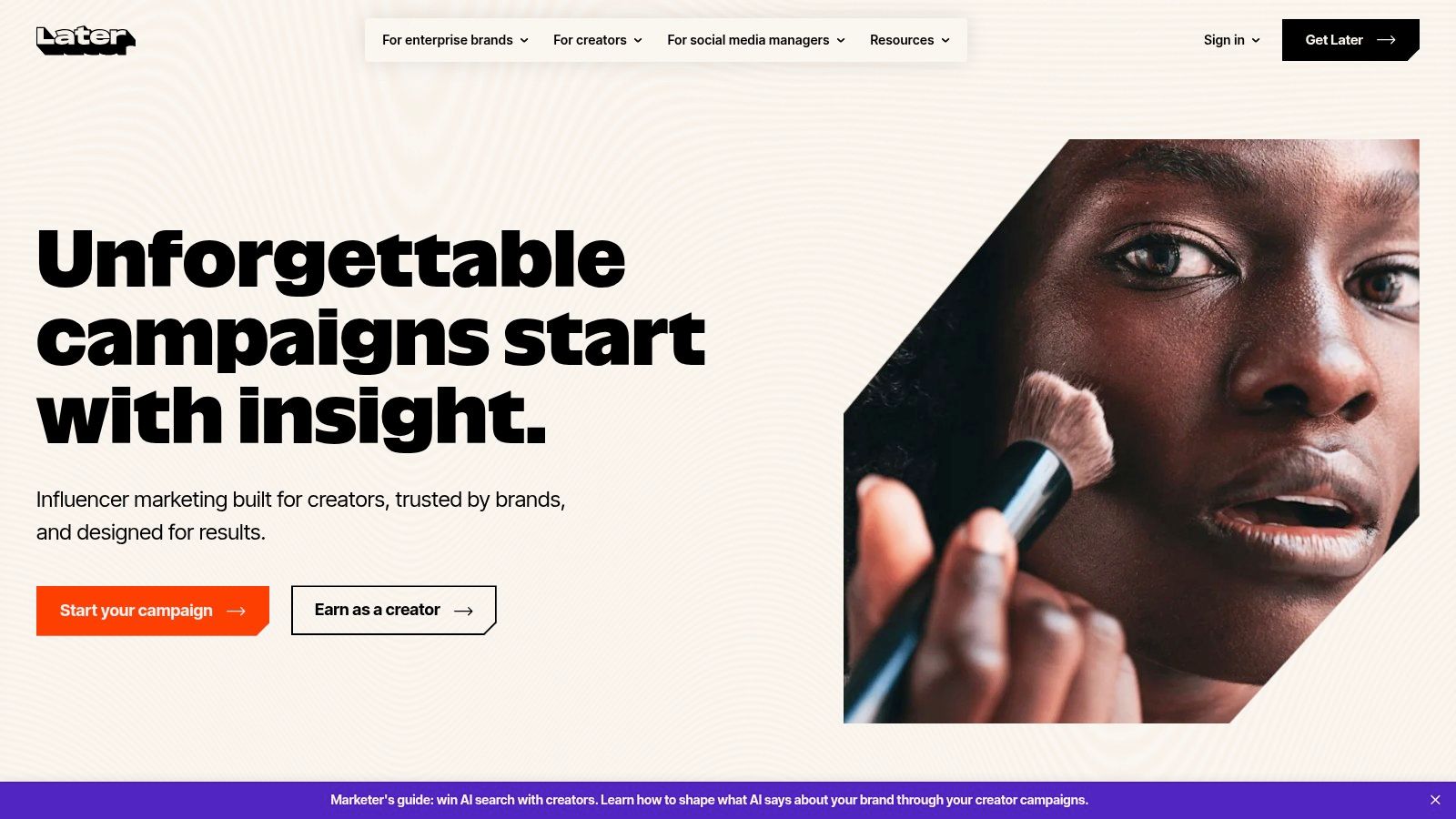
Later's Link in Bio is the best option for creators already using Later for social scheduling and post-level attribution. Instead of presenting only buttons, it can turn Instagram and TikTok posts into a clickable, shoppable grid, with each post connected to a destination.
That layout matches how many social visitors think. They recognize a post, tap it, and follow the related product, article, campaign, or sales page. Later's analytics then connect the bio experience to the broader publishing workflow, giving social teams a clearer view of which posts drive traffic or sales.
Best for content-led commerce
Later makes sense when your content calendar is the center of your business. A fashion creator, artist, or product-focused influencer can use the post grid as a visual catalog while managing publishing and reporting in the same platform.
The trade-off is dependence on Later. It's not a standalone free bio tool, so paying for Later solely for the link page may not make financial sense. Layout flexibility is also lower than Carrd or a bento-style builder, and native booking, email ownership, and direct digital-product delivery aren't its central strengths.
If you're already a Later customer, this is the most efficient choice for connecting social posts to destinations. If you need a general creator store, choose taap.bio or Beacons instead. Review the current Later Link in Bio product before switching, especially if your reporting depends on specific Instagram or TikTok integrations.
10. hoo.be
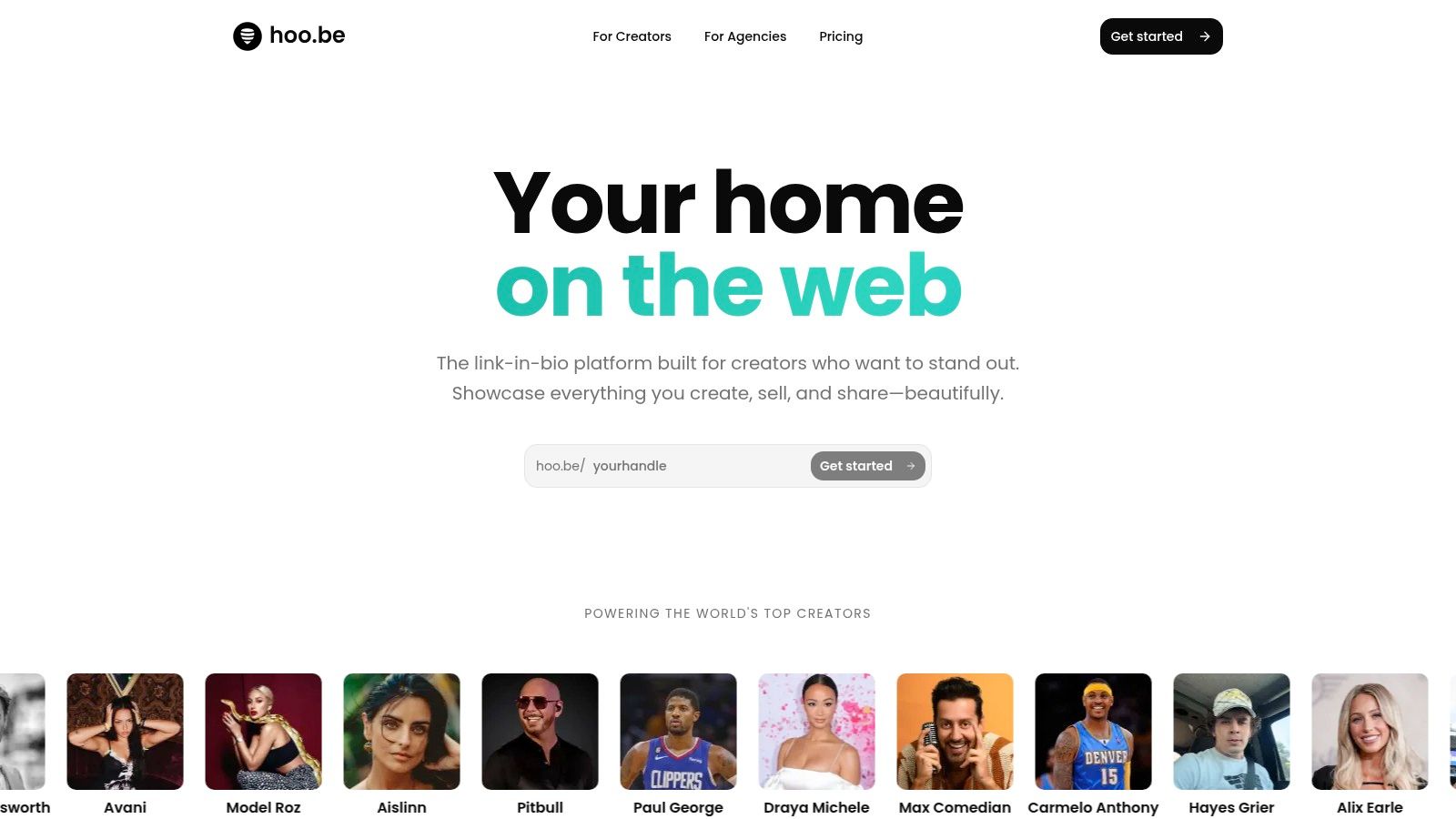
hoo.be is a creator-friendly choice for people who want a simple page with tips, product sales, discovery, and a clear path from free to premium. It supports unlimited links, page customization, plan-dependent analytics, contact collection, and a CreatorPass marketplace intended to increase visibility.
The platform's seller fees change by tier. The provided plan notes list 9% on Free, 5% on Pro, and 0% on Premium, so the economics depend on how much you sell and which subscription you choose. Confirm those terms on the hoo.be website before committing because fee structures and plan inclusions can change.
Useful for early monetization
hoo.be is easy to understand for creators who want a tip jar or occasional product sales without building a complex business system. The upgrade path lets you trade a lower platform fee for a higher plan, and premium access can include custom domains and deeper analytics.
Its limits become clearer for established creator businesses. It doesn't match Beacons for brand-deal infrastructure, Stan Store for sales funnels, or taap.bio for integrated bookings, email export, and per-widget analytics. Lower-tier seller fees can also reduce margins, particularly when products are inexpensive or sales volume is inconsistent.
Choose hoo.be when discovery and lightweight monetization matter more than consolidating your full operating stack. For a business page that must sell, schedule, capture, and measure in one place, taap.bio is the stronger recommendation.
Top 10 Linktree Alternatives Comparison
| Product | ✨ Core features | ★ UX / Quality | 💰 Price & value | 👥 Target audience |
|---|---|---|---|---|
| taap.bio 🏆 | ✨ All‑in‑one store + paid bookings + one‑tap email; bento drag‑drop; 10+ widgets; built‑in checkout & instant file delivery; GDPR‑by‑default | ★★★★, Fast setup; real‑time per‑widget analytics; ISO 27001 | 💰 $19/mo after 14‑day trial; 0% platform fees; instant payouts | 👥 Creators, musicians, coaches, freelancers, solopreneurs |
| Beacons | ✨ Storefront (products, memberships, courses); auto‑updating media kit; email & AI outreach; pixel integrations | ★★★★, Feature‑rich; steeper learning curve | 💰 Free tier w/ seller fees (9%); 0% on higher tiers; paid upgrades | 👥 Creators pitching brands, sellers needing media kit |
| Stan Store | ✨ Sales‑first checkout (one‑click offers, upsells, payment plans); bookings; affiliate support | ★★★★, Conversion‑focused funnels, quick setup | 💰 No free plan; paid tiers; seller fees vary by plan | 👥 Course creators, coaches, consultants focused on revenue |
| Campsite.bio | ✨ Flexible blocks, multi‑profile & collaborator seats; optional analytics add‑on | ★★★★, Polished mobile design; team tools | 💰 Affordable Pro tiers; granular pricing per profile/seat | 👥 Small teams, multi‑profile creators, agencies |
| Carrd | ✨ Lightweight one‑page builder; custom domains; embeds/forms; third‑party payments | ★★★★, High design flexibility; DIY setup | 💰 Very low annual pricing; publish multiple sites | 👥 Creators wanting mini‑sites and full control (DIY) |
| Bio.link | ✨ Unlimited sites/posts; AI chat for visitors; email builder & newsletter publishing | ★★★, Simple, content‑forward experience | 💰 Simple flat plan; Pro unlocks custom domains & extras | 👥 Creators wanting posts + email + lightweight AI engagement |
| Lnk.Bio | ✨ Minimalist link pages; 147+ embeds, many templates; lifetime pricing options | ★★★, Template‑based, ultra‑low cost | 💰 Free + one‑time lifetime plans; domain add‑ons | 👥 Budget‑conscious creators, agencies, template users |
| solo.to | ✨ Organized sections, scheduled links, basic→advanced analytics; multi‑page on Pro | ★★★★, Lean, fast, uncluttered UI | 💰 Affordable tiers; clear upgrade path | 👥 Creators who want a simple, high‑performance bio link |
| Link in Bio (Later) | ✨ Clickable IG/TikTok post grid; attribution in Later analytics; social scheduling tie‑in | ★★★, Integrated social workflow; less layout flexibility | 💰 Included with Later subscription (no standalone free) | 👥 Users of Later; social‑first creators managing posts |
| hoo.be | ✨ Unlimited links, tip jar, product sales, marketplace visibility (CreatorPass) | ★★★, Simple setup; discovery features | 💰 Free w/ seller fees (9%→5%); 0% at Premium | 👥 Emerging creators seeking tips, simple sales & discovery |
Choose the platform that matches your revenue model
The right Linktree alternative isn't the one with the longest feature list. It's the one that removes the largest bottleneck in your workflow.
taap.bio is the clearest recommendation for creators consolidating sales, bookings, email capture, and analytics on one page while keeping 0% platform fees. Beacons is better when a media kit, brand outreach, memberships, and email sending are central. Stan Store is better when your business runs on courses, coaching, and conversion-focused offers.
Choose Carrd when design control matters more than native operations. Choose Later when social scheduling and post-level attribution already drive your workflow. Pick Lnk.Bio or solo.to for a lightweight page that mainly routes visitors to media and external destinations. Campsite.bio is the practical team option, Bio.link suits content and list building, and hoo.be works for simpler creator monetization with tier-based seller fees.
Migration without losing momentum
Treat the switch as a workflow migration, not just a URL change.
- Export audience data: Download email contacts and confirm that consent records and subscriber fields remain usable in the new system.
- Inventory every destination: List products, booking pages, newsletters, portfolios, campaigns, social profiles, and tracking links before rebuilding.
- Map domains and redirects: Connect your custom domain where supported, then update the bio URL across Instagram, TikTok, YouTube, newsletters, email signatures, and other profiles.
- Recreate measurement: Preserve UTM conventions, analytics events, pixels, and conversion goals wherever the new platform supports them.
- Test transactions: Complete a product purchase on mobile, verify digital delivery, and test refunds or customer notifications.
- Test bookings: Check calendar availability, upfront payment, time zones, confirmation emails, and automated invitations.
- Review privacy settings: Confirm consent language, cookie behavior, analytics scripts, third-party processors, and data export options.
- Publish and monitor: Replace the old URL, keep the primary offers in familiar positions, and watch clicks, signups, purchases, and bookings after launch.
Confirm current regional pricing, payment support, platform fees, data-processing terms, and plan limits before switching. Those details can change, and payment availability may differ by country.
taap.bio combines a storefront, digital delivery, paid bookings, email capture with CSV export, rich media widgets, and per-widget analytics in one drag-and-drop page, with 0% platform fees on sales. Visit taap.bio to build a revenue-focused Linktree alternative and test whether a single mobile hub can replace the separate tools in your creator workflow.