More signup forms won't automatically create a stronger email list. A crowded page can collect addresses while producing weak consent, poor data, low engagement, and no clear path to revenue. The better question is which creator workflow are you supporting: a single-page profile, a publication, an ecommerce retention program, or a conversion system for existing website traffic?
Ownership matters first. You need a tool that makes consent understandable, keeps source data attached to each contact, supports GDPR-conscious collection, and lets you export your audience without friction. Automation depth matters when a subscriber needs a welcome sequence, a product recommendation, or a behavior-based follow-up. Ecommerce teams also need customer and product data, while creators often need a fast page that turns a social click into a signup, booking, or purchase.
This list compares creator stacks, lightweight capture tools, and ecommerce-plus-email platforms by the workflow they support. A link-in-bio page such as taap.bio can provide the capture and revenue layer, while a dedicated email platform can handle deeper campaigns when you need them. If you're starting from scratch, you can join for free and build from a clearly owned audience rather than renting reach from an algorithm.
Table of contents
1. taap.bio, One Link. Built to Sell. | The All-in-One Creator Store
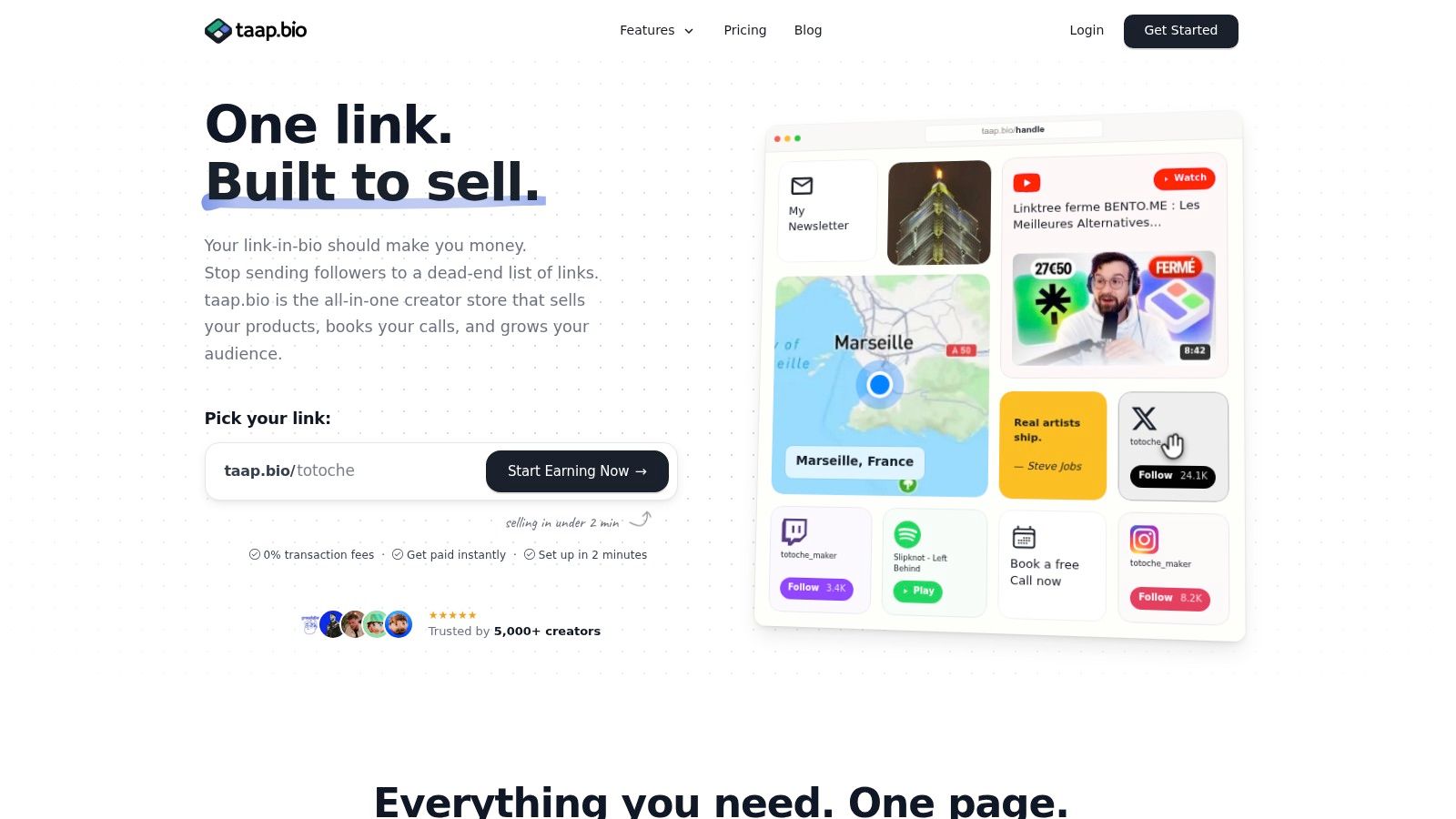
taap.bio is the strongest starting point for creators who want email capture connected to products, bookings, and content on one page. Its drag-and-drop bento layout keeps the visitor inside a focused revenue hub instead of sending them through separate storefront, scheduling, and signup destinations. Rich widgets can display video, music, maps, products, and other media, while the email signup block supports one-tap subscribing.
That workflow fits an Instagram creator, musician, coach, consultant, or digital seller who needs one public link to do several jobs. A visitor can discover an offer, subscribe, buy a digital file, or book paid time without navigating a large website. The platform also provides real-time analytics by widget, built-in checkout, instant digital delivery, paid booking calendars, and CSV export for contact portability. You can visit taap.bio to see the page and store model directly.
Best for creators who monetize attention
The main advantage is consolidation. taap.bio can replace several disconnected creator tools, reducing the number of redirects, dashboards, integrations, and subscription decisions you have to maintain. It charges 0% platform fees on sales and uses a flat $19 per month after a 14-day trial, although payment processor charges may still apply. Those product facts come from the supplied publisher brief, so confirm current terms before subscribing.
Privacy and portability are unusually visible in the workflow. Hosting in France, GDPR-friendly collection, ISO 27001 alignment, default third-party cookie blocking, and CSV contact export make the platform more suitable for creators who care about EU data expectations and future migration. Read how to collect emails from Instagram before placing the page in your social profiles.
Practical rule: Use taap.bio as the front door, then connect or export contacts to a deeper email platform when your campaigns need advanced segmentation or complex automation.
The trade-off is scope. A single-page bento store is excellent for focused conversion, but it isn't the right replacement for a large multi-page commerce site or a highly integrated enterprise stack. Choose it when speed, ownership, monetization, and a compact creator workflow matter more than extensive third-party customization.
2. Mailchimp
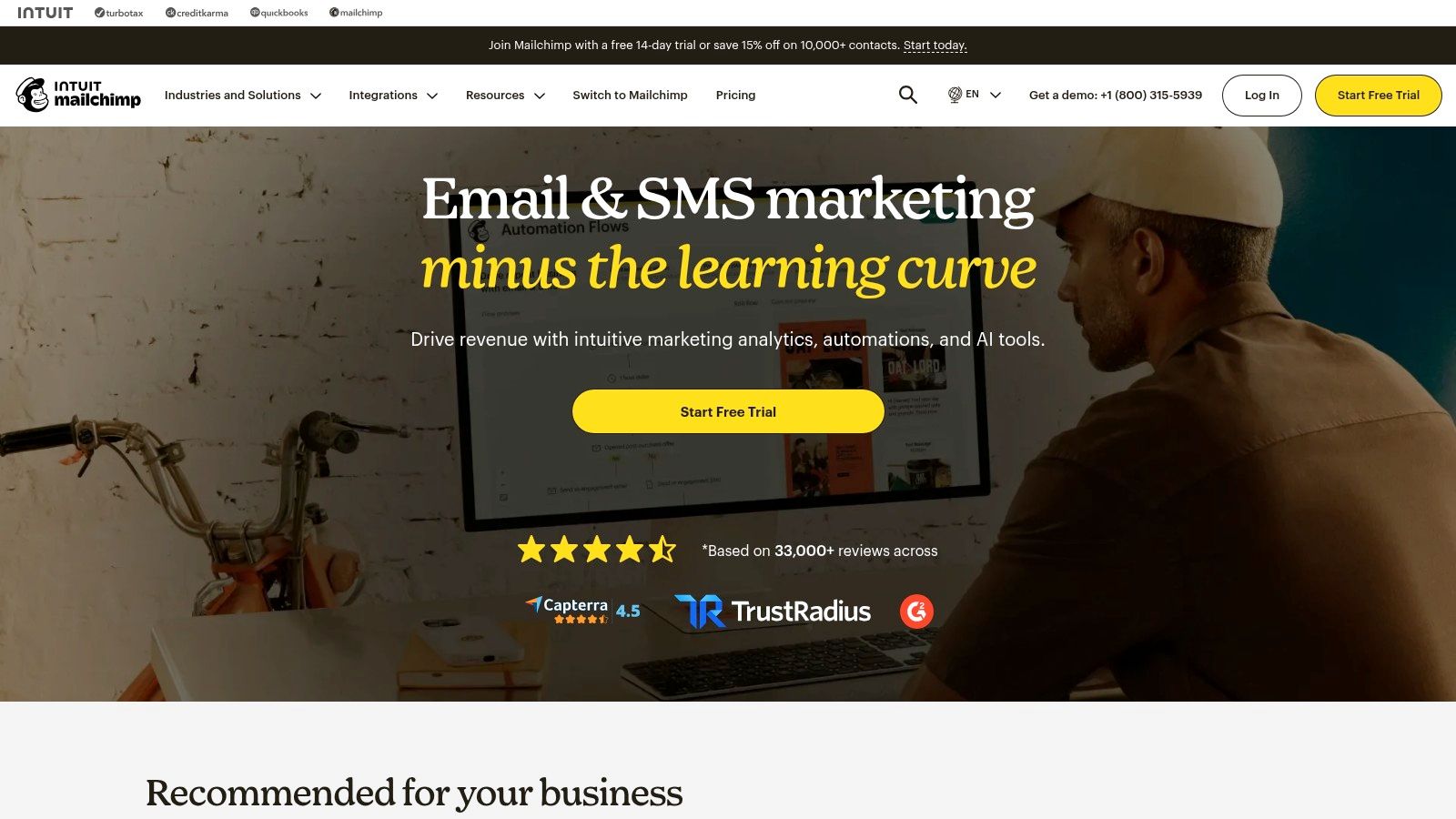
Mailchimp remains the safest quick-start choice for a small team that wants capture and email campaigns in a familiar interface. It combines embedded forms, popups, hosted forms, landing pages, email templates, automation journeys, segmentation, tags, testing, analytics, and a basic CRM. Ecommerce connections and advertising integrations can extend the workflow beyond the inbox.
The practical benefit is speed. A non-technical creator can publish a signup form, write a welcome email, create a basic segment, and launch a campaign without assembling a complicated stack. Mailchimp's large integration ecosystem also makes it easier to connect a website, store, or advertising channel to the subscriber record.
Where it fits a creator workflow
Pair Mailchimp with a taap.bio page when you want the link-in-bio experience to handle the first conversion and Mailchimp to handle newsletters, onboarding, and recurring campaigns. The page can focus on the creator's offer, while Mailchimp manages the subscriber relationship after signup. This guide to building an email list is useful when you're deciding what the signup promise should be.
Mailchimp's strength is breadth without demanding advanced technical skills. Its weakness is the cost and complexity that can appear as your contact base and sending needs expand. Plan limits are tied to contacts and sends, and the free option may feel restrictive for a growing creator business. Check the current plan structure on the Mailchimp website before committing your primary list.
Choose Mailchimp if you want a recognizable all-in-one platform and expect to use several of its channels. Don't choose it just because it's famous. If your page, products, bookings, and analytics already live in taap.bio, Mailchimp may add sending depth you need, but it can also recreate tool sprawl if you only send occasional updates.
3. MailerLite
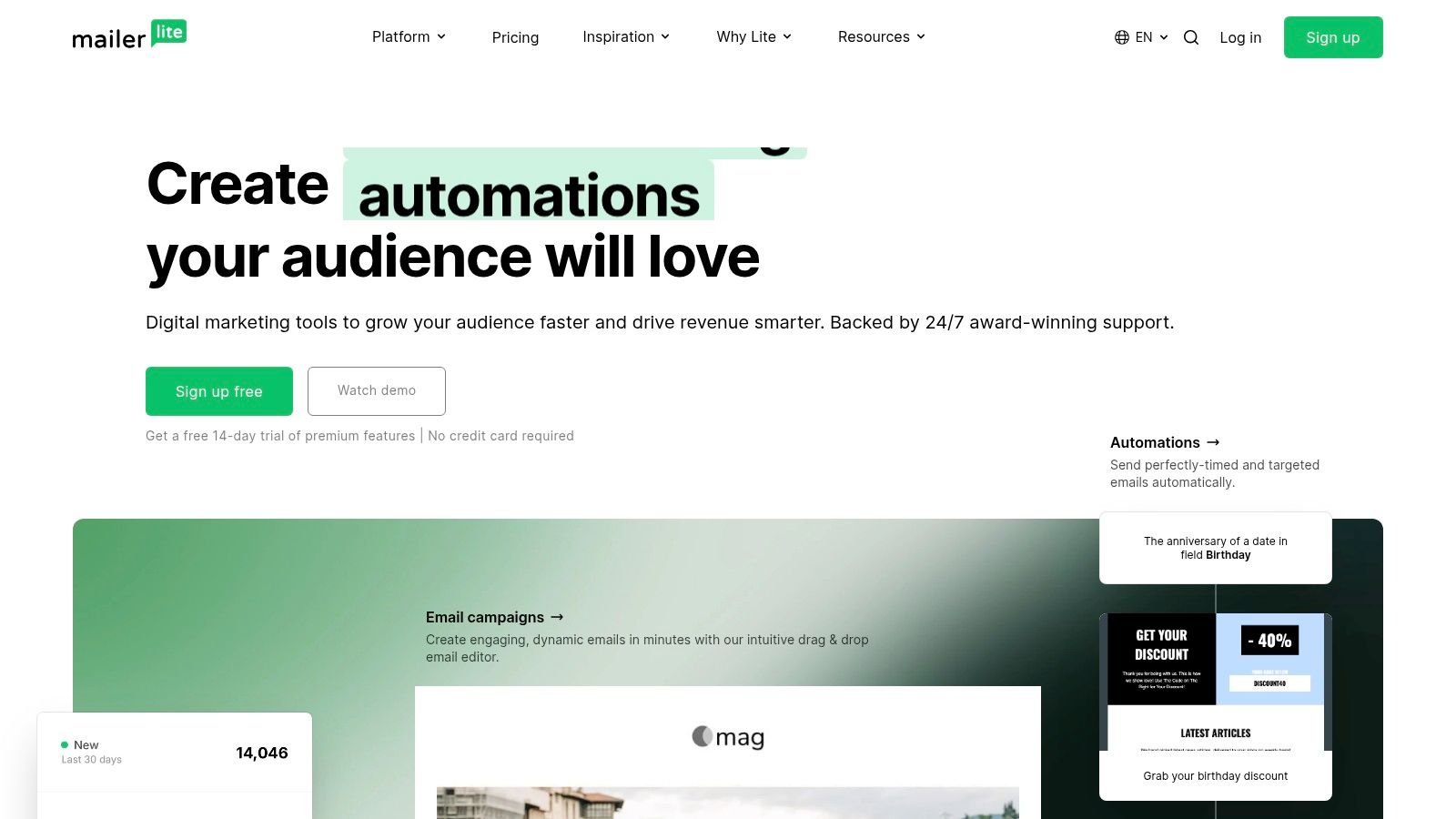
MailerLite is the best straightforward alternative for creators who want a clean editor and a low-friction publishing workflow. Its forms, popups, landing pages, simple websites, automation, segmentation, and basic ecommerce connections cover the essentials without burying the user in enterprise-style menus.
The editor is the reason to choose it. You can publish a landing page or embedded form quickly, connect the form to a welcome automation, and maintain a consistent visual style across campaigns. That makes MailerLite a natural partner for a taap.bio page. taap.bio captures the visitor from a social profile, while MailerLite delivers the ongoing newsletter or lead-magnet sequence.
Why simplicity beats unused features
MailerLite suits a creator who needs forms, landing pages, broadcasts, and basic automations, not a complex sales CRM. Its educational resources can help first-time users build pages and campaigns, and nonprofit discounts may improve its value for eligible organizations. Confirm current offers and plan limits on the MailerLite website, because free-plan features and limits can change.
The trade-off is depth. Advanced automation logic and reporting are less extensive than ActiveCampaign or Klaviyo, and the ecommerce layer isn't designed for stores that need rich behavioral data. That isn't a flaw for a newsletter creator. It's a reason to avoid paying for capabilities you won't use.
Use MailerLite when your workflow looks like this: a creator page or landing page collects consent, a welcome series explains the offer, and regular campaigns keep the audience engaged. Connect the signup source and preserve useful fields during export. If you later outgrow the automation model, a clean subscriber file will make migration easier than a list built through disconnected spreadsheets.
4. beehiiv
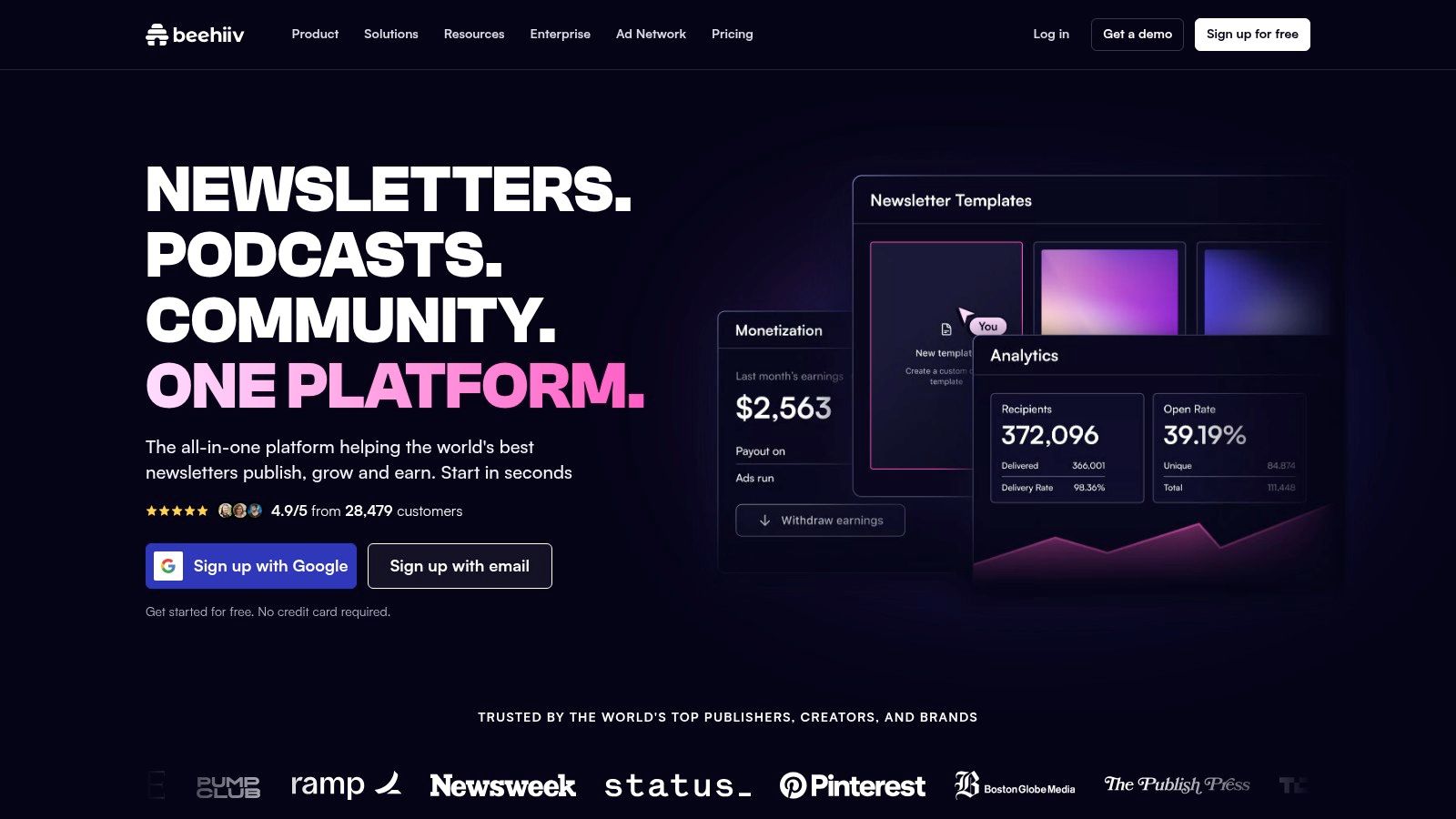
beehiiv is built for a creator whose email list is also a publication business. It combines a hosted newsletter site, email publishing, forms, landing pages, analytics, segmentation, referrals, recommendations, paywalls, and monetization options. The platform's growth features are more relevant to newsletter operators than to creators who only need a product announcement list.
The referral and recommendation mechanics give subscribers a role in distribution. A writer can publish consistently, encourage audience referrals, recommend other publications, and explore monetization without building every growth feature from scratch. Its modern editor and hosted publication model also shorten the distance between launching a newsletter and presenting it as a recognizable media property.
Pair it with a link-in-bio page
Place the beehiiv signup destination behind your taap.bio profile when your social audience needs a clear reason to subscribe. Keep the taap.bio page focused on the publication promise, recent issues, products, and other actions. Let beehiiv handle the publication archive, newsletter delivery, referrals, and analytics.
The cost is feature gating. Plans and available features vary by subscriber volume, and some advanced capabilities sit on higher tiers. Review the current options on the beehiiv website instead of assuming the entry plan includes every growth tool.
beehiiv is the right recommendation for a writer, analyst, commentator, or educator who publishes as the core product. It's less suitable when the list exists mainly to support bookings, product launches, or ecommerce retention. In those cases, MailerLite, ActiveCampaign, or Klaviyo will usually map more directly to the business workflow.
5. Substack
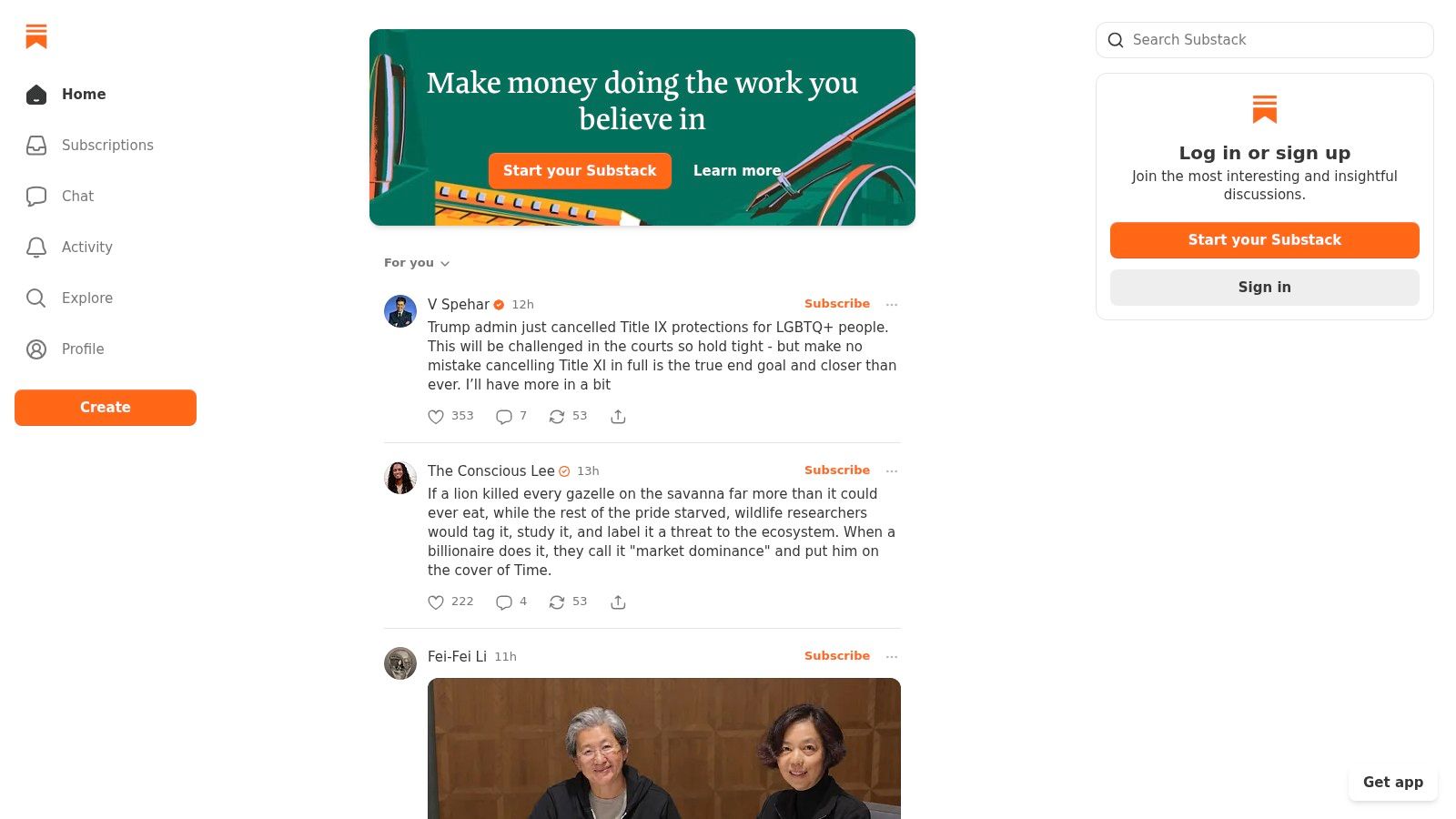
Substack is the fastest route to a newsletter with a website, especially when publishing matters more than design control. It bundles email delivery, web posts, subscriber capture, podcast publishing, paid subscriptions, and basic analytics. Creators can import and export subscriber lists, connect a domain, and keep ownership of the audience file.
That portability matters. A platform should make it possible to leave without rebuilding the audience from memory or asking subscribers to opt in again. Substack's import and export functions support that principle, but you should still document consent and subscription source before migrating any list.
The best use case is publication-led growth
A creator can put a Substack subscription link on taap.bio alongside a product block, booking calendar, or media widget. That gives the profile a commercial layer while Substack provides the editorial home. The pairing works well when the newsletter is the main relationship and taap.bio is the compact profile visitors use to choose their next action.
Use this newsletter-starting guide to shape the offer before you publish the signup link. A vague promise produces weak expectations, regardless of the software.
Substack's limitations are equally clear. Automation and design control are less granular than a dedicated ESP, and paid subscriptions carry a platform fee alongside Stripe processing fees. For a free newsletter, the simple setup is compelling. For a segmented lifecycle program or a store with complex customer journeys, move to a platform designed around those requirements.
6. Brevo, formerly Sendinblue
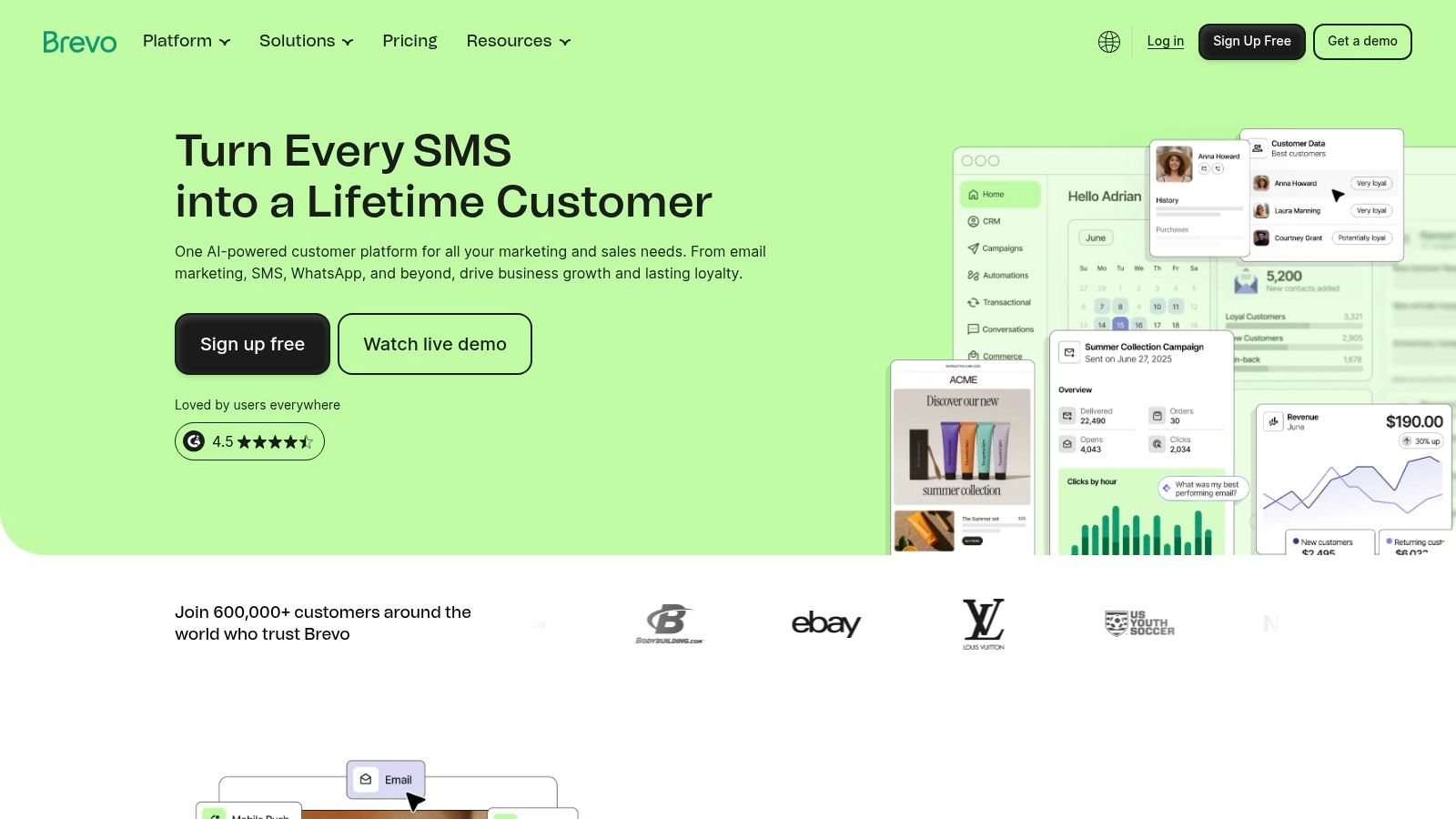
Brevo is the practical choice when email is only one part of the communication plan. It supports signup forms, popups, landing pages, email campaigns, transactional messages, SMS, WhatsApp, automation, segmentation, and reporting. Prepaid email credits also make it useful for occasional senders who don't want a contact-only pricing model.
That send-based flexibility changes the buying decision. A creator with a fluctuating publishing schedule can collect contacts through taap.bio, then send campaigns when there's a launch, event, or announcement. A service business can add transactional messages and appointment-related communication without forcing every interaction into a newsletter workflow.
Choose it for channel range
Brevo's free tier and prepaid credits can be attractive, but entry plans may include Brevo branding unless you add the relevant removal option. Advanced features are concentrated in higher tiers, so compare the exact functions you need rather than selecting it solely on the presence of a free plan. See the current details on the Brevo website.
The strongest setup uses taap.bio for a single-page capture and sales experience, then Brevo for email, SMS, or WhatsApp follow-up. Keep consent records separated by channel. Someone who agrees to email communication hasn't automatically agreed to every other channel.
Brevo is a better fit than a newsletter-only platform when your creator business sells services, runs events, or communicates across channels. It's not the simplest option for a writer who only wants to publish a weekly email, and its broader feature set can make the interface feel heavier than MailerLite.
7. GetResponse
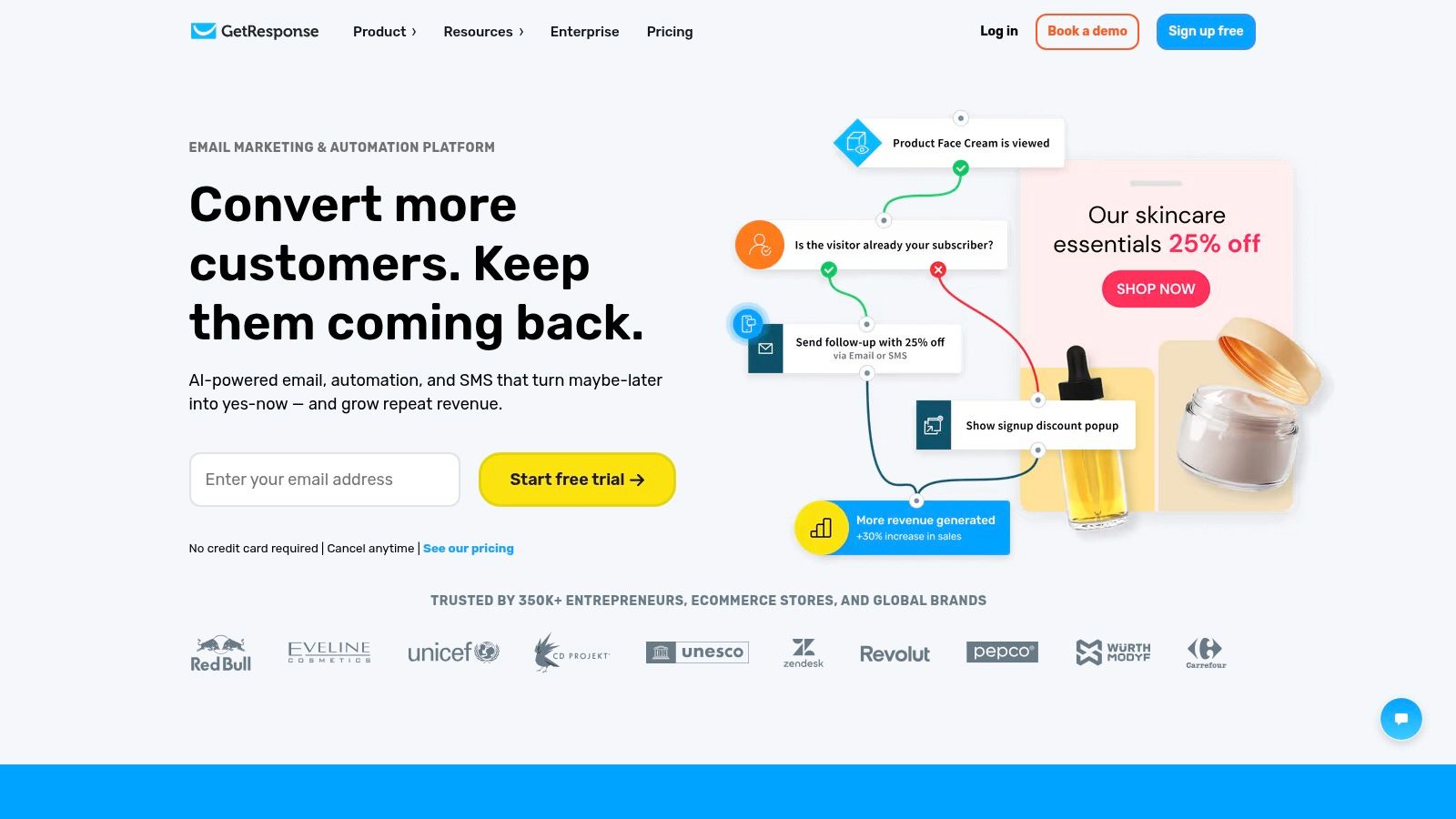
GetResponse is the right choice when the signup is only the first step in a larger capture-to-conversion funnel. It combines forms, popups, landing pages, email automation, conversion funnels, webinars, a website builder, and ecommerce features. Few tools in this list connect lead capture and webinar delivery so directly.
That makes it valuable for coaches, course creators, consultants, and educators. A taap.bio page can introduce the creator and collect the initial subscriber, while GetResponse can deliver a lead magnet, invite the contact to a webinar, nurture interest, and present a paid offer. The workflow stays under one account once the visitor leaves the profile page.
Buy the workflow, not the feature count
GetResponse has more moving parts than a simple ESP. That's acceptable if you'll use landing pages, funnels, webinars, and automations together. It's wasteful if you only need a monthly newsletter and one welcome message. Review the current modules on the GetResponse website before choosing a plan.
The landing page depth is the main attraction for list building. You can create a focused opt-in page for paid traffic or a webinar, while the taap.bio page remains the public link used across social profiles. Keep the promise consistent across both pages so subscribers know exactly what they're receiving.
Choose GetResponse for a structured education or sales journey. For a creator who wants the smallest possible stack, MailerLite is easier. For behavior-rich customer journeys tied to a sales pipeline, ActiveCampaign is stronger.
8. ActiveCampaign
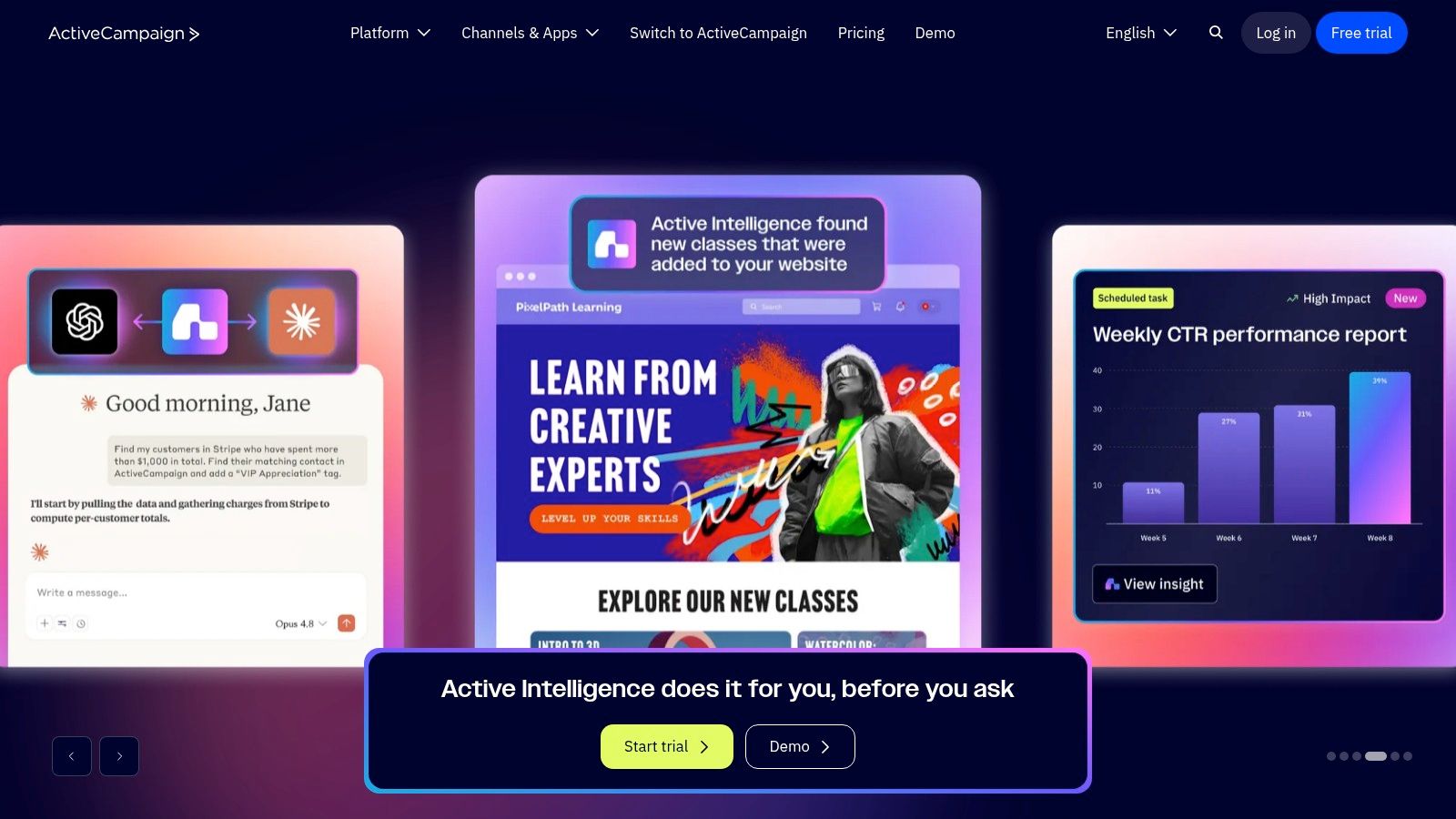
ActiveCampaign is the serious automation choice for creators who have moved beyond broadcasts and basic welcome sequences. Its visual automations, event and behavior triggers, forms, site tracking, lead scoring, split automations, CRM, pipeline tools, and segmentation support detailed nurturing.
A consultant can use a taap.bio signup to begin a sequence, then branch contacts based on pages visited, forms completed, or sales conversations. A course creator can distinguish prospects from customers and stop promotional messages after purchase. A small sales team can connect subscriber activity to a pipeline instead of managing marketing and sales in separate systems.
Make the data model deliberate
ActiveCampaign rewards planning. Define the difference between a subscriber, lead, customer, booking, and inactive contact before you build automations. Use fields and tags consistently, and record the source of a contact so a taap.bio signup doesn't become indistinguishable from a website form or a manual import.
This sequence-building resource can help you plan the first journey before opening the automation canvas. Start with a small number of clear paths. Complexity without a business reason makes maintenance harder and increases the risk of sending the wrong message.
The trade-offs are price and learning time. ActiveCampaign costs more than entry-level tools, has no permanent free plan, and can overwhelm non-technical users. Choose it when behavior-based nurturing and CRM alignment will directly support your workflow. If you're publishing a simple newsletter, beehiiv or Substack is the better fit.
9. Klaviyo
Klaviyo is the clear recommendation for ecommerce brands that need email capture connected to products, orders, and customer behavior. Its forms and popups feed into event-based segmentation, abandoned-cart flows, browse-abandonment journeys, email and SMS campaigns, and a broad application ecosystem.
The difference is data depth. A store can distinguish a first-time visitor from a repeat buyer, build segments around products viewed or purchased, and create messages that reflect the customer's actual relationship with the catalog. That's more useful than treating every subscriber as a generic newsletter contact.
Use it when retention drives the business
Klaviyo is particularly effective when the list needs to generate repeat purchases rather than just grow. Connect a taap.bio page to the store's email workflow when social traffic lands on a creator storefront, product launch page, or limited collection. Capture consent clearly, then let Klaviyo use store events for relevant follow-up.
Independent website-technology detection data places Klaviyo behind Mailchimp in detected email-marketing-tool usage, with 16.64% compared with Mailchimp's 21.21%. The same source identifies SendGrid at 13.07%, illustrating the category's fragmentation and the importance of clean exports and vendor portability. Review the underlying email marketing technology data rather than treating adoption as proof that a tool fits your workflow.
Klaviyo's cost rises with contact count and message volume, and it's excessive for a non-commerce newsletter. Choose it for Shopify, WooCommerce, BigCommerce, or another store with meaningful product and customer data. If your audience buys your expertise rather than products, ActiveCampaign or GetResponse will usually be more appropriate.
10. OptinMonster
OptinMonster is a conversion layer, not an email sender. It adds exit-intent popups, slide-ins, ribbons, targeted forms, templates, testing, and display rules based on factors such as scroll depth, time on page, referral source, and geolocation. It connects to the ESP you already use.
That makes it useful for a website with meaningful existing traffic and a clear conversion problem. You can show one offer to visitors arriving from a podcast, another to readers on a product page, and a different message to someone who appears ready to leave. The platform's job is to improve the capture context before the contact enters Mailchimp, MailerLite, Brevo, or another sender.
Add it after the basics work
Use OptinMonster with taap.bio when the link-in-bio page handles profile-level conversion and your separate website needs more targeted capture. A creator might send social visitors to taap.bio, then use OptinMonster on long-form articles or sales pages to offer a relevant download. That creates two distinct capture environments instead of forcing one form to serve every visitor.
Read this email capture tools guide before adding a pop-up layer. Poor timing, unclear value, or aggressive display rules can damage the user experience and produce low-quality subscribers.
OptinMonster requires embedding on your site and doesn't replace an email platform. Its results also depend on testing and thoughtful UX, not merely activating exit intent. Choose it only after your site has enough qualified traffic to justify a dedicated conversion layer. For a creator whose primary audience lives on social platforms, taap.bio's in-page signup is the more efficient first step.
Top 10 Email List-Building Tools Comparison
| Product | Core & Unique ✨ | UX & Quality ★ | Value & Pricing 💰 | Target Audience 👥 |
|---|---|---|---|---|
| taap.bio, One Link. Built to Sell. 🏆 | Drag‑and‑drop bento layout, 10+ rich widgets, built‑in checkout, paid bookings, real‑time per‑widget analytics, GDPR‑France, 0% platform fees ✨ | ★★★★★, Fast setup, ISO 27001, zero‑cookie default | 💰 $19/mo after 14‑day trial; 0% platform fees; instant payouts | 👥 Revenue‑focused creators & solopreneurs replacing multiple tools |
| Mailchimp | Email builder, signup forms, landing pages, basic CRM & integrations ✨ | ★★★★, Familiar UI, easy start | 💰 Free→tiered by contacts; can get costly at scale | 👥 Small teams & beginners |
| MailerLite | Simple email editor, landing pages, automations, signup forms ✨ | ★★★★, Intuitive, fast to publish | 💰 Competitive pricing; nonprofit discounts | 👥 Creators & small businesses seeking value |
| beehiiv | Newsletter‑first (referrals, paywalls, recommendations), hosted publishing ✨ | ★★★★, Modern editor, growth features | 💰 Free→paid; growth/monetization on higher tiers | 👥 Newsletter creators focused on growth |
| Substack | Hosted publishing + email, paid subscriptions, list export ✨ | ★★★★, Fastest route to publish & monetize | 💰 Free for free newsletters; platform fee on paid subs | 👥 Writers & paid newsletter owners |
| Brevo (Sendinblue) | Email + SMS/WhatsApp, automation, forms, prepaid credits ✨ | ★★★★, Solid multichannel UX | 💰 Free tier; send‑based pricing & prepaid options | 👥 SMBs needing email + SMS |
| GetResponse | Landing pages, funnels, webinars, automation workflows ✨ | ★★★, Powerful but more complex UI | 💰 Mid‑range pricing; best value when using multiple modules | 👥 Marketers needing funnels & webinars |
| ActiveCampaign | Advanced visual automations, CRM, site tracking, lead scoring ✨ | ★★★★★, Feature‑rich automation engine | 💰 Pricier; no permanent free plan | 👥 SMBs needing deep automation & sales alignment |
| Klaviyo | Ecommerce‑centric segmentation, product‑based flows, SMS + email ✨ | ★★★★★, Robust ecommerce reporting & flows | 💰 Pricing scales quickly with contacts | 👥 Ecommerce stores (Shopify/WooCommerce) |
| OptinMonster | Exit‑intent popups, targeted display rules, A/B testing; ESP integrations ✨ | ★★★★, High conversion focus; requires testing | 💰 Paid plans; site‑embed required | 👥 Site owners wanting aggressive lead capture |
Choose the Smallest Stack You Can Grow Into
The best email list building tools are not the ones with the longest feature lists. They're the ones that match how your audience discovers you, what you sell after signup, and how much operational complexity you can maintain. A creator who publishes weekly needs a different system from an ecommerce store with product events, and both need a different system from a consultant running webinars and sales calls.
Start with taap.bio when your primary need is a revenue-focused link-in-bio page with email capture. It combines a creator storefront, bookings, digital delivery, analytics, and a signup widget in one compact experience. The built-in CSV export protects list portability, while the page gives social visitors a direct route to subscribe, buy, or book.
Choose MailerLite or Mailchimp for straightforward campaigns. MailerLite is the cleaner choice for simple forms, landing pages, broadcasts, and basic automations. Mailchimp makes more sense when you value its ecosystem, familiar interface, and broader integrations. Check both platforms' current pricing and contact limits before importing a growing list.
Choose beehiiv or Substack when the publication itself is the product. beehiiv is stronger for newsletter growth mechanics and monetization features. Substack is faster for a hosted newsletter with a website, podcast support, and paid subscriptions. Both work well behind a taap.bio page that acts as the creator's public profile and commercial hub.
Use ActiveCampaign or GetResponse for deeper journeys. ActiveCampaign wins when behavior triggers, lead scoring, CRM, and sales alignment matter. GetResponse wins when landing pages, funnels, webinars, and email need to live together. Don't pay for either platform's complexity unless your workflow requires it.
Choose Klaviyo for ecommerce data. It's the most natural fit when product views, carts, orders, customer history, email, and SMS need to inform segmentation and revenue attribution. Add OptinMonster only when your existing website has enough qualified traffic to justify a separate capture layer. It should improve a working acquisition system, not compensate for an unclear offer.
The email marketing software category is already mature and expanding. It was valued at USD 1.7 billion in 2025 and is projected to reach USD 4.27 billion by 2034, with a projected 10.6% CAGR, according to Fortune Business Insights' market overview. Buyers therefore need to judge tools by integrations, deliverability, analytics, consent handling, and portability, not just by the form editor.
List growth also needs a realistic operating target. Average growth is described as about 2.5% per month, while healthy mature lists are often framed around 1% to 3% monthly growth, according to email list growth benchmarks. Treat those figures as benchmarks, not promises. A growing list still needs relevant offers, clean consent, useful segmentation, and regular removal of invalid or disengaged contacts.
AI adds another buying consideration. A 2025 report found that 29% of marketers identified advanced AI content generation and analytics as a major force of change, while 70% expected up to half of email operations to be AI-driven by 2026. The same report says 14% cited data privacy compliance as a major operational challenge, rising to 23% among larger-budget companies. Read the Validity State of Email 2025 report, and treat AI features as useful only when consent, review, and data controls remain clear.
Before migrating, follow this sequence:
- Export the audience: Download contacts as CSV, including available fields, tags, segments, source data, and consent records.
- Document consent: Record when and where each person subscribed, especially if contacts came from a taap.bio page, website form, event, or purchase.
- Map the data: Match fields, tags, segments, customer states, and suppression lists to the new platform before importing.
- Recreate capture points: Build the forms, landing pages, link-in-bio signup, confirmation message, and welcome automations.
- Test subscriber controls: Verify confirmation, unsubscribe, preference management, and data deletion flows.
- Check GDPR handling: Confirm the new vendor's processing terms, storage location, consent settings, and privacy documentation.
- Run a delivery test: Send a small internal test before switching the full workflow.
- Keep the old system available: Don't cancel the previous platform until the new forms, automations, exports, and unsubscribes work as expected.
If you need help choosing the wider AI tools and enterprise stack, keep the same principle in mind. Your stack should serve the creator workflow, preserve audience ownership, and make revenue or relationship outcomes easier to measure.
taap.bio gives creators one page for email capture, products, paid bookings, digital delivery, and widget-level analytics, with CSV export for list portability. Build your link-in-bio revenue hub and connect it to the email platform that fits your workflow by visiting taap.bio.