

Your Instagram bio decides, fast. It tells a new visitor whether to follow, click, book, or leave.
The limit is tight, so weak phrasing gets exposed quickly. Generic bios waste that space on labels that sound personal but do not move anyone toward a decision. Lines like “creator, dreamer, coffee lover” rarely help a buyer understand what you sell, who it is for, or why they should tap your link.
Strong bios do conversion work. They clarify your niche, frame the value, and point to one next step. That matters even more when Instagram is feeding a product page, booking funnel, email list, or media hub. A bio is not just profile copy. It is the front door to your sales path.
I treat the bio and link destination as one system. If the bio makes a promise, the page behind the link needs to fulfill it without friction. That is why the best instagram bio ideas are not just clever lines. They are paired with a focused destination, and Taap.bio's guide to adding links to your Instagram bio helps set that up correctly from the start.
That is the advantage this guide focuses on. Each bio format here is built to work with Taap.bio, so your profile can send people to a visual storefront, featured offers, content widgets, booking options, and monetization tools that match the promise in your bio. The result is stronger alignment between what people read on Instagram and what they can do next.
A good bio gets attention. A connected bio and Taap.bio page turns attention into revenue.
Table of contents
1. The Call-to-Action Bio with Link Strategy
A direct CTA bio usually outperforms a clever one. If the account has a clear business goal, the bio should tell visitors exactly what to do next and send them to a page built to finish that action.
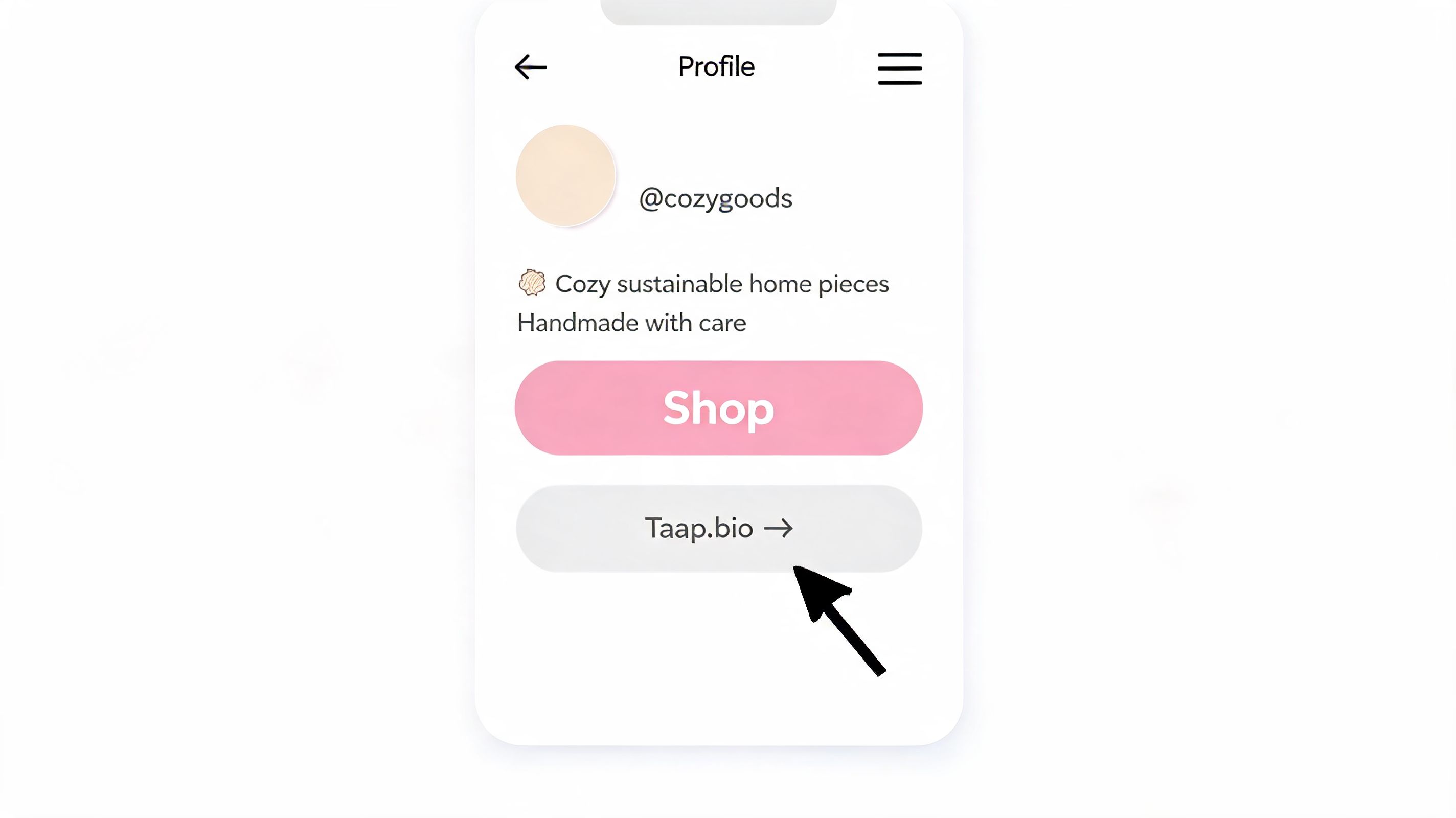
This format works best for creators selling one primary outcome right now. A booking-driven coach, a photographer taking inquiries, a producer selling beats, a digital product seller during launch week. The trade-off is focus. You give up personality and extra context in exchange for more clicks from people who are ready to act.
Examples:
- ✨ Sell Your Courses & Coaching | Link in bio
- 📚 Learn Digital Marketing | Book a session below
- 🎵 Music Producer | Purchase beats + book lessons
What works best
The accounts I see convert best with this format make one promise and connect it to one obvious destination. Clarity drives the click. Vague bios create hesitation, and hesitation kills intent on mobile.
A creator selling templates might write, “Canva templates for service businesses. Shop below.” A coach might use, “Book your strategy call. Programs + free resources below.” A photographer could use a sharper version pulled from these photography Instagram bio examples, then send visitors to a Taap.bio page with inquiry buttons, portfolio shots, and pricing FAQs at the top.
That alignment matters. If the bio says “Book a session,” the first visible block on your Taap.bio page should be booking. If it says “Shop presets,” lead with the product grid or checkout link. Taap.bio is useful here because the page can act like a visual storefront instead of a generic link list. You can pin the main offer first, support it with product cards, testimonials, media, or content widgets, and keep the path easy to follow.
I use a simple rule with CTA bios.
Practical rule: Put the result in the bio. Put the proof, offer details, and purchase path on the Taap.bio page.
That structure gives you room to convert without stuffing too much into 150 characters. It also works well if paid traffic is hitting your profile. Brands running product campaigns often pair a tight CTA bio with a cleaner destination flow, which is also a consistent theme in Instagram advertising strategies for e-commerce.
A few refinements improve results:
- Lead with the outcome: “Get stronger leads” beats “Marketing consultant.”
- Use one action verb: Shop, Book, Join, Download, Apply.
- Keep emojis functional: Use them to guide the eye, not decorate empty words.
- Match the first screen: Your Taap.bio page should show the promised offer before anything else.
- Update around campaigns: Launches, waitlists, and seasonal promos deserve fresh bio copy.
If you're setting up your profile from scratch, this walkthrough on how to put links on Instagram bio helps you connect the copy to the actual destination.
2. The Personality-Driven Bio with Niche Clarity
Personality sells faster when people can place you fast. A bio that sounds human and names the niche clearly does two jobs at once. It makes the right follower feel a connection, and it tells a potential buyer whether your offer is for them.
This format works best for personal brands, creators, consultants, and educators whose voice is part of the product. The mistake is making the bio either too polished or too quirky. If the personality is strong but the niche is vague, profile visits turn into passive followers. If the niche is clear but the voice is flat, you look interchangeable.
Examples:
- Helping burnt-out professionals leave the 9 to 5 | Coach + course creator 🚀
- Sustainable fashion nerd | I teach indie designers how to grow online ✨
- Friendly data scientist | Making analytics easier to use 📊
Add flavor, then label the category
I use a simple test here. If a stranger reads your bio in three seconds, can they answer these questions: who is this, what do they help with, and is this for me?
For coaches and experts, a two-line structure usually works well:
- line one: personality or point of view
- line two: niche + outcome
For example:
Helping overthinkers publish simpler content
Content strategist | Templates, audits, coaching below
That works because the first line creates affinity, while the second line qualifies the visitor. You do not need more cleverness than that. You need recognition.
Niche keywords matter here because Instagram search is literal. If you are a coach, photographer, designer, course creator, or music producer, say it plainly. A line like “Calm presence, fast turnaround. Wedding photographer for modern couples” has a stronger conversion job than a witty line no one can categorize.
There are real trade-offs:
- Too much humor reduces clarity: Inside jokes and vague irony often hide the offer.
- Too many labels create friction: “Creator | mentor | speaker | podcaster | founder” usually signals unfocused positioning.
- Too much brand polish weakens trust: People buy from humans, especially in expert-led businesses.
The best version gives visitors a reason to follow and a reason to click. Then your Taap.bio page should continue the same personality instead of dropping them into a generic link stack. Match the tone in your headline, creator photo, and first featured block. If your bio says you help overthinkers simplify, the first screen should show the simplest next step, such as a guide, audit, template, or starter offer. That matters even more if you sell low-ticket products or resources. This walkthrough on how to sell digital goods online is useful if you want that personality-led bio to connect directly to revenue.
If your profile also supports paid traffic, message match matters. Your ad promise, bio wording, and Taap.bio destination should feel consistent from first click to checkout. That alignment is a recurring theme in Instagram advertising strategies for e-commerce.
3. The Multi-Offer Bio with Strategic Listing
A single-link bio leaves money on the table if your business sells in more than one way.
Creators often have at least three conversion paths: buyers ready for a product, prospects considering a service, and new followers who need a lower-commitment entry point first. Your bio should sort those people fast. The goal is not to cram in every offer. The goal is to signal the buying options clearly, then send each visitor into a page built to handle that choice.
Examples:
📚 Online Courses
🎯 1:1 Coaching
🎁 Templates
👥 Community
Link in bio✍️ Copywriting Coaching
💌 Email Templates
🎓 Masterclass
→ Everything here
Use hierarchy, not volume
Multi-offer bios work when the list reflects business priorities. Lead with the offer that deserves the most attention. That might be your highest-margin service, your easiest first purchase, or the offer with the shortest path to revenue. The right order depends on your model.
“Helping creators” is too broad to sell. “Courses | Coaching | Templates” gives visitors enough context to self-select.
A consultant might structure the bio like this:
- first line: who they help
- second line: offer stack in priority order
- final line: CTA to the link
For example:
I help experts turn knowledge into income
Courses | VIP Days | Templates
↓ Start here
That format pre-qualifies the click. Someone who wants hands-on help notices VIP Days. Someone who wants a lower-cost option sees templates. Someone still deciding can start with the first screen on your Taap.bio page and choose from there.
Use these rules to keep the bio clean and commercially focused:
- List by revenue priority: Put the offer you want sold most first.
- Keep each item tight: One to two words per offer usually reads best.
- Choose one visual pattern: Emojis, separators, or line breaks. Stick to one.
- Match the order on Taap.bio: The first offer named in the bio should be the first offer shown on the page.
- Give each offer a job: One for high-ticket buyers, one for mid-ticket buyers, one for lead capture.
- Cut dead weight: If an offer gets little interest, remove it from the bio and test a stronger option.
The bio and landing page need to work together. Instagram gives you limited space, but Taap.bio can carry the full selling job with product blocks, featured links, content sections, and a visual storefront that separates offers by intent. A coach can feature 1:1 applications first, place a workshop or template pack next, and keep the email opt-in lower on the page for colder traffic.
That structure also improves audience response because people find the right next step faster. If your engagement is strong but profile clicks are scattered, review this guide on increasing social media engagement with clearer conversion paths and then tighten the offer order in both your bio and your page.
4. The Authority-Building Bio with Social Proof
Authority speeds up the click.
For coaches, consultants, educators, and service providers, a strong bio often needs one proof marker before a visitor will trust the offer enough to tap. The best authority bios do one job well. They show why you should be believed without turning the bio into a résumé.
Examples:
- 🏆 TEDx Speaker | Business Coach | Workshops below
- 📊 Ex-product lead | Consultant + templates
- 🎤 Published author | Keynotes, courses, advisory
The right proof to include
Use the proof that supports the sale you want now. If you want speaking inquiries, lead with stage or media credibility. If you sell consulting, lead with operator experience, client results, or a role your audience respects. If you teach, lead with a clear publishing or teaching credential.
I usually advise creators to build around four bio elements: who you help, what you help with, one relevant credibility signal, and a direct next step. Trying to cram in every credential, hashtag, and contact detail usually weakens the message.
For example, a consultant could write: “Ex-SaaS operator helping founders fix messaging. Advisory + templates below.”
That works because it gives the visitor a reason to trust the claim. “Marketing expert” says almost nothing. “Ex-SaaS operator” adds context, position, and a believable angle.
Put the authority signal as close as possible to the offer it supports.
Specific proof wins. “Featured in top outlets” is vague and easy to ignore. “TEDx Speaker,” “Published author,” or “Helped 40 founders sharpen positioning” is stronger because the visitor can picture what it means.
Your Taap.bio page should then confirm the claim and move the visitor toward action. The bio earns interest. The page closes the trust gap with visible proof and a clean path to the offer.
Use these page elements to support an authority bio:
- Testimonials block: Add short, outcome-focused client feedback.
- Media block: Show interviews, podcast appearances, or press mentions.
- Offer block: Place the paid service, course, or workshop directly under the proof.
- Booking block: Give warm leads a fast way to apply or schedule.
This setup works especially well for premium offers because visitors can verify your credibility and act in the same session. If profile visits are steady but clicks stay weak, review these social media engagement tactics that create clearer conversion paths, then tighten the proof and offer sequence on your bio page.
5. The Problem-Solution Bio Format
If your bio does not name a problem, it often reads like a label instead of a sales message.
This format works because it meets visitors at the moment of intent. They land on your profile with a frustration, goal, or stalled result in mind. A strong problem-solution bio shows you understand that friction and gives them a clear next step.
Examples:
- Struggling to turn followers into customers? I teach creators how to monetize. Start below.
- Hate complicated music production tools? I make simple templates for producers.
- Stuck in a job that does not fit? Build your online business with me ↓
Why this format converts
A common challenge for creators is turning attention into revenue. Follower count alone does not sell. Clarity does.
The best problem-solution bios name a specific pain point with commercial value. “Can't turn profile views into paying clients?” is strong because it points to a revenue problem. “Tired of failure?” is weak because it sounds broad, emotional, and generic.
That trade-off matters. If the pain is too vague, more people may relate to it, but fewer will click. If it is specific, you lose casual visitors and get more qualified ones. For businesses, that is usually the better outcome.
A few examples by niche:
- A nutrition coach: “Confused by conflicting diet advice? I build simple meal systems.”
- A design educator: “Your brand looks DIY? I help founders fix that fast.”
- A music educator: “Your mixes sound muddy? Learn cleaner production below.”
Write the pain in customer language
Pull the problem statement from comments, DMs, sales calls, support messages, and testimonials. Use the exact wording your audience repeats. That language usually outperforms clever copy because it feels familiar on first read.
Then connect the bio to a Taap.bio page that closes the gap between interest and action. This is the part generic bio advice misses. The bio gets attention. Your Taap.bio storefront should sort that attention by intent and send each visitor to the right next step.
Use a simple path:
- free resource for people still evaluating
- paid offer for ready buyers
- booking option for high-intent leads
You can also match the page blocks to the promise in your bio. If your bio says you fix one painful problem, lead with one focused offer, one proof element, and one primary button. Do not send visitors into a crowded link list with five unrelated options.
“I help” works. “I help with everything” does not. One pain. One promise. One next step.
6. The Community-Focused Bio with Engagement Incentive
Not every bio should feel transactional. Some should feel like an invitation.
This format works best when your business includes memberships, group coaching, paid communities, or a strong identity-based audience. Instead of selling a single product, you sell belonging. People join because they want access, support, accountability, or shared culture.
Examples:
- 👥 For creators building businesses, not just feeds | Community + coaching
- 🎨 A home for indie designers growing sustainable brands
- 🚀 Founders building together | Resources, group calls, support inside
Sell the room, not just the offer
Community bios perform best when they answer an unspoken question: “Who is this for people like?”
That's where identity language matters. “For first-time founders.” “For women building solo businesses.” “For artists who want stable income.” Those phrases filter the audience in a good way. The wrong people bounce. The right people feel recognized.
This style also pairs well with Taap.bio because your page can show multiple entry points into the ecosystem:
- membership join button
- lead magnet
- event replay
- application form
- content feed
If you run a paid community, don't make the bio all warmth and no action. Add an incentive. Early access, member-only resources, live sessions, or curated templates all give people a reason to click now instead of later.
A strong example: “Solo consultants scaling without burnout. Join our member hub for templates, calls, and support.”
That line sells the identity and hints at the experience.
Keep the invitation concrete
Warmth alone doesn't convert. “Welcome to my little corner” may sound friendly, but it doesn't tell visitors what they gain.
Use these prompts:
- Shared identity: Name the group.
- Shared goal: State what they're building or becoming.
- Shared benefit: Mention what members access.
- Clear action: Join, apply, start, explore.
7. The Minimalist Bio with Strong Brand Identity
A short bio can signal confidence fast. It can also waste profile traffic if the brand signal is weak.
This format works for creators whose niche is obvious before anyone reads a single line. Strong visuals, repeatable content themes, and a recognizable point of view do most of the persuasion. The bio labels the brand and points people to the next step.
Examples:
✍️ Writer
↓ Courses and notes🎬 Filmmaker
[brand link]🎵 Producer
everything below
Minimal copy works when the profile already answers the visitor's first questions. What do you make. Who is it for. Why should I care. If the grid, highlights, and content style do that job clearly, a sparse bio feels sharp. If they do not, the same bio feels unfinished.
Use this format when:
- your content style is visually consistent
- your niche is obvious from the first few posts
- your name or brand already has some recognition
- your Taap.bio page explains the offer stack clearly
One or two emojis can help a minimalist bio scan faster and break up plain text. Use them with restraint. The goal is visual structure, not decoration.
A strong example: “Designer. Systems for quiet brands. ↓”
That works because it does three jobs in a few words. It names the role, adds positioning, and directs the click.
Short bios raise the standard for everything around them. The profile photo has to feel on-brand. The feed has to look coherent. The linked page has to close the gap between intrigue and action.
That is where Taap.bio matters. A minimalist Instagram bio should lead to a page that does the selling your profile chose not to do. Build a clear welcome block, feature one primary offer, add your strongest proof or content widget, and keep one obvious CTA near the top. If you sell products, services, or digital downloads, the page should feel like a visual storefront, not a pile of links.
My rule is simple. If a stranger cannot understand your brand in five seconds, do not go minimalist yet. Use more clarity first. Trim later.
8. The Educational Resource Bio with Free Value
A strong free resource can turn casual profile visits into email signups, sales calls, and low-ticket purchases.
This bio format works best for creators who teach before they sell. Coaches, consultants, educators, and service providers often need more than one touchpoint to earn a conversion. A useful free asset shortens that trust-building process, especially when your bio and Taap.bio page are built to move people from quick win to paid offer.
Examples:
- 📚 Free SEO guide inside | Courses + consulting below
- ✉️ Weekly writing tips | Templates and workshops on my page
- 🎓 Grab the free toolkit | Masterclass + coaching available
Name the free value clearly
Specific offers get better clicks.
“Free stuff below” says nothing. “Free pitch deck checklist” tells the right person exactly why to tap. “Download my client onboarding template” works for the same reason. Clear language filters for buyer intent and makes the handoff to your link page easier.
Use this formula: free resource + audience + next paid step
For example: “Free launch checklist for course creators | Workshops + strategy calls below”
That bio does three jobs fast. It gives an immediate reason to click, tells visitors who the resource is for, and signals that paid help is available after the free download.
Build a page that turns free into paid
The bio gets the click. The page does the conversion work.
On Taap.bio, set up the free resource as the first visual block so it feels like the obvious next step. Under that, place a starter offer such as a workshop, template pack, or mini course. Lower on the page, add the higher-commitment offer, like consulting, coaching, or an application form. That order matters because free-value traffic is mixed. Some people want to sample your thinking. Others are already comparing providers.
I usually recommend one more layer. Add proof near the free offer. A testimonial, short creator intro, or content widget can raise opt-ins because people see who made the resource and why it is worth their email. If your business depends on showing expertise, pair this format with a polished resource hub or digital portfolio page for creators and educators.
A writing coach could lead with a free “personal essay pitch checklist,” follow it with a live workshop, then place a paid editing package below. That setup feels natural. The free asset proves expertise, and the Taap.bio page functions like a focused storefront instead of a loose list of links.
9. The Creator Portfolio Bio with Media Links
Your bio should sell the click by proving you make work worth viewing.
That is the job of a creator portfolio bio. It fits photographers, filmmakers, musicians, designers, illustrators, and any creator whose product needs to be seen or heard before someone buys. The bio sets the frame. The linked page has to show the work fast and place a paid next step close by.
Examples:
- 🎵 Producer | Beat store + lessons below
- 🎨 Brand designer | Portfolio + custom work
- 📹 Filmmaker | Edits, presets, and booking
Show the work fast
Clarity wins here. Put your creator identity near the front of the bio, then name the media or service people can get.
A producer might write: “Music producer | beats, mixing, lessons ↓”
That works because it does two things at once. It tells Instagram visitors what you make, and it tells buyers what they can do next. I recommend this format often because creative accounts lose conversions when the bio sounds clever but hides the actual offer.
The destination page matters even more. A plain link list forces people to guess where to click. A stronger setup turns the bio link into a storefront. On Taap.bio, a photographer can place a gallery first, then add presets, session booking, and a contact block on the same page. A musician can embed tracks, place the beat store near the top, and add a lessons offer underneath. That flow keeps browsing and buying in one place, which is usually the difference between attention and action.
If you need help structuring that page, this guide on how to create a digital portfolio for creators is a useful companion.
For a quick visual example of portfolio thinking in action, this video is useful:
Keep media tied to an offer
Portfolio traffic converts best when every media block points toward a business action.
Show a small, edited selection of work. Then place the offer directly under it. A filmmaker can feature three high-quality clips, followed by “Book editing” and “Buy LUT pack.” A designer can lead with identity projects, then add “Book a brand audit” and “Shop templates.” An illustrator can show client work, then place commission spots and print sales below.
That structure matters because portfolio visitors are not all at the same stage. Some want proof. Some want pricing. Some are ready to book now. Your bio should promise the category of work, and your Taap.bio page should handle the rest with visual proof, clear offer blocks, and one obvious next click.
10. The Lifestyle & Aspirational Bio with Behind-the-Scenes Angle
A lifestyle bio can attract fast, but it only converts when the aspiration feels earned.
This format works because people follow outcomes they want for themselves. More freedom. Better health. Cleaner routines. Higher income with less chaos. The mistake is selling the image without showing the mechanism.
Examples:
- 🏝️ Build a location-independent business | systems, coaching, resources
- 💪 From overwhelmed to fit and consistent | coaching + plans inside
- ✈️ Nomadic entrepreneur | guides, courses, masterminds
Sell the outcome. Show the receipts.
The best lifestyle bios pair identity with process. A creator who promises calm business growth should also show weekly planning, client delivery, boundaries, and the systems that make that lifestyle possible. A fitness coach selling consistency should show workouts, missed days, food prep, and how clients stay on track during busy weeks.
That behind-the-scenes layer does two jobs. It makes the aspiration believable, and it pre-qualifies the right audience. People who want results without the work will bounce. People who want a real path will click.
A stronger bio sounds like this:
“Helping freelancers build calmer businesses and better weeks. Systems + coaching below.”
That line sells a desirable future and hints at the method. It also gives your link a job.
Use Taap.bio to turn the dream into a path
This bio style performs best when your Taap.bio page acts like a visual storefront for the transformation you promise. Do not send people to a generic links page with no context. Build a page that shows how the lifestyle is created.
A practical layout looks like this:
- a headline that names the outcome
- a short intro video or pinned content widget showing your routine or workflow
- a starter resource for new followers
- a paid offer such as coaching, templates, or a membership
- proof blocks with client wins, work samples, or your own process snapshots
That structure matters. Lifestyle content gets attention, but behind-the-scenes content gets trust. Trust is what moves someone from “this looks nice” to “I want this result, and this person can help me get it.”
Keep the bio specific
Generic aspiration gets ignored. Specific aspiration attracts the right buyer.
Use concrete identity markers such as:
- remote consultant
- strength coach for busy parents
- minimalist fashion creator
- slow-travel entrepreneur
Then make sure the bio and Taap.bio page match. If the bio promises freedom, the page should show the tools, offers, and proof behind that promise. If the bio promises a calmer routine, the page should lead with resources and services that help someone create one.
Aspiration converts when visitors can see both the result and the process behind it.
10 Instagram Bio Ideas Compared
| Bio Type | 🔄 Implementation Complexity | ⚡ Resource Requirements | 📊 Expected Outcomes | 💡 Ideal Use Cases | ⭐ Key Advantages |
|---|---|---|---|---|---|
| The Call-to-Action Bio with Link Strategy | Low, single clear CTA, easy to implement | Low, one link + concise copy | High, strong click-through and conversions | E‑commerce, digital product sellers, coaches | High conversion; low friction; simple to test |
| The Personality-Driven Bio with Niche Clarity | Medium, requires authentic voice tuning | Medium, copycrafting and periodic updates | Medium‑High, attracts aligned followers | Personal brands, coaches, niche creators | Builds strong audience fit and memorability |
| The Multi-Offer Bio with Strategic Listing | Medium, needs structured formatting | Medium, prioritization and editing to avoid clutter | Medium, broad appeal across segments | Multi‑revenue creators, productized service owners | Shows full business scope; helps varied audiences |
| The Authority-Building Bio with Social Proof | Medium, must verify and quantify claims | Medium, gather credentials, metrics, media mentions | High, improves trust and justifies premium pricing | Consultants, expert coaches, B2B creators | Boosts credibility and attracts higher‑quality leads |
| The Problem-Solution Bio Format | Medium, requires audience research | Medium, precise messaging and testing | High, emotionally resonant, strong CTR | Coaches, consultants, niche problem solvers | Highly relatable; converts motivated prospects |
| The Community-Focused Bio with Engagement Incentive | Medium‑High, ongoing engagement strategy needed | Medium‑High, community tools and management | Medium, slower growth but high lifetime value | Memberships, masterminds, niche communities | Drives loyalty, recurring revenue, advocacy |
| The Minimalist Bio with Strong Brand Identity | Low, very short copy but needs brand alignment | Low, strong visual assets and consistency | Variable, high for known brands, low for new | Established influencers, premium brands | Memorable, sophisticated; lets product page tell story |
| The Educational Resource Bio with Free Value | Medium, needs lead‑magnet and funnel setup | Medium‑High, free content creation + email nurturing | High, effective list growth and paid conversions | Course creators, educators, marketers | Builds trust and scales list-to-paid conversion |
| The Creator Portfolio Bio with Media Links | Medium, organize portfolio highlights clearly | Medium, maintain up-to-date media links | Medium, attracts collaborators and clients | Musicians, artists, designers, photographers | Showcases work, drives cross‑platform traffic and opportunities |
| The Lifestyle & Aspirational Bio with Behind‑the‑Scenes Angle | Medium, must align visuals and messaging | Medium, content to support aspirational claims | Medium‑High, generates desire and premium leads | Lifestyle coaches, fitness, travel, personal development | Emotional resonance; positions for premium pricing |
From Bio to Business Your Action Plan
A strong Instagram bio should pull real business weight. It should qualify the visitor, frame the offer, and send the click to a page built to convert.
Start with your revenue model. If you sell one primary service, use a call-to-action bio or a problem-solution bio. If you have several offers, use a multi-offer structure with a clear order of priority. If your work needs to be seen before it can be bought, a portfolio bio will usually outperform a clever one-liner. If buyers need proof before they commit, lead with authority and social proof.
Good bios balance personality with precision. Too much flair hides the offer. Too much detail creates friction. The best-performing bios I've seen use plain language, a clear benefit, and one obvious next step.
Treat your bio like active conversion copy, not profile decoration.
Update it when your promotion changes. Update it when your audience starts using different language. Update it when a new offer becomes the main path to revenue. Small edits in a short bio can change who clicks, what they expect, and whether they buy.
A practical workflow looks like this:
- choose one business goal
- match it to one bio format from this guide
- write three versions
- pick the clearest one, not the most creative one
- send the click to a page that fulfills the promise in the bio
That final step decides whether your bio drives revenue or wastes attention. A sharp bio can earn the click. A weak destination loses it. Sending people to a crowded list of unrelated links creates hesitation, especially when you sell more than one thing.
A tool like Taap.bio helps fix that gap. It gives creators one conversion-focused destination where the bio, the page layout, and the offer stack work together. Instead of relying on a basic link list, you can build a visual storefront with product blocks, media, booking links, content widgets, and clear purchase paths. That matters when you need your Instagram profile to do more than collect views.
Pick one bio format from this guide and put it live today. Then make sure the page behind it is built to sell, book, showcase, or capture the lead. That is how a bio stops being a profile detail and starts working like part of your marketing system.


