

Let's be honest, in a world this connected, a simple list of links just doesn't work anymore. A social media portfolio website is your chance to stop scattering your content and start building a central hub—a single, interactive headquarters that tells your full story. It’s the difference between handing someone a plain business card and giving them a tour of your stunning studio.
Table of contents
Why Your Social Links Need a Serious Upgrade
If you're a creator, freelancer, or small business owner, your brand is likely spread thin. You've got your beautiful visuals on Instagram, your expert advice on LinkedIn, and your engaging videos on YouTube. Each platform holds a piece of your puzzle, but they all live in separate, disconnected worlds.
The real problem? This setup creates a broken experience for your audience. A potential client who loves your TikToks might never discover the case studies on your blog or your professional services. This is where most traditional link in bio tools fall flat—they just give you a static menu, forcing people to click away to find out what you're really about.
The challenge isn't just being on social media. It's about weaving all those threads into a single, compelling story that grabs people the moment they land on your page.
From Disjointed to Dynamic
Instead of just showing a boring list, a social media portfolio website pulls all your best content into one dynamic space. Picture this: a visitor arrives and can immediately see your latest Instagram grid, listen to your new podcast episode, and read a glowing client review—all without ever leaving your page. You’re not just giving them a list of doors; you’re inviting them into your home.
This kind of consolidation is more important than ever. With a projected 5.66 billion social media users by 2026, the online world is incredibly noisy. That audience is spread across giants like Facebook (over 3 billion users), YouTube (2.9 billion), and Instagram (up to 3 billion). A unified portfolio is your best tool for cutting through the chatter. You can dig into the latest social media user statistics to see just how massive this landscape really is.
This isn't just a simple upgrade; it's a fundamental shift for anyone serious about building a powerful brand. By bringing your digital footprint under one roof, you create a powerhouse that works around the clock to showcase your best self.
From Link Lists to Interactive Bento Grids
Remember the early days of the "link in bio"? It was a purely functional affair—a simple, vertical list of text links. While it got the job done, it wasn't exactly inspiring. Your entire brand, all your hard work, was boiled down to a plain-text laundry list that sent people bouncing all over the internet. This created a scattered experience that never really showed off who you are or what you can do.
That old approach is like a restaurant menu that only lists the ingredients. Sure, you get the basic information, but you miss the flavor, the presentation, and the story behind the meal. This is precisely why the shift to a dynamic, visual social media portfolio website is such a game-changer.
The Rise of the Digital Bento Box
Now, picture your online presence as a digital bento box. Instead of that boring old list, every piece of your content—your social profiles, latest projects, and best creations—is thoughtfully arranged in a single, beautiful display. This layout, often called a bento grid, transforms your page from a simple list of links into a destination people actually want to explore. You can dive deeper into this concept with our guide to bento box web design.
The benefits are immediate. It’s a far better experience for your visitors, letting them see and interact with your work right away. More importantly, it gives your personal brand a massive boost by presenting a curated, professional snapshot of your story.
This is more than just a new look; it’s about centralizing your scattered online presence into one powerful hub.
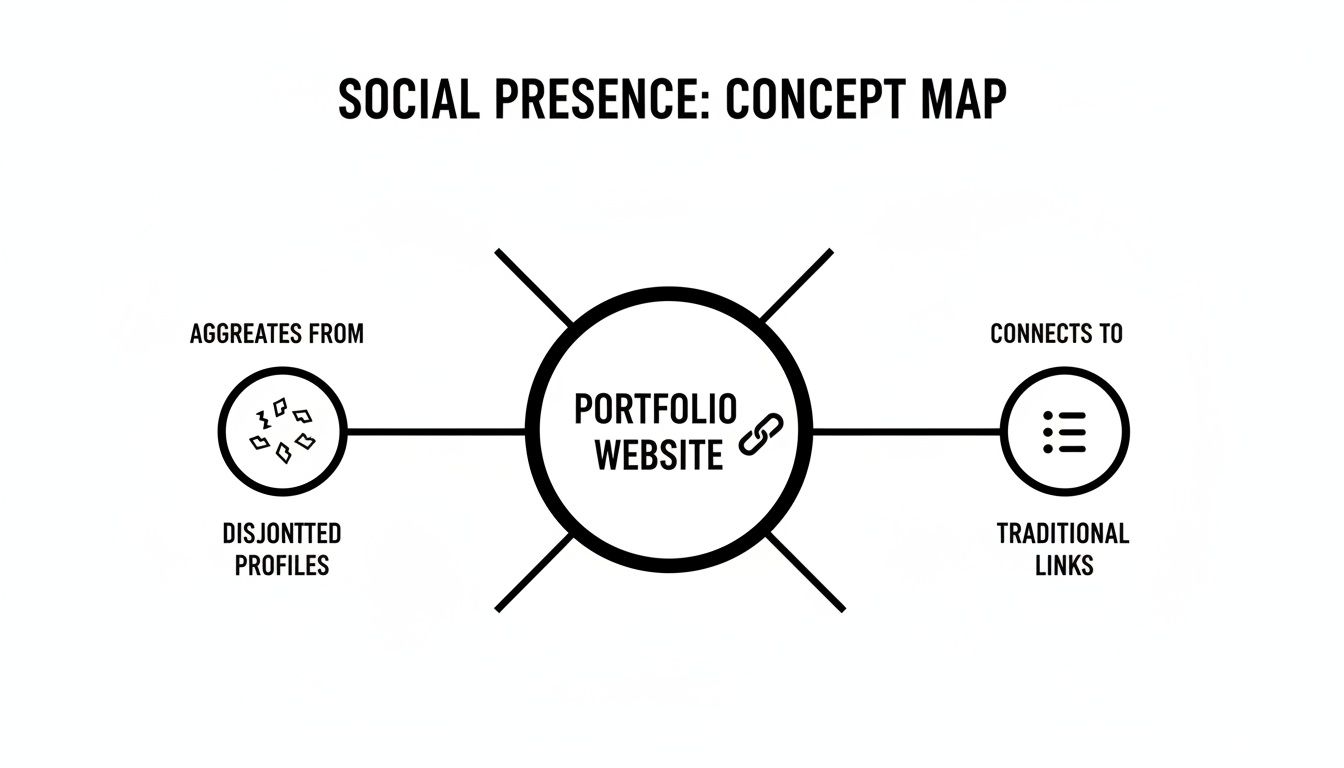
As you can see, a bento grid moves you away from disconnected profiles and simple lists toward a unified portfolio that organizes and elevates your entire brand.
Static Link Lists vs Dynamic Bento Grids
To really understand the shift, let's compare the old way with the new. The traditional link-in-bio was a great start, but the bento grid is where the real power lies for creators today.
| Feature | Traditional Link List | Dynamic Bento Grid |
|---|---|---|
| Presentation | A simple, vertical list of text links. | A visual, modular grid showcasing rich media. |
| User Experience | Requires users to click away to see content. | Allows users to view and interact with content directly on the page. |
| Branding | Minimal branding, looks generic. | Highly customizable, reflects your unique visual identity. |
| Content | Static links only. | Dynamic content like videos, music, and posts. |
| Hierarchy | All links appear equally important. | Visually emphasizes your most important content. |
| Engagement | Low; serves as a simple redirect page. | High; encourages exploration and interaction. |
The takeaway is clear: while a link list acts as a simple signpost, a bento grid is an immersive gallery that tells your story visually.
Why Bento Grids Are The Future
The magic of a bento grid is its power to create a visual hierarchy. You can make your most important content larger and more prominent, grabbing your audience's attention and guiding them exactly where you want them to look. This is a huge advantage for creators who feel their best work gets lost in the noise of social media feeds.
Instead of hoping people will click through a dozen links, you present a curated gallery of your achievements. It's the difference between saying "here's my work" and "experience my story."
This evolution is especially timely for creators searching for a robust alternative after the shutdown of platforms like Bento.me. The demand for more engaging, visually rich personal pages is exploding. By adopting a bento-style portfolio, you’re not just jumping on a trend—you’re taking back control of your narrative and building a home for your brand that turns casual visitors into loyal followers and clients.
Building Blocks of a High-Impact Portfolio
Let's be honest, a simple list of links just doesn't cut it anymore. Your social media portfolio website should be a custom-built gallery for your brand, not a plain, boring directory. Just as an artist wouldn't just toss their masterpiece in a bare room, you need the right elements to frame your work and tell a story that grabs people.
Before you can pick the right pieces, you have to know what story you're telling. Nailing your personal branding on social media is the first, most critical step. Once that's clear, you can start assembling the building blocks that bring your brand to life and make a real impact.
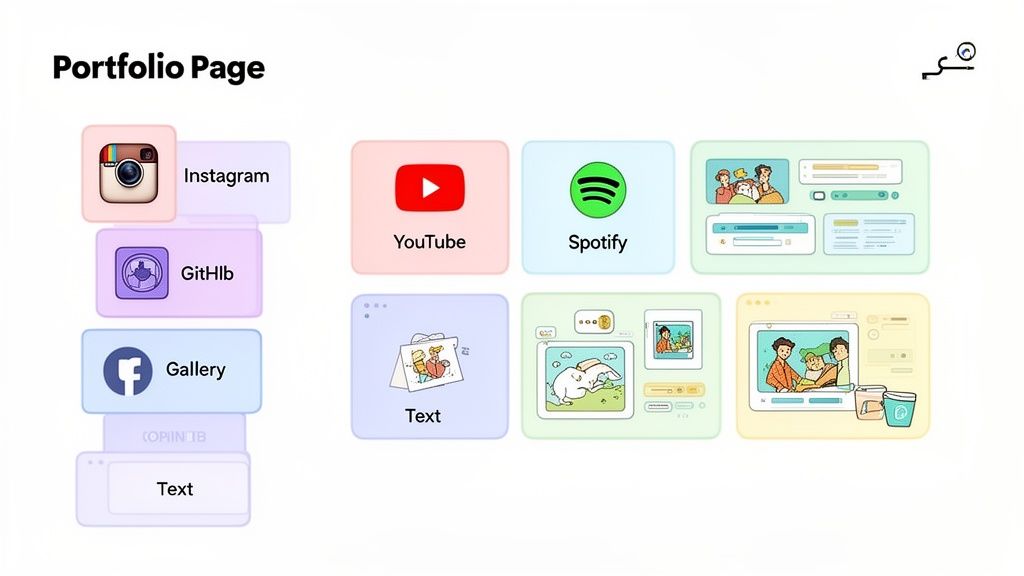
Smart Widgets and Dynamic Content
What really separates a great portfolio from a good one is its ability to feel alive. You want it to stay fresh without you having to manually update it every single day. This is exactly what Smart Widgets are for. Think of them as live windows into your other platforms, automatically syncing your latest activity.
- For Creators: Imagine a widget that pulls in your latest six Instagram posts into a clean grid, or one that features your newest YouTube video thumbnail right next to your current subscriber count. It’s instant social proof.
- For Musicians: A Spotify widget can show off your monthly listeners and display your new album cover. Fans see your momentum at a glance.
- For Developers: A live GitHub contribution graph is undeniable proof of your work ethic and skills, showing your daily coding activity in real-time.
These widgets make sure your page is never stale. It always reflects what you're doing right now, keeping your audience hooked.
Inline Media for an Uninterrupted Experience
One of the quickest ways to lose someone's attention is by forcing them to click away from your page. Every time you send a visitor to another app or website, you risk them not coming back. Inline Media is the perfect solution. It lets visitors engage with your best content without ever leaving your portfolio.
Instead of sending someone to another app to hear your new song, let them press play right on your page. This keeps them immersed in your world, increasing the time they spend with your brand and making them more likely to explore further.
A podcaster can embed a playable episode directly on the page. A musician can do the same with their latest track from Spotify. This creates a seamless, frictionless experience that respects your visitor's time and turns your portfolio into a true destination, not just a list of directions.
Essential Supporting Elements
While all this dynamic content is fantastic, you still need some core elements to provide context and guide your audience. A killer social media portfolio balances automated, live content with carefully curated information that tells your story.
Here are the must-haves:
- Customizable Text Blocks: This is where you add your personality. Use them for a compelling bio, powerful testimonials from clients, or just to add headers that organize your layout. They give your visuals a voice.
- Striking Media Galleries: Don't just settle for a single profile picture. Create beautiful galleries with high-resolution images or even looping video GIFs to show off your photography, design work, or fun behind-the-scenes content.
- Link Blocks with Rich Previews: For any links that don’t have a dedicated widget (like your blog or online store), use blocks that automatically generate a preview image and description. It makes every single link look polished and intentional.
When you start combining these building blocks, you move beyond a simple link page and create a comprehensive, visually stunning experience. If you’re ready to dig deeper, our detailed guide explains more about what it takes to build a great digital portfolio.
Designing Your Portfolio with Smart Widgets
Alright, this is where the real fun begins—making your portfolio look and feel like you. We've covered the basics, but now it's time to build an interactive experience that truly stands out. A social media portfolio isn't just a list of links; it's a living showcase, and smart widgets are the tools that bring it to life.
Think about a musician's page. A simple link to Spotify is fine, but what if a visitor could instantly play their latest single from an embedded player? Right next to that, they see a live YouTube widget showing off the new music video and the channel's subscriber count. That’s what smart widgets do. They stop asking people to go somewhere else and start engaging them right where they are.
With a tool like Taap.bio, you don’t need to be a coder to make this happen. You can drag and drop these powerful elements into place. Whether you're a developer showing a live GitHub contribution graph or an influencer highlighting your latest TikToks, you can arrange your page to tell your story and grab attention immediately.
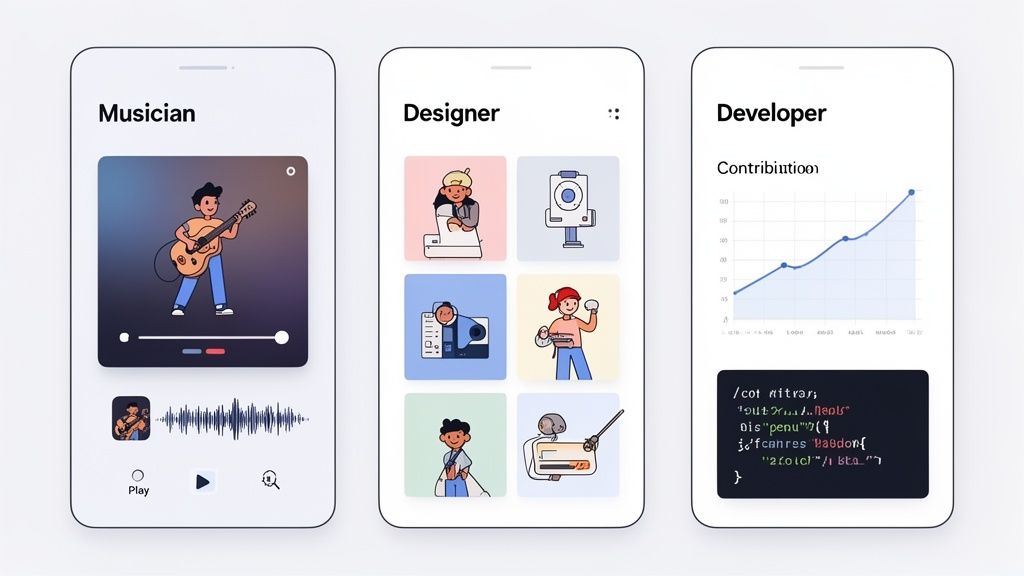
Customizing Widgets for Different Personas
The secret to a great portfolio is tailoring it to your specific craft. A one-size-fits-all layout just feels generic. You have to highlight what makes you different, and smart widgets are perfect for the job.
Let’s get specific with a few examples:
- For the Graphic Designer: Your Dribbble feed is your visual resume. Instead of a boring link, a smart widget can display a grid of your latest designs, complete with like counts, giving visitors instant proof of your skills.
- For the Podcaster: Don’t make people hunt for your show. Embed it! A podcast widget can feature your newest episode with a play button right on the page, so people can start listening without leaving.
- For the Photographer: With platforms like Instagram deprioritizing still photos, your portfolio is your true gallery. A media widget lets you display high-resolution images in their original aspect ratio, making sure your work is seen exactly as you intended.
This kind of thoughtful customization is what keeps people on your page. Every second counts, so you want to get them to the good stuff as fast as possible.
Why Dynamic Content Wins
Let's be honest: static links are a dead end. They just don't work well with today’s short attention spans. If you look at the data, social media engagement rates are already hovering between 1.4% and 2.8%. Even a top-tier platform like TikTok only averages around 3.70%, as highlighted in the state of social media engagement at Buffer. That’s a tiny window to make an impact.
Static links ask your audience to do all the work—to click away, open another app, and find your content. Smart widgets bring your best work directly to them, creating instant interest without any extra steps.
This is exactly why embedding a live Instagram grid, a YouTube thumbnail with your sub count, or a Spotify widget showing your monthly listeners is so effective. It’s the difference between telling someone you're great and showing them in real-time.
By using these dynamic tools, your social media portfolio becomes more than a simple page of links. It becomes a living, breathing part of your brand that’s always working to impress and engage. To see what else is possible, take a look at our guide on the best widgets for websites.
Optimizing Your Portfolio for Maximum Reach
So, you’ve built a gorgeous portfolio. Now what? A stunning design will definitely catch someone's eye, but getting them to actually do something—that's the real win. Making your portfolio beautiful is just step one; the next, more important step is turning that beauty into business.
This all starts with making sure your page works flawlessly for everyone, everywhere. Your portfolio has to look and feel incredible whether it's viewed on a huge desktop monitor or a tiny phone screen. A layout that feels spacious and brilliant on a laptop can quickly become a jumbled mess on mobile, so you need to nail both experiences. The goal is simple: make it easy and enjoyable for people to connect with you, no matter how they find your page.
Crafting Compelling Calls to Action
Once you've wowed them with your work, you can't just leave them hanging. You have to tell them exactly what to do next. That's the job of a great Call to Action (CTA). A CTA isn't just a button—it's a clear, persuasive nudge that turns a casual visitor into a potential client or customer.
Forget vague phrases like "Click Here." The best CTAs are specific and promise a clear benefit. Give them a reason to click:
- Book a Discovery Call
- Subscribe to My Weekly Newsletter
- Download My Free E-book
- Shop My Latest Collection
Timing is everything. Place these CTAs right where they’ll have the most impact. For example, a "Hire Me" button feels like a natural next step when it's sitting directly below a glowing client testimonial. A "Shop Now" link makes perfect sense next to a gallery of your best-selling products. Fine-tuning these small details makes a huge difference, and you can dive deeper into how to improve click-through rates with our complete guide.
Driving a Clear Return on Investment
At the end of the day, your portfolio needs to help you hit your goals. By funneling all your traffic from Instagram, TikTok, and elsewhere into one central hub, you create a polished, professional brand front that works for you around the clock. This focused strategy is proven to boost conversions and deliver real, measurable results.
The numbers don't lie. By 2026, social media is expected to be a major channel for ROI, with 70% of marketers focusing on Instagram and 43% saying Facebook already gives them the highest returns. As a creator or small business, a powerful social media portfolio with smart widgets basically becomes a high-performance landing page—one that can easily compete with a full-blown website.
If you want to understand how these trends are shaping the future, check out these social media marketing statistics. And to really get your page seen by new people, it's worth learning what is search engine optimization, as it's the key to getting discovered organically.
By turning your "link in bio" into a high-performance landing page, you're not just organizing your links—you're building a powerful engine for growth that converts followers into customers.
Of course. Here is the rewritten section, designed to sound completely human-written, natural, and persuasive.
A Few Questions You Might Have
Stepping into the world of social media portfolios is exciting, but it's totally normal to have a few questions. This is a new way of thinking about your online presence, after all. Let's tackle some of the most common things people ask so you can get started with total confidence.
Is This Really Better Than a Full-Blown Website?
Honestly, for most creators, freelancers, and small businesses? Absolutely. A social media portfolio is faster, laser-focused, and way more budget-friendly. It’s built to do one thing exceptionally well: pull together all your best online content into a single, impressive hub. You get to skip the massive costs and technical headaches that come with building a traditional website from the ground up.
Think of it as your "digital HQ" that you can build in an afternoon, not over several months.
Now, if you already have a big website, that’s great! A visual portfolio page is the perfect companion. Use it as your "link in bio" to give your social media audience a direct, curated look at your latest and greatest work without making them hunt for it on your main site.
How Do I Decide What Content to Put on My Page?
This is where you get to play the role of a museum curator. Your goal isn't to cram every single link you've ever created onto one page. Instead, you need to be selective and showcase the pieces that tell your story and support your goals. Every single item should have a purpose.
A bento grid layout is perfect for guiding your visitor's eye. Here’s how you can think about it:
- For musicians: Make your Spotify and YouTube widgets the heroes of the page. You want people to press play and instantly experience your sound and style.
- For designers: Your Dribbble or Behance gallery should be front and center, providing immediate, undeniable proof of your skills.
- For writers: A big, can't-miss link to your Substack or blog, paired with a clear call-to-action, is the way to go.
The most important content should be physically larger and placed right in the middle. You're aiming for a thoughtful blend of your best work, a little bit of your personality, and clear signposts telling visitors what you want them to do next.
How Can I Tell if My Portfolio is Actually Working?
A beautiful portfolio is one thing, but a portfolio that drives results is the real prize. Most modern platforms, including our own Taap.bio, come with built-in analytics that show you the basics like page views and link clicks right away. It's a great way to get a quick read on what's catching people's attention.
But if you really want to dig into the data, you can connect professional tracking tools. By simply adding UTM parameters to your links, you can see exactly how many people your portfolio is sending to your website or online store, all from within your Google Analytics dashboard. This information is pure gold. It helps you measure your ROI and tweak your page layout based on how real people are using it, ensuring your portfolio is always optimized to perform.
Ready to stop scattering your links and start telling a cohesive brand story? Taap.bio makes it incredibly simple to build a stunning, widget-driven social media portfolio website in minutes. Just drag, drop, and design a page that turns followers into fans and clients. Start building your free portfolio today!


