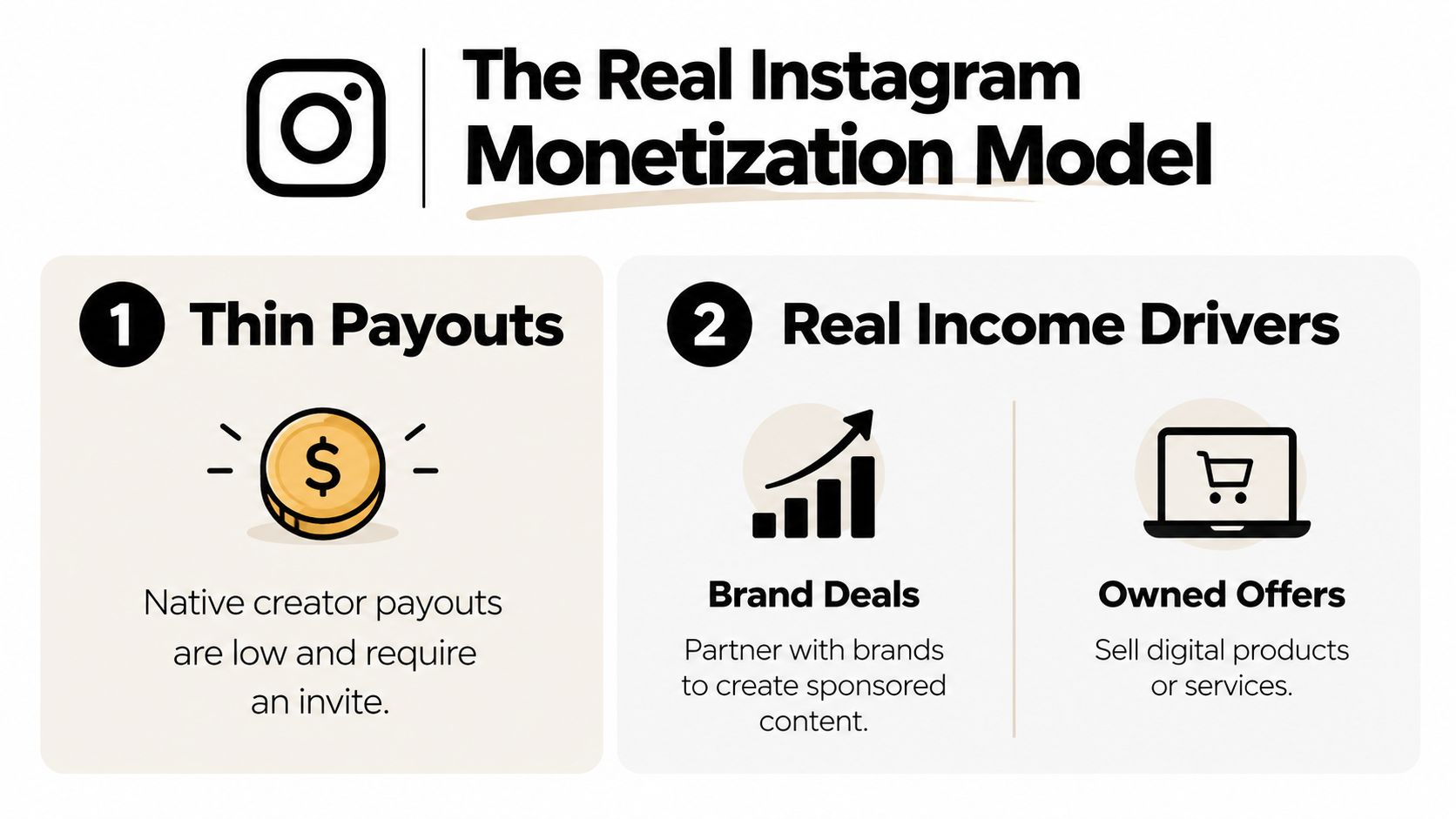
Instagram creators earned $2.3 billion in 2025, yet many still chase the wrong money stream. Native payouts are thin, invite-only, and unreliable, while real income usually comes from brand deals, affiliate offers, products, services, and bookings. If you want to understand how to make money on Instagram, the job isn't just “grow followers.” It's turning profile traffic into an owned transaction that you control.
That shift matters because revenue is already concentrated. In a 2026 survey of 1,865 Instagram influencers, 48.49% said they earn money from their accounts, average monthly income was $2,970, micro-influencers with 1,000 to 10,000 followers averaged $1,420 per month, and mega-influencers with over 1 million followers averaged $15,356 per month (creator economy income statistics). The same dataset estimated the average creator makes about $31 per hour, while beauty creators averaged about $60 per hour and mega-influencers reached roughly $187 per hour (creator economy income statistics). The pattern is clear, category and scale matter, but follower count alone doesn't pay the bills.
The better model is simple. Use Instagram to earn attention, then push that attention into a page that sells, books, and captures email without forcing people through a maze of links. That's where the money lives, especially for smaller creators who can't afford to depend on platform programs that may never open to them.
Table of contents
Why Most Instagram Monetization Advice Falls Short
Instagram advice often starts with the wrong target. It pushes creators toward badges, bonuses, or vague creator tools that sound useful but rarely control income. Public reporting says Instagram's payouts have crossed $1 billion across programs since the bonus initiative launched, yet annual payout totals are still undisclosed, and eligibility for some Reels-style monetization has been reported at around 10,000 followers plus 600,000 total views in 60 days (creator economy earnings by platform). That is a narrow gate, not a business plan.
The stronger signal is in creator pricing. Historical benchmarks showed an average Instagram influencer earned about $1,311 for a photo post and $2,784 for a Story in 2022. Later reporting said mid-tier creators could command about $8,500 per Reel on average, a 65% increase from 2022 baselines (Instagram influencer statistics). Brand-funded content still matters, but the money follows formats that move people toward action. Reels, Stories, Lives, and direct-response offers do that better than polished posts that end with applause and nothing else.
The business that pays is owned conversion
Follower count is a weak predictor by itself. A smaller, engaged audience with a clear niche can monetize better than a larger account with casual attention and no buying intent. Sponsored content, affiliate offers, services, and product sales keep winning when the creator owns the final step in the funnel.
Practical rule: if a post gets attention but does not send people somewhere they can buy, book, or subscribe, it is entertainment, not monetization.
That is also why distribution advice only matters when it leads to a concrete offer. A useful example for artists and music creators is social media music promotion, because it shows how attention can move toward a specific offer instead of sitting in a feed. The same logic applies across niches.
The system is straightforward. Build an audience, make content that invites action, point traffic to one clear offer, use one link that sells, and measure weekly so you know what to keep and what to cut.
Build an Audience and Profile That Converts
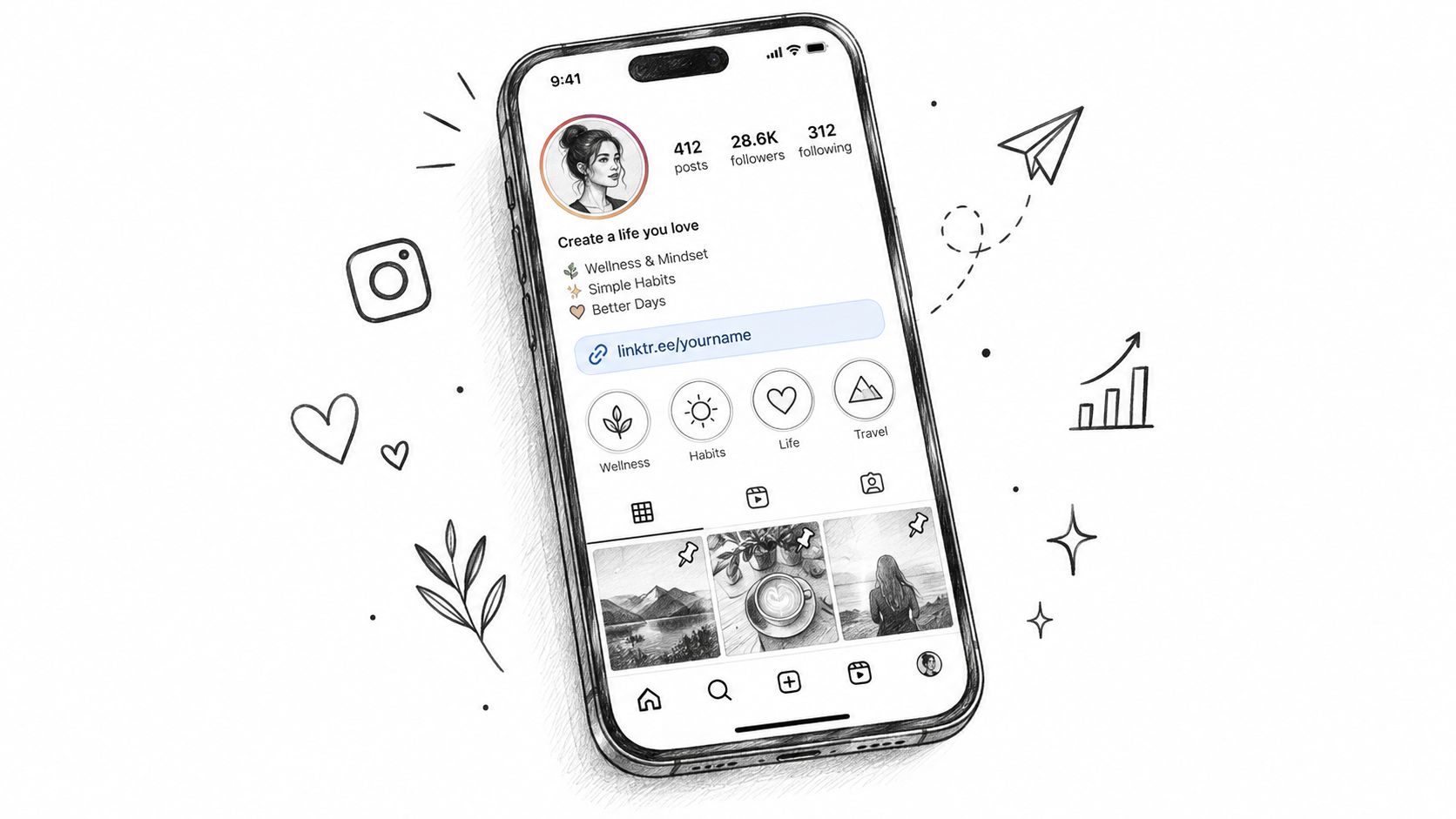
Your profile has one job, make a stranger understand what you do and what to do next. If someone lands on your page and still has to guess whether you sell templates, take bookings, or promote affiliate products, you've already lost the sale. A converting profile is not about looking polished, it's about removing friction.
Tighten the bio before anything else
The bio should say three things fast, who you help, what you offer, and where the click should go. That means no vague identity lines that sound clever but say nothing. If you need a quick checklist for what to include, this bio guide is useful because it keeps the focus on clarity, not decoration.
Pinned posts should do the same thing. One should explain your offer, one should show proof or process, and one should answer the most common objection. Highlights should work like a mini storefront, with one section for offers, one for results, one for FAQs, and one for behind-the-scenes content that builds trust.
Treat content as pre-sell, not just reach
Reels, Stories, and Lives matter because they create movement. Reels get discovery, Stories create familiarity, and Lives can handle the trust gap that blocks higher-ticket sales. The point isn't to post more. It's to place the right message in the format most likely to move someone one step closer to action.
A creator who sells services should talk like a service provider, not a lifestyle page. A creator who sells digital products should show the outcome, not just the product mockup. A creator who wants affiliate sales should demonstrate the use case, because people rarely buy from abstract recommendations.
Practical rule: every profile visit should answer one question, “Why should I click now?”
That's where a simple media kit helps. Brands don't want a messy inbox conversation where they have to piece together your niche, deliverables, and rates. They want a page or PDF that shows what you do, what formats you offer, and how you price them. For pricing structure, a practical reference is this service pricing guide, because it helps you stop underquoting before the first negotiation starts.
The goal isn't to look like everyone else. The goal is to look obvious to the right buyer.
Choose Your Monetization Model and Price It Right
The fastest way to waste time on Instagram is to try every money path at once. Sponsored posts, affiliate links, products, bookings, memberships, and subscriptions all work for someone, but they don't fit every creator. A smart monetization plan starts with fit, not ambition.
| Monetization Method | Best For | Typical Pricing Signal | Key Tradeoff |
|---|---|---|---|
| Sponsored content | Creators with a clear niche and brand-friendly audience | Benchmarks range from about $50 to $300 for nano creators to $5,000 to $100,000+ for macro and mega creators (Instagram creator statistics) | Income depends on brand demand and your ability to pitch |
| Affiliate marketing | Creators who can recommend products with real intent | Campaigns often convert around 1% to 5% overall, with higher rates in live or high-intent formats | Low conversion can flatten earnings fast |
| Digital products | Creators with repeatable knowledge, templates, guides, presets, or courses | Pricing depends on outcome and depth, not follower count | Requires product creation and clear positioning |
| Physical products | Creators with tangible merch or niche goods | Sales depend on offer quality and audience fit | Shipping and operations add complexity |
| Paid bookings | Coaches, consultants, freelancers, and service providers | Usually priced by session, package, or outcome | You trade time for revenue unless you systemize |
| Memberships | Creators with loyal communities and recurring value | Recurring revenue depends on retention | Needs ongoing content and community management |
What small but engaged creators should prioritize
Small audiences should start with the offer people can understand in one glance. For many creators, that means services, digital products, or affiliate recommendations before brand deals become reliable. A brand deal can be nice, but an owned offer gives you control over timing, price, and margin.
The bigger pricing lesson is format fit. A Story can support a quick response or a warm click, while a Reel usually needs more persuasive lifting because it reaches colder viewers. That changes what you charge and what you promise. A post that is built for discovery should not be priced like a format that is built for direct action.
Pricing rule: if you can't explain why your offer is worth the price, the market will treat it like a commodity.
For service sellers, package the result. For product sellers, package the outcome. For affiliates, sell the use case and the decision. For brand deals, set format-specific rates so you do not price a Story like a Reel or a Reel like a full campaign.
A practical reference for service pricing is this guide to pricing your services. It helps you stop underquoting before the first negotiation starts.
The best choice is usually one primary offer and one secondary path. That keeps your page focused, your content aligned, and your sales process simple enough to repeat.
Turn Profile Traffic Into Sales With One Link in Bio Page
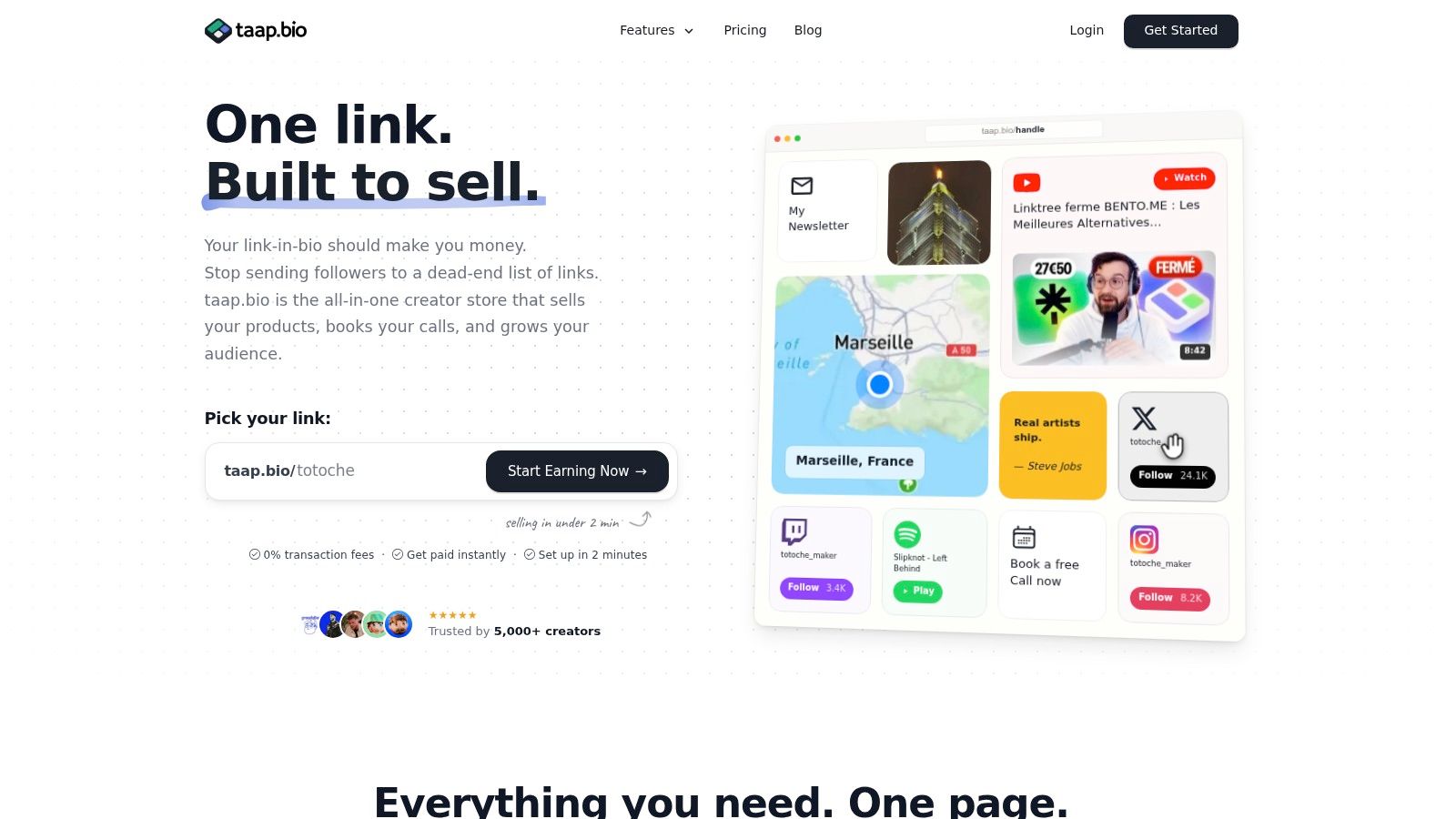
The cleanest way to monetize Instagram is to stop sending people to five different destinations. A single link-in-bio page can hold your store, booking calendar, and email signup in one place, which keeps more visitors from disappearing mid-click. That matters because low-priced offers live or die on friction.
Build the page like a storefront
Start with the highest-intent item first. If you sell a digital product, put that block at the top. If you book calls, lead with the booking card and make payment happen before the call is confirmed. If you want emails, put the signup field where it's impossible to miss.
That structure works because people on Instagram are scanning, not researching. The page should answer three things immediately, what can I buy, what can I book, and what do I get if I subscribe. If you need a reference for page structure, this landing page guide is a practical starting point because it focuses on action, not decoration.
A creator store is especially useful when you want to keep 0% platform fees on each sale. That matters on low-priced offers, where a fee can eat too much of the margin. Taap.bio is one example of this kind of setup, because it combines storefront, scheduling, email capture, and analytics in one page.
Use the page to reduce drop-off
The more steps you add, the fewer people finish. That's why the best pages keep checkout in place, send paid booking invites automatically, and capture email without forcing a separate signup flow. If you sell products, the checkout should feel immediate. If you sell calls, the calendar should confirm payment before time is reserved. If you sell lead magnets, the email capture should be one tap, not a long form.
For a broader retention mindset, YipSMS Inc. omnichannel playbooks are useful because they reinforce the same principle, stay consistent across touchpoints so people don't fall out of the funnel.
Keep the page lean and measurable
Real-time widget analytics tell you what's getting clicked, booked, and ignored. That gives you a live read on whether your top block is working or whether your audience wants a different offer first. The page should not feel like a website replacement. It should feel like the shortest path from attention to money.
The best version of this funnel is boring in the right way. One page. One clear offer hierarchy. One checkout. One booking path. One email capture. That's how profile traffic turns into revenue without your audience wandering off into tool sprawl.
Track What Matters and Fix What Does Not Convert
Likes and views matter only if they lead somewhere. A post can get attention and still fail to produce a sale, a booking, or an email signup. The numbers worth reviewing are the ones tied to revenue.
Check the funnel, not just the feed
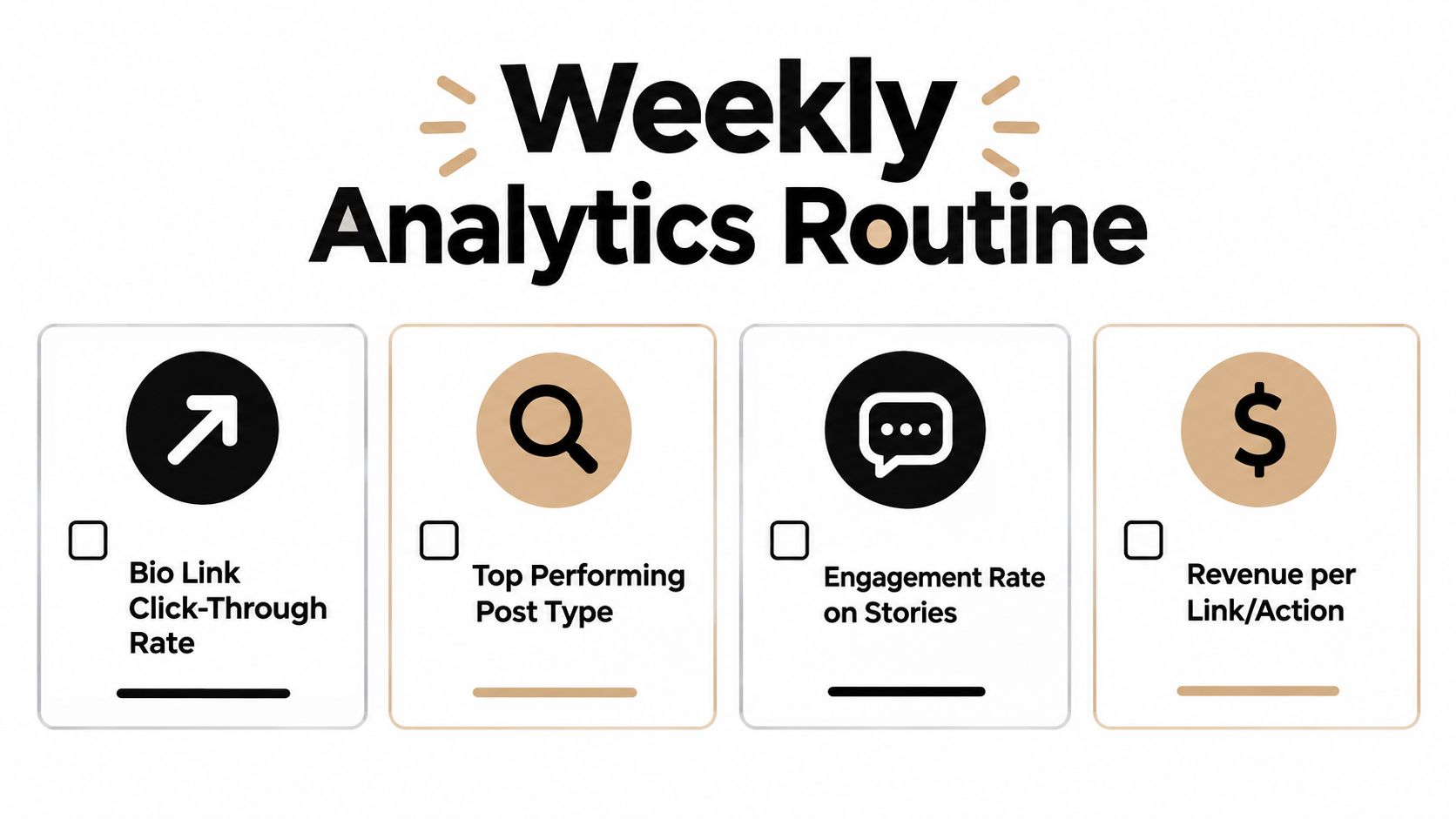
A weekly review should track bio link click-through, widget-level conversions, affiliate click-to-sale, booking completion, and email capture. Those signals show where people stop. Strong clicks with weak sales usually point to the offer or page layout. Weak traffic usually means the content or CTA is off.
Owned analytics matter even more because platform payout systems can shift without warning. Some creator programs are invite-only, and payout details are not always clear, so your real revenue signal is the click path you control. If the only thing you can measure is a platform bonus, you are guessing instead of managing the business.
Adjust the right variable first
If link clicks are good and conversions are poor, do not rebuild everything. Move the strongest offer higher, cut the copy, or change the CTA from “learn more” to something direct and specific. If bookings do not complete, check whether payment is too hidden or the schedule feels vague. If affiliate clicks happen but no sales follow, the product may not match the audience's intent.
A simple testing order keeps the work focused:
- CTA placement before changing the content.
- Offer order before changing the price.
- Pricing clarity before adding more options.
- Email capture before chasing more traffic.
Practical rule: fix one bottleneck at a time, or you will not know what moved the numbers.
For a tighter measurement habit, tracking conversions helps keep the focus on actions that pay, not on signals that only look good in screenshots.
Tracking is not about staring at dashboards. It is about cutting guesswork. Once you know which post type, CTA, and offer get the best response, do more of that and drop the rest.
Avoid Costly Pitfalls and Start Earning This Week
The biggest mistakes are always the same. Creators chase platform payouts that may never arrive, scatter traffic across too many tools, underprice their offers, and forget to collect email from the people who already showed interest. Each of those choices leaks revenue.
A better launch plan is simple. Pick one offer, set one price, publish three posts that point to the same action, and send every click to one checkout or booking page. If you sell digital products, this Instagram selling guide can help you tighten the offer side without turning your profile into a sales mess.
Your seven-day start
- Day 1: choose one monetization path, product, service, or affiliate offer.
- Day 2: write a bio that says exactly who you help and what the click does.
- Day 3: build one page that sells, books, and captures email.
- Day 4: publish a post that explains the offer.
- Day 5: publish a post that shows the outcome or proof.
- Day 6: publish a Story or Reel with a direct call to action.
- Day 7: review clicks, conversions, and replies, then adjust one thing.
Consistency beats improvisation here. The creators who keep showing up, keep their funnel simple, and own their audience keep earning long after the algorithm stops behaving.
Your content brings people in. Your offer turns them into revenue. Your email list keeps them from disappearing.
taap.bio gives creators one page to sell products, take paid bookings, and collect email without stitching together a stack of separate tools. If you want a cleaner way to turn Instagram traffic into owned revenue, visit taap.bio and build the page that makes every profile visit matter.