

Before you ever dream of sending a sponsorship pitch, your Instagram profile has to do the heavy lifting for you. It needs to be more than just a collection of nice photos; it needs to be a professional portfolio that screams "I'm ready for business."
Think about it from a brand's perspective. Marketing managers are constantly scrolling, looking for the next creator to partner with. A polished, strategic profile is what makes them stop and see you as a potential collaborator, not just another hobbyist. Your feed is your first handshake, so you have to make it a firm one.
This initial setup is absolutely non-negotiable. It’s the foundation that signals to brands you’re a serious creator who understands the business of influence. For a complete look at the journey ahead, it's worth reading this guide on how to get sponsorship for Instagram. Without these core elements in place, even the most compelling outreach email will fall flat.
Nail Your Niche and Audience
Your niche is your competitive edge. It's the specific world you own, whether that’s minimalist home decor, vegan meal prep for busy professionals, or thrift-flipping vintage denim. A tight, well-defined niche instantly tells a brand who your audience is and what they’re passionate about. Vague "lifestyle" accounts are a much harder sell because the audience is too scattered.
Passion is non-negotiable here. If you don't genuinely love your topic, it will show, and your content will lack the authenticity that builds a dedicated community.
Ask yourself these questions:
- What subject could I talk about endlessly without getting bored?
- What unique angle or personal story can I bring to this space?
- Is there an active, underserved community here that I can connect with?
When you have a clear niche, your content suddenly has a powerful purpose. This focus makes it infinitely easier to attract a loyal following—and the exact brands that want to reach them.
Craft a Bio That Sells
Your Instagram bio is your 150-character elevator pitch. In just a few seconds, it has to tell visitors who you are, what you do, and why they (and potential sponsors) should care. A killer bio combines your name, your niche, and a clear call-to-action or a dash of personality that makes you memorable.
Pro Tip: Your bio is a direct message to brand managers. Sprinkle in keywords related to your niche (like "SF-Based Tech Creator" or "Sustainable Fashion Advocate") so they immediately understand your value.
This simple framework shows how these foundational pieces fit together to create a profile that’s built for brand deals.
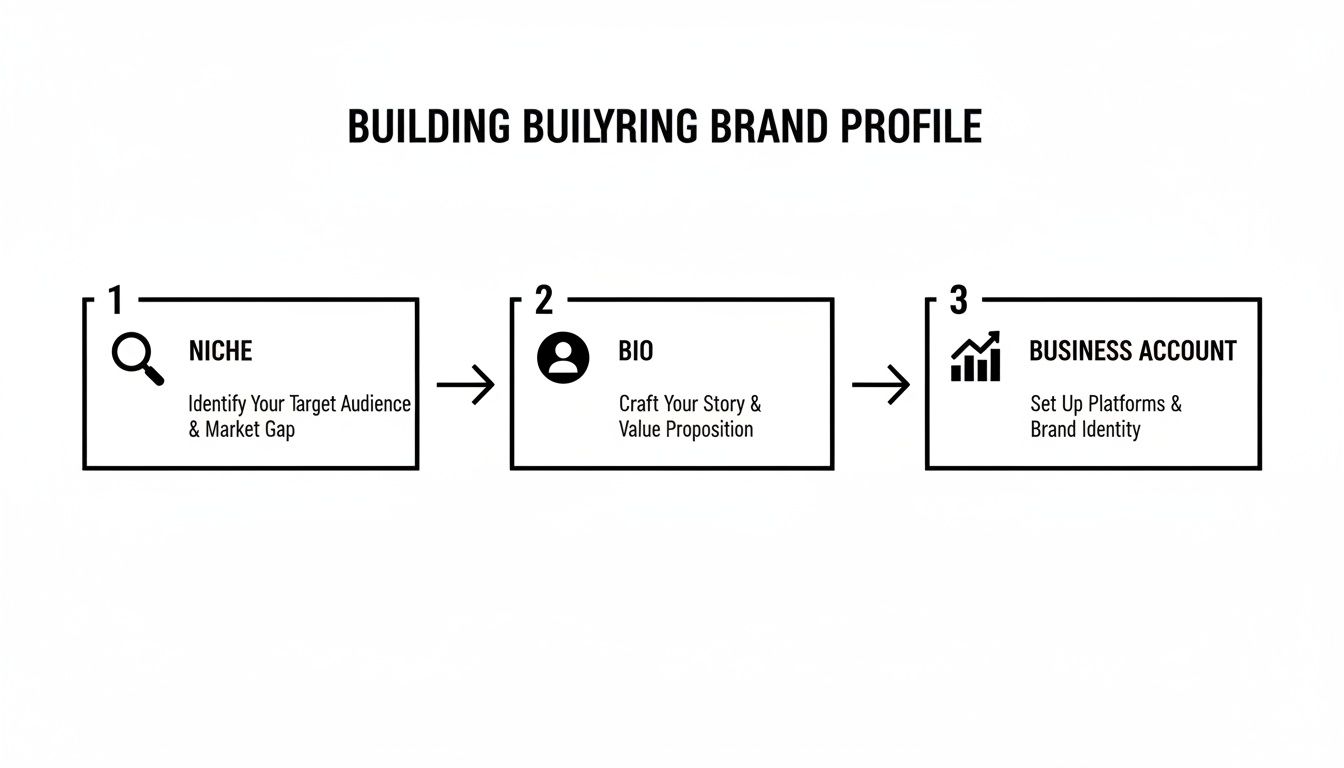
Each element supports the next, creating a professional and cohesive presence that naturally attracts the right kind of attention.
To help you get everything in order, here’s a quick-reference checklist. Go through your profile and make sure each of these elements is optimized and ready to impress.
Your Brand-Ready Instagram Profile Checklist
| Element | Why It Matters for Sponsorships | Actionable Tip |
|---|---|---|
| High-Quality Profile Photo | It's your first impression—it needs to be clear, professional, and reflect your brand's personality. | Use a well-lit headshot or a logo that is easily recognizable, even as a small circle. |
| Keyword-Rich Name Field | This field is searchable. Including your niche (e.g., "Jen | Travel Tips") helps brands find you. |
| Optimized Bio | It’s your elevator pitch. It must quickly convey your value and who you serve. | Clearly state your niche, your location (if relevant), and what makes you unique in 150 characters. |
| A Clear Call-to-Action | Your bio needs to tell people what to do next, like visiting your link in bio. | Add a CTA like "👇 Shop my faves" or "📧 For collabs, email me" pointing to your link/email. |
Once you’ve checked all these boxes, you’re presenting a unified, professional front that makes a brand manager’s job easy. They can see who you are, what you do, and how to work with you in a single glance.
Flip the Switch to a Professional Account
If you’re still using a personal account, you need to switch to a Creator or Business profile right now. This is the single most important technical change you can make, as it unlocks Instagram Insights—the free, built-in analytics tool that brands will ask to see.
This isn’t just a nice-to-have; it's a requirement. Brands need data to justify their marketing spend, and your Insights are the proof. This is especially true as brands increasingly seek out nano-influencers (1,000-5,000 followers) who command an impressive average 5.6% engagement rate—often higher than massive accounts. With $8 billion spent on Instagram marketing annually, you need to be ready to claim your piece.
Having access to this data is what allows you to prove your worth, negotiate better rates, and is a cornerstone of building a powerful online presence.
Table of contents
Crafting Content That Brands Can't Ignore
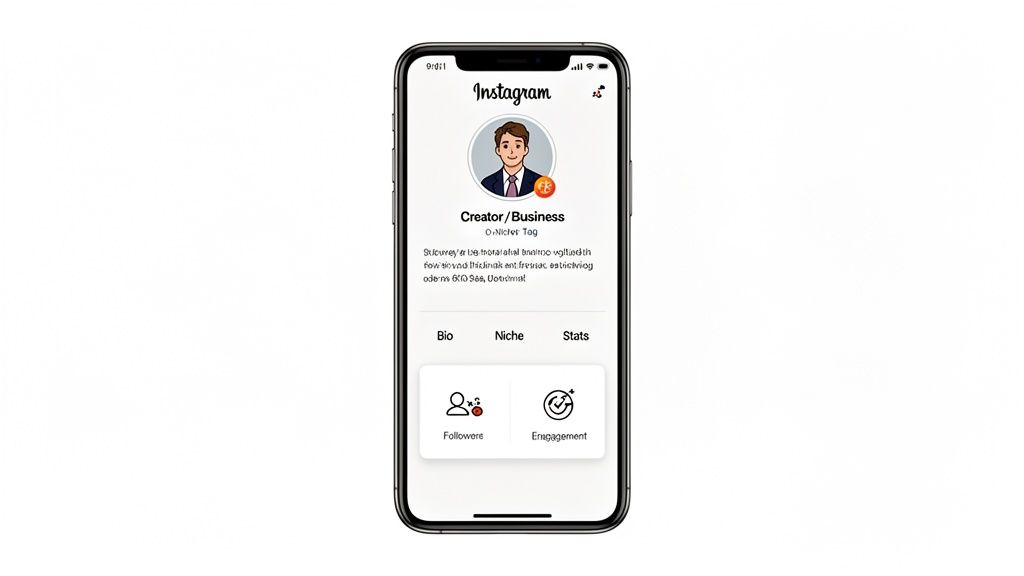 With a sharp, optimized profile in place, it’s time to focus on the main event: your content. Your Instagram feed is so much more than a personal photo album. It's your living, breathing portfolio, the very thing that makes a brand manager stop scrolling and see you as a potential partner.
Think of it this way: your bio makes a promise, but your content provides the proof. It’s not enough to call yourself a "sustainable fashion advocate." Your feed has to back it up with thoughtfully produced posts that show you live and breathe that niche. Every single post is a chance to prove you can create visuals that build community and drive real engagement.
Nail Your Visual Aesthetic
Your visual style is your signature. When a brand lands on your page, a consistent, polished look tells them you're a pro who takes this seriously. This doesn't mean every photo needs to be a carbon copy, but they should all feel like they belong to the same story.
Start by landing on a specific color palette or a consistent editing style you can apply to most of your content. A travel creator might lean into warm, earthy tones, while a tech reviewer could go for a crisp, minimalist vibe. This cohesion shows brands you have a clear vision they can trust.
A cohesive feed is more than just pretty pictures; it’s a strategic choice. It shows brands you understand branding and can seamlessly integrate their product into your world without disrupting the visual harmony your audience loves.
This consistency also builds deep trust with your followers. They know what kind of quality and style to expect from you, which is exactly why they stick around. For a brand, that predictability is gold because they can see exactly how their product will fit into your world.
Master the High-Engagement Content Formats
Let's be real—not all content formats are created equal, especially when you want to catch a sponsor's eye. While a great photo still has its place, brands are increasingly looking for creators who know how to use Instagram's more dynamic features to tell a better story.
If you want to get noticed, you need to get good at the formats that the algorithm and your audience love. These are the formats that encourage interaction and rack up watch time, which are key metrics for any marketing manager.
Top Formats to Prioritize:
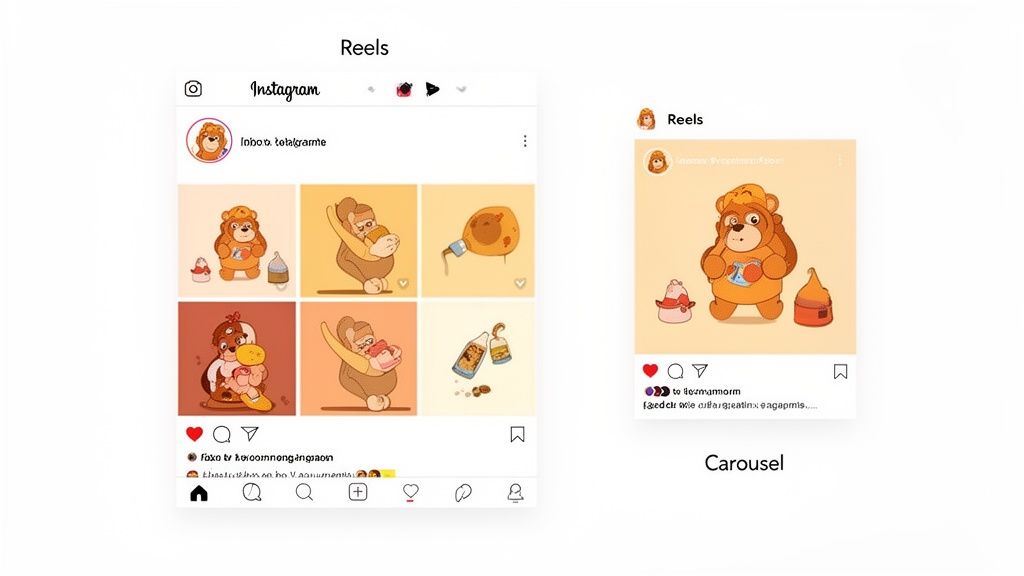
- Reels: Short-form video is your ticket to massive reach and discovery. Get comfortable using trending audio, trying creative transitions, and packing value into every clip. A Reel showing a product in action is infinitely more compelling than a static photo.
- Carousels: These multi-slide posts are engagement magnets. The simple act of swiping keeps people on your post longer, which is a huge signal to the algorithm. Use them to create mini-tutorials, share a list of tips, or tell a compelling before-and-after story.
- Stories with Interactive Elements: Use polls, quizzes, and question stickers to turn your Stories into a genuine conversation. Brands absolutely love seeing this because it’s hard proof that you have a real, active relationship with your community.
Producing high-quality video content is a serious skill. Understanding the technical details, like the right Instagram video file format to use, can make sure your content always looks sharp and professional, giving you an immediate edge.
Write Captions That Build Community
Your visuals might get the initial click, but it's your captions that make people stay. A great caption doesn't just describe the photo—it adds personality, shares a story, and invites people into a conversation. This is where you turn passive scrollers into a loyal community.
Ditch the generic, one-line captions and start thinking like a storyteller. Share the "why" behind your post. If you're a food blogger, don't just give me the recipe; tell me about the grandmother who taught it to you. That touch of authenticity is what builds a real, human connection.
Always end your captions with a clear call-to-action (CTA). Ask a question, prompt your followers to share a similar experience, or ask them to tag a friend. This one small habit can skyrocket your engagement and show brands that when you speak, your audience actually listens.
Assemble Your Professional Creator Toolkit
If you're serious about landing professional sponsorships, you have to look the part. It's not enough to just have a beautiful feed anymore. Brands need to see that you're organized, business-minded, and ready to collaborate. A messy or incomplete presentation can kill a deal before it even starts.
Think of it this way: your professional assets are your digital handshake. When a brand manager sees you have a polished media kit and a dynamic landing page, it instantly tells them you get it. You're not just a hobbyist; you're a potential partner they can rely on.
Upgrade Your Link in Bio with Taap.bio
That little link in your Instagram bio? It’s some of the most valuable digital real estate you own. For too long, creators have been stuck with a simple, boring list of links. Honestly, that just doesn't cut it anymore. To really capture attention, you need a page that acts like a mini-portfolio, showing off your entire digital world in one slick, visual space.
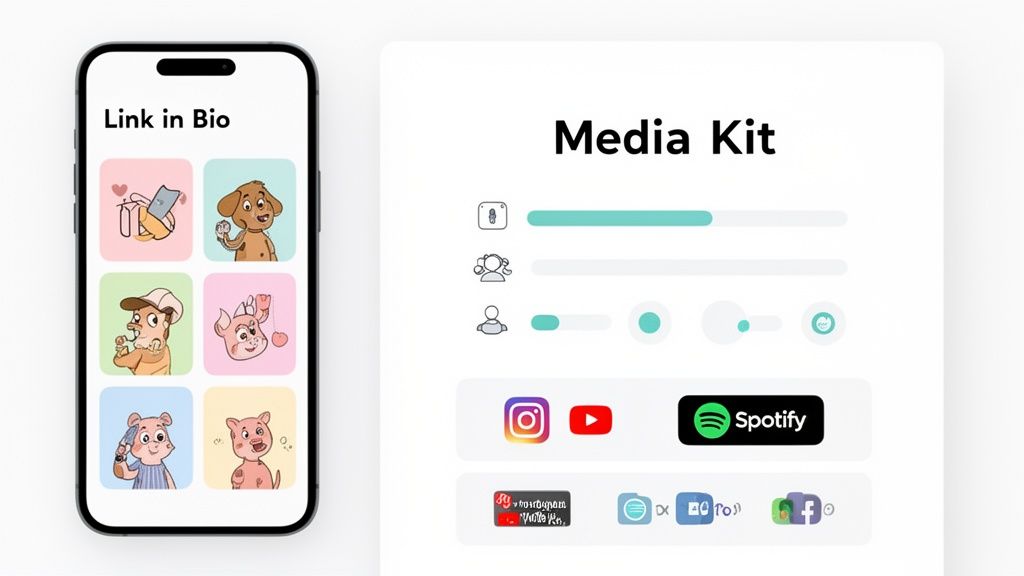
This is where a tool like Taap.bio completely changes the game. Forget those endless vertical lists. Taap.bio lets you build a dynamic, bento-box style grid. You can pull in different content blocks—like your latest YouTube videos, Spotify podcasts, or even live Instagram stats—and arrange them into a personalized dashboard that reflects your brand. It turns your link page from a basic menu into a destination.
Instead of a standard list, imagine a brand manager seeing a layout that truly captures your entire brand at a glance.
This visual-first approach immediately shows off your style and multi-platform presence, giving brands the full picture without making them hunt for it.
The real power comes from using smart widgets that display live information. Picture a marketing manager clicking your link and instantly seeing:
- An Instagram widget pulling in your live follower count and latest posts.
- A YouTube widget with playable thumbnails of your newest videos.
- A Spotify widget that lets them listen to your podcast right there on the page.
It’s not just about sending people away to other links; it’s about bringing your best content together into one cohesive experience. This level of polish and organization makes you look like a top-tier creator, no matter how many followers you have.
Craft a Media Kit That Sells
While your Taap.bio page is your public-facing portfolio, your media kit is your professional resume. This is the document (usually a PDF) that you'll send directly to brands when you're pitching them. It’s where you lay out the hard data they need to justify a partnership.
A weak or missing media kit is a massive red flag. It tells brands you're either inexperienced or not taking this seriously. Your kit needs to be well-designed and packed with the insights that marketers actually care about.
Think of your media kit as the closing argument in your pitch. It provides the hard data to back up the creative story your Instagram feed tells. It’s your chance to prove your influence with concrete numbers.
And those numbers really do matter, especially since you don't need a million followers to get noticed. In fact, 36% of brands now kick off collaborations by gifting products, a move that works incredibly well with smaller creators. Gifted campaigns with nano and micro-influencers often hit an engagement rate of 2.19%—outperforming the 1.94% for paid ones.
Key Components of a Winning Media Kit
Your media kit should be a quick, powerful summary of why a brand should work with you. Ditch the fluff and focus on what a busy brand manager needs to see.
What to Include:
- A Brief Bio: A short paragraph reintroducing you, your niche, and your mission. Remind them who you are and what your community is all about.
- Audience Demographics: This is non-negotiable. Head straight to your Instagram Insights and pull the data on your audience's age, gender, and top locations. Brands need to know if your followers match their target customer.
- Key Performance Metrics: This is where you prove your value. Include your follower count, but more importantly, your average post reach, average Story views, and your engagement rate.
- Collaboration Options & Rates: Be upfront. Clearly list the types of partnerships you offer (e.g., dedicated Reel, Story series, static post) and provide a starting rate for each. This shows you’re a professional and saves everyone a lot of back-and-forth.
- Past Work & Testimonials: Social proof is huge. If you've worked with brands before, showcase their logos. If you have a glowing quote from a past partner, even better.
Putting together a media kit from scratch can feel daunting. I'd recommend checking out some top-tier influencer media kit examples to get a feel for how the pros do it. And don't forget that your branding can extend offline, too. Little touches, like a custom Instagram decal sticker on your laptop or camera gear, can be a great conversation starter and reinforce your brand in the real world.
It’s Time to Make the First Move: Mastering Brand Outreach
Let's be real: sitting back and just hoping your dream brand stumbles upon your profile isn't a strategy. To land real, paid sponsorships on Instagram, you have to stop waiting for opportunities and start creating them yourself.
This is the part where you take control. Making the first move with proactive outreach is what separates the creators who are just getting by from those who are running a serious business. It shows brands you're not just a talented creative, but also a professional partner who knows how to drive results. Here's your playbook for nailing the pitch.
Build a Smart List of Target Brands
Before you type a single word of an email, you need to know exactly who you're talking to. A generic, "spray and pray" approach is a surefire way to get ignored. Your goal is to build a highly targeted list of companies that are a perfect match for your brand and your audience.
The best place to start? Look at the brands you already use and genuinely love. Authenticity is your superpower here. When you pitch a product you're truly passionate about, that excitement cuts through the noise and makes your proposal incredibly compelling.
Next, do a little market research. See who other creators in your niche are working with. This gives you a pre-vetted list of brands that are already sold on the value of influencer marketing and understand your audience. Don't forget to look for smaller, up-and-coming brands, too—they might be hungry for the exposure you can offer.
When researching a brand, go deeper than just their product page. Get lost in their Instagram feed, read their "About Us" page, and understand their mission. A partnership built on shared values is always more successful and authentic for everyone.
Once you have your list, do your homework. Follow them, engage with their posts, and get a feel for their brand voice. This isn't stalking; it's smart research that will allow you to personalize your pitch and prove you’ve put in the effort.
Find the Person Who Can Actually Say "Yes"
Sending your perfectly crafted pitch to a generic [email protected] email is the digital equivalent of shouting into a hurricane. It’s not going to get you anywhere. To get sponsored, your message needs to land directly in the inbox of the person who makes the decisions.
So, who are you looking for? You’ll want to hunt down people with titles like:
- Social Media Manager
- Influencer Marketing Manager
- Brand Manager
- PR Coordinator
LinkedIn is your secret weapon for this mission. Use its search to pinpoint people with these titles at your target companies. If you can't find a direct email address, a personalized connection request with a short, polite message on LinkedIn can often open the door.
Craft a Pitch They Can’t Ignore
Your first message, whether it’s an email or a DM, has one job: to stand out. Marketing managers are drowning in pitches. Yours needs to be short, powerful, and focused entirely on the value you bring to them.
Think of your message like a movie trailer—it needs to grab their attention immediately.
Your opening line is everything. Show them you're not just another random creator by mentioning a specific campaign they ran that you admired, or a product you genuinely use and why you love it.
Then, give a quick intro to who you are and what makes your audience special. Instead of just listing your follower count, highlight what makes your community unique and valuable.
This is the most critical part: connect the dots for them. Clearly explain why a partnership between your account and their brand is a no-brainer. How does your audience align with their target customer? What kind of creative ideas do you have?
Finally, close with a clear and simple call to action. Don't leave them guessing. Suggest sending over your full media kit or offer to hop on a quick call to brainstorm some ideas together.
Always attach your professional media kit to the email. This gives them all the data they need to make a quick decision. Nailing this outreach process is a fundamental part of a strong creator business, and you can dive even deeper with these influencer marketing best practices.
Nail the Negotiation and Seal the Deal
Getting that first "yes" from a brand feels incredible, but don't pop the champagne just yet. This is where the real work begins. The conversation is no longer about if you'll collaborate, but how. This is your chance to secure a partnership that truly values your work.
So many creators, especially early on, get swept up in the excitement and jump at the first offer. This is particularly true when it's just a free product. You have to fight that urge. If a brand comes to you with a list of demands—say, one Reel and three Stories, with an approval process and a strict posting schedule—they're not giving you a gift. They're hiring you for a professional service, and that service deserves professional pay.
So, How Much Should You Charge?
Let's get one thing straight: your follower count is only a tiny piece of the pricing puzzle. A brand isn't just buying access to your followers; they're buying your influence, your creativity, and your community's trust. Never let your follower count be the sole anchor for your rates.
Instead, your pricing should be built on a foundation of tangible value. Think about it from the brand's perspective and price your work based on these crucial factors:
- Engagement Rate: A smaller, highly engaged audience is almost always more valuable than a massive, passive one. If your comments section is buzzing and your DMs are active, you have a powerful community, and that’s worth a premium.
- Scope of Work: Get granular. What exactly are you delivering? Is it a single, simple post? Or is it a full-blown package with a Reel, a Carousel, and a series of Stories? More work and more formats mean a higher price tag. It's that simple.
- Content Usage Rights: This is a big one. Where will the brand use your content? Just on their own Instagram feed? Or in paid ads? And for how long? Each of these adds a layer of value and should be reflected in your fee.
- Exclusivity: If a brand asks you not to work with their competitors for a set period, they're limiting your ability to earn from other sources. That exclusivity comes at a cost, and you absolutely must charge more for it.
One of the most common mistakes I see creators make is forgetting to account for all the behind-the-scenes work. Your rate isn't just for the final post. It covers your time brainstorming, shooting, editing, writing compelling copy, and then sticking around to engage with comments. You're being paid for your expertise, not just a picture.
Dealing with Lowball Offers and "Pay-for-Post" Deals
You're going to get lowball offers. It's just part of the game. A brand will offer you a $50 skincare product in exchange for a high-effort video that will take you hours to create. The key is to handle it with professional grace, without burning any bridges.
Always start by thanking them for the opportunity. Then, gently pivot by reiterating the value you deliver and restating your rates based on what they're asking for. You'd be surprised how often a brand is just seeing what they can get away with. A confident, business-minded response can quickly turn a weak offer into a serious negotiation.
It’s also worth noting that the industry is shifting. For 2026 and beyond, smart brands are moving away from one-off posts and investing in long-term partnerships, treating creators like genuine extensions of their marketing team. With the global influencer market expected to blow past $30 billion, the opportunity is massive. Data shows 86.6% of businesses are already using Instagram Stories, and 78% of influencers themselves prefer Instagram for brand deals, so you're in the right place.
The Contract: Your Non-Negotiable Shield
Let me say this as clearly as possible: never, ever start work without a signed contract. A verbal agreement or a DM conversation is not enough. A formal agreement is what protects both you and the brand by putting everything in black and white. If a brand seems hesitant to sign a contract, consider that a giant red flag.
Think of your contract as the official roadmap for the entire collaboration. Before you put your name on anything, make sure it includes these essentials.
Your Sponsorship Contract Checklist
- Clear Deliverables: The contract needs to spell out the exact number and type of posts (e.g., "One (1) Instagram Reel, three (3) Instagram Story frames"). No vague language.
- Content Approval Process: How does the brand review your content before it goes live? Who gives feedback, and what's the expected turnaround time?
- Posting Dates and Schedule: The agreement should clearly define the posting window or the specific dates the content is due to be published.
- Content Usage Rights: This is critical. Pay close attention to how, where, and for how long the brand can use your content (e.g., "organic social media channels only for 90 days"). Watch out for scary terms like "in perpetuity" or "all media," which basically give them your content forever.
- Exclusivity Clause: If there's an exclusivity clause, it must clearly define which competitors you can't work with and for how long that restriction lasts.
- Payment Amount and Schedule: The contract must state your exact compensation and the payment timeline (e.g., "50% upfront, 50% upon completion," or "Net 30 days after the final post is live").
- FTC Disclosure Requirements: It should confirm that you'll follow the rules by using
#ad,#sponsored, or Instagram's "Paid Partnership" tool.
Negotiating can feel intimidating at first, but it’s a muscle you build with every deal. Each contract you sign reinforces your position as a professional creator. As you continue to grow, you'll find different platforms open up new and exciting sponsorship doors. To get a better sense of where to focus your energy, check out our guide on the best platforms for content creators looking to monetize their influence.
Your Instagram Sponsorship Questions, Answered
Let's cut through the noise. When you're trying to figure out how to get sponsored on Instagram, a few key questions always come up. I've been in the trenches with creators for years, and I'm here to give you the straight, practical answers you've been looking for.
How Many Followers Do I Actually Need?
Okay, let's get the big one out of the way first. Everyone wants to know the magic number of followers needed to land a sponsorship, and the truth is... there isn't one.
Seriously. The old-school obsession with massive follower counts is fading fast. Brands have gotten much smarter, and they've realized that a smaller, deeply connected audience is often way more powerful than a huge, passive one.
They're actively seeking out nano-influencers (that's you, with 1,000 to 10,000 followers) because you have something special: trust. Your community hangs on your every word. So, stop worrying about the follower count and focus on creating content that sparks genuine conversation. When you have that kind of engagement, the brands will come knocking, whether you have 2,000 followers or 200,000.
Should I Work for Free Products?
This is a classic "it depends" situation, but I'll give you a clear framework. When you're just starting out, accepting a free product—what we call an "in-kind" collaboration—can be a great move. It lets you partner with a brand you love, build a portfolio, and get that first "yes" under your belt without a ton of pressure.
But here’s where you need to draw a firm line. If a brand sends you a product, no strings attached, consider it a gift. Enjoy it! The moment they send a list of requirements—like a specific number of posts, a Reel, or an approval process—it’s not a gift anymore. It's a job.
Once a brand starts dictating deliverables, they're no longer giving you a gift; they're hiring you as a contractor. Your creative work, time, and influence have value that goes far beyond the cost of a product. Don't be afraid to ask for payment.
What Metrics Do Brands Really Look At?
While your follower count is the first thing people notice, it’s rarely the metric that seals the deal. Smart brand managers dig much deeper to understand the true impact of your content.
Here’s what they’re actually analyzing:
- Engagement Rate: This is your golden ticket. It's the proof that people are not just seeing your content but actively liking, commenting, sharing, and saving it. A high engagement rate shows you have a loyal, active community.
- Reach & Impressions: Brands need to know how many unique people are seeing your content. Get comfortable sharing your average post reach and average Story views directly from your Instagram Insights.
- Audience Demographics: This is non-negotiable. Brands have a target customer, and they need to see if your audience's age, gender, and top locations align with theirs. Have this data ready.
How Do I Figure Out My Rates?
Pricing your work can feel like throwing a dart in the dark, but it doesn't have to be. Your rate is a blend of your audience size, the effort required, and the overall value you bring to the table.
A common starting point many creators use is around $10-$20 per 1,000 followers for a single in-feed post. But please, treat this as a baseline, not a rule.
You absolutely must adjust that number based on other factors. Is it a complex Reel or a simple static post? Are they asking for usage rights to run your content as an ad? (That costs extra!) Is there an exclusivity clause? Your media kit should have a rate card that outlines these different scenarios clearly.
Ready to stop looking like an amateur and start presenting yourself like the professional you are? Your "link in bio" is your digital storefront. Taap.bio helps you build a gorgeous, bento-box style landing page that showcases your best content with live widgets from Instagram, YouTube, and more. Ditch the boring list of links and create a page that wins you deals. Create your beautiful Taap.bio page for free!


